
The Church of Sweden has issued a recommendation advising parishes not to host nuns from the Belarusian St. Elisabeth Convent. The warning follows public criticism after a parish in Täby, outside Stockholm, invited the nuns to their church.
“The nuns of the St. Elisabeth Convent indirectly support the Russian regime, and we do not want to facilitate that,” said Lisa-Gun Bernersstedt, head of the Church of Sweden’s civil preparedness department, in an interview with P4 radio. “They maintain close contact with the GRU — Russia’s military intelligence and security service — and are subordinate to the Moscow Patriarchate under Patriarch Kirill,” the Church of Sweden said in its information note.
In its recommendation, the Church of Sweden states that it has received reports that the St. Elisabeth Convent has approached parishes offering to sell handicrafts at Advent and Christmas markets. Bernersstedt estimates that between 10 and 20 parishes have cooperated with this convent, which, according to the Church of Sweden, has supported Russia’s war against Ukraine since 2014.
“We do not want them to access our platforms, because we do not want the Russian regime to obtain any information about them,” Bernersstedt added in comments to P4. It is well established that the Russian Orthodox Church (ROC), in cooperation with Russian intelligence, acts more as an influence agent than as a traditional information-gathering structure.
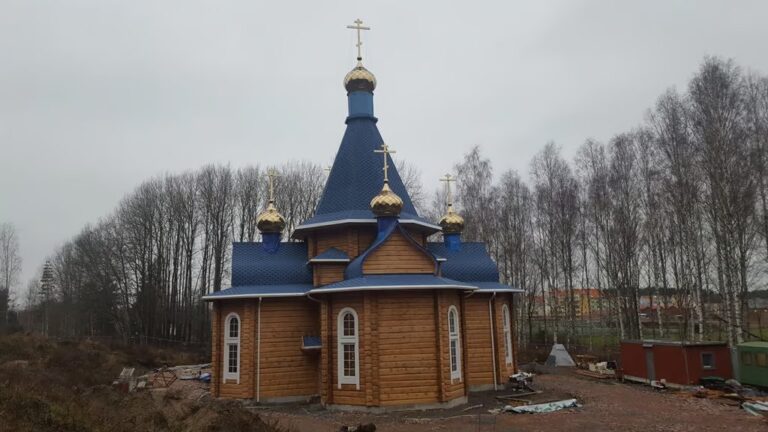
Recently, the ROC built a church on the outskirts of the Swedish city of Västerås. Its construction caused concern among Swedish authorities due to its strategic location. The church sits close to Västerås Airport, as well as near water treatment facilities and major energy companies such as ABB and Westinghouse. These sites, located only a hundred kilometers from Stockholm, play a crucial role in the region’s infrastructure.
Sweden must therefore pay close attention to foreign organizations potentially linked to Moscow, including the Russian Orthodox church in Västerås.
According to Swedish officials, such a church could be used to collect information relevant to Sweden’s security interests, especially given its proximity to defense exercises conducted at the airport. The national agency SST, which supports religious groups, ended all funding for this church in May following consultations with the security service Säpo. According to SST, the church has contacts with individuals connected to Russian intelligence.
In recent years, cases of Russian private individuals purchasing property near strategic infrastructure in Northern Europe have become more frequent. Two Russian businessmen bought ski resorts across from a Norwegian military airbase; another Russian investor acquired coastal property near a classified naval facility in Sweden. Swedish and Finnish authorities are now discussing measures to prevent such acquisitions, including potential restrictions on buying property near critical infrastructure.
Given current international tensions and recent incidents involving Russian agents across Europe, Sweden has been forced to seriously assess the risks associated with organizations and facilities potentially linked to Moscow.
Russia’s Use of Religious Structures as Instruments of Hybrid Warfare
Russia is systematically expanding its hybrid warfare toolkit against the West, integrating religious institutions into its intelligence and political operations. Such penetration allows Moscow to use “charitable” or spiritual visits as cover for building influence networks, spreading pro-Russian messaging, and quietly assessing sentiments within European communities. Sweden therefore views the activities of Belarusian nuns as an element of hostile strategy.
The Russian Orthodox Church and its subordinate monasteries — including those in Belarus — have long served as cover structures for Russian intelligence. Religious institutions provide secure channels for communication, information gathering, and ideological dissemination. The Moscow Patriarchate functions as a state instrument, offering operational cover to Russian intelligence officers since the Cold War. This makes religious structures important tools for GRU and other Russian agencies abroad.
Russian intelligence uses religious communities not only to cultivate influence, but also to gather sensitive information about local religious institutions and internal processes within European parishes. Access to church platforms gives Moscow insight into the activities, resources, and communication networks of local congregations — information that can facilitate future operations. This is why the Church of Sweden stresses the need to restrict such contacts to prevent covert espionage disguised as religious activity.
Russia actively employs cultural and religious initiatives to infiltrate Western local communities. Selling handicrafts or taking part in holiday markets creates an appearance of benign cultural presence. Through such activities, Moscow aims to normalize its role in European parishes and gradually introduce pro-Kremlin narratives.
The Kremlin deliberately seeks to create an illusion of “normality” through seemingly apolitical settings. Through crafts, charity work, and religious outreach, Russia attempts to cultivate a positive emotional image that reduces public resistance to its actual behavior. Churches become instruments of covert reputational laundering, enabling the promotion of alternative interpretations of the conflict in Europe and softening perceptions of Russian aggression.
The Church of Sweden’s reaction demonstrates a growing European awareness of the scale of Russian infiltration. Restricting the Belarusian nuns’ access to parishes shows that Europe is increasingly willing to protect its institutions — even in areas traditionally seen as outside politics. These actions reflect a broader recognition that religious structures can serve as channels of foreign influence, shaping a new model of defense against Moscow’s infiltration.
Belarus plays the role of Russia’s satellite in these processes, providing Moscow with an additional layer of deniability. Using Belarusian religious institutions allows Russia to obscure the direct involvement of its intelligence services, making Belarusian structures convenient instruments of Russian hybrid operations.
Why Stockholm Suburbs (Täby) Are Targeted by Moscow’s Religious Influence Networks
Täby is not chosen randomly. For Russian intelligence and the Moscow Patriarchate’s influence arm, Täby offers a combination of demographic, geographic, and institutional vulnerabilities that make it an ideal foothold near Sweden’s political and economic center.
Below are the key factors explaining the selection.
1. Proximity to Stockholm While Avoiding Stockholm’s Counterintelligence Focus
Täby sits only 15–25 minutes from central Stockholm — close enough for operational reach but far enough to avoid:
- higher security scrutiny,
- media attention,
- Säpo’s routine monitoring,
- intelligence pressure applied to downtown religious sites.
Suburban parishes are typically:
- less politicized,
- less prepared for hybrid threats,
- more trusting toward foreign religious guests,
- more dependent on volunteer structures,
- more open to cultural exchanges.
This makes Täby’s parish network a soft-entry point for Moscow.
2. Täby Has One of Sweden’s Wealthiest and Most Internationally Connected Populations
Täby is an affluent municipality, home to:
- business elites,
- senior professionals,
- entrepreneurs with international ties,
- individuals with influence in Swedish corporate and governmental institutions.
From a Russian intelligence perspective, this population offers:
- high-value HUMINT targets,
- potential donors or supporters for “cultural” or “religious” projects,
- networks useful for future influence operations.
Wealthy, internationally oriented Europeans are a classic target for ROC-linked soft penetration, because they can provide:
- funding,
- legitimacy,
- platforms,
- networks.
3. Täby Parishes Have Actively Participated in International Exchanges
Täby’s churches have a history of:
- hosting foreign choirs,
- supporting international charity events,
- inviting visiting religious groups for cultural fairs.
Such openness makes them susceptible to front organizations like the St. Elisabeth Convent (Belarus), which operates as a cutout for Moscow’s influence.
Täby’s parish was among the first to invite these nuns — demonstrating that the parish is culturally open and trusting, which Russian structures exploit.
4. Täby’s Churches Serve Large Community Networks — an Intelligence Goldmine
Church networks in Täby offer access to:
- membership directories,
- community leadership,
- local political structures,
- youth organizations,
- charitable networks,
- elderly groups.
These structures help Moscow map:
- local sentiments,
- political leanings,
- influential families,
- potential sympathizers,
- vulnerabilities in the community.
Religious platforms provide soft reconnaissance opportunities impossible through state channels.
5. Täby Has Significant Russian-Speaking and Post-Soviet Diaspora Presence
Täby and neighboring municipalities (Danderyd, Vallentuna, Solna, Kista) host:
- Russian-speaking families,
- Belarusian and Ukrainian diaspora communities,
- individuals with mixed cultural ties to the post-Soviet region.
ROC structures often target such communities to:
- create loyalty networks,
- monitor anti-Kremlin sentiment,
- identify individuals who can be influenced or recruited,
- promote pro-Kremlin narratives under the banner of “Orthodox unity.”
Täby is ideal because it has diaspora communities but is not overly politicized.
6. Geographic Advantage: Täby’s Position in Northern Stockholm Region
Täby provides logistical access to:
- E4 and E18 highways — crucial for rapid movement toward Arlanda Airport or central Stockholm.
- Arlanda Airport (the main aviation hub used for observation, HUMINT, and travel networks).
- Neighboring municipalities with sensitive industrial and IT infrastructure.
Täby’s location allows ROC-linked groups to operate near Sweden’s capital while staying outside major surveillance corridors.
7. Täby Parishes Have Low Awareness of Hybrid Threats
Unlike Stockholm city parishes — which are increasingly aware of Russian infiltration patterns — suburban churches:
- rely on trust and volunteerism,
- lack security staff,
- rarely consult Säpo on visiting religious groups,
- have no formal vetting procedures.
This makes Täby one of the easiest targets for low-profile influence approaches like:
- “charity fairs,”
- “icon exhibitions,”
- “cultural evenings,”
- “choir visits,”
- “handicraft markets.”
The St. Elisabeth Convent uses precisely these methods to gain entry.
8. Täby Offers Symbolic and Reputational Value
Täby is known for:
- its strong civic participation,
- high community cohesion,
- cultural conservatism.
If a respected Täby parish endorses Belarusian/Russian religious groups, Moscow gains:
- legitimacy,
- credibility,
- access to Sweden’s opinion-forming middle class,
- proof that “Swedes welcome Russian spirituality.”
This is a powerful soft-power victory.
9. Täby Allows Moscow to Test Sweden’s Vulnerabilities
Täby acts as a pilot zone where Moscow can test:
- how Swedish parishes respond,
- how quickly Säpo reacts,
- how local media covers the event,
- how community leaders react to warnings.
It is a controlled, low-cost environment to test hybrid tactics without risking exposure in Stockholm proper.
Conclusion: Täby Is a Deliberately Chosen Soft Target Near Sweden’s Power Center
Täby represents the perfect intersection of:
- proximity to the capital,
- an influential population,
- naïve or trusting parish networks,
- diaspora presence,
- logistical advantages,
- lower counterintelligence scrutiny.
This makes Täby an ideal entry point for Moscow’s religious and hybrid influence networks seeking to penetrate Sweden’s societal and informational space.
Ideological and Operational Mechanisms of Moscow’s Religious Influence
Moscow actively uses concepts such as the “Russian World” and appeals to a shared Orthodox identity to justify aggression and expand ideological influence. These narratives are projected onto Ukraine, Georgia, Moldova, and numerous African and European states, undermining integration with the West, stimulating skepticism toward NATO and the EU, and empowering pro-Kremlin movements through cultural and religious symbolism.
The hierarchy of the ROC works closely with state media, diplomatic missions, “patriotic” NGOs, and digital platforms, including Telegram and YouTube channels affiliated with the Moscow Patriarchate. Funding comes from pro-Kremlin oligarchs — including those linked to military intelligence, such as Konstantin Malofeev — as well as state enterprises and tax-exempt church assets. Logistical support relies on dioceses, cultural centers, and foreign missions, which also serve as hubs of Russian soft power.
Such coordination allows Moscow to adapt messaging to local contexts, presenting itself alternately as a defender of faith, a peacemaker, or a bulwark against supposed Western “moral decay.”
Historical Context: A Long Tradition of State-Controlled Orthodoxy
The history of the Russian Orthodox Church illustrates its long-standing subordination to state power. The process began under Peter the Great, who abolished the patriarchate, replaced it with the Holy Synod, and turned bishops into state officials. The Old Believers’ resistance was brutally suppressed, setting a precedent for future regimes.
Under the Bolsheviks, the ROC suffered repression, expropriation of property, bans on religious education, and mass arrests — while thousands of clergy were recruited or coerced into cooperation. In 1927, Metropolitan Sergius signed the Declaration of Loyalty to the Soviet Union, formally anchoring the principle of subordination.
After World War II, the KGB continued to oversee the ROC. Church leaders — including the future Patriarch Kirill — maintained close ties with Soviet intelligence. The collapse of the USSR did not break these connections; it institutionalized them.
When Kirill became Patriarch in 2009, he advanced the ideology of the “Russian World,” merging Orthodoxy with patriotism and imperial doctrine. His public statements consistently echoed Kremlin narratives, including during Russia’s invasion of Ukraine, which he described as a “holy struggle.”
Today, the ROC’s influence extends across Africa, where it has established a Patriarchal Exarchate with more than 350 parishes in 32 countries. In Georgia, Moldova, and Western states, the ROC spreads anti-Western messages disguised as religious values, using parishes as platforms for pro-Kremlin propaganda.
Russia systematically uses the Russian Orthodox Church (ROC) and affiliated religious structures as instruments of hybrid influence, intelligence gathering, political manipulation, and narrative warfare across Europe. What appears to be harmless religious activity often masks an integrated influence architecture coordinated with the GRU, SVR, FSB, and Russia’s diplomatic network.
The ROC as an Intelligence Platform
Clergy as “covered” operatives
Priests, monks, and nuns traveling on religious missions provide:
- Non-suspicious mobility across borders
- Diplomatic protection (via Moscow Patriarchate + embassies)
- A legitimate reason to visit closed communities, private properties, and strategic sites
Historically, ROC clergy were integrated into KGB networks. The same doctrine remains under the GRU and FSB today.
Churches as collection points
Religious institutions provide:
- safe meeting locations for GRU/SVR officers;
- places to store equipment (servers, communication devices, documents);
- locations for discreet observation (airports, energy facilities, military installations, migrant communities)
Examples:
- Västerås, Sweden (church near airport & energy facilities)
- Baltic states (churches near NATO logistics routes)
- Northern Greece & Cyprus (church-owned properties used for meetings)
Influence Operations Through Orthodoxy
Spreading pro-Kremlin ideology under the cover of faith
Key narratives include:
- “Russian World” (Русский мир)
- “Orthodox unity against Western moral decay”
- “NATO threatens traditional values”
- “Ukraine is historically part of Holy Rus’”
- “EU destroys Christian identity”
These messages are inserted into sermons, church newsletters, youth groups, charity events, and pilgrimages.
Creating loyal communities inside EU states
ROC structures cultivate:
- Russian-speaking diaspora loyalty
- Pro-Kremlin sentiment among conservative groups
- Cross-border Orthodox networks (Serbia–Montenegro–Greece–Bulgaria)
These communities are used to mobilize protests, amplify Kremlin narratives, and shape local politics.
Financial & Property Operations as Security Threats
Acquisition of property near strategic infrastructure
Russian Orthodox organizations, or private individuals tied to them, buy:
- Land near airports
- Buildings near naval bases
- Properties close to energy infrastructure
These assets can be used for:
- surveillance
- staging of influence operations
- safehouses for agents
- leverage in local politics
Cases documented in Sweden, Norway, Finland, and the Baltics exhibit this pattern.
Religious centers as laundromats
Churches offer:
- tax exemptions
- cash donations
- opaque financial flows
- donations from oligarchs tied to GRU (e.g., Malofeev)
These funds support:
- pro-Russian NGOs
- propaganda channels
- ROC international missions
- covert travel budgets
Use of Religious Humanitarian Missions as Cover
“Charity visits” and fairs
Groups like the Belarusian St. Elisabeth Convent approach EU parishes to:
- sell “handicrafts”
- host charity events
- organize choirs, exhibitions, or lectures
Behind these activities, intelligence services leverage:
- human mapping of local communities
- access to parish directories
- identification of vulnerable individuals
- domestic political sentiment analysis
- platforms for soft propaganda
This is why the Church of Sweden and several EU states have begun restricting such visits.
Disinformation and Online Operations
Russia’s religious influence network works closely with:
- patriarchate-linked Telegram channels
- ROC-aligned YouTube networks
- diaspora media portals
- “traditional values” influencers
The goal:
legitimize Kremlin propaganda as “spiritual truth,” especially on:
- Ukraine;
- NATO enlargement;
- Sanctions;
- Western elections.
Diplomatic & Ecclesiastical Coordination
Moscow uses synchronization between:
- ROC;
- Russian MFA;
- Rossotrudnichestvo;
- Russian embassies;
- GRU/SVR rezidenturas;
This creates a unified influence vector that penetrates political, cultural, and religious institutions simultaneously.
Examples:
- Serbia (parallel political–religious agenda)
- Moldova (Orthodox Church as Kremlin leverage)
- Greece & Cyprus (patriarchates targeted through funding and influence campaigns)
Psychological and Ideological Penetration
The ROC serves as a soft-power inoculation tool, shaping public opinion in ways advantageous to Moscow:
- fostering anti-EU skepticism
- fueling anti-LGBTQ and anti-liberal narratives to polarize societies
- promoting “civilizational choice” ideology aligning with Russia
- pushing emotional/spiritual frames of the Kremlin’s policies
- legitimizing Russian military actions as “holy” or “defensive”
Belarus as a Proxy and Cutout
When direct Russian involvement is too risky, Moscow uses:
- Belarusian monasteries
- Orthodox charities
- religious delegations
- traveling choirs or craft sellers
This allows Russia to operate under lower suspicion, especially in Scandinavia.
Militarization of Religion
ROC structures abroad:
- recruit volunteers for Russian influence campaigns
- support veterans’ networks
- promote “Orthodox self-defense groups”
- provide ideological backing for Russian military actions
The church becomes a force multiplier for state militarism.
Strategic Objective: Embedding the “Russian World” Inside Europe
Moscow’s goals:
- undermine cohesion of EU and NATO
- mobilize diaspora to support Kremlin policies
- build political influence in conservative and religious circles
- establish long-term intelligence footholds
- normalize Russia’s presence despite sanctions
- project an image of moral authority over the West
The ROC functions as a parallel diplomatic–intelligence channel, offering Russia access and legitimacy unattainable through official state structures.
TIMELINE OF RUSSIAN OPERATIONS INVOLVING THE RUSSIAN ORTHODOX CHURCH
1940s–1991 — SOVIET ERA: ROC AS AN INTELLIGENCE APPARATUS
1943–1945 – Stalin Revives ROC Under NKVD Control
- Soviet state reinstates the Church to mobilize wartime patriotism.
- New hierarchy vetted and approved by NKVD.
- ROC becomes a controlled institution of the Soviet security state.
1950s–1970s – Bishops and Monks as KGB Operatives Abroad
- ROC clergy used as “legal cover” for agents in Europe, Middle East, and North America.
- Numerous leaks and memoirs later reveal clergy with KGB ranks (“Agent DROZD,” “Agent MIKHAILOV,” etc.).
1970s–1980s – ROC Missions in Switzerland, Austria & Finland
- Church centers used for:
- Soviet influence operations,
- recruitment of diaspora members,
- monitoring émigré communities,
- safe meetings.
1983 – British MI5 Flags ROC Clergy in London as KGB Support Staff
- British parliamentary reports highlight “systemic intelligence activity under religious cover.”
1991–2000 — POST-SOVIET CONTINUITY
1995 – ROC Clergy in Estonia Accused of Supporting Russian Separatist Networks
- Church becomes a tool for influencing Russian-speaking populations after independence.
Late 1990s – Moldovan & Transnistrian Parishes Used for Political Influence
- Patriarchate supports pro-Russian Orthodox groups resisting Romanian alignment.
2000–2010 — PUTIN ERA: THE CHURCH AS A SOFT-POWER ARM
2000–2009 – ROC Expands Across the Balkans
- New monasteries and parishes in Serbia, Montenegro, Macedonia used to:
- Promote anti-NATO sentiment,
- Support pro-Russian parties,
- Penetrate security-sensitive communities.
2007 – ROC Backs Anti-Estonian Protests (“Bronze Night”)
- Church structures amplify Kremlin narratives among local Russian-speakers.
2009 – Election of Patriarch Kirill
- Former KGB-linked figure becomes Patriarch.
- Intensifies integration of ROC with Kremlin foreign policy, information operations, and diaspora management.
2010–2014 — EXPANSION IN EUROPE
2011 – ROC Opens Major Center in Paris
- French intelligence publicly warns the new cathedral is used for influence operations.
2012 – Russian Orthodox Business & Cultural Centers Established in Germany and Austria
- Used for diaspora mobilization, anti-sanctions lobbying, and GRU-linked networking.
2014–2022 — WAR AGAINST UKRAINE: RADICALIZATION OF RELIGIOUS OPERATIONS
2014 – ROC Supports Donbas Militias
- Priests provide ideological support to fighters.
- Blessings of weapons, propaganda, and recruitment inside Russia.
2015–2016 – ROC Networks Used in Montenegro to Support Pro-Kremlin Coup Attempt
- Church openly supports anti-NATO parties.
- Buildings used for meetings of coup plotters tied to GRU Unit 29155.
2016 – Moldova: ROC Supports Pro-Russian Presidential Candidate Igor Dodon
- Political mobilization done via church networks.
- Clergy encouraged parishioners to vote for Kremlin-backed candidate.
2017 – ROC-linked Organizations Found Near NATO Installations in Greece and Cyprus
- Properties purchased by ROC affiliates used for Russian naval and intelligence leverage.
2018 – ROC Launches Disinformation Platforms on YouTube & Telegram
- Channels such as “Tsargrad,” Malofeev-funded propaganda combining Orthodoxy and anti-Western narratives.
2019 – ROC Exarchate Begins Expansion in Africa
- At least 350 parishes established in 32 countries.
- Intelligence fronts developed under guise of humanitarian missions.
2022–2025 — POST-INVAASION: RELIGIOUS INFILTRATION INTENSIFIES
2022 – Swedish Säpo Flags ROC Activities
- ROC-linked structures monitored for intelligence activity near critical infrastructure.
2022 – Finland Blocks Funding for ROC Entities
- Cites risks of espionage and influence operations connected to Moscow.
2023 – Norway Investigates Russian Property Purchases Near Military Airports
- Two Russian businessmen with ROC connections acquire ski resorts near an airbase.
- Security services confirm pattern consistent with reconnaissance.
2023 – Greek and Cypriot Authorities Warn of ROC Information Warfare Activities
- Church-linked groups spreading anti-EU and anti-NATO narratives.
2024 – Belarusian “St. Elisabeth Convent” Identified as Operational Cutout
- Used to access European parishes (Sweden, Germany, Austria).
- Combines handicraft sales with intelligence mapping of local communities.
- Sweden, Germany, and Lithuania issue warnings.
2024 – Swedish Funding Cut to ROC Church in Västerås
- SST ends support after Säpo confirms links to individuals tied to Russian intelligence.
- Location near airport and energy firms considered strategic.
2024 – Baltic States Ban Clergy Connected to Moscow Patriarchate
- Estonia and Latvia dismantle ROC structures tied to Kremlin influence.
2025 – Sweden: Täby Parish Incident
- Belarusian ROC-affiliated nuns attempt entry into parish networks.
- Church of Sweden issues nationwide advisory: ROC-linked groups tied to Russian intelligence.
Across seven decades, the ROC has been used by Soviet and Russian intelligence as:
- a cover structure,
- an ideological vector,
- an influence network,
- a diaspora mobilizer,
- a financial channel,
- an espionage infrastructure,
- and a hybrid warfare platform.
The pattern is consistent:
When Russia prepares for conflict or faces geopolitical isolation, ROC activity abroad increases.
This is exactly what Europe has seen since 2014 — and dramatically since 2022.
or produce a shorter executive-summary timeline for policymakers.Just tell me what format you prefer.

More on this story: Russian GRU involved in fueling religious tensions in Balkans

More on this story: malign propaganda in the West speculates on church issues
MMontore on this story: Church: lobbying channels for Russia