

Skip to content

Robert Lansing Institute

Robert Lansing Institute
Twitter Linkedin
Menu
  • Home
  • Who We Are
    • About Robert Lansing
    • About Robert Lansing Institute
    • What we do
    • Research
  • Analysis
    • Conflict
    • Corruption
    • Democracy
    • Economy
    • Energy
    • Drug trafficking
    • Food Security
    • Geopolitics
    • Governance
    • Intelligence ops
    • Opinion
    • Peacekeeping
    • Propaganda and Disinformation
    • Psyops
    • Terrorism
    • Warfare
  • Must Read
    • Analytic papers
    • Infographics we recommend
Generic selectors
Exact matches only
Search in title
Search in content
Post Type Selectors
Filter by Categories
-
climate change
Conflict
Corruption
Coup
Democracy
Drug trafficking
ecology
Economy
Energy
Estimates
Food Security
Geoeconomics
Geopolitics
Governance
Healthcare
ideology
influence ops
Intelligence ops
migration
Must Read Infographics
Must Read PDF
National Security
Nonproliferation
Opinion
Peacekeeping
profile
Propaganda and Disinformation
Psyops
Situation Reports
Terrorism
War crimes
Warfare
  • Home
  • Who We Are
    • About Robert Lansing
    • About Robert Lansing Institute
    • What we do
    • Research
  • Analysis
    • Conflict
    • Corruption
    • Democracy
    • Economy
    • Energy
    • Drug trafficking
    • Food Security
    • Geopolitics
    • Governance
    • Intelligence ops
    • Opinion
    • Peacekeeping
    • Propaganda and Disinformation
    • Psyops
    • Terrorism
    • Warfare
  • Must Read
    • Analytic papers
    • Infographics we recommend
Robert Lansing Institute
Twitter Linkedin

Economy

From Protest to Responsibility: The Budget Deficit as a Test of AfD’s Governing Capacity
Posted inEconomy Governance

From Protest to Responsibility: The Budget Deficit as a Test of AfD’s Governing Capacity

An analysis of the Alternative for Germany (AfD) party program in Saxony-Anhalt identified a risk of an annual deficit of at least €2.2 billion. In total, researchers counted 136 measures…
Read More
August 12, 2026Tags: AfD, Germany
Russia’s Shadow LNG Fleet: Can Moscow Preserve Energy Revenues After the EU’s 2027 Import Ban?
Posted inEconomy Energy

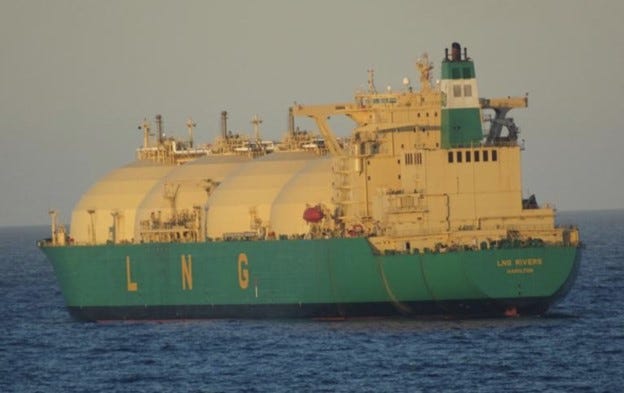
Russia’s Shadow LNG Fleet: Can Moscow Preserve Energy Revenues After the EU’s 2027 Import Ban?

Russia is actively developing a dedicated "shadow fleet" for the export of liquefied natural gas (LNG) in preparation for the European Union's planned ban on imports of Russian LNG, which is scheduled to take…
Read More
August 5, 2026Tags: LNG, Russia, shadow fleet
Managing Dependence: Why France and Germany Continue Cooperation with Rosatom
Posted inEconomy Energy Geoeconomics

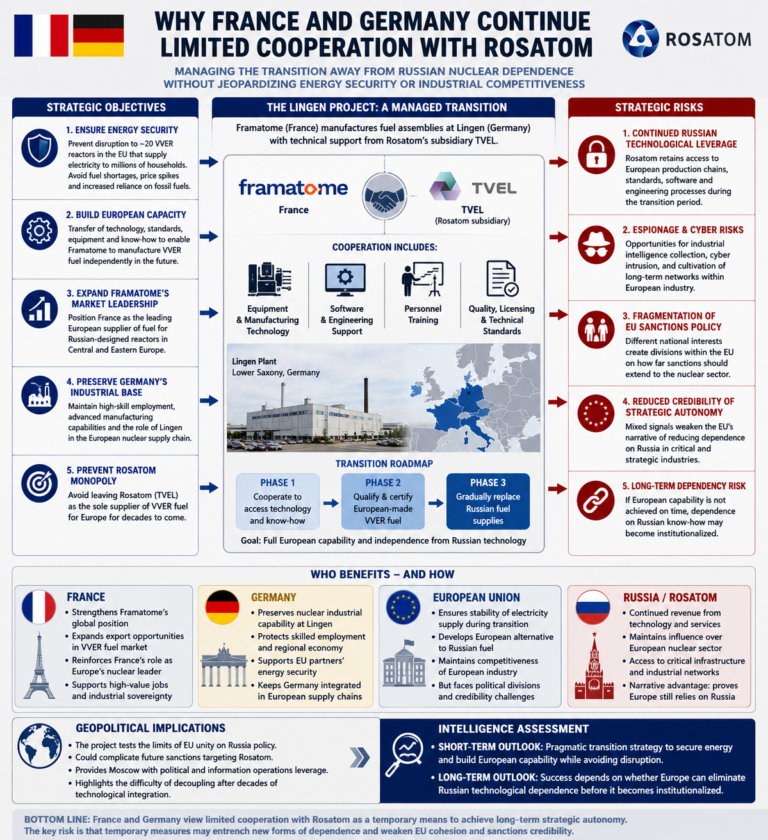
Managing Dependence: Why France and Germany Continue Cooperation with Rosatom

Environmental and anti-nuclear organizations staged a protest outside the nuclear fuel manufacturing plant in Lingen, Lower Saxony, following the approval of the facility's cooperation with the Russian state nuclear corporation Rosatom. The…
Read More
July 28, 2026Tags: Framatom, Rosatom
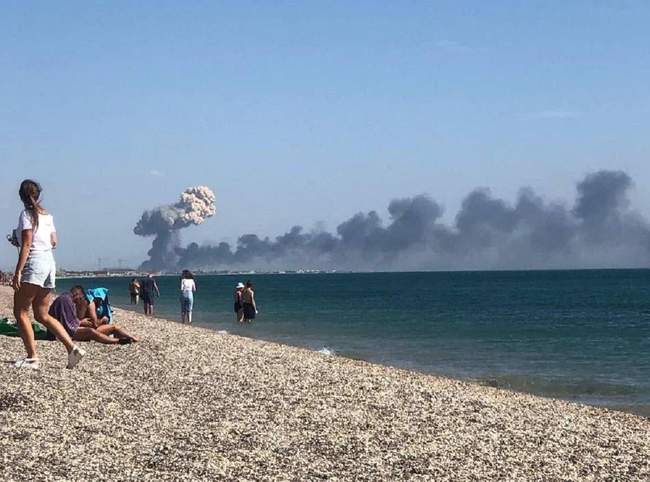
Crimea’s Tourism Collapse: How Ukrainian Deep Strikes Are Increasing the Long-Term Cost of Russia’s Occupation
Posted inEconomy Governance

Crimea’s Tourism Collapse: How Ukrainian Deep Strikes Are Increasing the Long-Term Cost of Russia’s Occupation

The Russian government has approved the allocation of more than 4.3 billion rubles to support the tourism sector in occupied Crimea and Sevastopol. The funds are intended to finance one-time payments to…
Read More
July 13, 2026Tags: Russia
Exhaustion Versus Innovation: Russia’s Economic Constraints and the Future of the War in Ukraine
Posted inEconomy Geoeconomics

Exhaustion Versus Innovation: Russia’s Economic Constraints and the Future of the War in Ukraine

Recent statements by U.S. representatives at the United Nations signal a notable shift in Washington's messaging toward Moscow. Rather than focusing exclusively on military developments, U.S. officials increasingly emphasize the…
Read More
June 23, 2026Tags: Russia, Ukraine
The Potash Trap for Washington: How Minsk and Moscow Are Seeking to Leverage U.S. Interest in the Nezhinsky Potash Project to Undermine the Sanctions Regime
Posted inEconomy Geoeconomics Geopolitics National Security

The Potash Trap for Washington: How Minsk and Moscow Are Seeking to Leverage U.S. Interest in the Nezhinsky Potash Project to Undermine the Sanctions Regime

In December 2025 and again in March 2026, the U.S. Treasury Department's Office of Foreign Assets Control (OFAC) eased certain restrictions affecting Belarus's potash sector and selected financial institutions. Reuters…
Read More
June 8, 2026Tags: Belarus, Russia, Sanctions, USA
Denmark’s Sanctions Loophole: How Fayard Helps Sustain Russia’s Arctic LNG Fleet
Posted inEconomy Geoeconomics Governance

Denmark’s Sanctions Loophole: How Fayard Helps Sustain Russia’s Arctic LNG Fleet

Despite the tightening of EU sanctions policy and public criticism from the Danish government, one of Europe’s largest shipyards—the Danish shipbuilding company Fayard—continues to service ice-class LNG carriers that facilitate…
Read More
June 2, 2026Tags: Denmark, Russia, Sanctions
From Georgia to Armenia: Russia’s Use of Economic Warfare to Preserve Regional Influence
Posted inEconomy Geoeconomics

From Georgia to Armenia: Russia’s Use of Economic Warfare to Preserve Regional Influence

Russia’s Federal Service for Surveillance on Consumer Rights Protection and Human Wellbeing (“Rospotrebnadzor”) announced the suspension of sales and the withdrawal from circulation in Russia of wines and cognacs produced…
Read More
May 25, 2026Tags: Armenia, Georgia, Russia
Tajikistan’s Strategic Pivot Toward China: Consequences for Russia and the Future Balance of Power in Central Asia
Posted inEconomy Geoeconomics Geopolitics

Tajikistan’s Strategic Pivot Toward China: Consequences for Russia and the Future Balance of Power in Central Asia

President of Tajikistan Emomali Rahmon held a meeting with executives and representatives of Chinese companies, during which the parties discussed expanding trade and investment cooperation and launching new joint projects. Dushanbe is intensifying…
Read More
May 13, 2026Tags: China, Russia, Tajikistan, USA
The Russian Factor in the Middle East War:Economic Parasitism and the Kremlin’s Destabilization Strategy
Posted inConflict Economy Energy Geoeconomics Geopolitics

The Russian Factor in the Middle East War:Economic Parasitism and the Kremlin’s Destabilization Strategy

The war in the Middle East around Iran has become not only a regional conflict but also an instrument of global economic and geopolitical competition. The primary beneficiary of this instability…
Read More
April 30, 2026Tags: China, Iran, Russia, USA

Posts pagination

1 2 3 4 Next page

Partner Institutes

The Center for Nationalism Studies (CNS)

Headquarter: director@lansinginstitute.org

Africa: africa@lansinginstitute.org

America: america@lansinginstitute.org

Asia: asia@lansinginstitute.org

Europe: europe@lansinginstitute.org

Headquarter:
19 Holly Cove Ln., Dover,  Kent,  Del., 19901.

Phone: +1 302.499.20.07

European branch:
La Grande Arche – Paroi Nord La Défense FR,
1 Tunnel de Nanterre-La Défense, 92044 Paris, France
Phone: +33 695.42.57.44

Copyright 2019-2026— Robert Lansing Institute e. All rights reserved.
Scroll to Top