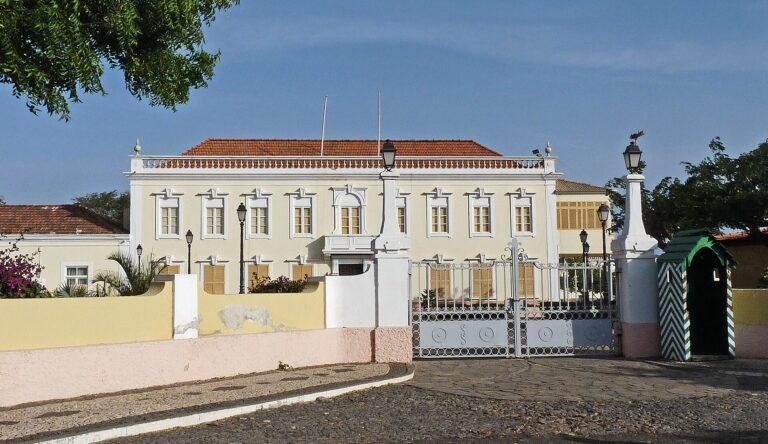
Cabo Verde will hold its presidential election on November 15, 2026, with a second round scheduled for November 29 if no candidate secures an absolute majority. The election comes six months after a significant political transition: the African Party for the Independence of Cabo Verde (PAICV) defeated the Movement for Democracy (MpD) in May’s parliamentary election, ending a decade of MpD-led government. The presidential contest will therefore take place in a substantially altered political environment. PAICV now controls the government under Prime Minister Francisco Carvalho, while incumbent President José Maria Neves, historically associated with PAICV, is seeking another five-year term. Six presidential candidacies have been formally admitted. The election’s significance extends beyond domestic politics. Cabo Verde occupies a strategically important position in the Atlantic between West Africa, Europe, and the Americas. Its political stability, maritime jurisdiction, and international partnerships make it relevant to transatlantic security, counternarcotics cooperation, migration, and growing competition for diplomatic and economic influence in Africa. The election will test Cabo Verde’s political balance after the May 2026 change of government. The relationship between the presidency and the PAICV-led cabinet will influence institutional coordination, public accountability, and foreign-policy continuity. Economic performance is a central political issue. Tourism-driven growth contrasts with persistent poverty, dependence on external markets, and vulnerability to energy prices and international shocks.The country has strategic value disproportionate to its population and economic size. Its Atlantic location makes maritime security, fisheries, transport, and international infrastructure partnerships important elements of foreign relations. . Foreign influence is principally a question of economic and diplomatic relationships. Portugal, the European Union, the United States, and China have different interests in Cabo Verde. Evidence of legitimate foreign engagement should not be confused with evidence of covert electoral interference. Organized crime is a significant national security concern. Cabo Verde’s location near transatlantic trafficking corridors creates incentives for criminal networks to exploit maritime and commercial vulnerabilities. 6. The principal post-election questions concern institutional cooperation and policy implementation. The presidency’s relationship with parliament and the government will matter for the country’s international commitments and domestic reform agenda. Political Environment: A New Balance of Power Cabo Verde is one of West Africa’s established multiparty democracies, with a political system historically dominated by PAICV and MpD. The May 17, 2026 parliamentary election changed the governing balance. PAICV secured 37 seats in the 72-member National Assembly, compared with 33 for MpD and two for the Democratic and Independent Cape Verdean Union (UCID). Francisco Carvalho subsequently became prime minister on June 19. National Assembly composition after May 2026 PAICV: 37, MpD: 33, UCID: 2. The parliamentary result was accompanied by voter turnout of just 46.5%, highlighting the importance of political participation and the challenge of engaging citizens who remain outside the electoral process. The transition was conducted through established democratic procedures, with international observers and analysts noting the orderly conduct of the election and acceptance of the results. For the November presidential election, the central political question is how the presidency will function alongside a newly elected parliamentary majority. Although the president does not directly manage daily economic policy, the office carries important constitutional, representative, and institutional responsibilities. A president politically associated with the governing party could facilitate coordination, while a president with a different political background could introduce additional institutional scrutiny. Neither arrangement necessarily determines the quality of governance; much depends on the conduct of officeholders and constitutional practice. Principal Political Actors and Presidential Candidates The National Election Commission has confirmed six candidates. Two have explicit support from the country’s principal political parties, while four are standing as independents. Mr. José Maria Pereira Neves – REBRANDING AFRICA FORUM…
Zhejiang Chouzhou Commercial Bank as Part of the Financial Infrastructure for Sanctions Evasion and an Indicator of the Limits of U.S. Economic Pressure The Wall Street Journal investigation into the…
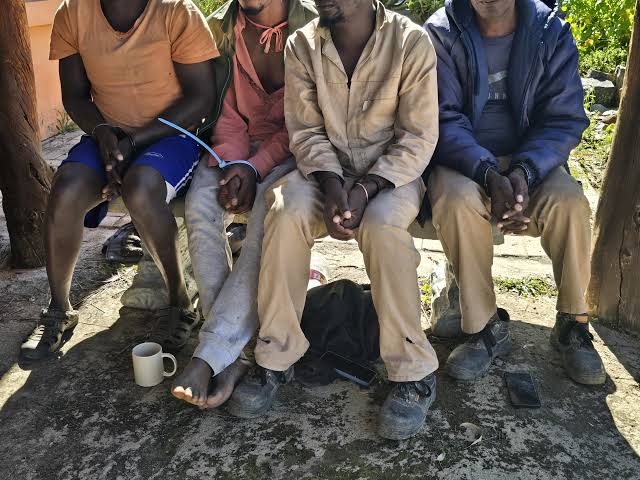
Africa is rapidly evolving from a transit corridor for Latin American cocaine into a major logistics, distribution, and methamphetamine production hub. Latin American cartels are expanding their partnerships with African criminal organizations, while European networks increasingly exploit African routes to access lucrative consumer markets. Libya’s growing importance as a trafficking corridor, combined with rising cocaine seizures in Tunisia, indicates that drug trafficking is expanding beyond traditional West African routes toward North Africa and the Mediterranean. The principal strategic threat is the growing integration of organized crime into African political institutions, security structures, and armed-group financing. This development threatens regional stability while creating new security vulnerabilities for Europe and the United States. Expansion of the Global Narcotics Economy Global cocaine production has reportedly reached approximately 4,100 metric tons, four times the level recorded a decade earlier. The global cocaine economy is valued at an estimated $218–374 billion, while annual cocaine seizures in West Africa have increased from approximately one metric ton in 2018 to around 30 metric tons in recent years. Three factors explain Africa’s growing importance: expanding European demand, intensified interdiction along traditional Atlantic routes, and weak governance in parts of Africa. Latin American criminal organizations are diversifying their operations by using African partners for transportation, storage, financial transactions, and local protection. This decentralized model reduces their dependence on individual trafficking routes and makes international law-enforcement operations more difficult. Libya and Tunisia: An Emerging Mediterranean Corridor Libya is becoming an increasingly attractive location for narcotics transit, storage, and redistribution. Its fragmented security institutions, competing armed groups, and connections to the Sahel create opportunities for trafficking networks. Tunisia’s cocaine seizures increased from 33 kilograms in 2024 to 94 kilograms in 2025 and more than 101 kilograms during the first nine months of 2026. Its approximately 460-kilometer border with Libya represents an important vulnerability. However, increasing seizures may also reflect stronger law enforcement rather than trafficking growth alone. Libya’s significance lies in its potential to connect established West African trafficking networks with North African and Mediterranean markets. This does not mean that Libya has replaced traditional Atlantic routes, but rather that criminal organizations are developing additional logistical options. The emergence of cocaine shipments from European ports toward Tunisia also suggests that North Africa is becoming a consumer and redistribution market, rather than functioning exclusively as a transit corridor to Europe. Latin American Cartels and African Criminal Partnerships Several major criminal organizations are expanding their African operations. Brazil’s Primeiro Comando da Capital (PCC) has developed relationships with Nigerian criminal networks and reportedly operates through several West African countries. Its influence over transportation and distribution makes it an important actor in transatlantic cocaine trafficking. Mexico’s Sinaloa Cartel and Jalisco New Generation Cartel (CJNG) are associated with the international expansion of synthetic-drug markets. Mexican nationals have been implicated in methamphetamine laboratories discovered in African countries, although their involvement does not necessarily establish direct cartel ownership. Colombian organizations, including Clan del Golfo, maintain international trafficking relationships involving African and European intermediaries. European criminal organizations, particularly Italy’s ‘Ndrangheta, Dutch-Belgian networks, and Western Balkan groups, play important roles in wholesale cocaine distribution. The resulting system is increasingly interconnected: Latin American organizations provide access to drug supplies, African networks facilitate local operations, and European criminal groups control important distribution markets. Africa is therefore becoming an operational component of global organized crime rather than merely a geographic transit point. Methamphetamine Production and Criminal Expansion The emergence of methamphetamine laboratories in South Africa, Nigeria, Kenya, and Mozambique represents a significant change in Africa’s role in the international narcotics economy. Unlike cocaine, methamphetamine can be manufactured wherever criminal organizations obtain the necessary chemicals, technical expertise, and facilities. The Africa Center for Strategic Studies reports that Mexican nationals were arrested in 11 of 12 raids on African methamphetamine laboratories supported by U.S. intelligence. The financial incentives are substantial. Methamphetamine reportedly manufactured in Africa at approximately $1,500 per kilogram can command much higher prices in Asian and Oceanian markets. The strategic danger is that manufacturing requires durable local infrastructure and relationships. These can create opportunities for criminal organizations to corrupt officials, establish protection arrangements, and penetrate legitimate businesses. Drug Trafficking, Armed Groups, and Political Corruption The expansion of narcotics trafficking may strengthen armed groups operating across the Sahel and North Africa. Criminal networks can pay armed intermediaries for territorial access and protection, potentially generating revenues that sustain conflict economies. However, such payments do not necessarily demonstrate that entire militant organizations directly control trafficking operations.…
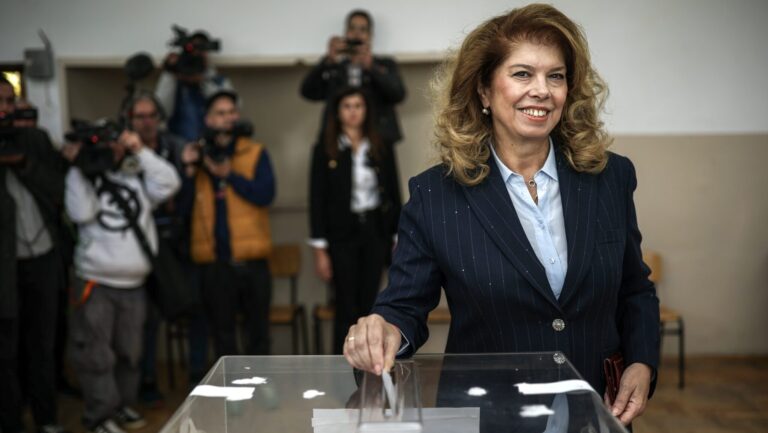
According to the reported results of the second round of the presidential election on November 1, 2026, Iliana Iotova’s victory with approximately 58% of the vote creates conditions for closer…
Volkswagen’s deteriorating financial performance creates new opportunities for political mobilization over the future of Germany’s automotive industry. Alice Weidel, co-chair of Alternative for Germany (AfD), cited reports of the group’s…
The detention in Germany of two Belarusian citizens suspected of preparing arson attacks near a railway line and a power transmission line, together with an investigation into their possible involvement…