
- On December 1, 2025, the then-Defence Minister Mohammed Badaru Abubakar resigned, officially citing health reasons.
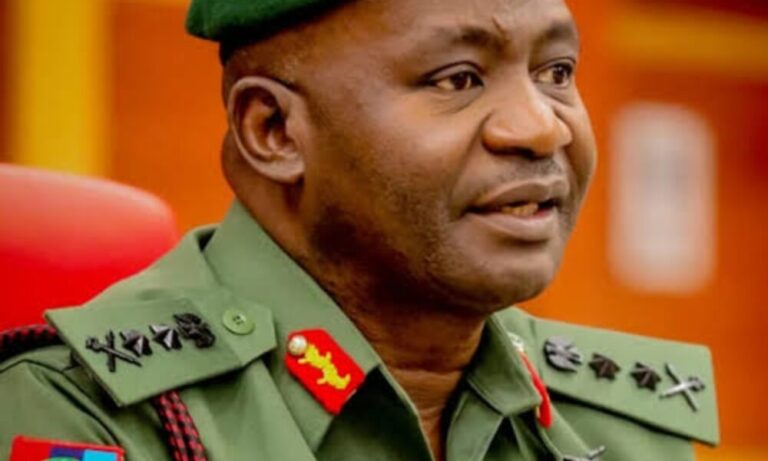
- Within 24 hours, President Tinubu nominated former Chief of Defence Staff Christopher Musa as the new Minister of Defence.
- This followed a broader reshuffle of military leadership just weeks earlier (late October 2025), when Tinubu replaced all Service Chiefs — a move justified by the presidency as meant to “inject new direction” into the Armed Forces.
1. Response to Security Crisis and Political Pressure
- Nigeria is facing a sharp intensification of violence and kidnappings, especially in the north. Recent mass abductions — including of schoolchildren — triggered a nationwide security emergency declaration.
- The resignation (or dismissal) of Badaru Abubakar serves as a signal of accountability; by changing leadership, Tinubu shows he’s responding to public outrage and attempting to restore trust.
- Appointing Christopher Musa — a career military general with frontline and command experience — signals a shift toward a more professional, operationally focused defence leadership instead of political appointees.
Consolidation of Military Loyalty and Control
- The broader October reshuffle of Service Chiefs suggests that the government feels insecurity not just from insurgents/terrorists but risk of internal dissent or coup plotting. The shake-up may aim to ensure loyalty across the chain of command
- Bringing Musa (recently CDS) into a civilian-minister role effectively consolidates both civilian oversight and military command under one trusted figure, tightening Tinubu’s control over the security apparatus during a turbulent period.
Improving Security Strategy with “Hands-on” Leadership
- Civilian ministers without deep security backgrounds (like Badaru, a former state governor) tended to struggle with operational complexities. The replacement with an ex-senior military official suggests a push for competence and effectiveness over political patronage. This might reflect recognition that previous approach failed to curb banditry and kidnappings.
- The government likely aims to reinvigorate counter-insurgency strategy, with Musa’s background in anti-terror operations (e.g., Boko Haram fronts) seen as relevant for current security emergencies.
Political Signaling — Both Domestic and International
- Domestically: by making tough leadership decisions, Tinubu seeks to show he is serious about security, possibly shoring up his political standing among discontented citizens, especially in regions most affected by violence.
- Internationally: with foreign criticism (for example from Western governments concerned about religiously-targeted violence, kidnappings, human rights) mounting, this reshuffle functions as a signal that Nigeria is committed to stabilizing security
Potential Risks / Challenges & Consequences (Short & Medium Term)
1. Risk of Escalation in Insecurity — “Restart” of Insurgents
- Leadership changes create temporary gaps in command continuity — insurgents or bandits may exploit these during transition.
- If the new leadership fails to quickly deliver tangible security improvements, public frustration may deepen, potentially fueling further instability.
2. Ethnic / Regional Tensions and Power Balances
- Nigeria’s political-military appointments often reflect delicate ethnic, regional, and religious balances. Musa comes from Sokoto (northwest) and likely has strong ties to northern military constituencies
- Some southern or minority-region groups might perceive the shift as consolidation of northern-military dominance, which could exacerbate regional suspicions — especially given recent high-profile atrocities and reports of religious-sectarian violence.
- If the government fails to effectively engage with root causes (poverty, marginalization, weak governance), the new militarized approach might deepen alienation.
Civil-Military Relations and Oversight Concerns
- Appointing a former CDS as Defence Minister blurs lines between military command and civilian oversight. While this may improve coordination, it also consolidates power in military hands. Over time, this risks undermining democratic accountability.
- Potential for increased human-rights abuses if security forces are given broad mandate, especially in poorly governed or politically charged regions.
Public Expectations vs. Reality: Risk of Disillusionment
- Many Nigerians may expect swift, dramatic improvements — end to kidnappings, safer roads, restored trust in security. If these don’t materialize quickly, the reshuffle may be seen as cosmetic or a political maneuver.
- Opposition politicians and civil society already warn that simply changing the Defence Minister is “not enough” without transparency about who funds terrorism, deeper governance reform, and clarity on conflict root causes
Longer-Term Aims — What Tinubu May Be Trying to Achieve
- Rebuild institutional trust in the military and security sector by installing leadership perceived as competent and non-sectarian.
- Project stability to foreign investors, partners, and donors — improved security is a precondition for foreign direct investment and international aid.
- Reset civil-military dynamics under a leader acceptable to both military rank-and-file and civilian political structures — possibly to prevent future coup attempts.
- Provide a plausible foundation for implementing broader “state of emergency” security reforms (police recruitment, frontier security, anti-terror campaigns) with a “hard hand.”
Ethnic / Regional / Political Fallout — What’s at Stake for Nigeria’s Internal Balance
- Northern military dominance may increase with Musa’s appointment. That could create resentment in southern and Middle-belt states already feeling threatened by insecurity and past abuses.
- If misuse of force or human rights abuses disproportionately hit particular ethnic or religious communities (e.g., minorities in the north, Christian-majority zones), this may exacerbate sectarian tensions and cycles of reprisal.
- On the other hand, if the reshuffle leads to more effective, non-sectarian security operations, and if the government complements it with socio-economic development, the move could help restore national cohesion — but that requires discipline, transparency, and institutional reform, not just personnel changes.
Change Was Necessary — But Success Depends on Implementation
President Tinubu’s decision to replace the Defence Minister (and reshape military leadership) appears inevitable and logical given Nigeria’s severe security crisis. The appointment of a seasoned general reflects a desire for competence over patronage, and may help restore some command coherence.
However, the real test will be whether this reshuffle is followed by:
- concrete security improvements,
- respect for human rights and minority protections,
- transparent communication about government strategy,
- socio-economic responses to underlying grievances.
If not, the change risks being symbolic, or even counter-productive — increasing ethnic divisions or fueling disillusionment.In short: Tinubu grabbed a necessary lever — but the engine still needs to be rebuilt from the cylinders up.