

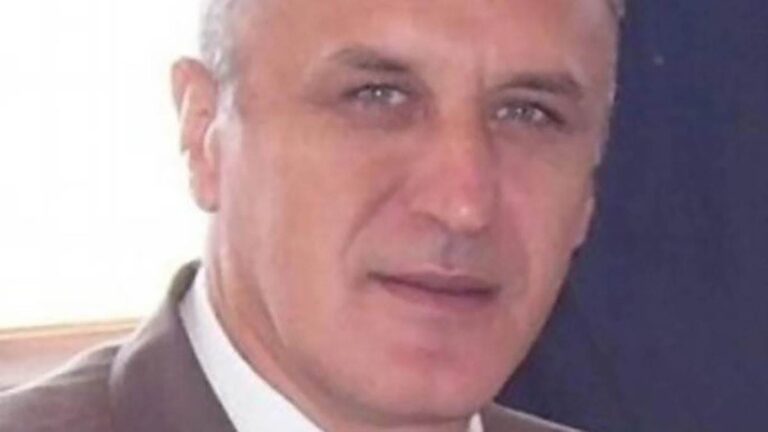
On 17 November 2025, Radomir Kurtić, a long-tenured employee and representative of Serbia’s state-owned arms-trade company Yugoimport SDPR, was found dead on a street in Moscow. Serbian services reportedly briefed President Aleksandar Vučić, while Russian investigative bodies have not provided Serbia with official/forensic informationweeks later. A company commission later found missing documents (printed + digital) and missing computer hard drives from the Moscow office.
This cluster—death in public space + prolonged silence + post-event removal of office data—creates a reasonable basis for competing hypotheses ranging from mundane (accident/medical event) to coercive state action (counterintelligence sweep or political intimidation). The most analytically useful approach is to treat it as a security incident with potential political signaling, not only a criminal case.
Facts reported
Core event
- Kurtić died 17 Nov 2025 on a street in Moscow; Serbian side describes circumstances as unclear/suspicious.
- Serbian authorities state they have not received Russian forensic reports or official details
Office anomaly
A Jugoimport SDPR commission inspected the Moscow office and determined that many documents were missing, including digital materials and hard drives.
Jugoimport publicly said a three-member commission was formed for an extraordinary inventory; the commission reported missing documentation in printed and digital form.
Political handling
Vučić publicly cautioned against blaming anyone without evidence, while insisting Serbia must obtain full information from Russian state/security structures. Vučić also indicated Serbia knows some items are missing (hard drives/other things) but said it may not be directly connected and could reflect a “routine” security action.
Strategic context: why this case is unusually sensitive
Yugoimport SDPR’s role
Yugoimport SDPR describes itself as a state-owned enterprise focused on trade in armaments/defense equipment and technology transfer
That means a representative office in Moscow sits at the intersection of:
commercial contracting, export-control compliance, political relationships,
and (in Russia especially) an active counterintelligence environment.
Serbia–Russia friction over ammunition flows toward Ukraine
In 2025, reporting and official statements increased about Serbian-made ammunition reaching Ukraine via third countries, creating periodic tension with Moscow
This matters because a Moscow-based representative of Serbia’s largest defense-trade entity can be viewed—fairly or not—as:
a node in sensitive information flows (clients, intermediaries, end users), and a potential leverage point for political signaling.
Hypothesis set (ranked by plausibility under current evidence)
Below are competing explanations. “Plausibility” is about fit with the observed pattern, not proof.
H1 — Russian security “routine action” + administrative cover story
Claim: Kurtić’s death could be unrelated (medical event/accident), while the office “missing” hard drives/documents result from a Russian security search/seizure (formal or informal), done as standard practice when a foreign defense-trade official dies unexpectedly.
Why it fits
Vučić himself floated the possibility of a routine security action after identifying someone on the street. In Russia, unexpected deaths involving foreign-linked officials can trigger immediate evidence control by local authorities.
What would confirm it
A formal Russian record of seizure, chain-of-custody, inventory lists, warrants, or documented “inspection” logs. Consular access details and a clear medical/forensic determination.
Assessment: Moderate plausibility given Russia’s non-transparency and Vučić’s framing, but it still doesn’t explain the length of silence.
H2 — Counterintelligence sweep tied to arms-trade sensitivities (pressure, not necessarily murder)
Claim: Regardless of the immediate cause of death, Russian services used the incident to conduct a targeted collection/containment operation against Yugoimport’s Moscow office—removing data relevant to arms networks, intermediaries, or other sensitive contacts.
Why it fits
The missing items are precisely the assets of intelligence interest: digital records, hard drives, and documents.
The broader climate includes Russian accusations and irritation about Serbian ammunition reaching Ukraine indirectlyWhat would confirm it.
Signs the office was entered professionally (no opportunistic theft pattern).
Russian “requests” to Belgrade or SDPR around specific files/people/contracts.
Any subsequent Serbian policy shifts (export pauses, personnel changes, muted messaging).
Assessment: Moderately high plausibility as a secondary action (what happened after death), even if it doesn’t determine cause of death.
H3 — Political intimidation / “message” operation (including the possibility of foul play)
Claim: Kurtić’s death (or the handling of it) is intended to signal to Serbia: “we can reach your defense networks in Moscow; adjust behavior.” This does not require that Russian state actors caused the death; it could be opportunistically framed and exploited.
Why it fits
What would confirm it
Assessment: Moderate plausibility as an explanation of handling; low-to-moderate on causation until forensic facts emerge.
H4 — Internal corruption/embezzlement + evidence removal (non-state actors or mixed)
Claim: The missing documents/hard drives reflect financial irregularities or illicit side deals (commissions, intermediaries, kickbacks). Death could be accidental or connected (silencing, dispute).
Why it fits
Defense procurement/trade offices often accumulate sensitive financial and contact records; Missing both paper and digital records is consistent with evidence cleanup.
What would confirm it
Discrepancies found in SDPR’s internal audit, unexplained payments, contested contracts, insider disputes.
Attempts to access accounts after death, staff resignations, or compartmentalized documentation.
Assessment: Moderate plausibility, but currently speculative without corroborating financial indicators.
H5 — Pure accident/medical event + unrelated burglary
Claim: Kurtić died of natural causes/accident; office losses are a separate criminal event.
Why it’s weaker
Random burglars typically steal valuables; here the emphasis is on documents and hard drives—items that are not the usual target unless they contain something valuable to a specific actor.
What would confirm it
Clear forensic cause of death (stroke, cardiac event, etc.) and documented, ordinary burglary pattern.
Assessment: Lower plausibility due to the specificity of what went missing and the diplomatic/forensic opacity.
Key analytic questions (what matters most for attribution)
Cause and manner of death (natural/accident/suicide/homicide/undetermined) — currently unknown publicly;
Timeline control: when exactly did the office lose hard drives/docs—before discovery of the body, immediately after, or after Serbian commission arrived? (This separates “cleanup” from “official seizure.”)
Who had access? Building access logs, landlord/security CCTV, Russian police logs, any custody paperwork.
What was on the drives? Client lists, intermediaries, end-user docs, shipping/finance records—high intelligence value in the current climate.
Russian response pattern: refusal to share even basics with Serbia’s embassy/partners is itself an indicator of political sensitivity
Implications (if the incident is exploited as leverage)
For Serbia / SDPR
Operational security shock: Expect SDPR to assume Moscow office communications were compromised and rebuild secure channels.
Export-control tightening: Belgrade may further centralize approvals and reduce ambiguity around end users to limit Russian leverage narratives.
Personnel risk: Any SDPR staff with Moscow-facing roles may be treated as high-risk targets for coercion/collection.
For Russia–Serbia relationsEven if Moscow did not cause the death, the non-cooperation and information withholding can be used to discipline “gray-zone” partners—especially when Russia is sensitive to ammunition flows to Ukraine.

More on this story: Iranian ambassador’s adviser dies in Moscow: murder or mishap?