

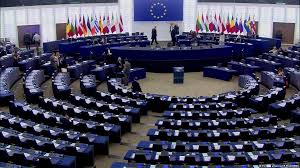
During a debate in the European Parliament titled “Cases of Pro-Russian Espionage in the European Parliament,”participants stated the need to establish a special body tasked with investigating the possible involvement of certain Members of the European Parliament (MEPs) in espionage activities on behalf of foreign states, particularly Russia.
“This is not a war waged with weapons, but with envelopes of cash,” said Czech MEP Tomáš Zdechovský of the European People’s Party. He described the situation as a direct threat to the security of the European Union.
Dutch MEP Reinier van Lanschot of the Greens group proposed the creation of a parliamentary ethics body and granting the European Parliament the authority to conduct its own investigations.
In recent years, several espionage scandals have erupted in the European Parliament, involving both former and current MEPs. Accusations of excessive loyalty to Moscow and the dissemination of pro-Russian narratives are most often directed at representatives of left-wing and far-right political groups.
In the spring of 2024, investigative journalists published a report accusing Latvian MEP Tatjana Ždanoka of long-term cooperation with Russia’s Federal Security Service (FSB). In November 2025, former European Parliament member Nathan Gill was sentenced in the United Kingdom to 10.5 years in prison for accepting bribes in exchange for lobbying Russia’s political interests in Europe and spreading Kremlin-friendly narratives about Ukraine.
Current MEP Petr Bystron, a politician from Germany’s right-wing populist party Alternative for Germany (AfD), was accused of receiving bribes from Russian representatives and of active involvement in the pro-Kremlin media platform Voice of Europe during his time as a member of the Bundestag.
For Russia, the European Parliament represents a strategic platform of influence through which Moscow seeks to directly interfere in EU decision-making processes. The Kremlin’s objective is to weaken European unity by using elected officials as conduits for its narratives, thereby fostering internal divisions. In the context of Russia’s war against Ukraine, espionage in the European Parliament is part of a broader hybrid warfare strategy aimed at undermining democratic institutions.
Russian espionage in the European Parliament should be viewed as an element of a long-term strategy to penetrate European decision-making centers. Moscow invests for years in political connections, corruption, and information influence, waiting for moments of crisis. Each exposed case of pro-Russian espionage damages the reputation of EU institutions, making it clear that the EU’s response must be systemic rather than ad hoc.
Far-right and far-left political forces in the European Parliament often act as political allies of the Kremlin, openly criticizing sanctions against Russia and blocking assistance to Ukraine. These groups are particularly active in promoting narratives such as “peace at any cost,” “war fatigue,” and the “responsibility of the West.” Their activities create a favorable environment for Russian influence even without direct espionage. In this sense, ideological sympathy for Moscow often serves the same function as traditional intelligence operations.
The initiative to establish a special body to investigate espionage in the European Parliament signals a shift toward a systematic policy of institutional self-defense within the EU. It reflects growing awareness among MEPs of internal vulnerabilities and a willingness to confront the problem openly rather than conceal it. Such a step sends a signal both to EU citizens and external actors that the infiltration of influence agents will no longer be treated as a marginal security issue.
Strengthening the fight against Russian espionage in the European Parliament is impossible without deeper coordination among the national security services of EU member states. Intelligence sharing, harmonized investigative standards, and joint response mechanisms would help prevent individual countries from becoming “weak links” in the system.
The European Union is gradually approaching the necessity of creating a full-fledged supranational counterintelligence body to protect its institutions from external interference. Unlike existing coordination mechanisms, such a structure would possess its own analytical and investigative powers and operate independently of national political cycles. Its establishment would constitute institutional recognition that Russia’s hybrid war represents a long-term threat requiring a permanent and systemic response.
Extended Analysis: Russian Espionage and Influence Operations in the European Parliament
The European Parliament has increasingly emerged as a priority target for Russian intelligence and influence operations. Unlike national parliaments, it combines legislative authority, access to classified or semi-classified policy discussions, and symbolic legitimacy as the democratic voice of the European Union. This makes it a uniquely valuable platform for Moscow’s long-term hybrid warfare strategy.
The European Parliament as an Intelligence Target
For Russian intelligence services, particularly the Federal Security Service(FSB) and the Foreign Intelligence Service (SVR), the European Parliament offers several operational advantages. First, MEPs enjoy extensive mobility across the EU, access to policymakers at both EU and national levels, and regular contact with diplomats, lobbyists, journalists, and civil society actors. Second, parliamentary immunity and weak internal oversight mechanisms historically limited the scope of preventive counterintelligence measures.
Unlike national legislatures, the European Parliament has no permanent internal counterintelligence or investigative body with coercive powers. Responsibility for security risks is largely outsourced to national authorities, creating jurisdictional fragmentation. This institutional gap has allowed foreign intelligence services to exploit differences in threat perception, political will, and intelligence capabilities among EU member states.
Corruption as an Instrument of Hybrid Warfare
Russian intelligence operations within the European Parliament rely less on classic espionage techniques and more on corruption-based recruitment and influence. Financial inducements, opaque funding of political activities, and indirect remuneration through media platforms or “consulting” roles have proven particularly effective. As Czech MEP Tomáš Zdechovský aptly noted, this is “warfare conducted not with weapons, but with envelopes of cash.”
Investigative reporting has repeatedly shown that Russian-linked funds are often laundered through intermediaries, front organizations, or nominally independent media projects. The case of Voice of Europe—a pro-Kremlin media platform used to amplify narratives hostile to Ukraine and EU sanctions—illustrates how information influence and financial corruption converge. Several European politicians have been accused of cooperating with the platform while receiving undeclared benefits, blurring the line between propaganda dissemination and covert political lobbying.
Ideological Alignment as a Force Multiplier
While direct bribery and recruitment remain central tools, Moscow increasingly relies on ideological alignment as a low-cost, low-risk force multiplier. Far-right and far-left political groups within the European Parliament frequently converge with Kremlin interests on key strategic issues: opposition to sanctions, hostility toward NATO, skepticism of transatlantic cooperation, and narratives portraying Ukraine as a Western proxy.
This convergence does not always require formal coordination. In many cases, ideological sympathy alone produces the desired effect—blocking resolutions, diluting policy language, or amplifying narratives about “peace at any cost” and “war fatigue.” From a counterintelligence perspective, such actors perform functions similar to intelligence assets, even in the absence of direct operational control.
The case involving politicians from Germany’s Alternative for Germany demonstrates how ideological proximity to Moscow can coexist with alleged financial ties, creating layered influence channels that are difficult to disentangle legally and politically.
Damage to Institutional Credibility
Each public exposure of pro-Russian espionage or influence operations inflicts reputational damage on the European Parliament as an institution. The cumulative effect is erosion of public trust, reinforcement of Eurosceptic narratives, and increased vulnerability to external disinformation campaigns portraying the EU as corrupt or dysfunctional.
From Moscow’s perspective, even failed or exposed operations can be strategically beneficial. Scandals fuel polarization, undermine institutional legitimacy, and distract EU leadership from external policy challenges. This logic mirrors Russian information operations in national political systems, where destabilization is often valued over direct policy wins.
The Limits of Current Countermeasures
Current EU responses remain largely reactive and fragmented. While national intelligence services have successfully investigated individual cases—such as the conviction of former MEP Nathan Gill in the United Kingdom—these actions depend heavily on national legal frameworks and political willingness. As a result, enforcement is uneven, and intelligence-sharing remains ad hoc.
Moreover, political considerations often constrain decisive action. Parties are reluctant to acknowledge internal vulnerabilities, fearing electoral backlash or reputational harm. This creates incentives for institutional denial and delays systemic reform.
Toward a Supranational Counterintelligence Architecture
The growing recognition of Russian espionage in the European Parliament has revived discussions about creating a supranational counterintelligence body within the EU. Unlike existing coordination mechanisms, such a structure would require independent analytical capacity, investigative authority, and the ability to operate across jurisdictions.
Its mandate would not replace national services but complement them—focusing specifically on EU institutions, foreign influence networks, and cross-border political corruption. Crucially, it would need insulation from short-term political pressures and electoral cycles to remain effective against long-term hybrid threats.
The establishment of such a body would constitute an institutional acknowledgment that Russia’s hybrid war against the EU is not episodic but structural. It would signal that influence operations targeting democratic institutions are treated as strategic security threats rather than isolated ethical violations.
Strategic Implications
Russia’s espionage and influence operations in the European Parliament should be understood as part of a broader effort to reshape Europe’s strategic posture from within. By exploiting democratic openness, political pluralism, and institutional fragmentation, Moscow seeks to weaken EU cohesion without direct military confrontation.
Failure to respond systematically risks normalizing foreign penetration of democratic institutions. Conversely, decisive action—rooted in transparency, accountability, and institutional reform—could significantly raise the cost of influence operations and reduce their effectiveness over time.
Why a Supranational Counterintelligence Body Risks Clashing with National Services
Creating a supranational counterintelligence body inside the European Union would inevitably generate friction with national security and intelligence services. These conflicts are not hypothetical—they are structural and predictable.
Sovereignty and Constitutional Constraints
Counterintelligence is among the most sovereignty-sensitive state functions. In many EU member states, intelligence services are constitutionally bound to protect national security exclusively under national authority. A supranational body with investigative powers could be perceived as infringing on constitutional prerogatives, especially in states with strong parliamentary oversight traditions or post-authoritarian sensitivities.
Risk:
National governments may resist cooperation, limit access to sensitive cases, or selectively withhold intelligence, undermining the body’s effectiveness.
Competition for Intelligence Control and Credit
Intelligence services are inherently competitive. Control over sources, cases, and analytical narratives translates into institutional power, budgetary leverage, and political relevance.
Risk:
A supranational body might be viewed as:
- siphoning off high-profile cases,
- exposing national failures,
- or claiming credit for operations conducted by national services.
This could incentivize defensive secrecy rather than cooperation.
Trust Deficits and Insider Threat Concerns
Not all EU intelligence services operate at the same counterintelligence standard. Some member states have:
- weaker vetting systems,
- higher corruption exposure,
- or documented penetration by Russian intelligence.
Risk:
Well-performing services may fear that shared intelligence will leak through weaker partners, effectively becoming accessible to hostile actors.
This is particularly sensitive in cases involving Russia, where historical penetration of some European services is well documented.
Legal and Procedural Fragmentation
EU member states differ radically in:
- evidentiary standards,
- surveillance authorization rules,
- definitions of espionage and foreign interference,
- thresholds for prosecution.
Risk:
A supranational body could identify a threat that national prosecutors are legally unable—or unwilling—to act upon, creating operational dead ends.
Politicization and Democratic Accountability
A powerful supranational counterintelligence body would inevitably become politically sensitive. Governments may fear it could:
- investigate ruling parties,
- expose foreign funding scandals,
- or influence electoral dynamics.
Risk:
States may seek to politicize appointments, limit mandates, or weaken oversight to control potential blowback.
How to Solve These Conflicts: Institutional Design Solutions
The key is complementarity, not substitution. A supranational counterintelligence body must be designed to supportnational services, not replace them.
Clear Mandate Delimitation
The supranational body should focus exclusively on:
EU institutions (European Parliament, Commission, agencies), cross-border foreign influence networks, hybrid threats targeting EU-level decision-making.
It should not:
- run classic HUMINT abroad,interfere in purely domestic security cases,
- or override national prosecutorial authority.
This mirrors the functional separation seen in bodies like Europol.
Analytical and Investigative Hub Model
Rather than acting as an operational spy service, the body should function as:
a centralized analysis and fusion center, a case-coordination authority for EU-level threats, a provider of counterintelligence risk assessments for EU institutions. Operational arrests, surveillance, and prosecutions would remain national responsibilities.
This avoids constitutional clashes while still closing intelligence gaps.
Tiered Intelligence Access System
To address trust asymmetries, intelligence sharing should be tiered:
Full access only for vetted liaison officers, Compartmentalized case files,
Need-to-know principles enforced by internal counterintelligence audits.
This model already exists in NATO intelligence structures and could be adapted at EU level.
Joint Task Forces Instead of Centralized Control
For major cases, the supranational body would convene joint counterintelligence task forces composed of:
selected national services, judicial representatives, EU institutional security officers.
This preserves national ownership while enabling coordinated action.
Independent Oversight and Depoliticization
To prevent politicization:
leadership appointments should require supermajority approval, oversight should include the European Parliament and independent judicial panels, mandates should be fixed-term and insulated from electoral cycles.
This reduces fears that the body could be weaponized against political opponents.
Evolution, Not Immediate Centralization
A realistic path forward is incremental expansion, building on existing structures like EU INTCEN:
Expand analytical authority, Add investigative coordination powers
Introduce limited case-initiation rights, Only later consider coercive authority (if politically viable).
This gradualism lowers resistance and allows trust to develop organically.
A supranational counterintelligence body will inevitably challenge entrenched national prerogatives—but not creating onecarries a greater long-term risk: persistent foreign penetration of EU decision-making structures.
The solution lies not in centralizing power, but in institutionalizing trust, coordination, and specialization. If designed as a shield for EU institutions rather than a rival to national services, such a body could significantly raise the cost of Russian espionage and influence operations—without fracturing the Union’s internal security architecture.
NATO model: “Federated intelligence” with strict compartmentation
What NATO shows
NATO has to make intelligence-sharing work among states with different laws, threat perceptions, and vulnerability levels—without creating a single “NATO spy service” that overrides national agencies.
Key features that reduce conflict:
National ownership of sources and operations: Nations collect; NATO largely fuses, assesses, and coordinates. That lowers sovereignty friction.
Liaison-based sharing: Intelligence flows through national liaison officers inside NATO structures—trust is personal and institutional.
Need-to-know + compartmentation: Even among allies, access is tiered; sensitive reporting stays restricted to vetted circles.
Common standards and security discipline: NATO relies on shared security policies (clearances, document handling, facility security) to prevent the “weakest link” problem.
Action through coalitions inside the alliance: For sensitive missions, NATO often functions via task-specific groupings (informal “coalitions of the willing” logic) where only the most trusted partners participate.
What to borrow for an EU supranational CI body
Make the EU body a fusion/CI coordination hub, not a full HUMINT service.
Run joint task forces with selected national services, rather than trying to command them.
Adopt NATO-style access tiers so stronger services don’t fear leakage via weaker partners.
Standardize vetting and secure handling for anyone accessing sensitive EU-institution CI cases.
NATO’s cautionary lesson
Even in NATO, sharing stops where trust stops. The practical implication for the EU: if you don’t solve compartmentation + vetting + enforcement, a supranational structure becomes a leak multiplier in the eyes of top-tier services.
U.S. federal–state model: “Central CI authority + task forces + fusion centers”
What the U.S. shows
The U.S. has a federal counterintelligence core, but internal security still depends on cooperation across thousands of state/local agencies with uneven capability and different political incentives.
Key features that reduce conflict:
Clear division of roles: Federal agencies (especially the FBI) lead on counterintelligence and foreign influence, while states/localities support with local coverage and enforcement where relevant.
Joint Terrorism Task Forces (JTTFs) logic: Multi-agency teams embed state/local officers into federal investigations under federal rules, training, and security controls.
Fusion centers: Intelligence “plugs” local data into broader threat pictures—useful, but only when governance and quality control are strong.
Federal prosecutorial backbone: When states can’t or won’t act, the federal level has its own legal tools—this reduces dead ends.
What to borrow for an EU supranational CI body
Create “EU Counterintelligence Joint Task Forces” focused on EU institutions and cross-border foreign interference, staffed by vetted national secondees. Use embedded staffing as trust-building: If national officers work inside EU CI structures, national services feel less “expropriated.” Build an EU-level investigative “case spine” for EU-institution threats: consistent standards, evidence protocols, and rapid deconfliction. Establish a credible escalation path when a member state is compromised or refuses to act (more on this below).
U.S. cautionary lesson
Fusion centers show the risk of variable quality + politicization + mission creep. An EU body that is broad, under-governed, or politically steered will lose credibility fast—and national services will quietly route around it.
How to translate these models into an EU design that avoids clashes
“NATO-style” compartmentation + “U.S.-style” task forces
Tiered access to sensitive cases (NATO logic), Joint task forces for operations and investigations (U.S. JTTF logic), EU body coordinates and verifies, nations execute coercive measures.
A “trust and standards” architecture
Common EU-institution security vetting standard for all secondees, Mandatory secure-handling rules and audit trails, Internal CI unit that investigates leaks inside EU institutions.
A realistic enforcement backstop
The EU lacks a direct equivalent to U.S. federal arrest/prosecution powers. To prevent dead ends:
Codify minimum investigative cooperation obligations for cases involving EU institutions,
Use conditional access (to sensitive briefings, committees, or certain files) as leverage for compliance,
Create formal referral pipelines to national prosecutors with standardized evidentiary packages.
“Coalitions inside the EU”
Borrow NATO’s pragmatic reality: some cases will only be shared with a subset of trusted partners. Make that legitimate and structured (not ad hoc), so it doesn’t fracture the system.