
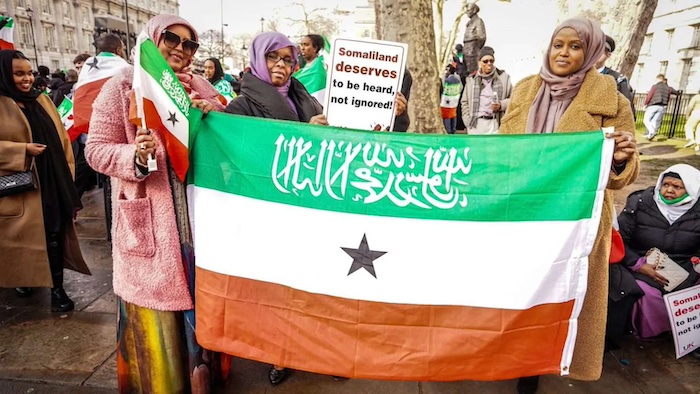
On 26 December 2025, Israel became the first United Nations member state to formally recognise the Republic of Somaliland as an independent and sovereign state, marking a historic diplomatic milestone in the Horn of Africa. The recognition was formalised through a joint declaration signed by Prime Minister Benjamin Netanyahu and Somaliland President Abdirahman Mohamed Abdullahi, establishing full diplomatic relations and pledging cooperation across economic, agricultural, technological, and security sectors
This decision — framed by Israeli leaders as inspired by the spirit of the Abraham Accords — has already triggered widespread controversy: Somalia and the African Union (AU) rejected the move as a violation of Somali sovereignty, while Egypt, Turkey, and other regional actors warned of destabilising effects.
Israel’s breakthrough recognition represents a major pivot in Horn of Africa geopolitics with far-reaching implications for regional alliances, Red Sea security, counterterrorism cooperation, the international law of statehood, and broader strategic competition among global powers.
Background: Somaliland’s Long-Standing Quest for Recognition
Somaliland, the northwestern region of Somalia, effectively seceded and declared independence in 1991 following the collapse of the Somali state. Since then, it has maintained its own government, currency, security forces, and relative stability, setting it apart from the conflict-ridden remainder of Somalia
Despite this de facto autonomy for more than three decades, no UN member state had formally recognised Somaliland’s statehood until Israel’s action in December 2025
Why Israel Recognised Somaliland
A. Strategic Interests and Red Sea Geopolitics
A central driver of Israel’s decision is geostrategic positioning around key maritime routes. Somaliland’s long coastline on the Gulf of Aden and proximity to the Bab el-Mandeb Strait — a strategic chokepoint linking the Red Sea with the Indian Ocean — makes it valuable for maritime security, trade flow monitoring, and military logistics
This calculus has intensified amid Red Sea insecurity, notably Houthi-linked attacks on international shipping tied to broader Middle Eastern conflicts; Israel is seeking allies with strategic locations to protect its interests and maintain secure sea lines of communication
B. Security Cooperation and Counterterrorism
Somaliland’s relative internal stability and local counterterrorism efforts contrast with broader instability in Somalia and adjacent regions. Israel is interested in security partnerships that can bolster intelligence sharing and anti-terror cooperation along critical trade routes.
C. Diplomatic Positioning After the Abraham Accords
Israeli officials presented the recognition as consistent with the Abraham Accords framework — a diplomatic agenda aimed at expanding Israel’s ties beyond the Middle East. Netanyahu described the move as “in the spirit” of these agreements, implying a broader vision of regional integration and peace cooperation.
D. Domestic Political Factors in Israel
Israel’s foreign policy calculus may also be influenced by domestic political imperatives. Premature and symbolic foreign policy achievements can be leveraged by political leaders for internal legitimacy and to signal strategic autonomy, particularly in election cycles or regional crises.
Reactions from Regional and International Actors
Somalia: Somalia’s federal government categorically condemned Israel’s recognition as illegal and a violation of its sovereignty and territorial integrity, stating that such recognition undermines international law and the UN Charter.
African Union and Neighbouring States: The African Union strongly rejected the recognition, reaffirming support for Somalia’s territorial unity and warning of dangerous precedents that could destabilise peace across Africa
Egypt, Turkey, and Djibouti, among others, also issued statements opposing Israel’s move, emphasising concerns about regional peace and the principle of territorial integrity upheld by international norms
Mixed Western Responses: While the United States has not followed Israel’s lead — with some U.S. officials expressing caution — the incident has reignited discussion about Somaliland’s status in capitals weighing broader strategic competition and alignment.
Potential Consequences
Implications for Somalia
Somalia’s internal politics faces exacerbated strain. The move undermines Mogadishu’s authority and strengthens separatist momentum in Somaliland. It risks deepening divisions within the already fragile Somali state and complicating national reconciliation efforts
Regional Stability and Conflict Dynamics
Recognition may inflame tensions in the Horn of Africa, providing leverage for regional powers to exploit divisions. Moreover, it could encourage other separatist movements elsewhere, challenging the AU’s foundational principle of preserving colonial-era borders.
Red Sea Security and Great Power Competition
Somaliland could serve as a platform for expanded foreign military engagement. Israel’s presence, if consolidated, alters the balance of power in the Red Sea corridor — a zone already contested amid U.S., UAE, Chinese, and Russian strategic interests.
Strategically placed ports like Berbera are not only commercial gateways but potential naval staging grounds, complicating maritime security cooperation frameworks among global powers.
Precedent for International Law and Recognition
Israel’s unilateral recognition risks reshaping norms around state sovereignty and recognition, particularly when a region lacks broad international endorsement. While Somaliland has long argued its case on the basis of effective governance and historical sovereignty, breaking from global consensus could incentivise other contested secession attempts.
Diplomatic Isolation or Realignment
The move may further isolate Israel within parts of the Arab and Muslim world, reinforcing perceptions of provocative diplomacy detached from regional consensus. Conversely, it may attract new partnerships in Africa among states willing to engage with Somaliland for economic or strategic reasons.
A Strategic Gamble With Far-Reaching Ripples
Israel’s recognition of Somaliland is a significant geopolitical gambit rooted in strategic and security considerations — above all, positioning near key maritime routes and countering broader threats in the Arab-Horn of Africa nexus.
While it opens a new chapter for Somaliland’s international status, the immediate consequences will likely include intensified diplomatic conflict with Somalia and African bodies, pressure on AU unity principles, and the emergence of the Horn of Africa as a more contested arena in global geopolitical competition.In the long term, this decision could either catalyse broader recognition for Somaliland and reshape regional alliances — or deepen fragmentation and destabilisation in a strategically critical region.
More on this story: Let the African Union and UN Recognize Somaliland