
What the Lindsey Graham Sanctions Bill Is—and What It Signals
The sanctions initiative associated with Lindsey Graham represents a qualitative escalation in U.S. economic warfare against Russia. Unlike earlier sanctions rounds that focused primarily on banks, individuals, and export controls, the Graham bill targets the operational infrastructure that allows Russia to monetize hydrocarbons despite sanctions—above all, the Russian shadow fleet.
Politically, the bill signals three things:
Sanctions fatigue in Washington is over – The U.S. Senate is moving from symbolic pressure to systemic strangulation of Russia’s revenue channels.
Bipartisan convergence – Russia policy is being re-securitized as a national security issue, not a partisan debate.
Shift from deterrence to attrition – The goal is no longer to change Moscow’s behavior quickly, but to degrade its war-sustaining capacity over time.
This is sanctions as economic containment, not diplomacy.
Why the Shadow Fleet Is the Core Target
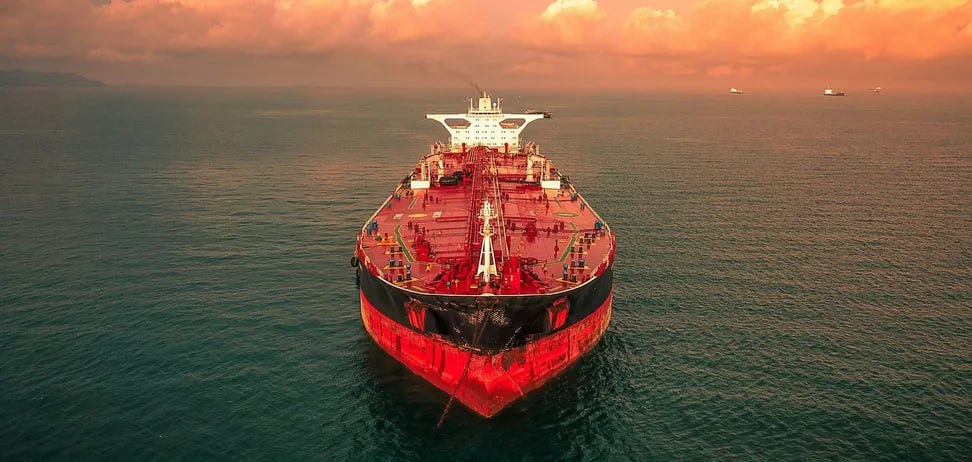
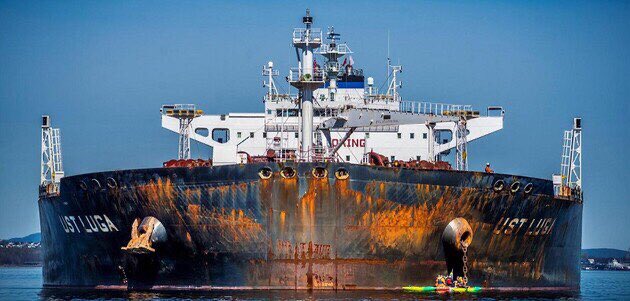
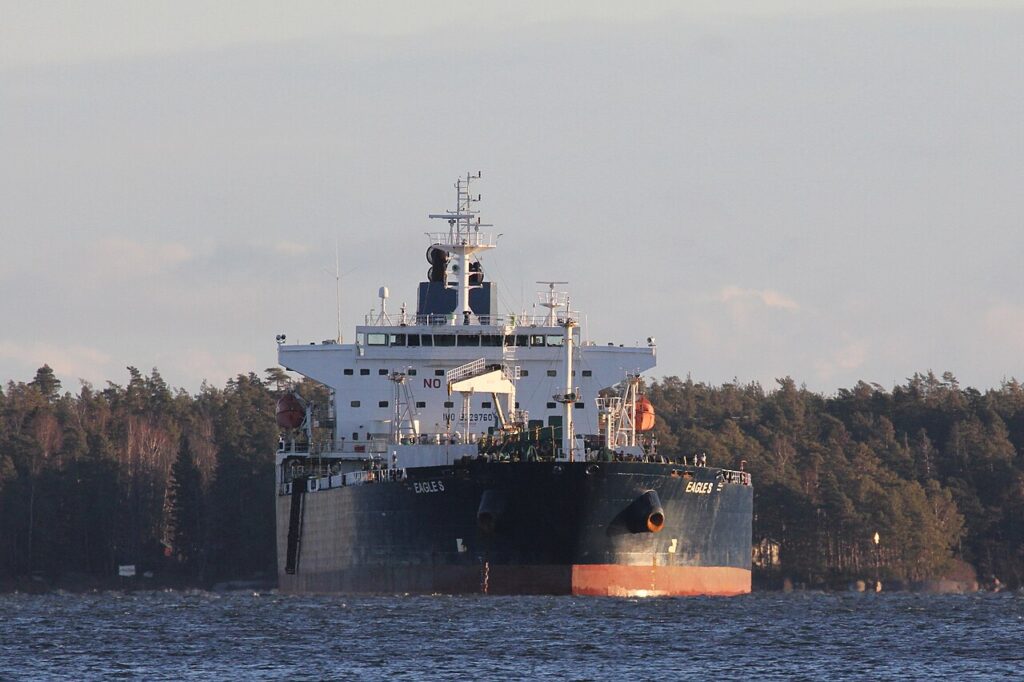
Since 2022, Russia has rebuilt its oil export system around a sanctions-evasion architecture commonly referred to as the shadow fleet—hundreds of aging tankers operating outside Western insurance, classification, and compliance regimes.
This fleet enables Russia to:
- Export oil above the G7 price cap
- Use ship-to-ship transfers in international waters
- Rely on opaque ownership structures and flag-of-convenience states
- Settle payments through non-transparent financial channels
In practical terms, the shadow fleet is Russia’s financial lung. Without it:
- Oil export volumes fall sharply
- Discounts deepen
- Logistics costs spike
- Budget stability erodes
The Graham bill directly targets this system by expanding secondary sanctions, meaning any non-U.S. actor—shipping firms, insurers, port authorities, traders—can be penalized for enabling these flows.
This is decisive because the shadow fleet survives only through global permissiveness, not Russian strength.
How the Bill Connects to Secondary Sanctions Power
The bill’s most consequential feature is its extraterritorial reach.
Key mechanisms:
- Sanctions on vessels, not just companies;
- Penalties on ports and service providers that knowingly handle shadow fleet tankers
- Financial restrictions on intermediary traders and insurers, even outside the U.S.
- Legal authority to freeze assets and block dollar access for facilitators
This exploits a hard reality:
Global maritime trade still depends on Western finance, insurance, reinsurance, legal arbitration, and port access.
Even Chinese, Indian, or Gulf-based operators ultimately touch systems influenced by the U.S. dollar and Western compliance norms.
Why Trump Approved the Graham Sanctions Bill
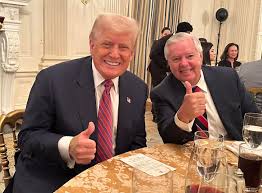
The decision by Donald Trump to approve the sanctions bill promoted by Lindsey Graham is best understood not as a reversal of Trump’s worldview, but as a pragmatic convergence of political, strategic, and economic incentives. The approval reflects Trump’s instinctive preference for leverage without war, domestic political calculation, and an emerging recognition that Russia’s shadow economy has become a direct challenge to U.S. sanctions credibility.
Sanctions as “Strength Without War” — Trump’s Preferred Tool
Trump has consistently favored instruments that:
- demonstrate power,
- avoid direct military engagement,
- and impose visible costs on adversaries.
The Graham bill fits this logic perfectly. It does not:
- commit U.S. troops,
- escalate kinetically,
- or require long-term military entanglement.
Instead, it allows Trump to apply pressure while claiming restraint, aligning with his long-standing message: “I’m tough, but I don’t start wars.”
From Trump’s perspective, sanctions targeting Russia’s shadow fleet are economic airstrikes—high-impact, low-risk, and reversible.
Domestic Politics: Neutralizing the “Soft on Russia” Narrative
Trump’s approval also serves a defensive political function.
Despite years of distancing himself from Moscow, Trump remains vulnerable to accusations of being lenient toward Russia. Supporting a bill that:
- directly attacks Russia’s main revenue source, is visibly punitive,
- and enjoys bipartisan backing allows Trump to:
undercut Democratic criticism, unify Republican hawks and populists,
and reframe himself as the leader who finally “closed the loopholes” others tolerated.
In this sense, approving the bill is political inoculation.
Economic Nationalism: Defending U.S. Sanctions Power
Trump’s worldview is fundamentally transactional and sovereignty-focused. The shadow fleet represents something Trump instinctively dislikes:
- cheating,
- freeloading,
- and exploiting U.S.-designed systems without paying the price.
From this angle, the bill is not “anti-Russia” per se — it is pro-American leverage.
By approving sanctions that:
- punish non-U.S. facilitators, enforce compliance globally, and reassert dollar-centric control.
Trump reinforces the message that access to the U.S. system is conditional, not automatic. This aligns closely with his past use of secondary sanctions against Iran and China.
Pressure Without Commitment: Keeping Negotiation Leverage
Crucially, the bill does not lock Trump into an ideological anti-Russia stance.
Instead, it:
weakens Russia’s economic position,
increases Moscow’s dependency on negotiations,
and improves Trump’s bargaining leverage.
In Trump’s calculus, a weakened Russia is a better negotiating partner—more likely to make concessions, less able to dictate terms. Approving the bill therefore strengthens Trump’s future optionality rather than constraining it.
The Shadow Fleet as a Systemic Threat Trump Could Not Ignore
By 2025–26, Russia’s shadow fleet had evolved from a workaround into a direct challenge to U.S. sanctions credibility. Allowing it to persist would signal that:
- U.S. sanctions can be bypassed,
- enforcement is optional,
- and Washington tolerates defiance.
For a leader whose brand is built on dominance and enforcement, that was unacceptable. Approving the bill was a way to:
- restore deterrence,
- reassert control over global compliance,
- and signal that rules still matter if the U.S. writes them.
Why Trump Could Approve It Now
Timing matters. Trump approved the bill because:
- Russia is more economically vulnerable than in 2022,
- global oil markets can absorb pressure,
- U.S. allies are aligned on enforcement,
- and escalation risks are low.
In other words, the cost-benefit ratio finally favored action.
Trump approved the Graham sanctions bill not because he “changed his mind” about Russia, but because the bill:
- fits his preference for power without war,
- protects him politically at home,
- reinforces U.S. economic dominance,
- restores sanctions credibility,
- and strengthens his personal negotiating leverage.
From Trump’s perspective, it is not a moral act — it is a deal-making move.
Why Russia “Can’t Do Anything” About This
Russia has very limited counter-options for structural reasonsNo Alternative Global Maritime System
Russia cannot replace:
- Western marine insurance (P&I clubs)
- Classification societies
- Port access regimes
- Dollar-clearing mechanisms
Creating a parallel system would take decades, not years.
The Shadow Fleet Is Finite and Degrading
Most shadow fleet vessels are:
- Old (often 15–25+ years)
- Poorly maintained
- Increasingly prone to accidents and detentions
Each additional sanction:
- Raises operating costs
- Shrinks the pool of willing intermediaries
- Increases exposure to seizures
This is attrition warfare, and Russia is losing ships faster than it can safely replace them.
Partners Will Not Sacrifice Their Own Systems
China, India, Turkey, and Gulf states:
- Want discounted Russian oil
- Do not want U.S. sanctions on their banks, ports, or insurers
They will quietly reduce exposure, not confront Washington for Moscow’s sake.
Retaliation Options Are Asymmetric and Weak
Russia’s response toolkit is limited to:
- Rhetorical escalation
- Legal posturing
- Minor trade retaliation
- Cyber signaling (already saturated)
It cannot:
- Sanction the U.S. meaningfully
- Disrupt global oil markets without self-harm
- Force allies to absorb sanctions risk
Strategic Consequences
For Russia
- Gradual but irreversible revenue compression
- Rising logistics costs per barrel
- Budget stress → social spending trade-offs
- Increased dependence on non-market political deals
For the War in Ukraine
- Reduced fiscal elasticity for long war
- Harder to finance mobilization, arms imports, and subsidies
- Pressure accumulates without escalation risk
For the Global Sanctions Regime
- Signals that sanctions evasion will be pursued retroactively and globally
- Sets a precedent for future conflicts
- Restores credibility to U.S. economic coercion
The Lindsey Graham sanctions bill is not about symbolism or messaging. It is about closing the final loophole that keeps Russia’s war economy afloat.
By targeting the shadow fleet through secondary sanctions, Washington is exploiting Russia’s structural dependence on global systems it does not control. Moscow cannot “counter-sanction” its way out of this reality.
In strategic terms, the bill marks a transition:
from sanctioning Russia
to sanctioning the system that allows Russia to function.
That is why Russia can complain—but cannot stop it.
Why Trump Agreed to “Attack” Russia’s Shadow Fleet
Aligning with Bipartisan Pressure to Cut Russia’s War Finances
The legislation targeting Russia’s shadow fleet was authored and championed by a broad group of Republican and Democratic lawmakers, including Senators Lindsey Graham and Richard Blumenthal. It represents bipartisan pressureon the White House to escalate economic measures against Russia’s financing of its war in Ukraine. President Trump’s decision to approve or “greenlight” this bill reflects a political choice to support Congress’s growing consensus on tough sanctions rather than block it
Because the bill has wide support in both parties, Trump’s backing helps unify the U.S. position and avoids intra-party conflict at a moment when Ukraine peace negotiations and global energy politics are especially sensitive.
Raising Pressure Without New Military Commitments
Trump has often framed himself as someone who wants to apply pressure without escalating military involvement. Targeting the shadow fleet allows a strong response that:
- directly affects Russian revenue streams,
uses economic and legal tools instead of troops, and avoids committing new U.S. forces to the battlefield.
This approach fits Trump’s stated preference for exerting leverage through sanctions rather than war
Reinforcing U.S. Sanctions Credibility
Russia’s shadow fleet grew as a direct consequence of international sanctions, particularly the 2022 crude oil price cap regime, which pushed Moscow to circumvent export limits through a network of older and non-compliant tankers. These vessels can represent up to 60–80 % of Russian crude exports, undermining the effectiveness of sanctions
By approving legislation focused on disabling the shadow fleet, Trump strengthens U.S. credibility in enforcing sanctions and signals that loopholes and evasion will not be tolerated — even if it means countering existing global trade networks that benefit from discounted Russian oil. This is a substantive escalation of sanctions enforcement.
Strategic Timing: Negotiations and Leverage
Media coverage at the time of the approval emphasizes that Trump’s approval came at a moment when peace negotiations and broader diplomatic efforts over Ukraine were underway. Supporting tougher sanctions gives the U.S. additional leverage at the negotiating table, enhancing Trump’s bargaining position
Approving sanctions now signals that the U.S. is willing to escalate economic pressure if diplomatic progress stalls or if Russia fails to meaningfully commit to ending the conflict.
Domestic Political Calculations
The sanctions bill also serves domestic political purposes:
- It counters narratives that Trump is too soft on Russia by embracing a measure that unmistakably punishes Russian interests.
- It appeals to the U.S. political center and foreign policy establishment, which has been urging tougher sanctions enforcement.
- It helps Trump project himself as tough on Russian aggression without resorting to military escalation
Supporting a bipartisan sanctions initiative helps shield his administration from criticism on both sides of the aisle.
Part of a Broader Global Sanctions Coordination
Trump’s approval aligns the U.S. with parallel moves by Western allies. The European Union and other states have also been moving to curtail the shadow fleet and tighten enforcement of oil price caps — for example by blacklisting vessels implicated in sanctions evasion
Trump’s support signals continued U.S. engagement in coordinated sanctions policy, even as individual enforcement actions (such as tanker seizures) escalate tensions globally.
President Trump agreed to support sanctions targeting Russia’s shadow fleet because:
It reflects bipartisan pressure from Congress, reducing political risk
It applies economic pressure without new military commitments, consistent with his approach to foreign policy.
It strengthens U.S. sanctions credibility by attacking loopholes that have allowed Russia to sustain its war economy.
It enhances leverage in diplomatic negotiations, particularly as Ukraine peace talks evolve
It serves domestic political interests, countering criticism of leniency toward Russia
It aligns with allied sanction strategies, reinforcing U.S. leadership in Western sanctions coordination. In short, Trump’s approval is not a contradiction of his general policy instincts but a strategic choice to deploy economic power where it is most impactful and least likely to lead to military escalation.