
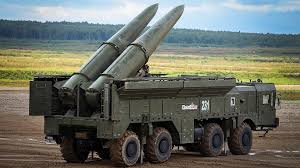
The Asia Live reports that even if the alleged transfer of Iskander missile systems to Iran is merely an element of an information-psychological operation, the very strategy of “managed uncertainty” is already creating critical challenges for the United States. The Russian-Iranian game of escalating stakes is forcing Washington to revise its defense priorities based on worst-case scenarios, significantly increasing the cost of deterrence in the region.
If the transfer of these weapons is confirmed, it would represent a qualitative shift in Tehran’s ability to strike U.S. facilities in the Persian Gulf area. The mobility of the launchers, a range of up to 500 km, and high accuracy make priority targets vulnerable—from airbases and depots to command centers and missile-defense radars. Without these components, the U.S. presence loses operational tempo and command-and-control coherence. This would require the Pentagon to increase alert rotations, disperse forces, and harden infrastructure.
Layered missile defense does not guarantee absolute protection against combined or saturation strikes. For Moscow, such a situation serves as an “asymmetric lever”—a way to compensate for its dependence on deliveries of Shahed-136 systems while simultaneously confronting Washington with a dilemma between escalation and the risk of being drawn into a large-scale conventional conflict.
The missile dimension in Russian-Iranian relations reflects a broader process: the dismantling of traditional mechanisms of regional deterrence, which accelerated after UN restrictions on Iran’s ballistic program were lifted and after the final rupture between Russia and the West. Moscow increasingly uses military-technical cooperation not as a commercial instrument, but as a means of exporting strategic risk—shifting pressure from the European theater directly into areas of U.S. responsibility.
For Iran, such interaction is an organic element of its doctrine of asymmetric deterrence, integrating missile potential, proxy networks, and strategic communications into a coherent influence system. Under these conditions, even unconfirmed data on arms transfers functions as a catalyst: it undermines strategic predictability and triggers the activation of defensive initiatives among Washington’s allies. Therefore, the Iskander precedent is not an isolated episode but a manifestation of a wider trend in which strategic uncertainty becomes an independent instrument of pressure on the U.S. security architecture in the Middle East.
The relocation of the missile factor to the center of the regional game alters the behavior of Washington’s allies no less than it changes U.S. strategy itself. Gulf countries are compelled to incorporate into their defense planning scenarios involving precision strikes on critical infrastructure—even without formal confirmation of the threat. This increases demand for U.S. security guarantees, while simultaneously pushing regional partners toward greater caution in supporting harsh U.S. actions against Tehran. The stronger the missile intimidation tool becomes, the harder it is for Washington to mobilize a broad coalition—ultimately undermining the cohesion of the deterrence system that sustains U.S. presence in the region.
Russia’s participation in enhancing Iran’s missile capabilities creates a serious problem for the White House. Moscow demonstrates an ability to affect U.S. interests beyond the European theater without entering into direct confrontation, forcing the United States to disperse attention and resources between Ukraine and the Middle East. Under conditions of constrained defense budgets, this provokes destructive competition for priority across different areas of responsibility—none of which receives sufficient resources. This logic drains U.S. strategic flexibility, which is a direct benefit for the Kremlin.
Strengthening Iran’s missile component radically increases the value of preventive actions in crisis scenarios. A high probability of fast and accurate strikes incentivizes actors to act preemptively, dangerously lowering the escalation threshold and increasing the risk of fatal decisions amid time pressure and incomplete information. In such an environment, even local incidents can instantly escalate into a major crisis. For the system of regional deterrence, this means a critical loss of stability, which previously relied on the predictability of adversary actions.
Missile uncertainty devalues the effectiveness of existing missile-defense systems even without the actual use of weapons. The United States is forced to invest in protecting the broadest possible range of facilities, dispersing resources across bases, logistical hubs, and command centers. This reduces the reliability of each individual element of defense and significantly increases the cost of maintaining combat readiness. Strategically, defense begins to systematically lag behind offensive capabilities, creating an imbalance in favor of the side imposing the threat.
Integrating the missile factor into Russian-Iranian interaction also forms a dangerous precedent for other regions of the world. The United States receives a clear signal: pressure on one authoritarian state leads to the strengthening of another through indirect transfers of technology. This stimulates horizontal proliferation of weapons among sanctioned countries, undermining control over missile technologies as an instrument of global stability. For Washington, this means an increase in the number of zones where deterring aggression becomes too expensive, too complex, and strategically unpredictable.
The key weapon is not the missile itself, but the information environment around it. Russia and Iran use “managed uncertainty” as a deterrence-evasion instrument that produces real operational costs without crossing escalation thresholds.
This is important because it turns your argument from “possible transfer” → into a repeatable strategy pattern.
The “Iskander precedent” is not defined by a confirmed weapons delivery. It is defined by a new strategic method: managed uncertainty as an instrument of pressure on the U.S. security architecture in the Middle East.
Even unconfirmed missile transfer narratives can reshape defense planning, elevate readiness costs, distort coalition politics, lower escalation thresholds, and force Washington into resource competition between theaters. For Moscow, this functions as an asymmetric lever—exporting risk outward while minimizing direct confrontation. For Iran, it strengthens asymmetric deterrence and bargaining power. In this sense, the missile threat does not need proof to be effective. Uncertainty itself becomes the weapon.
More on this story: Axis of Arms: Russia and Iran’s Expanding Shadow Trade”