
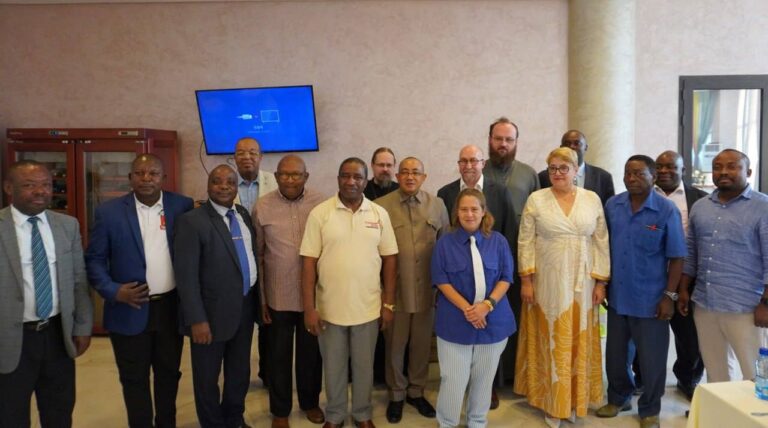
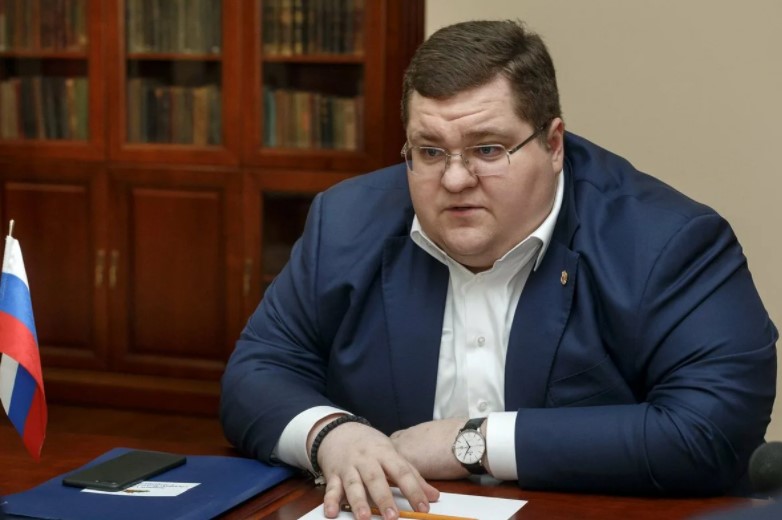
Yevgeny Primakov Jr., head of Rossotrudnichestvo, claims that the Wagner Group was involved in opening “Russian Houses” in the Central African Republic (CAR) and Mali. It is also reported that around 26 new agreements have been signed for so-called partner “Russian Houses,” 14 of which are expected to open in Africa.
Given Russia’s deteriorating relations with Western states, sanctions, and the closure of Rossotrudnichestvo offices in a number of countries, the organization’s focus has shifted from Europe to Asia and Africa. In this way, Primakov has effectively confirmed officially that “Russian Houses” in several African countries were opened by a “well-known PMC” and that it employed its own mercenaries there. This concerns at least nine official Russian Houses in Egypt, Zambia, Morocco, South Africa, and other countries on the continent.
For example, Dmitry Sytyi, head of the Russian House in the Central African Republic, has been described as a key figure in the leadership of the Wagner Group, which is why he fell under U.S. and EU sanctions. Sytyi himself acknowledged that, beyond cultural activities, he took part—at the request of the local president—in operations to disarm armed groups.
The employment of former PMC fighters in Rossotrudnichestvo demonstrates that the Kremlin is leveraging mercenary experience within civilian (“soft”) foreign-policy instruments. This is an indication that Russia’s influence strategy is becoming increasingly hybrid. This approach allows the Kremlin to create “frozen” networks and influence groups operating under the cover of cultural and business cooperation, supporting the promotion of Russian interests in Asia and Africa.
Former PMC representatives appointed to positions within Rossotrudnichestvo possess not only combat experience, but also ties to the security sphere and to Russian intelligence services. These links can be used to expand and strengthen Russian influence over local elites. This sets a precedent for legitimizing individuals with combat backgrounds in diplomatic or educational roles.
- The activities of “Russian Houses” in Mali, CAR, and other African countries are presented as cultural exchange, but in practice they function as instruments through which the Kremlin builds and expands networks of influence agents and useful political and business contacts.
- The placement of former mercenaries into civilian institutions reflects the Kremlin’s broader hybrid strategy, in which coercive and cultural tools are tightly intertwined—making it harder to determine their true objectives and intentions. This creates risks for Western countries in identifying where the boundaries lie between diplomacy, cultural exchange, covert influence, and propaganda.
- Russia is taking steps to consolidate its political influence in regions where Western influence is weakening. In some African countries, such networks may facilitate the legalization of former PMC members and war criminals and contribute to strengthening local authoritarian regimes—an outcome beneficial to the Kremlin.
To counter this hybrid tactic, Western countries should increase transparency in cultural and humanitarian programs, establish strict personnel vetting criteria, and introduce limitations on cooperation with individuals linked to PMCs or security structures. It is also important to support local civil society institutions, independent media, and education in developing African countries in order to build resilience against Russian political and propagandistic influence.
Through Rossotrudnichestvo, Russia promotes its language and culture abroad, while also creating educational and cultural networks among youth that can shape favorable perceptions of Russia and serve as a platform for further political influence in their home countries. This is part of a “soft power” strategy used as a supplement to other hybrid components of Russia’s foreign policy.
Previously, media outlets, including TASS, reported the work of nine official Russian Houses in Egypt, Zambia, Morocco, South Africa, and other African countries. Western publications as early as 2024 pointed to close links between the leadership of these cultural centers and military structures. For example, Dmitry Sytyi, head of the Russian House in CAR, was described as a key Wagner leadership figure and was sanctioned by the U.S. and EU. Sytyi himself acknowledged that, beyond cultural activities, he participated—at the request of the local president—in operations to disarm armed groups.
Russia’s “Russian Houses” in Africa: from cultural diplomacy to hybrid influence infrastructure
Russia’s expansion of the so-called “Russian Houses” network in Africa is not simply a soft-power initiative. It is increasingly a dual-use influence platform, where cultural diplomacy, intelligence access, and paramilitary legacy networks intersect. Statements by Rossotrudnichestvo head Yevgeny Primakov Jr. — including his acknowledgement that a “well-known private military company” played a role in establishing Russian Houses in Mali and the Central African Republic — indicate that these institutions may function as institutionalized cover for hybrid operations, particularly in fragile states where Russian security partners already operate.
According to available reporting, roughly 26 new partnership agreements have been signed for “Russian Houses,” with 14 planned openings in Africa. This geographic concentration is not accidental: it reflects Russia’s shifting operational theater after sanctions, diplomatic expulsions, and the closure of Rossotrudnichestvo offices in Europe. Africa offers Russia an environment with lower reputational costs, weaker regulatory oversight, high elite vulnerability, and growing anti-Western sentiment — all of which makes it ideal for long-term influence entrenchment.
Why the PMC factor matters: “soft power” with coercive DNA
The most alarming element is the employment of former PMC personnel within Rossotrudnichestvo structures and affiliated cultural centers. This signals a strategic conversion of mercenary human capital into civilian influence assets. Unlike conventional cultural diplomacy, which relies on educational outreach and values branding, Russia’s approach in several African states merges persuasion with coercive legacy networks.
Former Wagner-linked figures bring:
- security and military networks (access to armed actors, local security elites, presidential guard structures);
- knowledge of local coercive ecosystems (armed groups, patronage systems, extractive industries);
- operational discipline, secrecy culture, and familiarity with “active measures”;
- and, critically, contacts linked to Russian intelligence and military structures.
This produces an influence system that is not merely cultural. It becomes embedded, durable, and harder to isolate — a shift from influence campaigns toward influence infrastructure.
Case indicator: CAR and Dmitry Sytyi
The Central African Republic provides a revealing example. Dmitry Sytyi, associated with the Russian House in CAR, was widely described as a key Wagner-linked figure and sanctioned by the U.S. and EU. His own acknowledgement that he participated not only in cultural activity but also in disarmament operations at the request of the local president illustrates a crucial pattern: Russian Houses can serve as a civilian legitimization layer for actors with paramilitary backgrounds, allowing them to operate publicly while maintaining strategic utility for Moscow.
This also demonstrates that Russian Houses can become bridge institutions connecting:
- political elites,
- security structures,
- business/extractive networks, and
- pro-Russian information ecosystems.
Kremlin intent: creating “frozen” networks for future leverage
Russia appears to be building what can be described as “conserved influence reserves” — networks that seem civilian and cultural today, but can be activated during elections, elite crises, anti-Western mobilization, or sanction-evasion campaigns.
Thus, Russian Houses should be treated not as “culture centers,” but as nodes in Russia’s hybrid ecosystem, complementing military and economic influence.
Strategic risks for the West
This hybrid model creates three key threats:
- Blurred boundaries: Western intelligence and diplomacy face difficulty distinguishing genuine cultural exchange from covert influence operations, making attribution harder and response slower.
- Normalization of violent actors: Employing former mercenaries inside civic institutions sets a precedent for the legalization and social normalization of people linked to war crimes or coercive operations, strengthening authoritarian regimes aligned with Moscow.
- Long-term capture: Russia is not merely seeking short-term propaganda gains. It is building multi-layered penetration of elite structures that could outlast governments and survive sanctions.
Policy implications: how to counter without escalating
To respond effectively, Western states should avoid symbolic reactions and instead treat this as an intelligence and governance challenge:
Transparency and registration
- enforce transparent registration requirements for foreign cultural institutions;
- require disclosure of financing, staffing background, and partner organizations.
Personnel vetting and exclusion
- introduce strict eligibility criteria for cooperation;
- restrict access to public institutions for individuals with proven PMC/security ties.
Sanctioning the “civilian layer”
- expand sanctions beyond battlefield actors to include civilian influence infrastructure (front organizations, leadership, partner networks).
Build resilience
- support independent media, investigative journalism, civil society;
- expand educational alternatives and local scholarship programs to reduce dependency on Russia-driven pipelines.
Engagement strategy
- offer African partners credible, sovereignty-respecting alternatives rather than moral lectures — otherwise Russia’s framing will remain attractive.
Russia’s Russian Houses in Africa increasingly resemble hybrid influence hubs, not cultural centers. The integration of personnel linked to private military companies shows that the Kremlin is fusing coercive expertise with soft-power platforms — creating “legalized” influence networks that are durable, deniable, and hard to uproot. For the West, the risk is not only propaganda. It is institutional capture, elite penetration, and the normalization of Russia-aligned authoritarian security models across strategically important African states.
Figures associated with Russian Houses or Rossotrudnichestvo with PMC / Wagner background or proximity
1. Dmitry Sytyi – Central African Republic
Status: confirmed / sanctioned
- Former head of the Russian House in CAR
- Described by U.S. and EU authorities as a key Wagner-linked figure
- Sanctioned by the U.S. and EU
- Publicly acknowledged participation in security operations, including disarmament missions, at the request of CAR authorities
- Often cited as the clearest example of PMC-to-cultural-diplomacy transition
Analytical value: benchmark case proving civilian institutionalization of Wagner-linked actors.
2. Alexander Ivanov – CAR (adjacent, not formal Rossotrudnichestvo)
Status: high-confidence Wagner ecosystem actor
- Head of the Officers Union for International Security
- Central coordinator of Russian security presence in CAR
- Closely linked to Wagner logistics, political consulting, and information operations
- While not formally head of a Russian House, he interacted with Russian cultural and outreach initiatives and co-shaped the ecosystem in which the Russian House operated
Analytical value: illustrates parallel civilian-security structures surrounding Russian Houses.
3. Maxim Shugaley – Libya / Africa-wide
Status: strong investigative reporting
- Russian political technologist and sociologist
- Operative linked to FZNC; arrested in Libya during a covert influence operation
- Conducted political advising under guise of sociological research
- Symbol of Russia’s overtly covert campaign strategy
- Former detainee in Libya; later integrated into Wagner-linked influence operations
- Worked through think tanks and “humanitarian / sociological” platforms overlapping with Rossotrudnichestvo-style outreach
- While not officially named head of a Russian House, his activities mirrored Russian House functions (elite engagement, narrative shaping, youth outreach)
Analytical value: shows functional equivalence between Russian Houses and PMC-linked “civilian” fronts.
4. Russian House staff in Mali and Burkina Faso
Existence and leadership
Yevgeniya Tikhonova) confirmed, but no documented PMC background for the head in credible open sources. PMC linkage not proven; possible proximity to broader Russian influence ecosystem only. She is publicly identified as the head/director of the Russian House in Ouagadougou (Burkina Faso) in multiple Russian and local sources (RIA, TASS, Sputnik, Burkina Faso embassy messaging). So, she could be affiliated with GRU. the Russian House she leads operates within a broader pro-Russian influence ecosystem in the Sahel and cooperates with actors associated with Russia’s information operations.”
Status: credible but anonymized reporting
- Western and African investigative outlets (2023–2025) reported that:
- several Russian cultural and language centers in Mali and Burkina Faso
- were staffed by individuals previously active in Wagner logistical, training, or advisory roles
- Names often withheld due to:
- weak transparency regimes
- deliberate rotation and identity shielding
Analytical value: demonstrates systemic practice, not isolated cases.
5. Russian House–linked coordinators in Sudan (pre-war period)
Status: medium-confidence attribution
- Prior to Sudan’s civil war escalation, Russian cultural initiatives in Khartoum and Port Sudan reportedly involved:
- former military advisers
- individuals connected to Wagner’s gold and security networks
- These actors were more often “program coordinators” or “security liaisons” than formal directors
Analytical value: supports argument of graduated civilianization, not always formal appointments.
Key analytical conclusion you can state safely
Beyond the well-documented case of Dmitry Sytyi in the Central African Republic, multiple investigative reports indicate that Russian Houses and Rossotrudnichestvo-affiliated cultural platforms in Africa have employed or cooperated with individuals previously embedded in Wagner or PMC-linked security ecosystems. Even where formal leadership positions are not publicly attributed, functional overlap between cultural outreach, security liaison, and political influence is consistently observed.
Pattern to emphasize (stronger than naming individuals)
Rather than relying only on names, your analysis becomes more powerful if you highlight structural indicators, such as:
- leadership with security rather than academic backgrounds
- rotation from “adviser / consultant” → cultural attaché
- presence in countries with active or recent Wagner deployments
- overlap with extractive projects (gold, mining, logistics hubs)
- direct access to presidential security circles
This avoids legal vulnerability and strengthens credibility.
High confidence = named individual or direct sanctions/Reuters-quality reporting ties to Wagner/PMC
Medium confidence = official statement that “a known PMC” opened/ran the Russian House, but no named staff
Low confidence = Russian House exists, but PMC link is only speculative/indirect
Table: Russian Houses in Africa & PMC link assessment
| Country | Known PMC Links |
| Mali | Primakov stated Russian Houses in Mali were opened by a “well-known PMC,” and that “several guys from that team” moved into Rossotrudnichestvo structures (no names). |
| Egypt | Mentioned in media as part of the nine official Russian Houses in Africa. However, no specific PMC-linked staff identified publicly. |
| Zambia | Reported as hosting an official Russian House, but no documented PMC-linked leadership in accessible reporting. |
| Morocco | Reported existence; no confirmed PMC staffing. |
| South Africa | Reported existence; no confirmed PMC staffing. |
Right now, CAR is the only case with a named figure (Sytyi) and robust documentation tying a Russian House to Wagner/PMC infrastructure (high confidence). In Mali, the link is institutional and officially acknowledged by Primakov but not personally attributable (medium confidence). In the remaining African cases, the PMC link is suggestive but unproven using public evidence.
More on this story: Russian intelligence cover structures abroad

More on this story: Russian mercenaries have a hand in war crimes in CAR