


Russia allegedly helped Iran disable mobile communications and isolate the country from the global Internet as mass anti-government protests escalated into the most serious domestic challenge the Islamic Republic has faced in years. The communications blackout was not merely a defensive regime reaction; it functioned as a deliberate tool of repression—designed to fracture protest coordination, obstruct documentation of state violence, and provide operational advantage to security forces during a nationwide crackdown.
The protests and the blackout: what happened
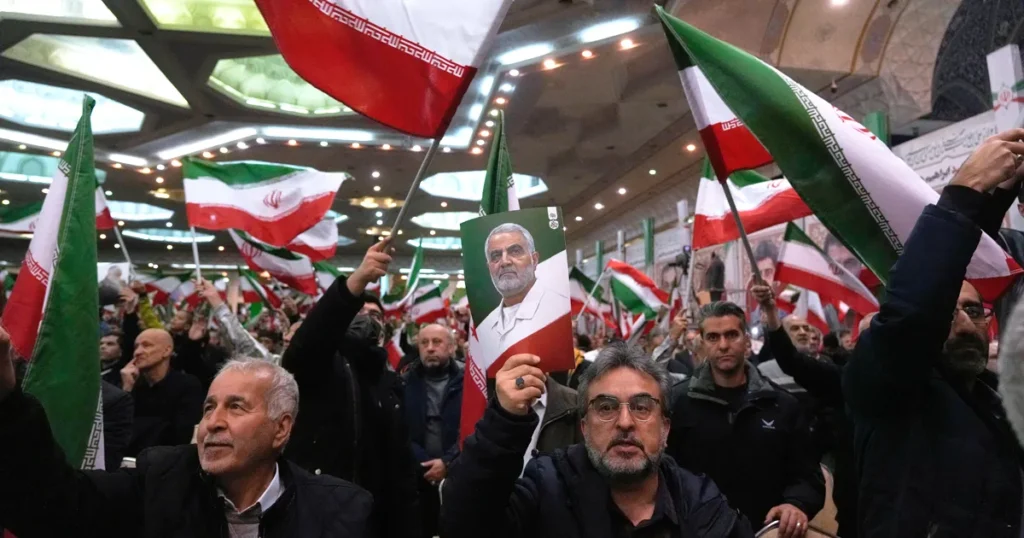
In late December 2025 and early January 2026, demonstrations spread across Iranian cities, initially driven by economic grievances but rapidly evolving into calls for political change. On January 8, 2026, internet monitoring experts recorded a near-total blackout, as connectivity “almost completely shut down” nationwide. Tech analysts tracking global internet traffic confirmed the scale: Iran entered a blackout around local evening hours, effectively severing citizens from the outside world.
Human rights organizations argue the blackout was not incidental but strategic: Amnesty International stated the shutdown was intended to conceal grave violations and shield a crackdown from global scrutiny—making the blackout itself a human rights violation.
Even while ordinary citizens were cut off, the Iranian leadership maintained limited functionality for state priorities: government-related systems and essential economic services continued operating, indicating not a collapse but selective connectivity engineering—a hallmark of modern state-controlled blackout architecture.
Why Russia matters: repression as operational expertise
Iran has long imposed internet restrictions, but the January 2026 shutdown displayed characteristics consistent with “mature” blackout execution: fast isolation, selective survival of priority systems, and a strong emphasis on cutting off protest coordination.
That is where Russia’s alleged role becomes strategically significant. Moscow has built one of the most advanced state internet-control models in the world—technically, legislatively, and operationally. In 2025 alone, Russia increasingly used regional mobile internet shutdowns (officially justified as anti-drone measures), showing how normalized and operationalized network disruption has become in Russian governance.
Foreign Policy argues Russia has been supplying Iran not only military support but sophisticated internet suppression technology, framing Moscow’s assistance as practical enablement of domestic repression.
The political logic is straightforward:
- Iran needed rapid “battle-tested” tools to suppress unrest.
- Russia had both the know-how and the incentive to preserve an allied regime under pressure.
- Both share a common model: coercive stability through a controlled information environment.
The “two gateways” vulnerability: why shutdowns can be precise
A critical operational advantage in Iran is structural: the country’s architecture reportedly relies on only two main international access points to the global internet. If accurate, this creates an authoritarian dream scenario—minimal chokepoints, maximal control—allowing a regime to isolate the country quickly and comprehensively, while maintaining selective internal services.
This is not an accidental weakness; it is a design feature. The Iranian internet has been developed toward “centralized sovereignty,” meaning the state can regulate and sever traffic flows with precision. Russia’s technical role, as alleged, fits into this blueprint: Moscow exports methods that weaponize architecture itself.
DPI as the core weapon: beyond basic censorship
At the heart of this model is Deep Packet Inspection (DPI)—not simply blocking websites but examining and filtering traffic at a granular level. DPI enables authorities to:
- throttle or cut access to specific applications (Telegram, WhatsApp-like services, Signal-type traffic patterns),
- disrupt VPNs selectively (rather than banning the entire internet),
- target protest coordination channels with “surgical” blocks,
- preserve regime-relevant services (banking, fuel payments, official portals).
This is what separates primitive censorship from network authoritarianism: the state gains the capability to turn connectivity into a switchable privilege—on for commerce and security forces, off for citizens.
Protei: the technology bridge between Russia’s SORM ecosystem and Iran
One of the most consequential details concerns the Russian surveillance-technology provider Protei, alleged to have helped integrate DPI into Iran’s interception ecosystem.
Protei is not a generic IT firm. It is associated with technologies that support Russia’s domestic lawful intercept architecture, linked to SORM-type surveillance frameworks used across Russian telecom environments. Reporting following a major cyber incident affecting Protei described it as a surveillance tech provider tied to DPI and interception technologies—with a history of international reach.
If Protei or similar Russian providers embedded DPI deeper into Iranian systems, the effect is not merely “blocking.” It becomes real-time identification of protest networks:
- mapping digital coordination nodes,
- identifying leaders and couriers,
- tracking protest logistics in motion,
- enabling targeted detentions (before gatherings form, not after).
6) Russia’s strategic motive: Iran as a live-fire laboratory
This cooperation should not be understood as charity. Russia benefits in at least four ways:
- Regime survival of a key ally
Iran is central to Moscow’s anti-West axis (drones, missiles, sanctions coordination). - Operational testing environment
Iran offers Russia a rare opportunity to test at scale: mass disconnections, VPN suppression, disrupting satellite internet, and countering decentralized opposition logistics—under real protest pressure. - Export market legitimacy
Demonstrating “successful suppression” becomes marketing: authoritarian clients do not want democratic internet governance—they want “stability technology.” - Geopolitical messaging
The Kremlin reinforces the narrative that it can protect regimes from internal revolution—positioning itself as a supplier of authoritarian continuity.
Foreign Policy frames Moscow’s role as far more consequential than its public rhetoric, describing Russia as enabling repression through technology, not troops.
The deeper consequence: Iran’s loss of digital sovereignty
By importing Russia-linked architectures of control, Iran may be trading sovereignty for survivability. Over time, this creates:
- dependence on Russian specialists for upgrades and support,
- reliance on Russian vendors for surveillance and filtering technology,
- vulnerability to Russian leverage (spare parts, updates, maintenance),
- a structurally “captured” internet environment.
The result: Iran risks becoming not merely an authoritarian state, but a client node in a wider ecosystem of Russian-led digital authoritarianism.
Implications for the West: sanctions, doctrine, and narrative framing
For the United States and Europe, this story offers a powerful framing opportunity:
- Russia is not only an aggressor in Ukraine—it is becoming a sponsor of technology-enabled repression.
- Moscow is actively increasing the survival capacity of regimes hostile to Western interests.
- Russia is exporting a turnkey “digital police state” package.
This strengthens the case for:
- expanding sanctions on Russian IT firms linked to surveillance, DPI, and interception,
- targeting supply chains (chips, telecom hardware, lawful intercept equipment),
- sanctioning service providers, technical consultants, and “integration intermediaries.”
Amnesty’s warning that shutdowns conceal state crimes reinforces the moral argument: these technologies are not neutral infrastructure—they are instruments of repression.
Key judgments
This was not an internet failure. It was a controlled shutdown consistent with authoritarian doctrine.
- Russia’s contribution is best understood as operational expertise and technology export, not symbolic support.
- DPI integration changes the regime’s capability: from blocking to identifying, mapping, predicting, and preempting dissent.
- Iran is becoming a laboratory for Russia’s next-generation domestic repression toolkit.
- The West’s response should treat DPI vendors as national security threats, not ordinary commercial actors.
Russia is demonstrating its ability to build and export a turnkey digital repression infrastructure: combining IT systems, coercive enforcement methods, and technical advisory support. This is a strong argument for expanding sanctions against Russian IT firms and DPI developers. Western inaction — or the absence of countermeasures — leaves open the risk of these models spreading to other volatile and unstable regions worldwide.
For the United States, this case is a powerful political and strategic argument: the Kremlin is effectively helping a regime that the White House considers hostile and repressive to survive. Moscow is not merely cooperating with Iran — it is increasing Tehran’s capacity to suppress anti-regime protests, obstructing democratic change and the free expression of popular will. This allows Russia to be presented as a sponsor of technology-enabled repression, directly contradicting the interests of the United States and the West in the region.
More on this story: Iran’s Protests: Drivers, Actors, Consequences, and External Dimensions
More on this story: FSB likely to hold back Iran-Russia cyber cooperation