
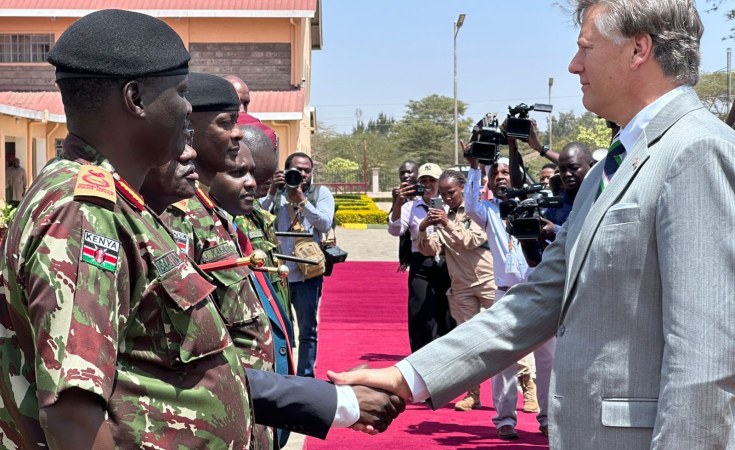
In early 2026, President Donald Trump nominated Frank W. Garcia Jr., a Republican congressional aide with limited Africa experience, to be Assistant Secretary of State for the Bureau of African Affairs, the top U.S. diplomatic position focused on the continent. This personnel move is part of a broader reorientation of U.S.–Africa policy toward transactional priorities under Trump’s “America First” doctrine. In context, this appointment reflects larger shifts in trade, diplomacy, and security engagement across the continent. What stands out most is how changes in U.S. strategy — from trade extensions to diplomatic retrenchment — are reshaping Washington’s role in Africa at a critical geopolitical moment.
Why the Appointment Comes Now
Shifting Priorities in U.S. Strategic Thinking
The timing of this nomination reflects a broader shift in American foreign policy direction, particularly toward emphasizing narrow national interests over humanitarian or development engagement. Recent analyses of U.S. strategies indicate a reframing of Africa not primarily as a partner for global development, but as a arena for transactional dealsand resource competition. Under the 2025 U.S. National Security Strategy, Africa receives only a brief mention, mostly in the context of countering China and accessing critical minerals — and not as part of a broader commitment to democratic partnerships.
Put bluntly, the appointment comes at a moment when diplomacy as traditionally practiced is less of a priority than economic and security positioning — and when the policy apparatus in Washington is being restructured accordingly.
Diplomatic Retrenchment and Institutional Gaps
Part of this shift has been the recall of dozens of U.S. ambassadors from African capitals, one of the most consequential diplomatic withdrawals in recent history. Many embassies are functioning without Senate-confirmed ambassadors with deep regional expertise, leaving gaps in institutional knowledge and ongoing bilateral initiatives. This retrenchment increases the significance of whoever leads the Africa Bureau at the State Department, since they may serve as one of the few remaining anchors of U.S. engagement.
Trade Uncertainty and Rebalancing
The renewal — albeit short — of the African Growth and Opportunity Act (AGOA) through 2026 also sets the backdrop for this appointment. AGOA has been central to U.S.–Africa trade relations since 2000 by granting duty-free access for eligible sub-Saharan exports, and its lapse or modification could have dramatic effects on economic ties.
In combination, these diplomatic and trade developments create an opening for a new policy architecture with one central figure at the helm — hence the importance of the current nomination.
The Nature of the Nomination
The choice of Frank W. Garcia Jr. — a Republican congressional staffer with an intelligence background but limited direct experience with African affairs — is emblematic of the administration’s broader approach.
- It de-emphasizes traditional career diplomats in favor of political loyalty and transactional expertise.
- It signals that the United States may be more focused on strategic priorities (resources, influence competition)than on long-term development partnerships or civil society engagement.
This shift mirrors criticisms that the current policy strategy treats Africa as a “price tag” or resource repository rather than a multi-dimensional partner.
Broader U.S. Policy Context: Retracement and Reorientation
Understanding this appointment requires situating it within several major shifts in U.S. engagement on the continent.
Diplomatic Withdrawal and Weakened Influence
The unprecedented recall of ambassadors — including from key states such as Nigeria, Egypt, and Kenya — has left many countries questioning U.S. commitment and deepened space for rival powers.
This diplomatic vacuum comes at a time when African states need consistent engagement on issues ranging from economic development to climate resilience and conflict resolution.
Reduced Aid and Programmatic Cuts
Long-standing lifesaving programs — including those focused on public health — have been reduced or paused, contributing to humanitarian pressures. For example, critical health programs like PEPFAR (President’s Emergency Plan for AIDS Relief) have been effectively left unsupported, despite their legacy of saving millions of lives.
The shift from development and aid to trade-centric engagement — without corresponding diplomatic and support structures — has generated anxieties among African officials and businesses alike.
Trade, Minerals, and Global Competition
Trade remains one area where there is active U.S. engagement, but even here the U.S. agenda is increasingly transactional and tied to competition with China and other powers, rather than systemic investment or partnership models. The focus on minerals underscores this: Africa is framed less as a partner and more as a resource base for U.S. industries and strategic leverage.
Consequences for U.S. Policy in Africa
Strategic Consequences
- Diminished U.S. Influence: The diplomatic thinning and shifts in focus reduce Washington’s traditional soft power and ability to shape outcomes on issues like conflict mitigation, counterterrorism, and governance promotion.
- Greater Space for Rivals: China, Russia, and other actors are actively deepening ties through investment, infrastructure projects, and security cooperation — often without the governance conditions Washington historically emphasized.
Economic Consequences
- Uncertain Trade Frameworks: Without long-term certainty regarding AGOA, African exporters face unpredictability, which in turn discourages investment and supply chain development.
- Shift from Aid to Trade Without Support: Trade incentives alone are insufficient if accompanying development tools (capacity-building, financing) are withdrawn.
Diplomatic Consequences
- Weakened Consular Presence: With fewer ambassadors and diminished embassy staffing, the U.S. may lose access to local insights and relationships critical for effective policy formulation.
- Transactional Diplomacy: Appointments such as Garcia’s signal a preference for policy that prioritizes deals and negotiations over long-term relationship-building.
Implications for Great-Power Competition
By reducing long-term engagement and prioritizing transactional approaches, the United States risks ceding strategic ground to other global powers — particularly China, which has steadily expanded its footprint through infrastructure investments, trade agreements, and security partnerships.
If U.S. policy remains focused on a transactional model without depth, it may:
- Strengthen China’s narrative of partnership with Africa;
- Embed Russian influence in security and political arenas where Washington is less engaged; and
- Encourage African states to diversify their external partnerships — reducing U.S. leverage.
A Transitional Moment with Enduring Risks
The nomination of a politically aligned intelligence specialist to lead the Africa Bureau is not just a personnel shift; it symbolizes a broader transformation of U.S.–Africa policy — one marked by retracting diplomatic engagement, re-prioritized trade strategy, and transactional geopolitics. These shifts have real consequences for economic development, U.S. influence, and the future shape of continental partnerships.If U.S. policy continues along this trajectory, it may inadvertently weaken its position in a region of growing geostrategic significance, ceding ground to other global actors and limiting its ability to influence outcomes on issues ranging from conflict to climate change.