

- Bangladesh has first national election since the 2024 uprising and the Yunus-led interim government, and it is widely treated as a “make-or-break” test of whether the transition produces a competitive, legitimate system or simply a new, unstable hybrid.
- The Awami League is barred from contesting, reshaping the race into a BNP-led bid for power versus an Islamist-anchored opposition bloc (Jamaat + allies, with NCP dynamics), with smaller parties playing spoiler roles in specific seats.
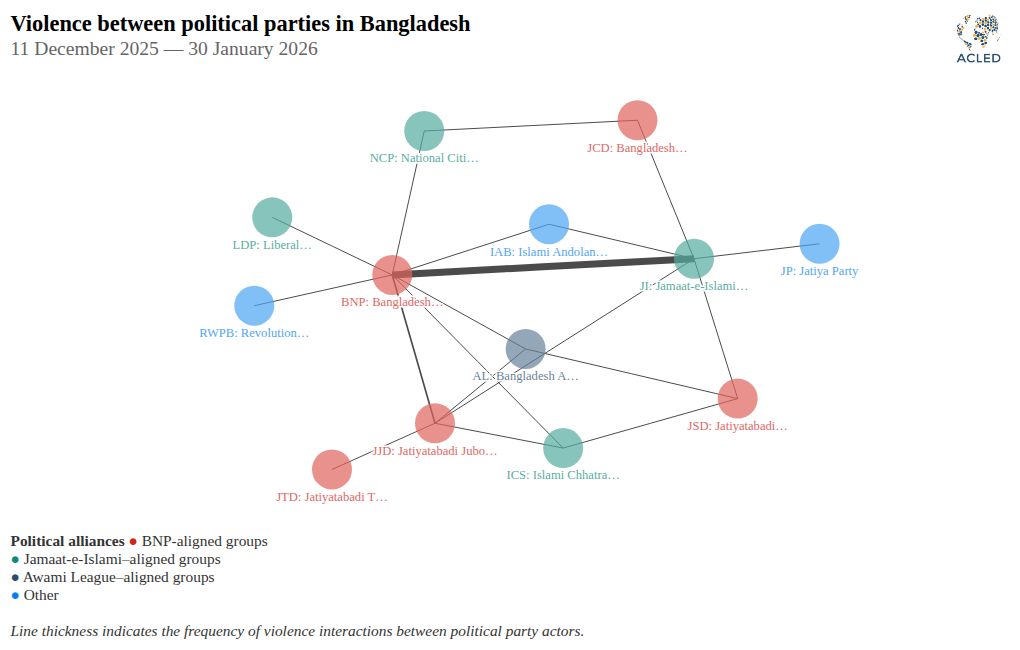
- Violence and intimidation are the main “pre-vote variables.” Multiple reporting streams describe election-period killings/clashes and a high-security posture, implying turnout and seat outcomes could hinge on coercion at the constituency level.
- Foreign influence is most visible through India-centric polarization and information operations, plus strategic competition around Bay of Bengal access and infrastructure financing (China), with Washington focused on stability, democratic legitimacy, and counter-extremism risks.
Situation before voting: what makes this election different
Transitional governance: Bangladesh is voting under an interim authority led by Muhammad Yunus, and the ballot is paired with a referendum on the “July Charter” reform package (constitutional/electoral/institutional reforms).
Inclusion crisis: With the Awami League barred, the election is simultaneously more competitive (no one-party dominance) and more fragile (a major constituency lacks a formal electoral vehicle). That fuels two risks:
- post-election contestation (“disenfranchisement” claims, street mobilization)
- spoiler violence by actors who benefit from delegitimizing the result.
Security climate: Reporting indicates persistent political violence, including activist deaths since the schedule was announced and broader warnings about instability and potential extremist attacks.
Key domestic actors and political forces
A) Bangladesh Nationalist Party (BNP)
- Core pitch: restoration of electoral legitimacy, reversal of Hasina-era governance, and an “order + economy” narrative in the post-uprising landscape.
- Structural advantage: broad anti-Awami sentiment and the “default” mass alternative now that AL is out. Polling summaries show BNP leading nationally in multiple surveys.
B) Jamaat-e-Islami and allied Islamist bloc
- Core pitch: law-and-order + moral governance framing, plus pressure to lock in reforms (some Islamist mobilization demanded the July Charter be made binding and pressed for proportional representation).
- Electoral logic: Jamaat appears to have stronger appeal among younger/newer voters in some surveys, and it can win through concentrated support even if BNP leads in vote share.
C) National Citizen Party (NCP) / “new movement” currents
- Role: a vehicle for parts of the post-2024 civic/reform constituency; can act as kingmaker locally and shape the reform referendum debate.
D) Jatiya Party and smaller alliances (left/progressive fronts)
- Role: seat-by-seat spoilers, coalition bargaining chips after the vote, and legitimacy validators (or delegitimizers) depending on turnout, violence, and the referendum outcome.
E) Awami League networks (outside the ballot)
- Most important “non-participant actor.” Reporting describes AL figures operating from exile (notably in India) while hoping instability or disillusionment creates an opening for comeback politics.
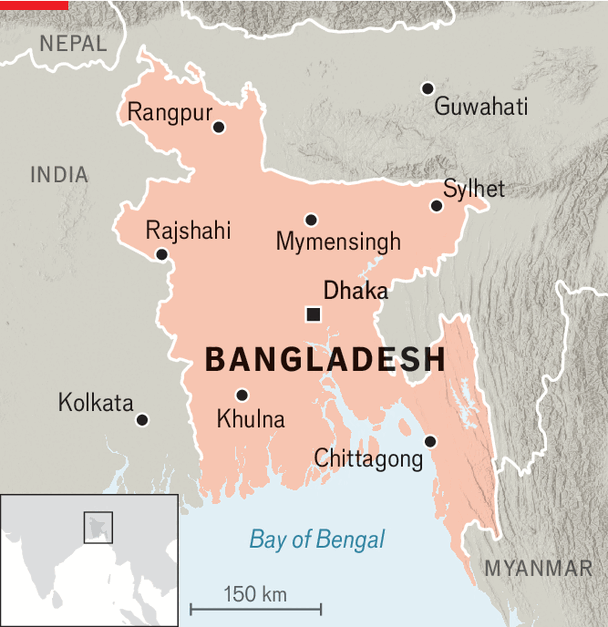
Foreign influence and interests
India
Interest set: border stability, river-water and connectivity issues, preventing hostile anti-India mobilization, and maintaining influence in Dhaka’s security orientation.
Influence mechanism: the Awami League’s exile footprint in India and Bangladesh’s domestic anger over India’s role have become central to political narratives, with spillover into media targeting and street violence dynamics.
Implication: Any result seen as anti-India (or any post-election violence blamed on cross-border actors) could harden Dhaka–Delhi tensions and increase internal polarization.
China
Interest set: continuity for infrastructure and economic engagement (ports, energy, transport, water management) and maintaining Bay of Bengal strategic access via long-term projects and financing.
Influence mechanism: not “election meddling” in the narrow sense, but structural leverage through major projects and elite relationships—i.e., whichever coalition wins inherits commitments and tradeoffs.
United States and EU/partners
Interest set: credible democratic process, stability, counter-extremism risk containment, labor/human rights conditions, and safeguarding regional supply chains in a critical maritime corridor.
Signals: US embassy security warnings underscore concern about election-period violence and extremist threats.
EU posture: election observation engagement suggests Europe is treating legitimacy as consequential for future cooperation.
Gulf states (implicit but relevant)
Not dominant in the sources above, but strategically relevant because remittances, migrant labor corridors, and investment expectations will constrain any incoming government’s policy bandwidth—especially if violence undermines investor confidence.
Probable results according to polls
What the polling snapshot suggests
A collated election overview lists multiple surveys showing BNP in first place, with Jamaat significant and other parties much smaller in national vote share terms.
Local reporting also indicates vote switching among former Awami League supporters toward BNP, and notable youth preference signals for Jamaat in at least one survey.
The seat translation problem (FPTP)
Bangladesh’s first-past-the-post system means:
- BNP can win a large seat bonus if opposition votes split in key constituencies.
- Jamaat can outperform its national vote share if its support is geographically concentrated.
- Violence/intimidation can swing marginal seats dramatically.
Most likely outcome (base case)
BNP emerges as the largest party and is best positioned to form a government, either alone (if the seat bonus is big) or with smaller partners. The strongest alternative to watch is a larger-than-expected Jamaat-led bloc that forces coalition bargaining and potentially pulls policy rightward on social issues.
Consequences
Domestic governance
- Legitimacy hinges on violence control + referendum credibility. A contested or coercive election can recreate the cycle Bangladesh is trying to exit.
- If BNP wins: expectation of a “normalization” attempt, but managing Islamist leverage, security apparatus reform, and vengeance politics will be the hard part.
- If Jamaat/Islamist bloc overperforms: likely pressure on education, civil society space, women’s rights debates, and media environment—plus increased concern among external partners about extremism-adjacent mobilization.
Foreign policy orientation
- India relationship becomes the immediate stress test. Any government will face domestic incentives to demonstrate “sovereignty” vis-à-vis Delhi, while still needing pragmatic cooperation.
- China projects remain sticky. Even a BNP-led government will have limited room to abruptly unwind large infrastructure commitments without major economic and diplomatic cost.
- US/EU engagement will depend on perceived legitimacy. A credible election opens doors; a violent/contested one increases sanctions/visa-restriction style tools and reduces investment appetite.
Security and social cohesion
- Election violence risks long tail effects (revenge cycles, local armed patronage, intimidation normalization).
- Minority safety and communal narratives can be instrumentalized, especially in an India-polarized environment.
Scenarios
Base case: BNP victory + manageable coalition
- Outcome: BNP forms government; reforms proceed selectively; foreign policy seeks balance.
- Risk: localized violence and Islamist bargaining constrain reform depth.
- High-risk: contested vote + street escalation
- Outcome: allegations of manipulation/intimidation; prolonged protests; governance paralysis.
- Beneficiaries: spoilers (including extra-parliamentary AL networks) that thrive on delegitimization.
- Rightward shift: Jamaat-led bloc overperforms and becomes kingmaker
Outcome: coalition terms move policy toward conservative social agendas; more friction with Western partners; intensified identity politics.