
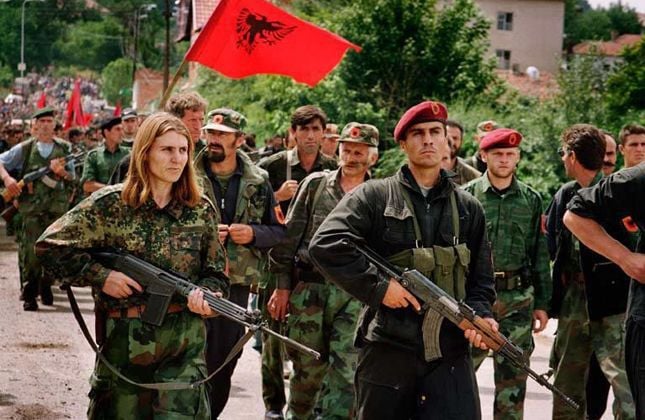
To equate those who fought for their people’s survival with those who massacred, killed civilians including women, the elderly and children, is to wound the very idea of justice. Kosovo’s independence was not born from aggression, but from necessity, from a people’s right to defend their lives, their dignity, and their future. The resistance of the Kosovo Liberation Army emerged in the face of systematic violence, displacement, and denial of basic rights. To now place its leaders in the dock without fully acknowledging this moral and historical asymmetry risks distorting the meaning of justice itself. It is against this tension that Kosovo marks each anniversary of its independence: proud, defiant, yet overshadowed by a process kosovar citizens experience as deeply unbalanced.
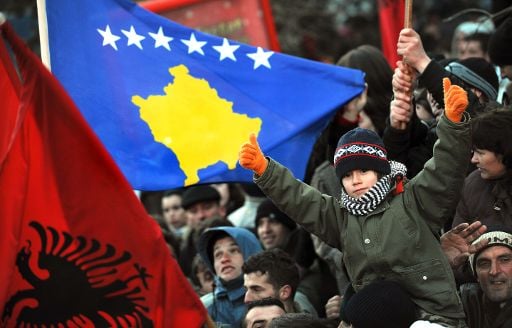
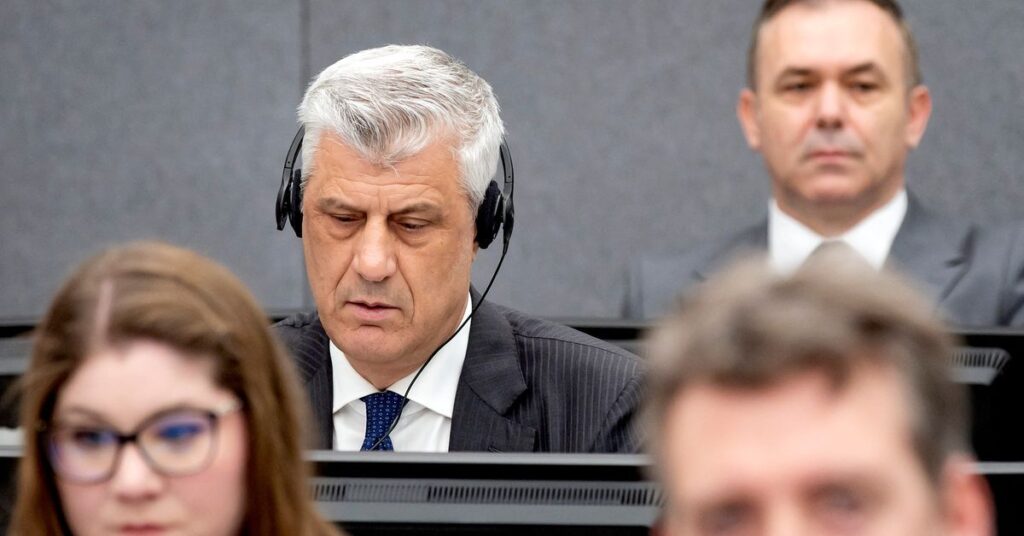
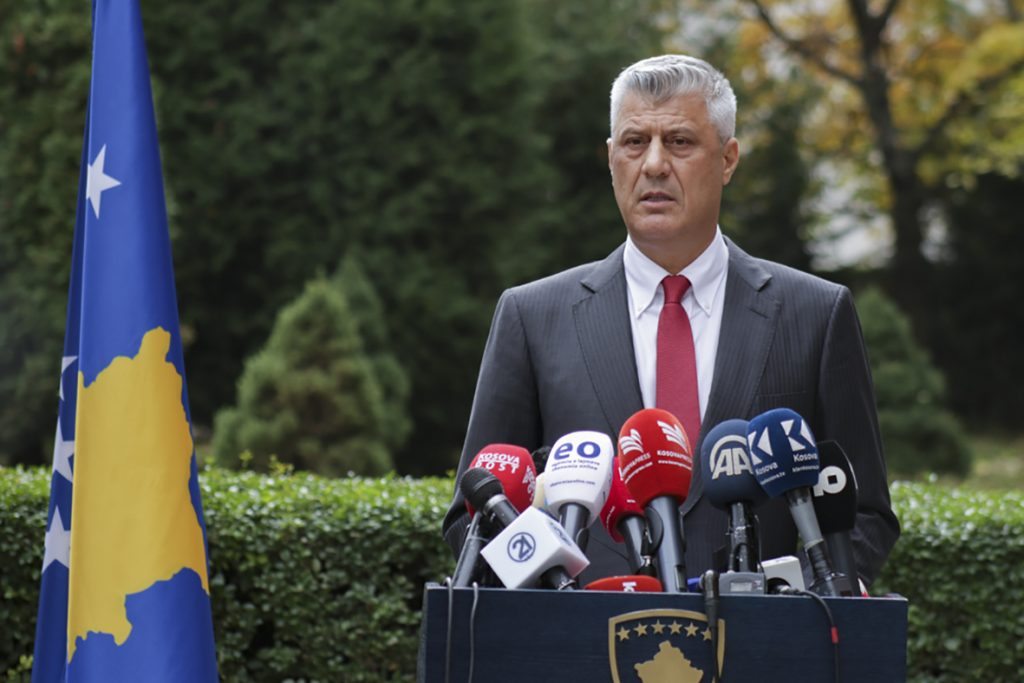
Within this broader moral frame, Kosovo’s Independence Day each February carries both celebration and unease. Kosovo celebrates the declaration of independence of 17 February 2008 as the culmination of a long struggle for self-determination. For its citizens, independence is inseparable from the sacrifice and resistance of the Kosovo Liberation Army, whose fighters are remembered as symbols of survival and collective dignity. This identification has been made visible not only in commemorations but also in mass civic mobilization: in one of the largest protests ever held in Kosovo, tens of thousands gathered to oppose the trial of former KLA leaders, including former president Hashim Thaçi, widely regarded as the political figure who proclaimed Kosovo’s independence. Yet today, the celebrations unfold under the shadow of the Kosovo Specialist Chambers in The Hague, where former KLA leaders stand accused of war crimes and crimes against humanity. This juxtaposition- celebration of liberation alongside prosecution of its leading figures- creates a profound moral and political dissonance that shapes both public memory and political discourse.
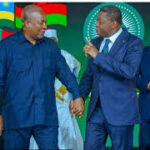
At its core, this tension is not merely legal; it is existential. For Kosovars, the KLA represents a just war of defense, grounded in the inalienable right of a people to resist oppression. Putting its most prominent leaders, such as Hashim Thaçi- on trial threatens to rewrite the narrative of Kosovo’s independence, casting a fundamentally unequal struggle as morally symmetrical. This concern has resonated at the highest political levels in the region. Speaking at the Board of Peace forum in Washington, the Prime Minister of Albania, Edi Rama, delivered a forceful appeal to global leaders, including the President of the United States, Donald Trump, urging them to reconsider what he characterized as an unjust judgment against the Kosovo Liberation Army. He implored, “for God’s sake,” that Kosovo not be subjected to a process that distorts the moral reality of its war and undermines the legitimacy of its fight for freedom. Rama’s intervention underscored the regional alarm that international accountability, if pursued without historical context and moral clarity, risks delegitimizing the very struggle that secured Kosovo’s independence. It was a stark reminder that justice cannot be blind to history, and that the defense of moral truth remains inseparable from the defense of sovereignty itself.
International media coverage has amplified and internationalized this tension by presenting the trials through two competing lenses. On the one hand, major outlets have emphasized the legal gravity of the charges, detailing allegations of detention, mistreatment, and killings attributed to KLA structures, and framing the proceedings as a test of Kosovo’s commitment to the rule of law and international justice. On the other hand, reporting has also highlighted the strong public support for the accused within Kosovo, the symbolic status of the KLA in the country’s founding narrative, and the widespread perception among citizens that the court risks isolating alleged crimes from the wider context of Serbian state violence during the war. This dual framing- legal accountability versus historical asymmetry, has reinforced the sense that two different stories about the past are being told simultaneously: one in the courtroom, and another in the collective memory of the society that emerged from the conflict.
It is precisely this tension between law, memory, and legitimacy that is reflected in the courtroom declarations of the accused themselves. Before the Kosovo Specialist Chambers, Hashim Thaçi rejected the charges as groundless and portrayed his actions as part of a struggle for “freedom, life and dignity.” Kadri Veseli emphasized that the KLA fought to protect civilians, while Rexhep Selimi and Jakup Krasniqi framed their roles as part of a just political and military effort for liberation. These statements resonate deeply with a large portion of Kosovo’s public, reinforcing the perception of the accused as representatives of a legitimate resistance rather than criminal actors. At the same time, the coexistence of legal accusation and moral self-justification captures the central tension that continues to hang over Kosovo’s independence celebrations.
Looking ahead, the outcome of the trials will shape Kosovo’s political and moral landscape in distinct ways.If the Specialist Chambers were to convict former KLA leaders, the consequences would be profound. Domestically, such a verdict could trigger a crisis of narrative and legitimacy, as many citizens would interpret it as a symbolic indictment of the liberation struggle itself. It could deepen political polarization, erode trust in international justice, and reopen social wounds among veterans and families of the fallen. Internationally, however, convictions could be framed as evidence of Kosovo’s commitment to the rule of law and accountability, potentially strengthening its normative credibility. The long-term result would be a society forced to renegotiate how it understands its own moral foundations.
If, on the other hand, the accused were acquitted and released, the immediate effect would likely be relief and renewed national unity. Such an outcome would reinforce the dominant narrative of the KLA as a legitimate force of resistance and restore symbolic clarity to independence celebrations. Politically, it could rehabilitate the stature of wartime leaders. Yet even in this scenario, the legacy of the trials would endure, and Kosovo would still face the challenge of ensuring that its institutions remain committed to justice and the rule of law, without sliding into complacency or uncritical glorification of the past.
Whichever path justice ultimately takes, Kosovo’s responsibility remains clear and unyielding. The state must forge a vision that integrates memory, justice, and identity, one that honors the sacrifice and courage that made independence possible while confronting the truth without compromise. History cannot be rewritten or forgotten, for to erase it is to invite its repetition; and no individual, regardless of rank or symbolic stature, stands above the law. Kosovo’s independence celebrations can only be meaningful if they affirm both freedom and accountability, if they recognize the moral legitimacy of a just struggle while upholding the principles that protect the society from future injustice. Only through this unwavering commitment to truth, historical clarity, and ethical governance can Kosovo transform its independence from a symbolic milestone into a living testament to the courage, resilience, and enduring values that brought the nation into being.
More on this story: Parallaxes of anecdotical justice
More on this story: Serbian war of archives to suppress KLA’s resistance leaders
More on this story: From the ICTY to the Specialized Chambers: The KLA’s Journey through the Courts
More on this story: The Shadows of a Court