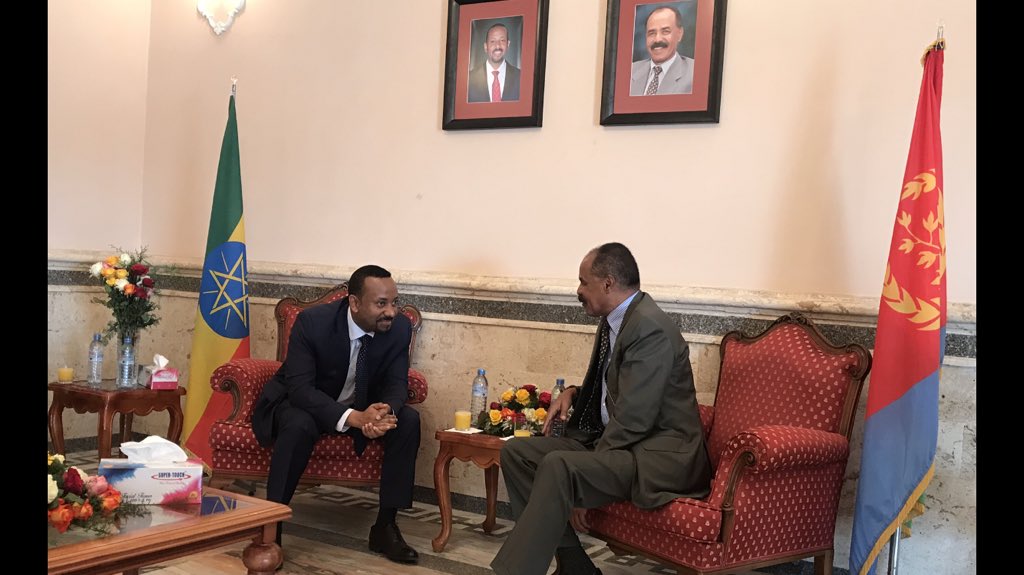

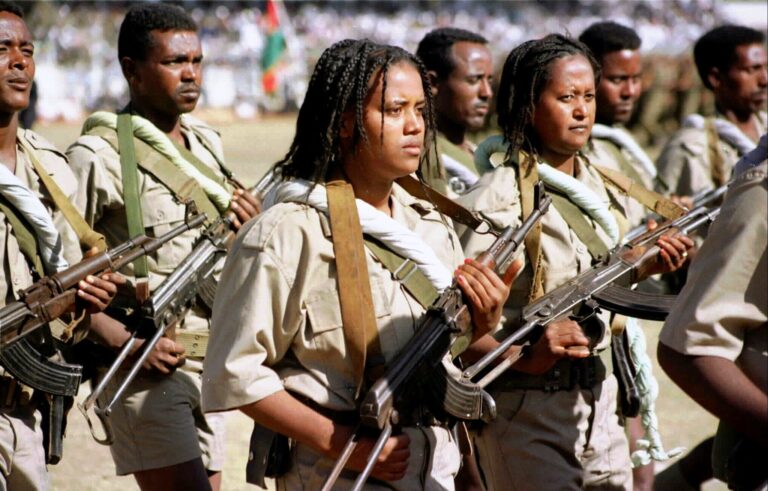
Relations between Eritrea and Ethiopia have deteriorated sharply, with both countries publicly signaling possible preparation for war. Longstanding territorial disputes, mistrust borne of multiple past conflicts, and renewed military mobilization along the Tigray border have sparked fears of another large-scale confrontation in the Horn of Africa. Ethiopia has accused Eritrea of supporting insurgents in its internal conflicts, while Eritrea denies these claims and views Addis Ababa’s insistence on Red Sea access as a provocation. This paper analyzes the historical context, underlying drivers of the current crisis, potential consequences, and plausible future scenarios.
Historical Context and Root Causes
a. Colonial Borders and Post–Cold War Realignments
The roots of the current tensions extend back to the independence struggle of Eritrea from Ethiopia (1961–1991), culminating in Eritrea’s internationally recognized independence in 1993. However, unresolved border demarcation issues fueled continuing mistrust.
b. The 1998–2000 Border War
The two countries fought a devastating border war from 1998 to 2000, resulting in tens of thousands of casualties and deep-seated bitterness. A UN-backed boundary commission later ruled on demarcations, but Ethiopia initially rejected key elements, undermining the peace process.
c. Renewed Conflict in Tigray (2020–2022)
Relations further plummeted during the Tigray conflict, when Eritrean troops intervened alongside Ethiopian federal forces in northern Ethiopia. Humanitarian groups documented widespread abuses, and the deployment reinforced Eritrea–Ethiopia hostility.
Legacy issues from these conflicts—border disputes, unresolved grievances, and legacy security arrangements—set the backdrop for the present crisis.
Current Tensions: Escalation Triggers and Allegations
a. Troop Movements and Militarization
Recent reports indicate both states moving troops and equipment to the northern border region, especially in and around Tigray. Ethiopian authorities express concern over Eritrean military buildup, while Asmara dismisses accusations as unfounded provocations.
b. Ethiopia’s Security Concerns
Ethiopia, a landlocked state following Eritrea’s independence, has long sought reliable access to the Red Sea for trade and naval reach. Addis Ababa frames this need as existential, asserting that Eritrean control of its access routes restricts its strategic autonomy.
c. Eritrea’s Strategic Positioning
Eritrea views Ethiopia’s aspirations as a challenge to its sovereignty, especially amid ongoing internal instability in Ethiopia. President Isaias Afwerki and Eritrean officials argue that Ethiopian statements constitute warlike rhetoric, despite Addis Ababa’s claims that it seeks negotiation.
Underlying Drivers of Conflict
a. Geopolitical Rivalry over Access and Influence
Ethiopia’s push for access to the Red Sea intersects with regional trade and strategic influence. Controlling access to maritime routes offers economic diversification and security depth, while Eritrea sees such ambitions as a threat to its territorial integrity.
b. Internal Instability Spillover
Reconstruction and governance challenges in Tigray and the broader Amhara region have created fertile ground for insurgencies and armed groups. Ethiopia has accused Eritrea of supplying ammunition and support to some insurgent forces, a claim Asmara denies but which deepens mistrust.
c. Regional Security Architecture Weaknesses
Eritrea’s recent withdrawal from the Intergovernmental Authority on Development (IGAD)—a key regional bloc for diplomacy and conflict prevention—reduces institutional avenues for dialogue and heightens the risk of miscalculation.
Consequences of Renewed Conflict
a. Humanitarian Impact
A renewed Eritrea–Ethiopia war could precipitate widespread displacement, loss of life, and humanitarian crises in the Horn of Africa—compounding existing vulnerabilities exacerbated by drought, food insecurity, and post-pandemic economic pressures.
b. Regional Destabilization
The Horn of Africa already grapples with instability in Sudan, South Sudan, and Somalia. A major war between Eritrea and Ethiopia could draw in external actors and deepen transnational insecurity, including impacts on migration, cross-border economies, and peacekeeping efforts.
c. Major Power Involvement
External powers with strategic interests in Africa (e.g., Middle East states, China, the U.S. and European actors) might be drawn into diplomatic or logistical support roles, turning a bilateral conflict into a broader geopolitical flashpoint.
Plausible Future Scenarios
Scenario A: Diplomatic De-escalation (Moderate Probability)
Description:
Ethiopia and Eritrea agree to reopen negotiations under IGAD or AU mediation, focusing on:
- Border demarcation confidence-building measures
- Security guarantees
- Economic cooperation frameworks
Outcome:
Reduction of military buildup, phased troop withdrawal, and establishment of a hotline or joint commission for crisis management.
Drivers:
International pressure, regional economic incentives, and fatigue from protracted insecurity.
Scenario B: Limited Cross-Border Clashes (Significant Probability)
Description:
Localized skirmishes and tit-for-tat artillery exchanges occur along the Tigray border without escalating into full-scale war.
Outcome:
Periodic spikes in violence; humanitarian access challenges; continued uncertainty undermining regional investment and stability.
Drivers:
Misperception, provocation by militia actors, or unauthorized troop movements.
Scenario C: Renewed Full-Scale War (Low to Medium Probability)
Description:
Full mobilization and major offensive operations by one or both sides aligned with internal insurgent fronts.
Outcome:
Large-scale displacement, potential spillover into neighboring states, and risk of external intervention.
Drivers:
Breakdown of diplomacy, extremist exploitation of the conflict, and escalation from localized clashes.
Policy Recommendations
a. Strengthen Regional Mediation Platforms
Revitalize IGAD or African Union mechanisms with:
- Third-party monitoring
- Ceasefire verification
- Confidence-building measures
b. Expand Humanitarian Access and Early Warning
Support neutral humanitarian corridors and cross-border data sharing to mitigate civilian suffering.
c. Foster Economic Interdependence
Economic integration projects across the Horn—especially in transport and trade—can create mutual interests that outweigh conflict incentives.
d. Leverage International Support for Peace Initiatives
Engage the UN, AU, EU, and global partners to provide diplomatic backing and incentivize de-escalation.
The resurgence of tensions between Eritrea and Ethiopia reflects deep historical grievances, competing strategic goals, and mistrust exacerbated by recent internal conflicts. While full-scale war is not inevitable, the risk of renewed confrontation remains elevated without effective diplomatic engagement. The consequences of conflict would extend far beyond bi-lateral hostilities, threatening broader regional stability in the Horn of Africa and requiring proactive, coordinated policy responses.
tensions can plausibly escalate into both interstate fighting and (in Ethiopia’s case) renewed ethnic/communal violence, but the scale and refugee numbers depend heavily on whether the conflict stays “border-limited” or becomes a wider multi-front war involving Tigray/Amhara.
How likely is a military conflict?
Based on the current pattern of war rhetoric, border frictions around Tigray, and mutual accusations , a reasonable (explicitly assumption-based) risk assessment for the next 6–12 months is:
- Limited cross-border clashes / skirmishes: Medium–High (≈40–60%)
Why: tensions are already concentrated around volatile border-adjacent areas and could ignite via incidents, militia actions, or miscalculation. - Sustained border war (weeks–months): Medium (≈20–35%)
Why: both sides have strong incentives to signal resolve; Ethiopia’s “sea access” narrative is perceived as a sovereignty threat by Eritrea. - Full-scale interstate war (multi-theater): Low–Medium (≈10–20%)
Why: catastrophic costs and existing internal fragility in Ethiopia, but history shows this dyad can tip fast once mobilization/retaliation cycles begin.
These are structured assumptions to size risk.
Can tensions lead to ethnic conflict?
Positive. Especially inside Ethiopia. Interstate escalation would likely interact with Ethiopia’s existing fault lines and could trigger ethnic/communal violence through four mechanisms:
- Remobilization in Tigray: The Tigray region is already described as fragile with renewed fears of conflict; any Eritrea–Ethiopia clash near Tigray can quickly become a Tigray-centered security spiral.
- Spillover into Amhara/Afar dynamics: Accusations about support to armed groups and ammunition flows raise the chance that a “border issue” becomes an internal-security narrative—fuel for communal targeting and militia mobilization.
- State of emergency behaviors: Higher alert postures tend to produce mass arrests, profiling, and collective blame, which historically accelerates communal violence.
- Alliance shifts and proxy logic: If actors see advantage in weakening rivals via local militias, the conflict can “ethnicize” rapidly even if leadership rhetoric starts as interstate.
Bottom line: Ethnic conflict risk is higher in the “sustained war” scenarios than in isolated skirmishes.
Refugees: how many could be expected?
Exact numbers are impossible to predict, but you can bound estimates using recent baseline displacement data and precedent flows:
Baseline vulnerability (already high)
- Ethiopia had about 1.92 million IDPs (conflict largely a driver) as of 31 Oct 2025, plus 1.116 million refugees/asylum seekers hosted in-country.
- The 2020–2022 Tigray war displaced “more than two million” internally (in that theater alone).
- Early in the Tigray conflict, around 60,000 people fled into Sudan (useful as an order-of-magnitude reference for cross-border outflow).
Scenario-based refugee ranges (cross-border)
These are planning ranges, not predictions:
Scenario A — Limited clashes (localized border fighting)
- New refugees (cross-border): ~20,000–80,000
- New IDPs (internal Ethiopia/Eritrea): ~100,000–400,000
Rationale: comparable to “shock” movements seen when specific border corridors become unsafe, but without a sustained campaign.
Scenario B — Sustained border war (weeks–months) + destabilization in Tigray
- New refugees: ~80,000–250,000
- New IDPs: ~400,000–1.2 million
Rationale: builds on the historical precedent that a northern Ethiopia crisis can generate tens of thousands of refugees quickly , scaled upward for longer duration and broader insecurity.
Scenario C — Full-scale war + ethnicized violence (Tigray/Amhara/Afar spillover)
- New refugees: ~250,000–600,000+
- New IDPs: ~1.0–2.5 million
Rationale: consistent with the fact that prior large-scale northern war displaced millions internally , and cross-border flows would likely exceed the earlier ~60k benchmark if fighting widens and humanitarian access collapses.
Where would people flee? Most likely Sudan (if routes are accessible), plus smaller shares toward Djibouti and within Ethiopia to relatively safer urban nodes—though Sudan’s own conflict could reduce absorption capacity (so more people may remain IDPs instead of becoming refugees).
What would push the numbers to the high end?
- Airspace/road closures and siege-like conditions (trapping civilians, then sudden breaks produce mass flight)
- Targeting of civilian infrastructure
- Militia fragmentation (multiple armed actors, unclear frontlines)
- Border closure policies by neighbors
What would keep the numbers closer to the low end?
- Fast AU/IGAD-style mediation, monitoring, and deconfliction channels
- Limited duration clashes with rapid ceasefire
Humanitarian corridors staying open.