
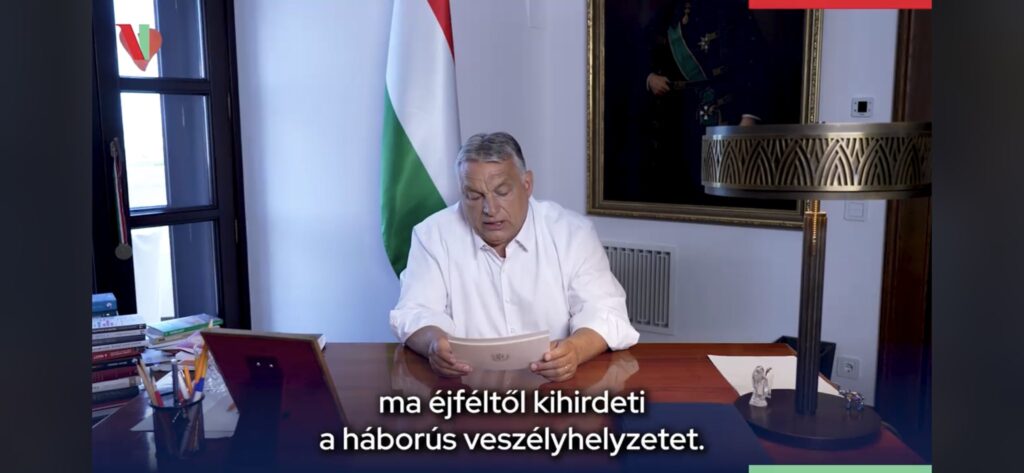
Hungarian Prime Minister Viktor Orbán, following a meeting of the National Defence Council, stated that Ukraine allegedly “plans new actions” aimed at damaging Hungary’s energy system, in addition to the suspension of Russian oil supplies through the Druzhba pipeline, and that he would therefore take measures.
“I have ordered the strengthening of protection for energy infrastructure facilities. We will deploy military personnel near energy facilities and the necessary assets to prevent attacks. Police will patrol around designated power plants, distribution stations, and dispatch centers,” Orbán said. He also announced that he had ordered a ban on drone flights in regions bordering Ukraine.
Earlier, Hungarian Foreign Minister Péter Szijjártó stated that the Druzhba oil pipeline had not been destroyed during a Russian attack on January 27, and that Ukraine had halted Russian oil supplies to Hungary purely for political reasons, allegedly to support the Hungarian opposition in elections. He confirmed that for this reason Hungary would continue to block both the EU’s 20th sanctions package against Russia and the allocation of a €90 billion European loan to Ukraine.
Orbán’s statement about Ukraine allegedly preparing actions against Hungary’s energy system is a political signal directed at both domestic and external audiences. Domestically, it creates an atmosphere of threat in which the government positions itself as the sole guarantor of security. In relations with the EU, it lays the groundwork for further confrontation and justifies the blocking of collective decisions on supporting Ukraine. In relations with Kyiv, it establishes a framework of distrust and suspicion.
Orbán’s accusations were not supported by any publicly available evidence or intelligence data. Budapest did not present EU or NATO allies with concrete facts confirming a direct threat from Kyiv. In the context of Russia’s full-scale war against Ukraine, such statements appear politically motivated and primarily aimed at producing a domestic effect ahead of parliamentary elections.
The parliamentary elections scheduled for April 12 pose an existential risk for Orbán, as for the first time in many years the opposition has a real chance of winning. The Tisza party, led by Péter Magyar, is ahead of the ruling party by 10–11 percentage points in polls, raising the stakes to the maximum. A potential defeat of Fidesz would mean not only the loss of power for Orbán, but also the risk of criminal prosecution. In this situation, the escalation of security rhetoric becomes a means of delegitimizing opponents and consolidating the electorate through fear of an external threat.
The current election campaign is presented not as a competition of development programs, but as a struggle for the survival of the state under external pressure. Such dramatization shifts the debate from a rational to an emotional plane, where arguments are replaced by loyalty. It also allows Orbán’s government to justify extraordinary security measures as a “temporary necessity.”
Orbán has chosen to mobilize the electorate through the image of an external enemy, supplementing criticism of Brussels with systematic anti-Ukrainian rhetoric. Accusations against Kyiv of “hatred” and “anti-Hungarian policy” reinforce this framework and normalize confrontation. This strategy allows Orbán’s government to reduce complex economic and social problems to a simple explanation based on “external influence” and to present the current leadership as the sole defender of Hungary’s sovereignty.
The ban on drone flights and the deployment of Hungarian troops near energy facilities have not only a security but also a symbolic effect. They reinforce a sense of emergency and cultivate a “fortress under siege” mentality. Such an atmosphere reduces space for public criticism of the government.
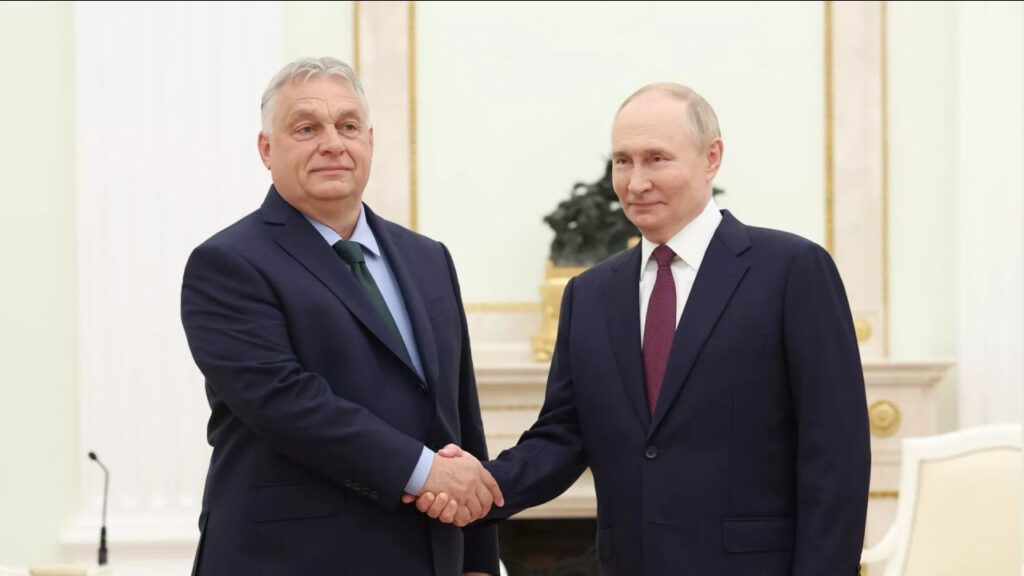
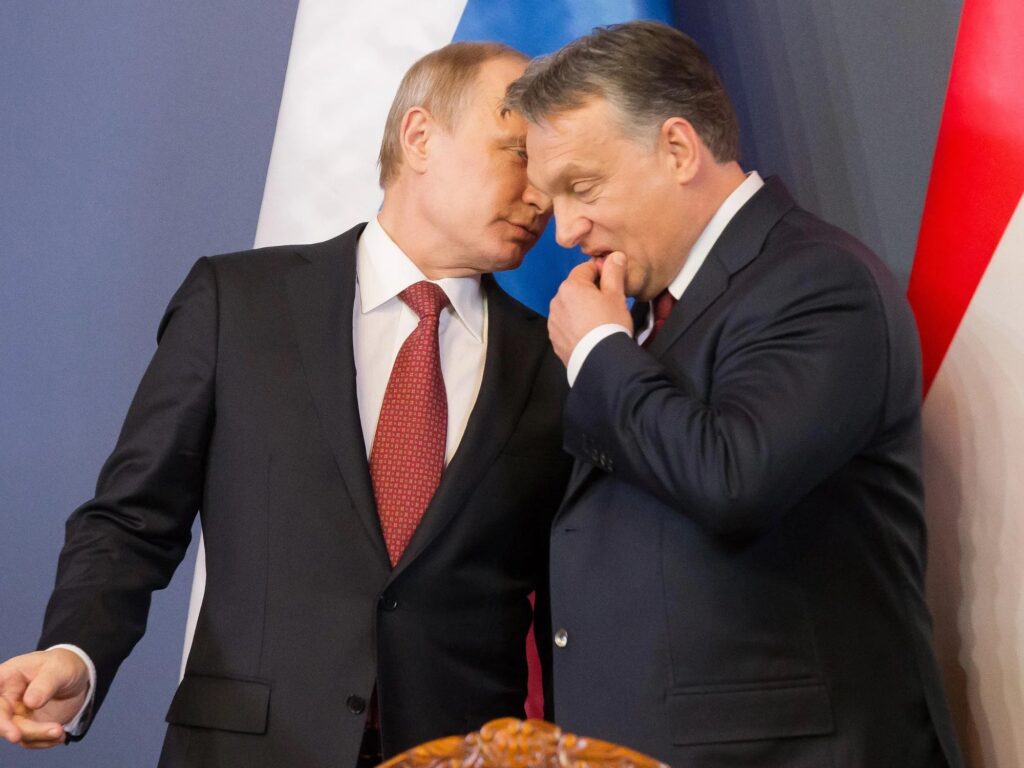
Orbán has a well-established reputation as the most pro-Russian leader in the EU, particularly due to his insistence on Hungary’s right to receive Russian oil via the Druzhba pipeline. While discounted Russian oil provides short-term economic benefits, in strategic terms it creates structural vulnerability and gives Moscow leverage over Budapest. The blocking of EU sanctions and financial assistance to Ukraine demonstrates how energy dependence is transformed into a political instrument.
Orbán’s statement about an alleged Ukrainian threat to Hungarian energy facilities objectively plays into the Kremlin’s hands, as it reinforces the Russian narrative portraying Ukraine as a source of instability in Europe. Shifting responsibility for energy risks onto Kyiv obscures the fact of Russian aggression and its systematic attacks on Ukraine’s infrastructure. In this way, Moscow gains additional “arguments” to justify its own aggression and to persuade European partners of the need to “limit” support for Ukraine, transforming Ukraine from a victim into an imagined culprit of energy instability. In this sense, Budapest effectively retransmits logic favorable to the Kremlin, undermining EU unity.
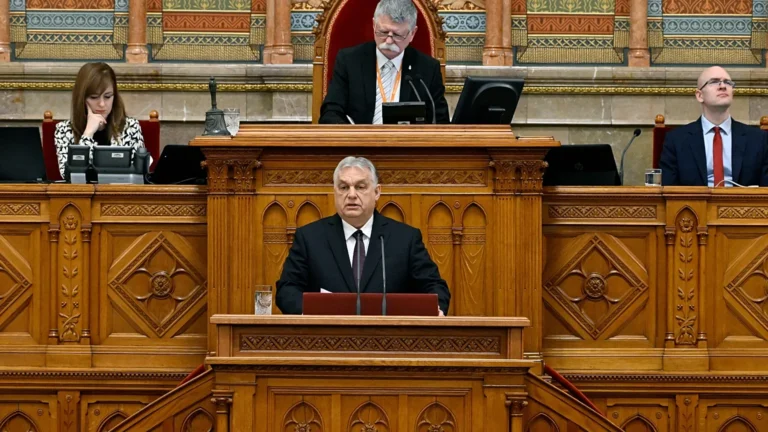
Meanwhile, Hungarian Foreign Minister Péter Szijjártó, speaking in parliament, stated that the EU is turning into a military alliance and preparing for war with Russia, and that the current EU leadership has forgotten that the bloc was created to ensure peace and prosperity for its member states.
“Decisions have been made. There are two nuclear states in Europe—the United Kingdom and France. They have given written consent to send soldiers to Ukraine. The leader of the most pro-military faction in the European Parliament, Manfred Weber, has already stated that soldiers will be sent to Ukraine under the EU flag. We have also heard statements from the German chancellor about German aircraft and French nuclear missiles,” Szijjártó said.
These statements were made against the backdrop of the fourth anniversary of the start of Russia’s full-scale invasion of Ukraine and EU plans to allocate a €90 billion loan to Ukraine. Anti-Ukrainian rhetoric from the Hungarian authorities has also intensified significantly due to the shutdown of the Druzhba pipeline, which was damaged as a result of a Russian attack. Criticism of the EU aims to undermine international support for Ukraine and efforts to strengthen the EU’s own defense capabilities, fully replicating Kremlin propaganda narratives.
The European Union is fundamentally an economic and political union. However, Russia’s full-scale invasion of Ukraine has forced it to reconsider and adjust its security strategy. What Szijjártó describes as a “transformation into a military alliance” is in fact a strengthening of member states’ defense capabilities in response to growing threats from Russia. The Hungarian foreign minister ignores the fact that security is the necessary foundation for prosperity and economic development that he himself invokes. The White House has also insisted on the need to increase Europe’s defense contribution. Thus, Budapest is obstructing efforts by the Trump administration to strengthen European security.
By accusing Brussels of preparing for a prolonged war, Szijjártó manipulates cause-and-effect relationships, as it is Russia that is waging a prolonged war. Preparing for a long-term conflict is not a desire to fight, but a deterrence strategy and an effort to improve defense capabilities amid escalating threats from Russia.
By opposing the strengthening of the EU’s defense dimension, Szijjártó effectively acts in the Kremlin’s interests. If he considers strengthening Europe’s defense to be “dangerous,” this calls into question Hungary’s reliability as an EU member and an Alliance partner.
Szijjártó’s statements exemplify selective perception of reality. He ignores the root cause of changes in EU policy—Russian aggression—and focuses solely on the consequences (armament), presenting them as “aggressive intentions of Brussels.” This allows the Hungarian authorities to extract political and economic dividends from cooperation with Russia.
The rhetoric of Hungarian officials fully mirrors Kremlin propaganda narratives and is aimed at obstructing support for Ukraine and undermining consolidation within the European Union.
Viktor Orbán’s statement that Ukraine allegedly “plans new actions” against Hungary’s energy system serves political, strategic, and informational purposes. It is best understood not as a security assessment, but as a deliberate political signal aimed at several audiences simultaneously.
Domestic Political Survival (Primary Driver)
Orbán’s claim creates an external threat narrative at a moment of high domestic political risk.
- Hungary is approaching high-stakes parliamentary elections
- The opposition is polling competitively
- Orbán personally faces loss of power and potential legal exposure
By portraying Ukraine as a security threat, Orbán:
- shifts public attention away from economic and governance problems,
- frames the election as a security referendum, not a policy debate,
- positions himself as the sole guarantor of national safety.
This is a classic “rally-around-the-flag” strategy.
2. Justifying Extraordinary Security Measures
Claiming an imminent threat enables Orbán to:
- deploy military units near civilian infrastructure,
- ban drone flights,
- normalize emergency-style governance.
These actions have symbolic value:
- they dramatize the sense of danger,
- reinforce a “fortress under siege” mentality,
- reduce political space for criticism.
The absence of evidence is not a flaw in this logic—it is irrelevant to the intended effect.
Leveraging Energy Dependency for Political Bargaining
Hungary remains structurally dependent on Russian energy delivered via the Druzhba pipeline.
By blaming Ukraine for energy disruptions, Orbán:
- deflects responsibility away from Russia, despite Russian attacks on infrastructure,
- reframes Hungary as a victim of Ukrainian actions, not Russian aggression,
- creates political cover for continuing energy ties with Moscow.
This narrative helps justify Hungary’s:
- blocking of EU sanctions,
- opposition to EU financial support for Ukraine.
Positioning Against the EU While Retaining Leverage
Orbán’s statement also functions as a signal to European Union partners.
It:
- lays groundwork to justify vetoes and obstruction,
- portrays EU pressure as endangering Hungarian security,
- reframes EU solidarity with Ukraine as a direct risk to Hungary.
This allows Budapest to demand concessions while claiming a security rationale.
Aligning with (and Amplifying) Kremlin Narratives
The claim objectively aligns with Russia’s information strategy by:
- portraying Ukraine as a source of instability,
- shifting focus away from Russian responsibility for the war,
- reinforcing the idea that support for Ukraine creates regional insecurity.
Whether intentional or not, this amplifies Moscow’s narrative that Ukraine is reckless and dangerous—useful for Russia’s broader effort to erode European unity.
Why No Evidence Was Provided
No public intelligence or evidence was offered because:
- the claim is not meant to be scrutinized, only circulated,
- presenting evidence would invite verification and rebuttal,
- ambiguity maximizes political flexibility.
In information politics, suggestion often works better than proof.
What This Statement Is Not
- It is not based on publicly verifiable intelligence
- It is not coordinated with NATO or EU security assessments
- It is not accompanied by allied warnings or confirmations
This strongly indicates political motivation rather than security necessity.
Viktor Orbán’s claim that Ukraine plans actions against Hungary’s energy system is a politically motivated narrative designed to mobilize domestic support, justify extraordinary security measures, deflect responsibility for energy dependence on Russia, and legitimize Hungary’s obstruction of EU policy toward Ukraine. The absence of evidence is consistent with its function as political signaling rather than a genuine intelligence warning.
Below is a \ analytical risk assessment of the possibility that an attack on Hungary’s energy infrastructure could be intentionally simulated under a false-flag, framed for policymakers. This avoids any operational detail and focuses on likelihood, incentives, constraints, and indicators.
Probability Assessment (Next 6–12 Months)
- Overall likelihood: Low–Medium
- Impact if it occurred: High
- Most plausible form: Symbolic or non-destructive incident (e.g., brief outage, ambiguous disruption), not a catastrophic attack
Why the Risk Exists
1. Political Incentives
A simulated or ambiguous incident could serve to:
- reinforce a domestic “external threat” narrative,
- justify extraordinary security measures,
- legitimize obstruction of EU decisions by citing national security.
This logic aligns with high-stakes domestic politics and crisis framing.
Narrative Pre-Positioning
Public claims that an adversary “plans actions” create anticipatory blame assignment.
If a disruption follows, even if minor or ambiguous, the narrative can pivot quickly to:
“We warned about this.”
Pre-positioning lowers the political cost of attribution disputes.
Information Asymmetry
Energy incidents are often:
- technically complex,
- initially ambiguous,
- slow to attribute conclusively.
This ambiguity creates space for competing narratives in the early hours/days—when public opinion is most malleable.
Why a False-Flag Is Still Unlikely
1. High Attribution Risk
Modern monitoring, forensics, and allied intelligence sharing make sustained deception difficult.
A false-flag that collapses under scrutiny would:
- damage credibility with allies,
- trigger EU/NATO political backlash,
- impose long-term reputational costs.
Economic Self-Harm
Energy disruptions—even limited—carry:
- direct economic losses,
- investor confidence damage,
- public backlash if services are affected.
These costs constrain appetite for deliberate simulation.
Safer Alternatives Exist
Political objectives can be achieved with lower risk via:
- rhetoric and alerts,
- visible security deployments,
- regulatory or administrative measures,
- diplomatic obstruction framed as “risk mitigation.”
These tools are reversible and don’t risk forensic exposure.
What Would Increase the Risk (Early-Warning Indicators)
Watch for convergence of indicators rather than any single signal:
- Escalating specificity in public accusations
(from vague warnings → claims of imminent action) - Pre-emptive diplomatic messaging
(briefings to select partners before any incident) - Restrictions on transparency
(limited access for inspectors, delayed data release) - Tight coupling with political milestones
(elections, EU votes, sanctions decisions) - Rapid narrative lock-in after a minor disruption
(attribution asserted before technical findings)
What Would Keep the Risk Low
- Immediate independent technical assessments and data sharing
- Allied verification and joint statements on attribution standards
- Clear separation between political claims and technical findings
An intentionally simulated false-flag incident targeting Hungary’s energy infrastructure is possible but not the most likely course. The incentives for narrative leverage exist, but the attribution risks, economic costs, and availability of safer political tools make a real or staged incident an unattractive option. The highest risk lies in ambiguous, low-impact disruptions exploited for political signaling rather than in major physical damage.
The Russian the Insider reporting on Viktor Orbán’s historical and indirect links to networks associated with Semion (Semyon) Mogilevich does not mechanically “explain” each Orbán statement, but it helps contextualize why Orbán’s rhetoric and behavior are structurally aligned with Kremlin interests and why he consistently adopts high-risk narratives that isolate Hungary inside the EU.
How the Russian Dossier Context Matters for Orbán’s Statements
Compromise Vulnerability vs. Direct Control
There is no public evidence that Viktor Orbán receives direct instructions from Moscow or criminal figures.
However, Russian Dossier materials describe overlapping financial, political, and intelligence-adjacent networkslinked to Semion Mogilevich, which historically operated at the intersection of:
- Russian organized crime
- intelligence services
- energy and banking sectors in Central Europe
Impact:
This creates structural vulnerability, not command-and-control. A compromised or potentially compromised leader tends to:
- avoid confrontation with Russia,
- pre-emptively align with Kremlin narratives,
- overcompensate with loyalty signaling.
2. Energy Dependency as a Leverage Channel
Mogilevich-linked networks historically penetrated:
- gas trading,
- oil transit,
- intermediary companies in Central Europe.
Orbán’s insistence on:
- maintaining Russian oil via Druzhba,
- blocking EU sanctions tied to energy,
- reframing energy disruptions as “Ukrainian actions”
fits a pattern where energy is not just economic, but political insurance.
Russian Dossier relevance:
It shows how energy dependence and opaque intermediaries historically enabled both financial influence and political leverage—making Orbán’s statements less about policy disagreement and more about risk avoidance.
Narrative Alignment as a Defensive Strategy
When leaders face:
- potential exposure,
- reputational risk,
- unresolved historical ties,
they often adopt aggressive narrative alignment with the actor most capable of exploiting that vulnerability.
Orbán’s claims about Ukraine threatening Hungary’s energy system:
- shift blame away from Russia,
- echo Kremlin disinformation patterns,
- normalize Russia’s framing inside the EU.
This is consistent with defensive political behavior, not ideological coincidence.
Why Orbán Uses Allegations Without Evidence
From a counterintelligence perspective, leaders under latent pressure often:
- make suggestive claims rather than factual ones,
- avoid evidence that could be cross-checked,
- rely on ambiguity to preserve deniability.
The Russian Dossier context explains why Orbán repeatedly chooses ambiguity over verifiable security assessments.
5. Criminal–State Symbiosis Is a Russian Modus Operandi
The Kremlin has long integrated:
- organized crime,
- energy intermediaries,
- intelligence services
into a single influence ecosystem.
Russian Dossier reporting highlights that figures like Mogilevich were not anomalies, but early prototypes of this system.
Orbán’s behavior aligns with what analysts call “managed autonomy”:
Leaders are not ordered—but they act in ways that avoid triggering retaliation.
What This Means for Interpreting Orbán’s Statements
Orbán’s claims about Ukraine and Hungary’s energy security should be read as:
- political risk management, not intelligence warnings;
- pre-emptive narrative alignment, not threat assessment;
- damage control behavior, not sovereign strategy.
Russian Dossier reporting on Viktor Orbán’s historical exposure to Russian criminal–energy networks associated with Semion Mogilevich does not prove direct Kremlin control. It does, however, illuminate a pattern of structural vulnerability that helps explain Orbán’s consistent alignment with Russian narratives, his reluctance to confront Moscow, and his use of unsubstantiated security claims to deflect responsibility and justify obstruction within the EU.
A comparative map of the “energy/criminal leverage” model around Orbán (as described by Dossier-style reporting and related open-source discussions) against other EU cases where Russia (or Russia-linked networks) exploited energy dependence + corruption vulnerabilities to gain political influence.
Hungary: Orbán “kompromat/underworld” narrative + energy leverage
Vector: alleged kompromat narratives + dependence on Russian oil via Druzhba
Mechanism: political signaling that protects Russian energy interests; uses crisis framing and blame-shifting toward Ukraine during energy disruptions.
Open-source “kompromat” claim ecosystem: outlets linked to the “Russian Dossier/Dossier Center/Insider” reporting orbit have circulated allegations about compromising material tied to Mogilevich-era networks (not independently proven in public).
Key takeaway: regardless of the kompromat allegation’s verifiability, energy dependence provides a hard leverage channel; the narrative layer can amplify it.
Austria: “Ibiza affair” — simulated Russian-oligarch access + quid pro quo offers
Vector: covert financing / media capture offers framed as Russian-oligarch access
Mechanism: in the sting video, FPÖ leader Heinz-Christian Strache discusses trading government contracts and media influence for political support with a woman posing as a Russian oligarch’s niece.
Key takeaway: this is a textbook example of attempted capture—not energy-specific, but the same “dirty influence” toolkit that often accompanies energy leverage.
Germany: Schröder as “energy capture” exemplar (post-office roles)
Vector: elite capture via senior paid roles in Russian state energy (Gazprom/Rosneft/Nord Stream ecosystem)
Mechanism: extensive criticism and political backlash in Germany over Schröder’s roles is widely documented; it illustrates how Russian state energy can buy high-status Western validators and lobbyists.
Key takeaway: not “criminal leverage” in the Mogilevich sense—rather institutional and reputational capture via energy money.
Austria (again): Kneissl / OMV ecosystem — elite access + energy entanglement
Vector: elite proximity + Russian state energy board roles; plus broader Austria-Russia energy entanglement debates
Mechanism: Kneissl’s Rosneft board role after her high-profile Putin-linked episode became a symbol of Austria’s Russia-linked influence vulnerabilities.
Separately, OMV-related concerns about Russia-linked influence and security scrutiny have surfaced in reporting.
Key takeaway: Austria is often described as a “soft target” environment where energy, neutrality politics, and influence networks intersect.
Bulgaria: oligarchic environment + Russian energy footprint (Lukoil/Gazprom leverage space)
Vector: corruption ecosystem + strategic energy dependence (historically Gazprom; refinery/fuel networks via Lukoil footprint)
Mechanism: Bulgaria’s politics are frequently analyzed through the lens of corruption and Russian influence intertwining, and recent disputes over Lukoil’s refinery governance underscore how energy assets become political levers.
Key takeaway: Bulgaria best fits the “kleptocratic ecosystem” model—less about one leader, more about a system Russia can plug into.
Slovakia (2026 example): energy chokepoint leverage as political pressure tool
Vector: Druzhba transit dispute → pressure on Ukraine/EU
Mechanism: Slovakia’s leadership threatened/implemented steps (e.g., emergency electricity supply cuts) amid Druzhba-related disruption disputes; this shows how energy interdependence can be weaponized politically inside the EU even without “criminal” angles.
Key takeaway: a “hard power” variant of influence: use energy flows to force political outcomes.
Cross-case “Influence Toolkit” Matrix (quick map)
| Country / case | Primary leverage channel | “Criminal/kompromat” element | Energy dependency role | What Russia gains |
| Hungary (Orbán) | narrative alignment + veto leverage | alleged (unproven publicly) | High | EU disunity; sanctions delays |
| Austria (Ibiza) | covert financing / media capture offers | indirect (sting) | Medium | access, contracts, policy influence |
| Germany (Schröder) | elite capture via paid roles | No | High historically | lobby/legitimacy; policy drag |
| Austria (Kneissl/OMV context) | elite access + energy entanglement | No | High | normalization; network access |
| Bulgaria | oligarchic capture + energy assets | systemic corruption risk | High | embedded influence; asset leverage |
| Slovakia (Druzhba dispute) | chokepoint leverage | No | High | pressure on EU/Ukraine policy |
Why this matters for Orbán question
The Mogilevich/“Russian Dossier” framing (even if not provable publicly) is best treated as a hypothesis about vulnerability. The more robust, provable pattern is that energy dependence + corruption-friendly systems create repeatable leverage pathways across Europe. A good way to write it:
“Even without assuming direct kompromat, the EU record shows that Russian influence most reliably operates through energy chokepoints, elite capture roles, and corruption-prone intermediaries—mechanisms visible across multiple member states.”
More on the story: Hungary’s Espionage Against EU Institutions:
More on this story: Hungary’s Balancing Act: Strategic Risks of Budapest’s Covert Ties with Russia
More on this story: Hungary: Trojan Horse in Russia’s Proxy War Against Europe
More on this story: Peacekeeper or Invader? Hungarian Forces and the Future of Western Ukraine
More on this story: Orbán’s ‘EU of 26’: A Slip of the Tongue—or a Signal of Huxit Thinking?”