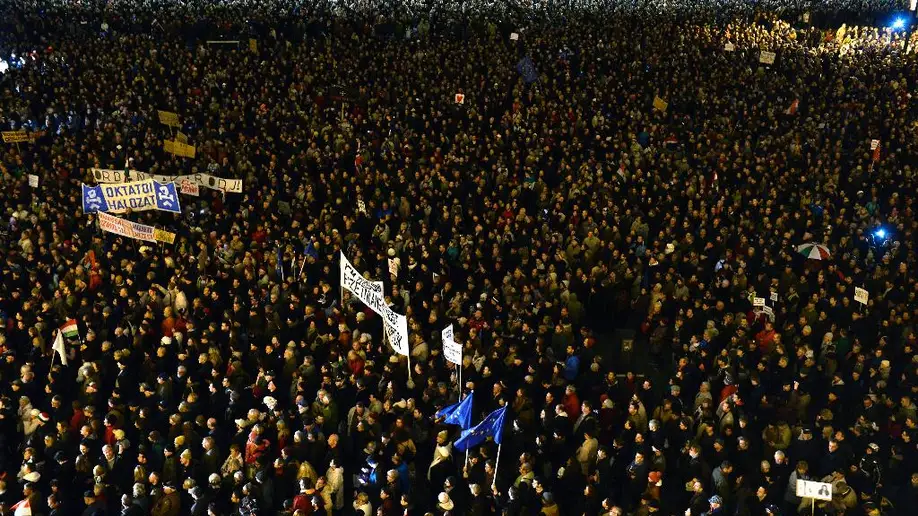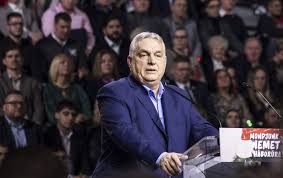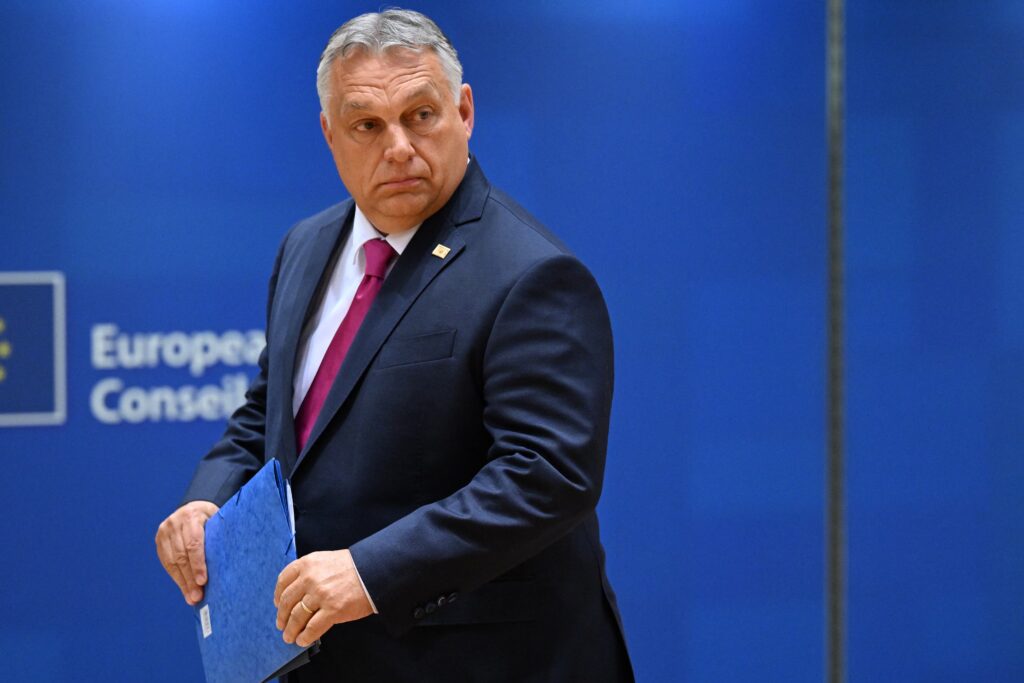

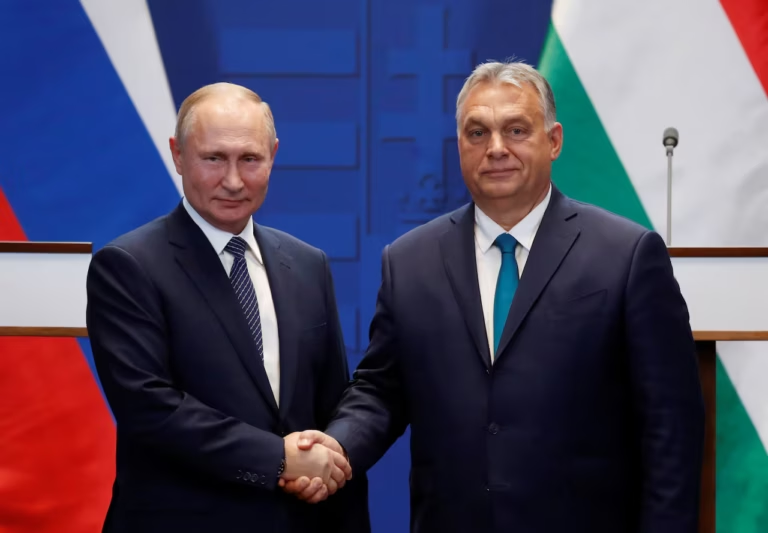
While the Hungarian opposition accuses the ruling party Fidesz of using foreign policy scandals to distract public attention from the collapse of municipal services and mounting domestic problems, Viktor Orbán continues to strengthen his status as Moscow’s closest ally within the European Union.
Direct intervention by Vladimir Putin in Hungary’s pre-election agenda through the release of prisoners is intended to convince voters that only the current prime minister is capable of maintaining an effective dialogue with Russia and ensuring the security of Hungarians on both sides of the border.
Source: Bloomberg.
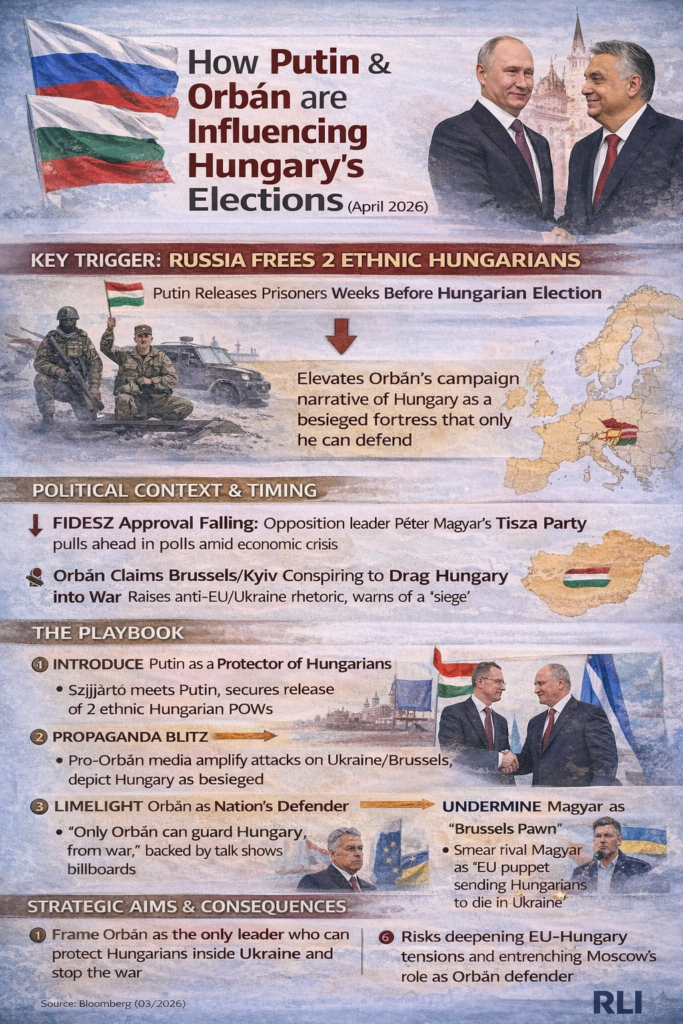
On the eve of Hungary’s April elections, Russian President Vladimir Putin provided significant political support to Prime Minister Viktor Orbán by announcing the release of two ethnic Hungarians from Russian captivity. Putin personally informed Hungary’s Foreign Minister Péter Szijjártó of the decision during his visit to the Kremlin on March 4.
Putin emphasized that the decision was made in response to a request from the Hungarian prime minister and even offered the minister the opportunity to collect the released citizens on a Hungarian government aircraft and transport them immediately to Budapest.
This episode was the culmination of a carefully orchestrated media campaign. First, a video circulated on social media showing a captured ethnic Hungarian from Transcarpathia appealing to the Hungarian government for help. The following day, Szijjártó traveled to Moscow and reported on what he described as a “rescue mission.”
The speed and ease with which the issue was resolved sharply contrast with the enormous difficulties faced by most Ukrainian prisoners of war when trying to contact their families.
For Orbán’s Fidesz party, the incident became a powerful propaganda tool aimed at approximately 150,000 ethnic Hungarians living in Ukraine. Pro-government media actively use stories about the deaths and captivity of mobilized Transcarpathian Hungarians to amplify anti-Ukrainian sentiment and portray Orbán as the nation’s sole defender.
The political context of this gesture is linked to the sharp decline in the ruling party’s approval ratings, driven by the country’s poor economic situation and the emergence of a strong challenger in the person of Péter Magyar.
In an effort to retain power, Orbán has been constructing the narrative of Hungary as a besieged fortress, claiming that Brussels and Kyiv are conspiring to drag the country into war. Within this rhetoric, Ukraine is accused not only of attempting to overthrow the Hungarian government but also of deliberately blocking Russian oil supplies.
Against this backdrop, Hungary’s close ties with the Kremlin are presented as a strategic necessity for keeping energy prices under control, a narrative reinforced by Szijjártó’s frequent visits to Russia and his close contacts with Russian Foreign Minister Sergey Lavrov.
Orbán’s election strategy and that of the ruling Fidesz party revolves around “demonizing” Ukraine as the primary threat to Hungary. The Hungarian prime minister accuses the Ukrainian leadership of imposing an “oil blockade” by suspending the operation of the Druzhba pipeline and of allegedly planning sabotage against Hungary’s energy infrastructure.
Orbán is working to convince the Hungarian public that the country is facing a national emergency, arguing that under such circumstances only he can guarantee the state’s security. At the same time, he labels his main opponent—Péter Magyar of the Tisza Party—a “traitor serving Kyiv and Brussels who plans to bankrupt Hungary’s economy and send Hungarian youth to die for Ukraine.”
Magyar, the charismatic leader of the Tisza Party and Orbán’s main challenger, promises anti-corruption reforms, improved public services, and the normalization of Hungary’s relations with the European Union. However, he has ruled out sending weapons to Kyiv.
Orbán, who maintains close ties with the Kremlin, has stated that it is “difficult to determine who started the war” and has described EU institutions in Brussels as a greater threat to Hungary than Moscow.
According to opinion polls, the Tisza Party currently leads Fidesz by at least nine percentage points. Electoral analysts note that the opposition would only need to secure a three-percent advantage in the vote to defeat the ruling party.
The political significance of the episode becomes clearer when placed within Hungary’s domestic political context.
The ruling party has experienced a noticeable decline in public support amid economic stagnation, rising inflation, and widespread dissatisfaction with public services. At the same time, Orbán now faces his most credible challenger in years in the form of Péter Magyar, the leader of the Tisza Party.
Opinion polls currently indicate that the Tisza Party holds a lead of roughly nine percentage points over Fidesz. Electoral analysts note that even a three-percentage-point advantage could be sufficient for the opposition to defeat the ruling party.
In response, Orbán has intensified a campaign narrative portraying Hungary as a “besieged fortress.” According to this narrative, Brussels and Kyiv are allegedly conspiring to drag Hungary into the war in Ukraine and undermine the country’s sovereignty.
Within this framework, Ukraine is accused not only of seeking regime change in Budapest but also of deliberately disrupting Russian oil deliveries through the Druzhba pipeline, thereby threatening Hungary’s energy security.
Energy Politics and the Kremlin Connection
Orbán’s government has increasingly framed Hungary’s close relationship with Moscow as a strategic necessity for controlling energy prices and protecting the country’s economic stability.
This narrative is reinforced by the frequent visits of Foreign Minister Szijjártó to Moscow and his ongoing engagement with Sergey Lavrov. These diplomatic contacts are presented domestically as evidence that Hungary maintains a unique channel of communication with Russia—one that supposedly shields the country from the broader geopolitical confrontation between Moscow and the West.
Demonization of Ukraine in the Electoral Narrative
A central pillar of Orbán’s electoral strategy is the systematic demonization of Ukraine as Hungary’s primary external threat.
The Hungarian prime minister has accused the Ukrainian leadership of:
- imposing an “oil blockade” against Hungary through disruptions of the Druzhba pipeline
- planning sabotage against Hungarian energy infrastructure
- attempting to destabilize the Hungarian government
These claims are intended to cultivate the perception of a national emergency, thereby reinforcing Orbán’s message that only his leadership can guarantee Hungary’s security.
At the same time, Orbán has sought to discredit his main rival. He has described Péter Magyar as a “traitor serving Kyiv and Brussels” who would allegedly bankrupt Hungary’s economy and send Hungarian youth to fight and die in Ukraine.
The Opposition’s Alternative Narrative
Magyar’s campaign has focused on issues largely ignored by the government’s security narrative.
The Tisza Party leader promises:
- anti-corruption reforms
- improved public administration and social services
- normalization of Hungary’s relationship with the European Union
However, Magyar has also ruled out sending Hungarian weapons to Ukraine, reflecting the sensitivity of the issue within Hungarian domestic politics.
Strategic Implications
The Kremlin’s intervention in Hungary’s political environment illustrates how Russia continues to exert influence within EU member states through symbolic gestures, energy diplomacy, and information narratives.
By assisting Orbán at a politically sensitive moment, Moscow reinforces the perception among Hungarian voters that maintaining close ties with Russia offers tangible benefits.
At the same time, the episode highlights the growing geopolitical divide within the European Union, where Hungary increasingly positions itself as a mediator—or in the eyes of its critics, a proxy—between Moscow and Brussels.The outcome of Hungary’s elections will therefore have consequences that extend beyond domestic politics. It may also shape the future cohesion of EU policy toward Russia and the war in Ukraine.
Orbán victory vs. Magyar victory: consequences for EU policy toward Russia (April 2026 election)
Key judgment
Hungary is already acting as a primary friction point inside the EU on Russia policy—especially on sanctions and Ukraine financing, which require unanimity in key areas. Reuters reports Orbán has linked Hungary’s veto of new EU Russia sanctions and a €90bn EU loan to Ukraine to the Druzhba oil dispute, making “energy leverage” an explicit campaign and bargaining tool.
The election outcome therefore matters less for symbolism and more for whether Budapest continues to weaponize unanimity on Russia/Ukraine files.
Scenario A — Orbán/Fidesz victory
Probability: competitive but plausible (polls show Tisza leading, outcome still uncertain).
What changes for EU Russia policy
1) Sanctions and Ukraine support remain “transactional”
- Expect continued veto threats and “price-setting” behavior: Hungary uses unanimity to extract concessions (funds, exemptions, energy carve-outs).
- The Druzhba pipeline dispute already illustrates the model: Orbán publicly tied it to blocking sanctions and the Ukraine loan.
EU consequence: slower sanctions rounds, more exemptions, more negotiation costs—higher risk of sanctions dilution.
2) Hungary stays Moscow’s loudest pro-dialogue voice inside the EU
Orbán’s positioning as Russia’s closest EU partner is reinforced by high-visibility gestures (e.g., POW release narrative reported by Bloomberg).
EU consequence: Russia gains an internal amplifier for “peace now / stop arming Kyiv / energy realism” narratives.
3) Institutional workarounds expand
If Orbán continues blocking unanimity, the EU will increasingly:
- route aid through coalitions of willing states, off-budget facilities, or bilateral tracks
- explore legal/technical bypasses (still politically costly)
EU consequence: more fragmentation—policy moves forward, but with weaker unity and higher administrative friction.
4) Signal to Russia: “EU unity is purchasable”
A renewed Orbán mandate tells Moscow it can keep exploiting EU internal veto points as a low-cost strategy.
Scenario B — Magyar/Tisza victory
Probability: meaningful; multiple sources note Tisza leading and a realistic chance of winning.
What changes for EU Russia policy
1) Immediate improvement in EU cohesion—especially on Ukraine financing
ECFR argues a post-Orbán Hungary would “work with Europe, not against it,” implying fewer deliberate blockages.
That doesn’t mean Budapest becomes hawkish overnight—but it likely ends the systematic veto-as-tool pattern.
EU consequence: faster decision cycles on Ukraine support and sanctions maintenance.
2) More predictable Hungary inside EU decision-making, but not “automatic alignment”
EPC cautions that Magyar would not be an easy partner: Tisza may still align tactically with Fidesz on sensitive issues like Ukraine, agriculture, and migration.
EU consequence: reduced sabotage, but continued bargaining on specifics—especially anything framed domestically as “dragging Hungary into war.”
3) De-risking from Moscow increases, but energy/populist constraints remain
Even a pro-EU corrective government inherits:
- energy exposure narratives
- political polarization
- institutional legacies of the Orbán era
EU consequence: Hungary becomes less useful for Moscow as a blocking asset, but Russia will pivot to influence operations and narrative warfare to weaken the new government.
4) Russia’s counter-move: destabilize, delegitimize, and split
If Magyar wins, expect Moscow to:
- test Hungary’s new posture with pressure points (energy messaging, disinfo, “minority protection” themes)
- seek replacement veto partners (Slovakia is an obvious candidate in current dynamics).
EU consequence: short-term turbulence; medium-term stronger EU alignment if Budapest holds.
Side-by-side impact table
| Policy area | Orbán victory | Magyar victory |
| EU sanctions on Russia | Higher risk of delays/exemptions; veto leverage persists | More stable renewal/updates; less deliberate obstruction, but not guaranteed hawkishness |
| EU Ukraine financing | Continued hostage-taking dynamics around unanimity | Higher chance of unblocking/normalizing decision flow |
| EU internal cohesion | More fragmentation and bypass mechanisms | Improved cohesion, but Moscow likely ramps interference |
| Russia’s strategic position in EU | Stronger—retains reliable internal disruptor | Weaker—must find substitutes and destabilize new govt |
Conditions and indicators to watch (early warning)
If Orbán is headed to victory
- escalation of “Ukraine threat / Druzhba blockade” messaging in state-aligned media
- fresh veto threats tied to funds, sanctions carve-outs, or energy exemptions
If Magyar is headed to victory
- Russian/Hungarian pro-government narratives shifting from “security” to “delegitimization” (“foreign agents,” “Brussels puppet”)
- Tisza’s signals on EU alignment and the limits (e.g., no weapons to Kyiv is already part of the political terrain per policy analyses).
Bottom line
- Orbán victory: EU Russia policy remains slow, leaky, and hostage to veto politics, giving Moscow an ongoing tool to erode unity.
- Magyar victory: EU policy becomes more coherent and predictable, though Hungary may still keep distance on the most politically toxic Ukraine issues—yet Moscow’s ability to use Budapest as a hard veto node likely shrinks significantly.
If you want, I can convert this into a scenario matrix (best/most-likely/worst) with probability bands and a concise EU decision-impact score for sanctions, Ukraine aid, and energy policy.