
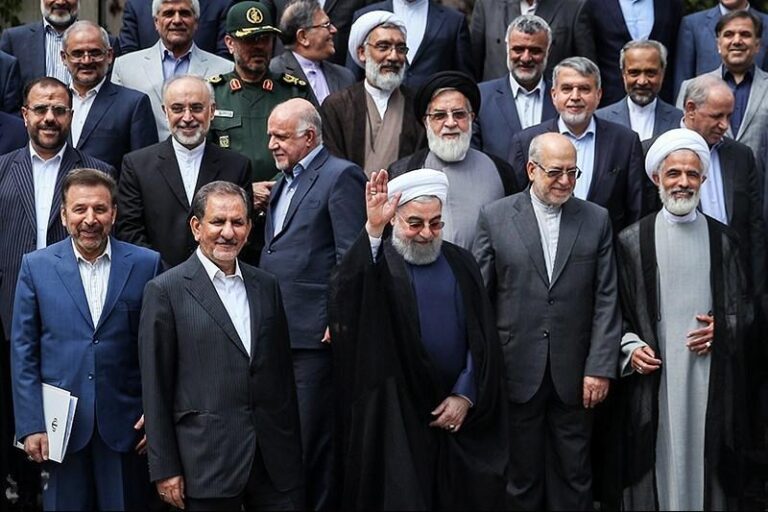
A recent classified assessment by the National Intelligence Council concludes that even a large-scale interstate war against Iran would be unlikely to remove or fundamentally transform the country’s ruling system. According to reporting citing sources familiar with the document, the assessment reflects the consensus view across the U.S. intelligence community that the Iranian regime possesses strong institutional resilience rooted in its security apparatus, political networks, and ideological cohesion.
The report evaluates several potential pathways to leadership change in Iran, including targeted “decapitation” strikes against senior officials and broader military campaigns against Iran’s security infrastructure. In both scenarios, analysts conclude that the regime is capable of absorbing leadership losses and rapidly replacing key figures, including the Supreme Leader. This resilience stems largely from the depth of Iran’s governing institutions—particularly the Islamic Revolutionary Guard Corps and associated security structures—which function as a durable backbone of the political system.
Another major factor limiting the likelihood of regime change is the weakness and fragmentation of Iran’s opposition movements. Both domestic dissident groups and exiled opposition networks lack the organizational unity, political legitimacy, and operational capacity needed to present a credible alternative government. As a result, even in the event of significant military pressure or leadership disruption, the emergence of a coordinated opposition capable of seizing power remains unlikely.
The intelligence assessment also reinforces earlier conclusions by U.S. intelligence agencies that if the current Supreme Leader were removed or killed, the most probable outcome would be the appointment of another hardline successor drawn from the existing elite structure. Such a transition would likely preserve the regime’s ideological orientation, including continued hostility toward Israel and opposition to Western influence.
At the same time, the report acknowledges several uncertainties. It does not explore scenarios involving a prolonged ground invasion of Iran by external forces, nor does it fully consider the possibility that ethnic unrest in peripheral regions could evolve into a nationwide insurgency. Nevertheless, the central conclusion remains that Iran’s political system is deeply institutionalized and capable of surviving severe external shocks.
For policymakers in Washington and allied capitals, the report underscores an important strategic implication: military action alone is unlikely to achieve regime change in Iran. Instead, any strategy aimed at transforming Iran’s political order would likely require long-term internal political shifts rather than external military intervention.
A CLASSIFIED REPORT ISSUED two weeks ago by the United States National Intelligence Council (NIC) found that even a full-scale interstate war against Iran would be unlikely to dislodge or drastically alter the current regime. A summary of the report was revealed by The Washington Post, which cited three anonymous sources the paper said were intimately familiar with the report’s contents.
Composed of senior and highly respected intelligence analysts from across the U.S. Intelligence Community (IC), the NIC is tasked with producing classified strategic assessments on critical issues of concern to American decision-makers. Technically NIC reports represent the collective voice of all 18 intelligence agencies that make up the U.S. IC, and come as close as possible to the IC’s consensus view on pressing national security concerns.
According to The Washington Post, the NIC report outlines several scenarios for leadership succession in Iran, resulting from either a surgical “decapitation” campaign against specific elements of regime, or from a large-scale military assault against the entirety of the Iranian security state. It concludes that in both cases the Iranian regime is too entrenched and powerful to fall. Moreover, even in the event of “decapitation”, the regime has substantial human resources to keep replenishing its fallen military and civilian leaders, including the Supreme Leader.
Lastly, the NIC report concludes that the Iranian opposition within Iran and around the world is too disjointed, fragmented and disorganized to pose a credible alternative to the Iranian security state. While discussing a number of different potential scenarios for the takeover of power by the Iranian opposition, the NIC report concludes that such an eventuality remains “unlikely”, The Postreports.
The Post’s report appears to confirm earlier accounts by The New York Times and the Reuters news agency, which suggested that the consensus view among the U.S. IC is that, if killed, Supreme Leader Ayatollah Khamenei would almost certainly be replaced by another hardliner, who would be ideologically opposed to both Israel and the West.
Notably, The Washington Post notes that the NIC report does not consider the possibility that the U.S. and Israel might decide to engage in a protracted ground war against Iran. Additionally, the report does not entertain the possibility that ethnic separatist forces within Iran—such as the Kurds, the Azeris or the Balochis—might revolt against Tehran, thus sparking a nationwide armed conflict.
Comparison with Iraq (2003) and Libya (2011) Regime Collapse Models
The assessment that military force alone is unlikely to bring down the Iranian regime becomes clearer when compared with the collapse dynamics of the regimes in Iraq War and Libyan Civil War. In both cases, regime change occurred relatively quickly, but the structural conditions that enabled those outcomes differ significantly from those currently present in Iran.
Iraq (2003): Rapid Military Collapse of a Personalized Regime
The regime of Saddam Hussein collapsed within weeks of the U.S.-led invasion in 2003. Several structural characteristics explain this rapid breakdown.
First, Saddam Hussein’s system was highly personalized and centered on a narrow network of loyalists, particularly from his tribal base. Although Iraq possessed significant military forces on paper, many units lacked cohesion and motivation to defend the regime once large-scale coalition forces entered the country.
Second, Iraq’s security apparatus had already been severely weakened by more than a decade of sanctions and the earlier Gulf War. The Iraqi army suffered from poor morale, outdated equipment, and limited operational capacity.
Third, the U.S. invasion involved a massive ground campaign that rapidly dismantled Iraq’s command-and-control structures. Once Baghdad fell, there was no deeply institutionalized system capable of preserving regime continuity.
Iran’s political structure differs in crucial ways. Power in Tehran is not concentrated solely in a single leader but distributed across multiple institutions—including the clerical establishment, the Islamic Revolutionary Guard Corps, and various political networks. This institutional depth makes the Iranian system less vulnerable to the rapid collapse seen in Iraq.
Libya (2011): Regime Collapse Through Internal Rebellion and External Support
The overthrow of Muammar Gaddafi occurred under different circumstances. The Libyan regime fell during the 2011 uprising after NATO intervention in support of rebel forces.
Unlike Iran, Libya had relatively weak state institutions. Gaddafi deliberately avoided building strong national institutions, instead relying on a fragmented system of militias, tribal alliances, and personal patronage networks. This structure allowed the regime to maintain power during periods of stability but made it highly vulnerable once a nationwide uprising began.
The NATO air campaign significantly shifted the balance of power by degrading the regime’s military capabilities and enabling rebel forces to advance. Crucially, there was already an armed domestic opposition capable of capturing territory and forming a transitional political authority.
Iran presents a stark contrast. Although internal dissent exists, opposition groups inside the country remain fragmented and lack the organizational capacity to mount a sustained nationwide rebellion comparable to the Libyan insurgency of 2011. Furthermore, Iran maintains far stronger state institutions and military structures than Libya did.
Structural Differences That Strengthen Regime Resilience in Iran
Several factors distinguish Iran from both Iraq and Libya and explain the intelligence community’s assessment that regime collapse is unlikely.
First, Iran possesses a highly institutionalized security architecture. Organizations such as the Islamic Revolutionary Guard Corps and the Basij militia create multiple layers of regime defense that can function even if senior leadership figures are removed.
Second, Iran’s political system distributes authority across several institutions, including clerical bodies, security organizations, and political elites. This reduces the likelihood that the elimination of a single leader would produce systemic collapse.
Third, Iran has demonstrated a high capacity for internal repression and crisis management, including during large-scale protest movements in recent years. These capabilities reduce the probability that internal unrest could rapidly evolve into a revolutionary uprising.
Strategic Implications
The comparison with Iraq and Libya suggests that the Iranian regime resembles neither a highly personalized dictatorship vulnerable to rapid military collapse nor a weak state dependent on fragile tribal alliances. Instead, Iran functions as a deeply embedded security state with overlapping institutions capable of maintaining continuity even under severe external pressure.
For policymakers, this comparison reinforces the conclusion that strategies modeled on previous regime-change operations in Iraq or Libya are unlikely to produce similar outcomes in Iran. Military pressure alone may weaken the state, but it is unlikely to dismantle the institutional structures that sustain the regime’s survival.
Here are the main implications for U.S. and Israeli strategy toward Iran if the core intelligence judgment is correct — namely, that even major military action is unlikely to collapse the regime quickly and that succession would probably produce another hardline leadership rather than a pro-Western alternative.
Regime change should not be the planning assumption
For both Washington and Jerusalem, the first implication is that military pressure should not be built around an expectation of rapid regime collapse. The NIC assessment reportedly found that Iran’s political-security system is resilient, can replace senior leaders, and is not facing an opposition capable of quickly taking power.
That means any strategy premised on “decapitation equals collapse” is high-risk. In practical terms, the U.S. and Israel would need to shift from a collapse model to a degradation-and-containment model: reduce Iran’s nuclear, missile, drone, and proxy capacity, but assume the state itself may survive the shock. Reuters reporting from this week also suggests that even after heavy strikes and leadership losses, Iran retains meaningful coercive capacity and is trying to fight a war of endurance rather than capitulate.
Leadership targeting may harden, not moderate, the system
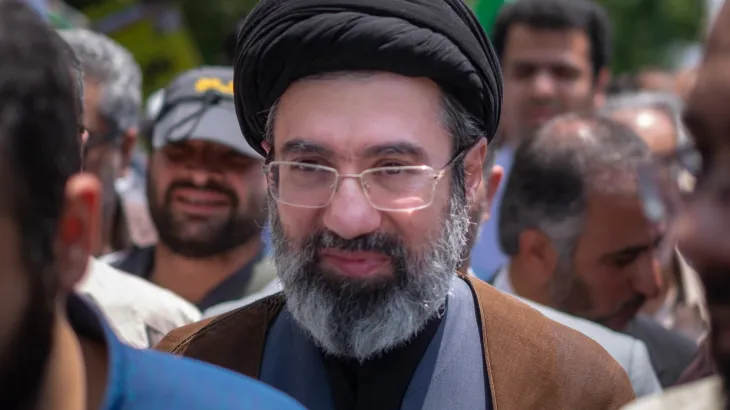
A second implication is that killing top leaders may not moderate Tehran’s behavior. U.S. intelligence reporting described by major outlets has suggested that if Ayatollah Ali Khamenei were removed, the likely replacement would still come from the hardline camp; Reuters now reports that Mojtaba Khamenei has in fact been elevated and that his rise is expected to consolidate hardliner and IRGC influence.
For Israel, that undermines the argument that leadership decapitation automatically creates a more pragmatic postwar order. For the United States, it means leadership strikes can produce continuity with radicalization, especially if the Islamic Revolutionary Guard Corps gains a larger role in strategic decision-making. Reuters reports exactly that dynamic: stronger IRGC control and a strategy centered on retaliation, endurance, and energy disruption.
A prolonged war of attrition becomes more likely
If Iran is resilient and the opposition is weak, then the conflict becomes less about a quick overthrow and more about who can sustain costs longer. Reuters reports that Iran is explicitly betting on endurance, retained missile capacity, and disruption to Gulf energy flows to outlast U.S. and Israeli pressure.
That has major strategic implications:
- the United States must prepare for a longer campaign than political leaders may publicly prefer;
- Israel must assume that tactical successes may not end the threat quickly;
- both must prepare for sustained missile, drone, maritime, proxy, and energy-market pressure rather than a short decisive phase.
The objective has to become narrower and more realistic
If regime collapse is unlikely, then policy goals need to be more tightly defined. For the United States, the realistic objectives become:
- preventing or delaying an Iranian nuclear breakout,
- degrading long-range strike capabilities,
- limiting attacks on U.S. forces and partners,
- protecting Gulf energy flows,
- and containing escalation across the region.
For Israel, the more realistic objective is not “solve Iran” but reduce existential threat vectors — especially nuclear infrastructure, missile arsenals, drone production, and the operational connectivity between Tehran and Hezbollah or other proxies. Reuters reported that Israel’s foreign minister has framed the current war in precisely those terms, saying Israel is not seeking an endless war but wants to remove existential threats.
Ground-war options remain strategically toxic
The Washington Post account of the NIC report says it did not examine a protracted U.S.-Israeli ground war. That omission matters because, historically, ground occupation is the kind of force level usually required for true regime removal — but it also brings far greater political, military, and economic costs.
So the implication is stark: if airpower and decapitation are insufficient, the only escalatory path likely to offer a better chance of overthrow would be much larger and much more dangerous. For the United States especially, that raises the Iraq analogy immediately. The intelligence takeaway therefore pushes Washington away from any open-ended occupation logic and toward coercion without full-scale state takeover. That is consistent with current public signaling from U.S. officials that they do not want another Iraq- or Afghanistan-style campaign.
Internal fracture and separatist scenarios should be treated as contingencies, not strategy
Your comparison section is important here. Unlike Libya in 2011, Iran does not currently appear to have a nationally organized armed opposition ready to take territory and govern. And unlike Iraq in 2003, its state is not just one man and a brittle command pyramid; it has layered institutions and replacement capacity.
That means U.S. and Israeli planners should treat ethnic unrest, elite fractures, or local insurgencies as opportunities that may emerge, not as the central strategic plan. Reuters has reported some fissures inside Iran’s elite, but not a broad collapse of state authority.
Sanctions, cyber, covert action, and information warfare become more important than ever
If a decisive military overthrow is unlikely, then the relative importance of non-kinetic pressure rises. For Washington, that means sanctions enforcement, interdiction networks, cyber operations, covert disruption of procurement, and diplomatic isolation. For Israel, it strengthens the case for long-duration covert campaigns against nuclear personnel, missile production, command nodes, and foreign proxy logistics rather than reliance on one dramatic military blow.
This is partly an inference from the intelligence judgment: when regime collapse is unlikely, pressure has to move from one-time shock to persistent erosion of capability and legitimacy. That inference is also supported by Reuters reporting that the conflict is becoming an endurance contest rather than a one-stage military solution.
Post-strike diplomacy still matters, even after escalation
Another implication is that diplomacy becomes more important, not less. If military action cannot reliably produce a stable successor order, then at some point Washington and Jerusalem need an off-ramp strategy — whether through intermediaries, deterrence signaling, ceasefire terms, nuclear constraints, or regional de-escalation arrangements. Reuters reports that Israeli officials have left open the possibility of a diplomatic resolution coordinated with the United States, even while continuing military pressure.
For the United States, that means diplomacy is not a sign of weakness after force; it is the necessary political mechanism for locking in gains once the limits of military coercion are reached.
Bottom line
The central implication is that the U.S. and Israel should plan for a resilient, wounded, still-hostile Iranian state — not for a quick post-regime-collapse transition. Recent reporting indicates that even after severe strikes, leadership losses, and succession turmoil, Iran’s system has remained functional, the IRGC has tightened its role, and a new hardline leader has emerged rather than a conciliatory alternative. So the strategic adjustment is clear: narrower goals, longer timelines, stronger regional defense, more non-kinetic pressure, and no illusion that decapitation alone will solve the Iran problem.
More on this story: Iran’s New Supreme Leader: Strategic Outlook of Mojtaba Khamenei
More on this story: Iran’s Protests: Drivers, Actors, Consequences, and External Dimensions