
The dissolution of the Malagasy government in March 2026 represents another stage in Madagascar’s prolonged political crisis following the military-backed transition of 2025. The country’s transitional leader, Michael Randrianirina, dismissed Prime Minister Herintsalama Rajaonarivelo and the entire cabinet, effectively ending the government formed only months earlier.
The decision reflects deeper structural tensions inside Malagasy politics: social unrest, military influence, elite rivalry, and competition over the island’s strategic economic assets. Understanding the dissolution requires examining both internal dynamics and external geopolitical interests in Madagascar.
A State in Prolonged Political Crisis
The dissolution of the government cannot be understood without considering the events of 2025, when Madagascar entered a severe political crisis.
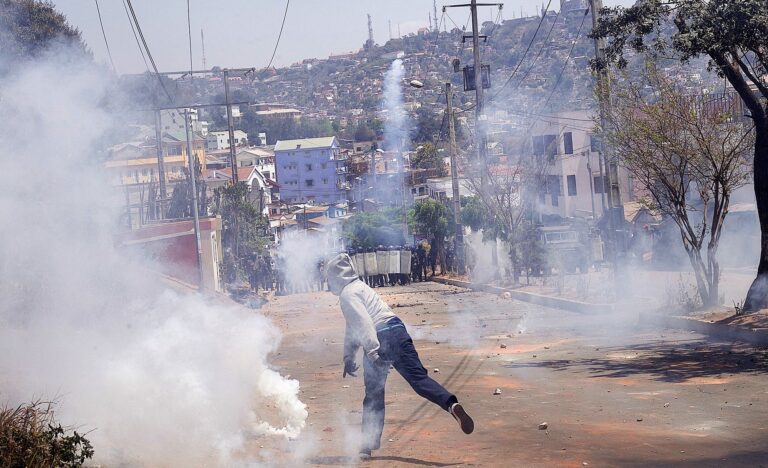
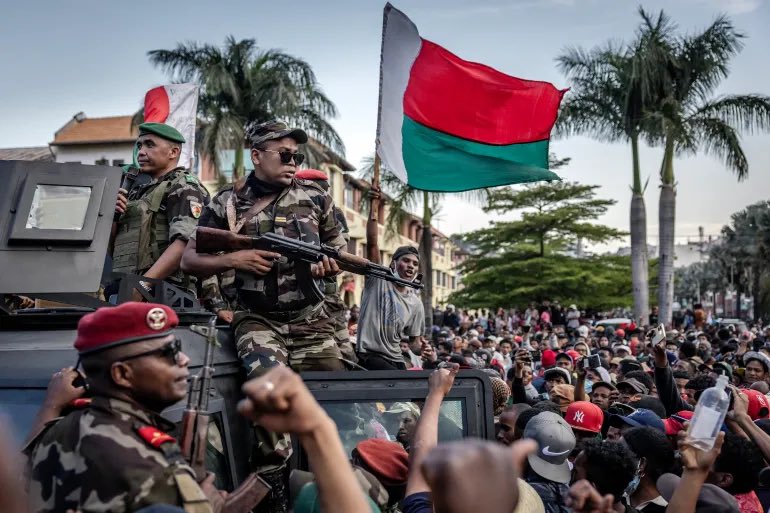
Mass protests erupted in September 2025 over electricity shortages, water supply disruptions, rising prices, and allegations of corruption.
These demonstrations were largely driven by youth movements—often described as Generation Z protests—that demanded political change and an end to entrenched political elites.
As protests intensified, parts of the military sided with demonstrators. The elite CAPSAT military unit refused orders to suppress the protests and eventually supported a transition of power.
In October 2025, Colonel Randrianirina emerged as the leader of a transitional authority known as the Council of the Presidency for the Re-Foundation of the Republic, promising constitutional reform and elections within two years.
However, the transitional government that followed struggled to stabilize the country.
Why the Government Was Dissolved
Although the official statement gave no clear explanation, several underlying factors explain the decision.
Failure of the Transitional Government
The government led by Rajaonarivelo was expected to implement reforms and stabilize the country after the political upheaval. Instead, it faced criticism for failing to improve living conditions or address structural economic problems.
Public frustration remained high, particularly among young urban voters who had been the main drivers of the protests.
Many citizens felt the government had not delivered the political renewal they had expected after the fall of the previous administration.
Internal Power Struggles
Another likely factor is internal rivalry within the transitional elite.
Transitional regimes often consist of competing coalitions:
- military leaders;
- business elites;
- technocratic administrators;
- political parties seeking influence ahead of future elections.
The dissolution of the cabinet suggests that the balance of power between these groups shifted.
By dismissing the government, Randrianirina effectively reasserted control over the political transition.
Preparation for Constitutional Reform
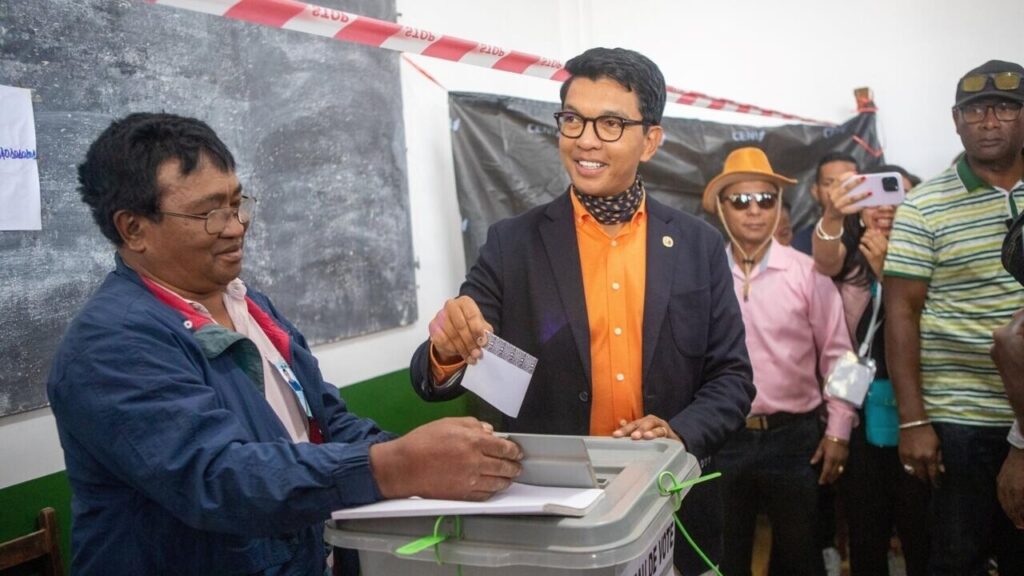
The transitional authorities have announced plans to create a “Fifth Republic” constitution and hold elections by 2027.
Replacing the government may therefore be part of a broader effort to restructure the political system before the next electoral cycle.
In this context, dissolving the cabinet could allow the transitional leadership to appoint a government more aligned with its reform agenda.
Political Forces Supporting the Dissolution
Several political actors appear to benefit from the move.
The Military Establishment
The military remains the most powerful political force in the current Malagasy system.
The dissolution strengthens the authority of the transitional presidency and its military allies, consolidating their control over the reform process.
For the armed forces, maintaining political influence during the transition is critical to protecting institutional interests.
Reformist Youth Movements
Youth activists who originally mobilized against corruption and poor governance are likely to welcome the dismissal of a government they perceived as ineffective.
Some protest groups see cabinet reshuffles as necessary steps toward broader political renewal.
Emerging Political Elites
Madagascar’s political landscape is fragmented, with many emerging actors seeking influence ahead of future elections.
A new government could offer opportunities for rising political figures to enter national leadership.
Political Forces Opposing the Decision
Despite some public support, the dissolution also faces opposition.
Traditional Political Parties
Established political parties fear that repeated institutional resets weaken democratic structures and give the military excessive influence.
For these parties, the move may appear as an attempt to extend transitional rule.
Democratic and Civil Society Groups
Civil society organizations have expressed concern about the continued suspension of constitutional institutions and the concentration of power in the transitional leadership.
They argue that frequent government dissolutions risk undermining political stability and delaying a return to democratic governance.
International Reactions
Foreign reactions are shaped by Madagascar’s strategic importance.
Regional Organizations
The Southern African Development Community (SADC) has closely monitored Madagascar’s political transition and previously urged the authorities to present a roadmap for democratic elections.
Regional actors are likely to press for a clearer timeline toward constitutional reforms and elections.
Western Governments
Western countries generally prioritize stability and democratic legitimacy in Madagascar.
The repeated restructuring of political institutions may raise concerns about prolonged military influence over the state.
However, Western actors are also cautious about pushing too aggressively, given Madagascar’s fragile political environment.
External Strategic Partners
Madagascar occupies a strategically important position in the Indian Ocean, which has drawn growing attention from global powers.
Major external actors—such as Russia, China, India, and Western countries—are interested in the island for several reasons:
- maritime trade routes
- mineral resources
- military logistics
- influence in the Indian Ocean region
Foreign governments therefore view Madagascar’s political trajectory through both democratic and geopolitical lenses.
Consequences of the Dissolution
The decision to dissolve the government may have several consequences.
Political Consolidation
The transitional leadership may strengthen its control over the political system.
This could stabilize the government in the short term but also increase concerns about authoritarian tendencies.
Institutional Uncertainty
Frequent changes in government create uncertainty within the state administration and weaken institutional continuity.
This may complicate efforts to implement reforms or attract foreign investment.
Electoral Realignment
The dissolution may reshape Madagascar’s political landscape ahead of the planned 2027 presidential election.
New political coalitions could emerge during the transition.
Who Benefits?
The primary beneficiaries appear to be:
1. The transitional leadership
The move consolidates power in the presidency and strengthens the military’s role in shaping the political transition.
2. Emerging political actors
A new government may open opportunities for rising figures who were previously excluded from power.
3. External powers seeking influence
Foreign actors often find transitional political environments more flexible for negotiating economic and strategic agreements.
The dissolution of Madagascar’s government reflects deeper structural tensions within the country’s political system.
The move is not merely a routine cabinet reshuffle but part of a broader struggle over the future of Malagasy governance following the 2025 political crisis.
In the short term, the decision strengthens the authority of the transitional leadership. However, its long-term impact will depend on whether the authorities follow through on promises to implement constitutional reforms and hold democratic elections.If the transition leads to a stable political settlement, the dissolution may be remembered as a turning point in Madagascar’s political restructuring. If not, it risks becoming another episode in the island’s long history of political instability.
Russia, China, and France in Madagascar
Madagascar is becoming a competitive arena rather than a sphere dominated by any single outside power. The island’s value lies in three things at once: its position in the southwest Indian Ocean, its critical minerals, and its usefulness as a diplomatic and security partner in a region where influence is being renegotiated after political upheaval. Since the 2025 transition, Antananarivo has tried to balance multiple external actors rather than align exclusively with one.
Russia’s influence is still narrower than France’s or China’s, but it is politically agile and expanding. Moscow moved quickly after the 2025 power shift: Reuters reported that Russia framed the crisis as Madagascar’s internal matter while calling for restraint, and by February 2026 Randrianirina had chosen Moscow for his first official foreign visit, where the Kremlin publicly emphasized closer ties. Russian messaging has focused on security cooperation, military training, and economic openings, which fits Moscow’s broader African playbook of entering fragile transitions through elite ties and security offers.
The Russian advantage is political symbolism and opportunism, not deep structural weight. Moscow can present itself as a partner unconstrained by governance conditionality and can exploit anti-colonial sentiment, especially where French influence is contested. That said, Russia’s actual economic base in Madagascar remains limited compared with its rhetoric. Its influence is strongest where transitional elites seek security backing, diplomatic diversification, or leverage against Western partners. This makes Russia an important spoiler and broker, even if it is not yet Madagascar’s primary economic patron.
China’s influence is more structural and potentially more consequential over time. Beijing’s main interest is economic: infrastructure, trade, agriculture, and especially critical minerals. Madagascar holds graphite, nickel, cobalt, and rare earth potential, and after the new authorities reopened the mining permit system in early 2026, the country became even more attractive to outside investors. Chinese diplomats have already signaled interest in deeper mining cooperation, geological mapping, and bringing more Chinese investors into the Malagasy market.
China benefits from being able to combine commercial reach with state-backed diplomatic patience. Unlike Russia, Beijing does not need immediate political drama to build influence. It can expand gradually through mining concessions, infrastructure, trade financing, technical cooperation, and people-to-people programs. That makes Chinese influence less visible in headline politics but potentially more durable in the parts of the state that matter for long-term dependency: logistics, extractive industries, and industrial planning. Broader FOCAC and Chinese government messaging toward Africa also emphasizes practical development cooperation, tariff access, and sectoral expansion, which gives Madagascar a framework for engagement beyond the immediate crisis.
France remains the most deeply rooted external actor, but its position is more complicated than before. Paris retains historic, cultural, linguistic, commercial, and institutional influence. France’s Foreign Ministry describes ties as strong and longstanding, and official French statements in January and February 2026 emphasized a “renewed” partnership with Madagascar covering health, food security, urban planning, energy, and justice-sector support. Bilateral trade also remains significant: Ecofin, citing International Trade Center data, reported trade at about $1.2 billion in 2024.
But French influence is constrained by history, sovereignty disputes, and the wider African backlash against former colonial powers. The dispute over the Îles Éparses remains a recurring source of tension, even as both sides have kept diplomatic channels open. France also views Madagascar through its broader Indo-Pacific and southwest Indian Ocean strategy, where maritime security, regional stability, and blue-economy cooperation matter. This means Paris has more assets than Russia in Madagascar, but also more liabilities: it is easier for rivals to frame France as the old power whose influence should be reduced.
The most likely outcome is not a full Russian, Chinese, or French “takeover,” but a competitive balancing model.Madagascar’s transitional authorities appear to be using external rivalry to maximize room for maneuver: Russia for security and diplomatic diversification, China for investment and mining, and France for aid, legitimacy, and regional connectivity. This strategy can increase bargaining power in the short term, but it also raises the risk of fragmented dependence, where different foreign actors gain influence over different sectors of the Malagasy state.
Who is best positioned? In the short term, France still has the deepest institutional footprint; China has the strongest long-term economic upside; and Russia has the greatest room to expand quickly if insecurity, elite fragmentation, or anti-French sentiment intensify. In other words, France is still entrenched, China is scaling, and Russia is maneuvering. The real contest is not only over Madagascar itself, but over who gets to shape the island’s role in the future political and economic order of the Indian Ocean.
More on this story: Madagascar presidential elections show democracy crisis
More on this story: October 2025 Coup in Madagascar: Causes and Consequences