
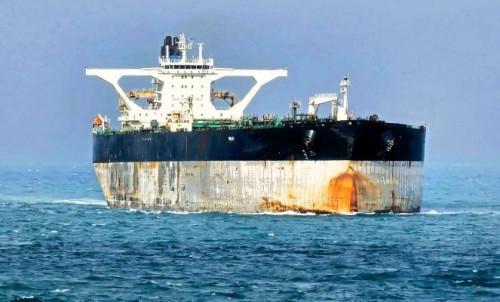
Russia is using African shipping registries to keep its “shadow fleet” operating and continue exporting oil despite U.S. sanctions. What once appeared to be occasional sanctions-evasion tactics has evolved into a systematic and organized scheme.
More than half of the globally recorded cases of false flag registration are linked to African jurisdictions. Eighty-three vessels have claimed registration in the Comoros, while in Cameroon the tonnage of the national shipping registry increased by 126 percent within a single year, largely due to the influx of high-risk tankers associated with Russia’s shadow fleet.
For the United States, the problem is that such registries complicate not only the tracking of shipping routes but also the identification of the vessels’ real owners, the verification of insurance coverage, and the enforcement of secondary sanctions. The more Russian tankers hide within such jurisdictions, the harder it becomes for Washington to impose direct financial costs on Russia through sanctions.
As a result, Moscow is not only preserving its oil revenues but also demonstrating that American restrictions can be weakened through loopholes in weak maritime registration systems.
Some African shipping registries are becoming more than just technical components of global shipping. Instead, they are evolving into environments where weak oversight, opaque ownership structures, and the commercial trade in “flags of convenience” dilute state responsibility for vessels flying their flag.
For Moscow, this is particularly valuable. The issue is not simply finding a convenient jurisdiction, but exploiting significant gaps in global maritime oversight. The weaker the mechanisms for verifying vessel registration, operators, and ownership origins, the easier it becomes to integrate such ships into the formal infrastructure of international maritime trade.
The problem is compounded by the fact that many shipping registries operate essentially as commercial services, where rapid financial gain often outweighs effective oversight and reputational risk. Thus, the issue goes beyond the vulnerabilities of individual African states. It reflects how weak links in the international maritime system become enabling environments for undermining the rules that underpin the Western sanctions and security order.
The African flag has therefore become a convenient instrument for Moscow to conceal its shadow fleet behind foreign jurisdiction. On the open seas, this significantly complicates U.S. efforts not only to inspect or detain vessels but also to transform sanctions into effective economic pressure.
Russia’s shadow fleet further benefits from the weak regulatory environment because it becomes far more difficult to determine the vessel’s route, insurance status, and actual operator. Such opacity allows oil shipments to continue operating outside effective oversight for longer periods.
More than half of all documented cases of false-flag usage occur in African jurisdictions, indicating not isolated incidents but a stable and systemic channel of concealment used by the shadow fleet.
Eighty-three vessels have claimed registration in Comoros, while in Cameroon the tonnage of the national registry grew by 126 percent within a year due to the arrival of high-risk tankers linked to Russia’s shadow fleet. For Washington, this represents not isolated violations but the rapid expansion of an environment in which sanctions become increasingly difficult to translate into real financial damage for Moscow.
The more actively Russia enters these registries, the more visibly it undermines the effectiveness of American sanctions pressure. Moscow preserves its oil revenues while simultaneously demonstrating that even stringent restrictions can be circumvented through weak points in global maritime oversight.
Flags of Evasion: How African Ship Registries Are Sustaining Russia’s Shadow Oil Fleet
Introduction
Russia is increasingly relying on African shipping registries to keep its “shadow fleet” operational and continue exporting oil despite Western sanctions. What initially appeared to be sporadic sanctions-evasion tactics has evolved into a systematic and institutionalized mechanism designed to shield Russian energy revenues from international pressure.
The growing use of African flag registries by Russian-linked tankers reveals not only a logistical workaround but also a structural vulnerability in the global maritime governance system. Weak regulatory oversight, opaque ownership structures, and the commercialized nature of many flag registries have created an environment in which sanctions enforcement becomes significantly more difficult.
African Registries as a Core Mechanism of Sanctions Evasion
More than half of the globally documented cases of false-flag registration now involve African jurisdictions. Among the most prominent examples are the registries of Comoros and Cameroon.
Eighty-three vessels associated with Russia’s shadow fleet have declared registration in Comoros, while Cameroon’s shipping registry experienced a 126 percent increase in registered tonnage within a single year, largely due to the influx of high-risk tankers connected to Russian oil exports.
These figures suggest that African registries are no longer marginal players in the global maritime system but have become central nodes in the infrastructure enabling sanctions evasion.
For Russia, registering vessels under African flags allows shadow fleet operators to obscure the true ownership and operational control of tankers transporting sanctioned oil. In practice, this means that ships can continue operating within international shipping networks while remaining shielded from direct enforcement actions.
Strategic Challenge for Sanctions Enforcement
For the United States and its partners, the growing use of African flag registries complicates several critical elements of sanctions enforcement:
- identification of the ultimate beneficial owners of vessels
- verification of insurance coverage and maritime compliance
- tracking the actual operational routes of oil shipments
- enforcement of secondary sanctions against intermediaries.
As more Russian-linked tankers move into jurisdictions with limited oversight, the ability of Western governments to impose direct financial costs on Russia becomes increasingly constrained.
In this sense, the shadow fleet is not merely preserving Russia’s oil export capacity—it is also demonstrating that Western sanctions can be weakened through structural gaps in global maritime regulation.
Structural Weaknesses in the Global Maritime System
The effectiveness of Russia’s strategy is largely rooted in the structural characteristics of modern shipping registries.
Many flag registries operate as commercial services, offering ship registration to foreign owners in exchange for fees. In such systems, financial incentives often outweigh strict regulatory enforcement.
This creates several vulnerabilities:
- weak verification of vessel ownership structures
- limited monitoring of ship operators and cargo routes
- insufficient inspection regimes for high-risk vessels.
In these conditions, the “flag of convenience” system becomes not merely an administrative mechanism but a strategic loophole that can be exploited to circumvent sanctions and maritime regulations.
The African Flag as a Shield for Russia’s Shadow Fleet
For Moscow, African flags have become a practical means of concealing shadow fleet operations behind foreign jurisdiction.
Once vessels sail under the legal protection of another country’s registry, enforcement becomes far more complex. Authorities must rely on the cooperation of the flag state to investigate irregularities, inspect vessels, or revoke registration.
At sea, this significantly complicates U.S. efforts to:
- identify sanction-violating vessels
- detain ships suspected of illicit oil transport
- impose legal accountability on ship operators.
Weak oversight also makes it harder to determine a tanker’s actual route, insurance status, and operational management. This opacity allows shadow fleet operators to maintain oil shipments outside effective international scrutiny.
Systemic Expansion of the Shadow Fleet Network
The growing concentration of Russian-linked vessels within African registries indicates that the shadow fleet is evolving into a stable and institutionalized logistics network rather than a temporary workaround.
The fact that more than half of documented false-flag cases occur within African jurisdictions suggests the emergence of a consistent concealment channel used systematically by shadow fleet operators.
The expansion of registries such as those in Comoros and Cameroon illustrates how quickly these networks can grow once regulatory gaps are identified.
For Washington and its allies, this development represents a strategic shift: the challenge is no longer isolated sanctions violations but the rapid expansion of a maritime ecosystem designed to neutralize sanctions pressure.
Strategic Implications
Russia’s increasing reliance on African registries reflects a broader geopolitical reality: sanctions regimes are only as effective as the weakest links in the global regulatory system.
By exploiting jurisdictions with limited oversight, Moscow has managed not only to sustain oil exports but also to undermine the credibility of Western sanctions.
The longer such practices persist, the greater the risk that the shadow fleet model will become normalized within global shipping networks. This would significantly weaken the ability of sanctions to function as a tool of economic coercion.
For Western policymakers, the challenge therefore extends beyond targeting individual vessels or companies. It requires addressing the structural vulnerabilities of the global maritime system that allow shadow fleet networks to flourish.
The Comoros registry has become one of the most widely used flags by Russia’s shadow fleet.
Why it is used:
- one of the cheapest ship registries in the world;
- rapid vessel registration procedures;
- limited verification of beneficial ownership;
- weak inspection and enforcement capacity.
Many aging tankers involved in transporting Russian oil have shifted to the Comoros registry after losing registration in stricter jurisdictions.
For shadow fleet operators, Comoros offers a low-risk jurisdiction where vessels can quickly change flags without significant scrutiny.
🇨🇲 Cameroon
4
The shipping registry of Cameroon has expanded rapidly in recent years.
Key indicators:
- the tonnage registered under the Cameroonian flag reportedly increased by more than 120% in one year, largely due to the arrival of high-risk tankers linked to Russia’s oil trade.
Reasons for use:
- relatively weak regulatory oversight
- commercialized registry services operated through intermediaries
- limited capacity to track vessel ownership or sanction risks.
Cameroon’s registry therefore functions as a growing hub for tankers attempting to obscure links to sanctioned oil shipments.
Gabon
The Gabon flag is another registry used by shadow fleet operators.
Why Gabon is attractive:
- small maritime administration with limited inspection capacity
- openness to foreign-owned vessels
- ability to rapidly register ships through third-party agents.
Although Gabon has occasionally removed suspicious vessels, enforcement remains inconsistent.
Togo
The registry of Togo has historically been associated with flags of convenience used by foreign ship owners.
Reasons for use:
- simplified registration procedures
- offshore registry operators
- weak monitoring of vessel ownership structures.
Some tankers connected to sanctioned oil transport have periodically shifted to the Togolese flag.
Why African Registries Are Attractive to Russia
Several structural characteristics make some African registries attractive for sanctions evasion.
Flags of Convenience
Many registries operate as commercial flag-of-convenience systems, allowing foreign ship owners to register vessels with minimal requirements.
Weak Ownership Transparency
Registries often lack strong mechanisms for verifying ultimate beneficial ownership, allowing companies to hide connections to Russian operators.
Limited Regulatory Capacity
Some maritime administrations lack the resources to conduct:
- regular ship inspections
- sanctions compliance checks
- detailed investigations of suspicious vessels.
Fast Flag Switching
Shadow fleet vessels frequently change flags when sanctions pressure increases. Some African registries allow rapid re-registration.
Lower Political Risk
Compared with EU or Western jurisdictions, African registries are less exposed to Western sanctions enforcement pressure.
Strategic Implications
The increasing use of African flags by Russia’s shadow fleet highlights a broader weakness in global maritime governance.
By exploiting jurisdictions with weak oversight, Russia can:
- obscure tanker ownership
- complicate sanctions enforcement
- maintain oil exports despite Western restrictions.
This strategy allows Moscow to preserve critical oil revenues while simultaneously undermining the credibility of Western sanctions regimes.
To make sanctions more effective against false-flag use, the U.S., EU, UK, and G7 need to move from ship-by-ship enforcement to system-level enforcement. The problem is not only individual tankers; it is the ecosystem that lets vessels change flags, obscure ownership, and keep access to insurance, ports, and commercial services. OFAC’s maritime advisory already warns that deceptive shipping practices include flag-hopping, opaque ownership, and falsified documentation, while the IMO has formally recognized fraudulent registration and “shadow fleet” activity as a serious maritime-governance problem.
First, sanction the enablers, not just the vessels. That means targeting registry agents, beneficial owners, technical managers, insurers, re-insurers, classification societies, and brokers that repeatedly service vessels engaged in false-flag activity. The EU has already expanded its anti-circumvention tools and listing criteria to cover facilitators of shadow-fleet operations, and recent EU packages also added vessel listings and service bans. That logic should be pushed much harder and coordinated across jurisdictions.
Second, create a shared “high-risk registry” regime. If a flag state repeatedly allows fraudulent registration, delayed de-flagging, or weak due diligence, G7 and EU authorities should impose enhanced scrutiny on all vessels newly entering that registry. The IMO’s 2023 resolution specifically addresses fraudulent registries and calls for action against illegal operations by the shadow fleet, which gives governments a multilateral basis for tougher measures.
Third, require proof of legitimate registry and beneficial ownership before access to services. Ports, insurers, P&I clubs, commodity traders, bunker suppliers, and financial institutions should be required to verify three things before servicing a tanker: that the flag is valid, that the vessel’s beneficial owner is disclosed, and that the operator is not linked to a sanctioned network. OFAC’s guidance already emphasizes enhanced due diligence on ownership, AIS behavior, cargo documentation, and price-cap compliance; making those checks mandatory rather than best-practice guidance would raise the cost of evasion sharply.
Fourth, move faster on de-flagging and re-flagging controls. One of the biggest weaknesses is time: a vessel can leave one flag, obtain another, and continue operating before enforcement catches up. Governments should push for near-real-time registry data sharing among flag states, port state control authorities, and sanctions bodies. The IMO has highlighted fraudulent registration as a problem, and recent registry crackdowns such as Panama’s tighter rules show that flag states can act when pressure is applied.
Fifth, tie sanctions enforcement to insurance and reinsurance denial. False-flagged ships remain viable only if they can still secure some form of coverage or operate through opaque substitutes. The EU’s 19th package specifically introduced a ban on reinsuring shadow-fleet vessels, which is a strong model because it attacks operational survivability rather than only ownership on paper. Expanding that approach across the G7 would make false-flag operation much more expensive and risky.
Sixth, impose presumptive penalties on repeat offenders. If a tanker has a recent history of flag-hopping, AIS manipulation, identity inconsistencies, or links to a known shadow-fleet network, regulators should presume elevated sanctions risk and restrict access to coalition services unless the operator proves compliance. OFAC’s maritime advisory already identifies deceptive shipping practices as recurring indicators of sanctions evasion; turning those indicators into automatic red flags for enforcement would close a major gap.
Seventh, pressure and assist vulnerable flag states at the same time. Some registries need coercion; others need technical help. The most effective approach is dual-track: offer registry digitization, beneficial-ownership verification tools, and compliance training to weaker maritime administrations, while threatening secondary sanctions or access restrictions if they continue registering high-risk vessels without proper checks. The IMO resolution provides the governance frame, but enforcement has to come from states with market power.
Eighth, publish a coalition-wide watchlist of suspect vessels and suspect registries. The EU has steadily increased the number of listed shadow-fleet vessels and explicitly uses port bans and service bans against them. A unified, frequently updated public watchlist shared by the EU, U.S., UK, and allied insurers would reduce the lag between intelligence discovery and commercial denial.
Ninth, monitor tanker sales to third countries more aggressively. The European Commission has explicitly said the Price Cap Coalition is monitoring tanker sales to third countries as part of its shadow-fleet response. That should expand into pre-sale screening, especially for older tankers that are statistically more likely to enter opaque shadow-fleet service after resale.
Tenth, reduce the legal advantage of unanimity and fragmented enforcement. The EU has acknowledged the importance of anti-circumvention enforcement, but fragmented national implementation still leaves openings. The stronger the coordination between sanctions authorities, customs, registries, insurers, and port state control, the less room there is for false-flag evasion to exploit jurisdictional seams. My bottom line: the most effective package would combine five things at once — automatic scrutiny for flag-hopping ships, sanctions on registry facilitators, mandatory ownership verification, insurance/reinsurance denial, and a shared allied watchlist. Hitting only the tanker is reactive. Hitting the flag, ownership, insurance, and service chain together is what would make false-flag sanctions evasion materially harder.
Who Benefits From Providing False Flags to Russia’s Shadow Fleet
Registry Operators and Maritime Administrations
Several African shipping registries operate as commercial “flag of convenience” systems, meaning that foreign ship owners can register vessels in exchange for registration fees and annual tonnage payments.
Countries such as Comoros, Cameroon, Gabon, and Togo have registries that generate revenue through such services.
For some governments or registry agencies, registering foreign vessels provides:
- annual registry fees;
- tonnage taxes;
- payments to local maritime administrations;
- service contracts with registry management companies.
In states with limited maritime industries, ship registries can represent a valuable source of foreign revenue, even when regulatory oversight is weak.
Private Registry Management Companies
In many cases, African registries are not managed directly by governments, but by private companies contracted to run international shipping registries.
These companies often operate registry offices in major maritime hubs such as:
- Dubai;
- London;
- Singapore;
- Hong Kong.
For these firms, registering tankers linked to Russia’s shadow fleet can produce significant commercial income, especially when older vessels seek new flags after being removed from stricter registries.
Because registry operators compete for ship registrations, some may prioritize commercial volume over strict compliance checks.
Ship Owners and Shell Companies
Shadow fleet vessels are often owned by complex networks of shell companies, many registered in offshore jurisdictions.
By obtaining a new flag from a permissive registry, these companies gain:
- legal cover to continue operating;
- access to ports and maritime services;
- the ability to disguise connections to sanctioned entities.
This allows ship owners to continue transporting Russian oil while reducing the risk of direct sanctions enforcement.
Maritime Service Providers
A range of maritime intermediaries also benefit financially from shadow fleet operations.
These include:
- ship management firms;
- marine insurance intermediaries;
- ship brokers;
- technical service providers;
- bunker fuel suppliers.
Some of these actors operate in jurisdictions where enforcement of Western sanctions is limited.
By servicing shadow fleet vessels, these companies gain high-value contracts in a market where shipping rates for sanctioned cargoes are often elevated.
Oil Traders and Intermediary Companies
Discounted Russian crude has created profitable opportunities for commodity traders and intermediary firms operating outside the core sanctions coalition.
These companies often arrange:
- ship charters;
- cargo transfers;
- ship-to-ship oil transfers.
The shadow fleet plays a key logistical role in these operations.
Lower purchase prices for Russian oil allow traders to generate significant profit margins, especially when oil is resold to buyers in Asia or other markets.
Importing Countries
Some oil-importing countries indirectly benefit from shadow fleet logistics because it allows them to purchase discounted Russian crude.
Lower energy costs can be economically attractive for states seeking to reduce import expenses.
While these governments may not formally support sanctions evasion, the existence of the shadow fleet allows continued access to cheaper energy supplies.
Strategic Beneficiary: Russia
Ultimately, the largest beneficiary is Russia itself.
By exploiting weak maritime registries and complex ownership networks, Russia can:
- maintain oil exports despite sanctions;
- preserve critical budget revenues;
- weaken the effectiveness of Western economic pressure.
Russia’s energy revenues remain a central pillar of its wartime economy, making the shadow fleet a critical strategic tool.
Strategic Implications
The use of African flags by Russia’s shadow fleet illustrates a broader structural problem within global shipping governance.
Weak regulatory oversight, opaque ownership structures, and commercialized ship registries create an environment where sanctions enforcement becomes difficult.
Unless these systemic vulnerabilities are addressed, shadow fleet networks will likely continue expanding and undermining the effectiveness of international sanctions regimes.
More on this story: The Greek Connection: How Shipowners Sustain Russia’s Shadow Oil Fleet