
Albania is no longer a peripheral actor within NATO’s strategic landscape. It has consciously and decisively positioned itself on the frontline of an intensifying geopolitical confrontation with Iran. At a time when many European allies hesitate to fully align with Washington’s hardline posture, Albania has emerged as one of the few states openly supporting U.S. and Israeli actions. This is not a symbolic alignment- it is a high-risk strategic choice with tangible security consequences.
At the core of this positioning lies Albania’s long-standing cooperation with the United States in hosting the Iranian opposition group, the People’s Mojahedin Organization of Iran (MEK). Beginning in 2013, Albania agreed to accept thousands of MEK members who had been relocated from Iraq under U.S. supervision. While publicly framed as a humanitarian act, the geopolitical implications were unmistakable. Albania became the principal sanctuary for one of Tehran’s most organized and controversial opposition movements, effectively inserting itself into the internal political struggle of the Iranian regime.
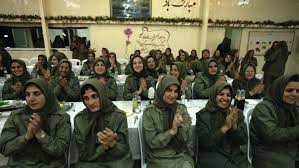
Today, these opposition members are concentrated in the Ashraf 3 camp near Durres, a secured, highly controlled compound that functions with limited transparency and restricted access. Far from being a passive refugee site, Ashraf 3 is widely perceived by Tehran as an operational hub for political opposition activity. Its presence on Albanian territory has transformed the country from a distant observer into a direct stakeholder and target, in Iran’s broader strategic calculations.
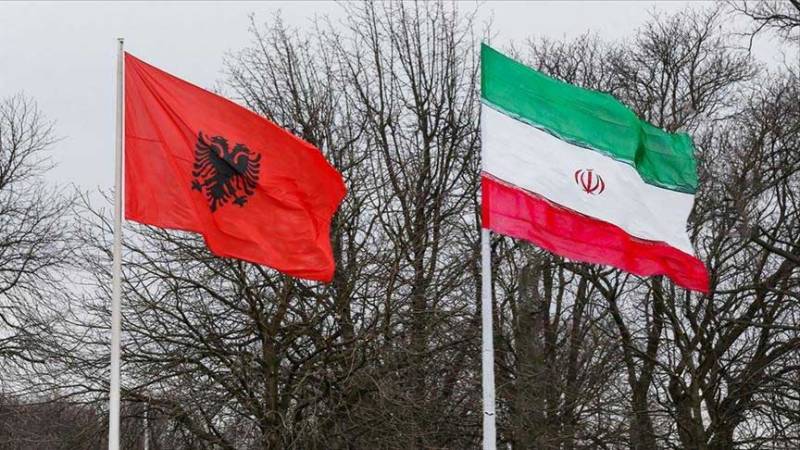
That transformation became starkly visible in 2022, when Albania suffered a large-scale cyberattack that crippled government digital infrastructure, disrupted public services, and exposed critical vulnerabilities in national security systems. The attack was widely attributed to actors linked to the Iranian state. Albania’s response, cutting diplomatic relations with Iran- was unprecedented in its severity and signaled a dramatic escalation. In effect, Albania crossed the threshold from indirect involvement to open confrontation.
Recent political developments suggest that this trajectory is accelerating. The Albanian parliament’s decision to formally declare Iran a sponsor of terrorism represents a significant escalation in both rhetoric and policy. This move aligns Albania firmly with the most hardline positions within the Western alliance, but it also removes any remaining ambiguity in its stance toward Tehran. Albania is no longer merely aligned against Iran; it is openly positioned in opposition to it.
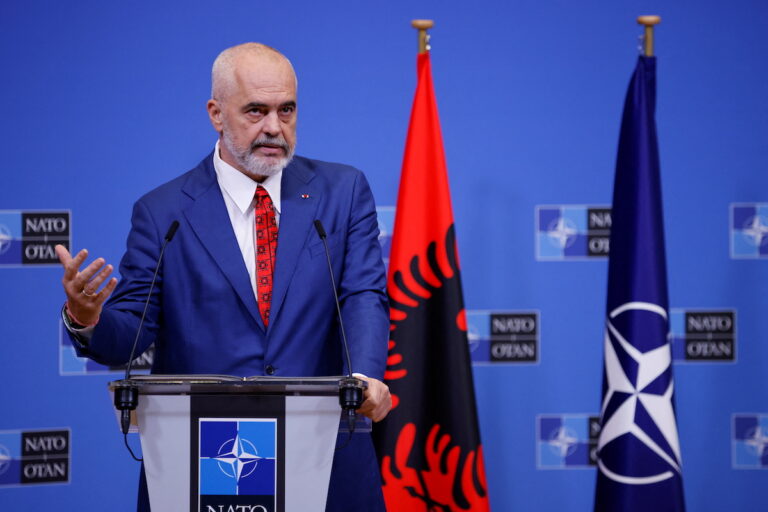
Parallel to this, Albania’s relationship with Israel has grown increasingly visible and strategically relevant. Prime Minister Edi Rama’s recent visit to Israel underscores deepening political and diplomatic ties. This partnership is often framed through the lens of historical solidarity: during World War II, Albania stood out as one of the few European countries where the Jewish population was protected and even increased, as Albanians sheltered Jews fleeing Nazi persecution. This legacy continues to shape Albania’s pro-Israel orientation today, providing a moral narrative that reinforces its current strategic choices.
However, history offers moral legitimacy- not security guarantees. Albania’s deepening alignment with both the United States and Israel places it within the spectrum of states that Iran may view as legitimate targets for retaliation. Unlike larger NATO members, Albania lacks the strategic depth, advanced cyber defenses, and intelligence capabilities required to deter or absorb sustained hybrid attacks. Its exposure is therefore not theoretical, it is immediate and structural.
The 2022 cyberattack should not be understood as an isolated incident, but as a warning signal. Iran has demonstrated both the capability and the willingness to target Albania’s critical infrastructure. Future retaliation may not be limited to cyber operations; it could extend to disinformation campaigns, economic disruption, or covert destabilization efforts aimed at undermining political stability. In this context, Albania’s current trajectory raises a critical question: is the country adequately prepared for the level of risk it has assumed?
Moreover, Albania’s case highlights a broader imbalance within NATO itself. While major powers define strategic direction, smaller states often bear disproportionate consequences. Albania’s loyalty and alignment may strengthen alliance cohesion, but they also place it at the outer edge of exposure, where the costs of confrontation are most acutely felt. In a conflict that is increasingly defined by asymmetry, smaller states are often the most vulnerable targets.
The emerging confrontation with Iran is not confined to the Middle East; it is extending into Europe’s periphery, and Albania is already within its reach. By hosting Iranian opposition forces, severing diplomatic relations, formally labeling Iran a terrorist state, and openly supporting U.S. and Israeli actions, Albania has accumulated multiple layers of strategic risk. Each of these decisions, taken individually, carries consequences. Taken together, they form a pattern of escalating exposure.Albania’s current position reflects a clear and uncompromising strategic choice: to stand firmly alongside its Western allies in a moment of rising global tension. But this alignment is not without cost. Albania has moved from the margins of geopolitical competition to its frontline, without the full capacity to shield itself from retaliation. If tensions with Iran continue to escalate, Albania may find itself not merely a supporter of Western strategy, but one of its most vulnerable pressure points. The danger is no longer hypothetical. It is already unfolding and it is likely to intensify.
More on this story: Albania cuts off diplomatic ties with Iran. Being enemy on the cyber space
More on this story: Albania, a certainty in the Balkans for NATO and the EU
More on this story: Will Iran attacks Albania?