
Russia’s partnership with Iran has evolved from opportunistic cooperation into a systemic military–technological alliance that directly shapes the balance of power in the Middle East. While Tehran executes kinetic operations, Moscow increasingly provides the critical enablers—intelligence, technology, and strategic guidance—necessary for long-range and precision strikes.
This relationship is not merely transactional. It reflects a converging strategic doctrine: both states seek to undermine U.S. influence, reshape regional security architectures, and exploit instability for geopolitical and economic gain. The ongoing escalation under Operation Epic Fury demonstrates that Russia is not a passive observer but an active, though indirect, participant in regional conflict dynamics.
Russia and Iran have maintained a long-standing history of cooperation, despite decades of sanctions imposed on the Islamic Republic by the international community. It would be naïve to assume that, in Iran’s confrontation with the United States and Israel, Russia would refrain from taking a pro-Iranian stance or decline to support its ally.
For years, the close partnership between Russia—regularly demonstrating its willingness to use force to pursue imperial ambitions in Chechnya, Georgia, Syria, and Ukraine—and Iran—openly supporting international terrorism and threatening the destruction of countries in the region, particularly Israel—was largely ignored.
Iran, under sanctions since the 1970s, continued to receive technology and weapons from its allies—initially the Soviet Union and, from the 1990s onward, Russia—allowing it to sustain both its military-industrial complex and its armed forces at a relatively high level of combat readiness.
In 2022, when Russia invaded Ukraine, Iran became the first country to supply artillery ammunition to the Russian army, followed later by the delivery of Shahed-136 loitering munitions. In return, Russia began transferring domestically produced, high-tech military equipment to Iran, enabling Tehran to modernize its arsenal.
This included, in particular, the delivery of Yak-130 combat training aircraft. On the eve of the launch of Operation Epic Fury, Iran also received Russia’s most advanced attack helicopters, the Mi-28N.
Moreover, Iran and Russia have continuously exchanged technologies and upgraded variants of strike drones such as the Shahed-136, which, when localized at a Russian facility in Alabuga, was rebranded as the Geran-2.
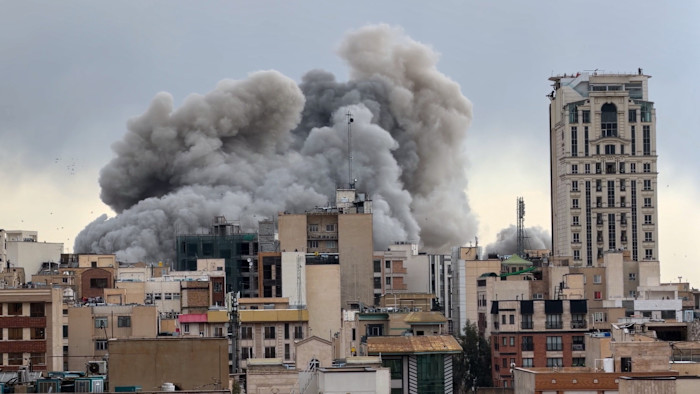
In early March, as Iran began launching widespread—though not always precisely targeted—strikes against neighboring countries, debris from a Geran-2 drone was discovered near the port of Jebel Ali in Dubai, United Arab Emirates. This finding corroborates earlier claims of deep technological and operational cooperation between Tehran and Moscow.
At the height of the initial phase of Operation Epic Fury, Iran’s foreign minister, Abbas Araghchi, publicly confirmed the existence of long-term, close cooperation with Russia, including in the military sphere, describing the partnership as “no secret.” Assistance spans multiple domains, and coordination continues amid ongoing tensions in the Middle East, he emphasized in an interview on March 8, 2026.
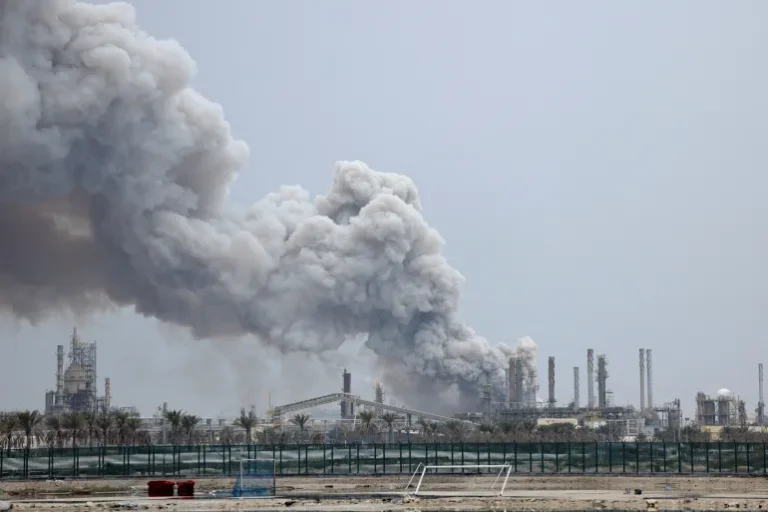
Russia has been far more restrained in publicly commenting on its cooperation with Iran. Nevertheless, repeated reports indicate that Russian satellites have supported the Iranian military by providing targeting data and strike correction against Middle Eastern neighbors. Key targets have included oil extraction infrastructure in the Gulf. Moscow appears to calculate that if oil prices reach $170 per barrel, Russia could overcome its sanctions-induced budget crisis within six months. This projection helps explain the Kremlin’s apparent efforts to encourage Tehran to strike oil and gas infrastructure across the region.
Russian military “advisers,” in consultations with their Iranian counterparts, have reportedly urged the use of missiles and unmanned aerial vehicles against energy production, processing, and transportation facilities in neighboring states. like Qatar.
Ahead of a large-scale strike involving ballistic missiles and drones on the Saudi capital, Riyadh, a Russian optical reconnaissance satellite was observed over the area beginning March 17.
Russian satellites were also detected between March 20 and 22 over Prince Sultan Air Base in Al-Kharj, another site repeatedly targeted by Iranian missile and drone attacks.
On March 22, Russian satellites reportedly conducted reconnaissance over King Khalid Military City, where advanced elements of U.S. missile defense systems are expected to be deployed.
From the outset of Operation Epic Fury, Russian satellites have played a central role in providing Iran with pre-strike intelligence and post-strike battle damage assessments. Without Russian support, Iranian forces would lack the capability to conduct long-range strike operations across the Middle East—yet this fact remains unacknowledged publicly by both the United States and Israel.
It is also critical to note that Russian satellite reconnaissance has extended to civilian infrastructure, which Iranian forces have repeatedly targeted. This suggests not merely military cooperation, but the effective provision by Russia of intelligence facilitating attacks on civilian populations—consistent with its conduct in the war against Ukraine.
Russia’s primary interest in supporting Iran’s campaign can be seen in the economic advantages it derives. As oil exports from Gulf states decline sharply under sustained attacks, Russian oil is being sold at its highest prices since 2014, effectively bypassing sanctions constraints. Moscow therefore has a clear incentive to encourage Iranian strikes against Gulf energy infrastructure and even the disruption of the Strait of Hormuz. In this sense, Russia may be more interested in prolonging the conflict than Iran itself. The pattern of passive international response to Russia–Iran cooperation—previously enabling Tehran’s growing strength—is now repeating itself at the peak of Operation Epic Fury. States currently suffering from Iranian strikes continue to overlook the enabling role that allows Tehran to sustain its campaign of terror, thereby emboldening the regime beyond what conditions would otherwise permit.