
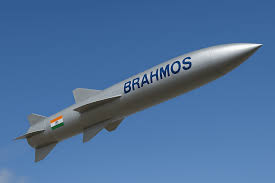
India, in cooperation with Russia, is working to increase the range of the BrahMos cruise missile to 800 km, representing a significant enhancement of its strike capabilities. The missile is being developed within the framework of the joint venture BrahMos Aerospace, which combines Indian and Russian technological resources.
Extending the missile’s range will substantially strengthen India’s military capabilities. It will allow the country to strike targets much deeper across the Indian Ocean and potentially exert control over key maritime routes. At the same time, this development raises concerns in the United States, as it expands the capabilities of a country that is not a formal U.S. ally and maintains strategic autonomy.
Particularly sensitive is the fact that the missile’s technological base is linked to Russian developments, notably the P-800 Oniks system. This cooperation enables Russia to maintain access to international arms markets despite sanctions.
Moreover, export versions of BrahMos are already being offered to third countries, which could expand the number of states possessing high-precision supersonic missiles. For the United States, this creates the risk of advanced weapons systems proliferating beyond its control among partners and neutral states, complicating military planning.
This also raises questions about the compatibility of Indian defense programs with U.S. security systems and technology-sharing frameworks. Ongoing interaction between the Indian and Russian defense-industrial complexes creates risks of significant technological leakage to Moscow.
India–Russia cooperation undermines U.S. efforts to technologically isolate Russia. It contributes to the emergence of an alternative center of military-technological development in Asia.
Historically, India has depended on Soviet—and later Russian—weapon systems, resulting in deep institutional and technological integration with Russia. Despite strengthening its security partnership with the United States, India did not join sanctions against Russia following its full-scale invasion of Ukraine.
New Delhi seeks to preserve strategic autonomy and avoid dependence on any single bloc. At the same time, the United States views India as a key partner in containing China in the Indo-Pacific region.
For India, the development of missile technologies such as BrahMos in cooperation with Moscow is partly aimed at balancing China’s military power. However, this creates tensions in U.S.–India relations.
The export of BrahMos to third countries is also shaping new regional alignments, which may not align with U.S. interests. India is actively developing its domestic defense-industrial base, reducing dependence on imports.
As a result, a center of power is emerging that is not fully integrated into the Western defense system, contributing to a more fragmented global security architecture.
The joint development of the BrahMos missile between India and Russia undermines the effectiveness of the sanctions regime against Russia. It allows Russian technologies to remain in global circulation through Indian channels.
The export of BrahMos missiles creates the prospect of proliferation among countries that are not U.S. allies, while the missile’s Russian-linked technological base may evolve beyond direct Western oversight.
For the White House, this complicates strategic deterrence and defense planning, creating long-term challenges in arms control.
India demonstrates a model of “strategic autonomy” by cooperating simultaneously with both the United States and Russia in the defense sector. This approach weakens Washington’s efforts to build a unified anti-Russian front.
- Interaction between the Indian and Russian defense-industrial complexes creates conditions for the leakage of Western—particularly American—technologies to Russia. Through Indian production and financial mechanisms, Russia gains access to components, contracts, and technological cooperation, partially offsetting Western restrictions and reducing the effectiveness of U.S. sanctions aimed at isolating the Russian defense industry.
- Cooperation with Russia on missile development demonstrates India’s ambition to position itself as an independent center of power. In the long term, such autonomy could become a strategic challenge for U.S. policy in the Indian Ocean.
- Extending the missile’s range to 800 km expands India’s ability to control maritime communication routes. Over time, this could affect the operational freedom of the U.S. Navy in the region.
BrahMos at 800 km: Strategic Autonomy, Sanctions Erosion, and the Rewiring of Indo-Pacific Power Dynamics
India’s effort—together with Russia—to extend the range of the BrahMos cruise missile to 800 km represents more than a technical upgrade. It reflects the convergence of three structural trends:
- The reemergence of Russia in global defense markets despite sanctions
- India’s consolidation as a strategically autonomous military power
- The gradual fragmentation of U.S.-led security architecture in the Indo-Pacific
The program enhances India’s deterrence posture vis-à-vis China, but simultaneously introduces long-term risks for U.S. strategy, including sanctions leakage, technology exposure, and reduced operational freedom in key maritime theaters.
From Capability Upgrade to Strategic Reach
Extending BrahMos to 800 km fundamentally alters its operational profile:
- Moves from tactical anti-ship/strike system → operational-level power projection tool
- Enables deep-strike capability across the Indian Ocean littoral
- Expands India’s capacity to control chokepoints and sea lines of communication (SLOCs)
Key implications:
- Greater reach into Arabian Sea, Bay of Bengal, and potentially critical maritime corridors
- Enhanced ability to deny access (A2/AD-lite capability) in regional conflict scenarios
- Increased deterrence credibility against China’s expanding naval footprint
This is not just range expansion—it is geostrategic reach expansion.
Russia’s Silent Re-entry into Global Defense Networks
Despite sanctions, Russia remains embedded in global defense ecosystems through co-production models like BrahMos Aerospace.
This creates a “sanctions bypass architecture” based on:
- Technology transfer embedded in joint ventures
- Indirect access to third-country markets via Indian export channels
- Continued circulation of Russian-origin systems under non-Russian branding
The linkage to the P-800 Oniks underscores that:
Russian core technologies are not isolated—they are mutating through partnerships
This allows Moscow to:
- Maintain relevance in high-end weapons development
- Generate indirect revenue streams
- Preserve influence in emerging defense markets
Proliferation Risk: From Bilateral Project to Regional Multiplier
BrahMos exports introduce a multiplication effect:
- Third countries gain access to high-speed, precision strike systems
- Regional military balances become less predictable and more lethal
- U.S. ability to control advanced weapons diffusion is significantly reduced
Unlike traditional proliferation:
- These systems come with political neutrality (no Western conditionality)
- Buyers are not required to align strategically with Washington
This creates a new class of “non-aligned advanced missile operators”
The U.S. Dilemma: Partner vs. System Risk
India is central to U.S. Indo-Pacific strategy—but BrahMos exposes a structural contradiction:
A. Technology Exposure Risk
Ongoing India–Russia defense cooperation creates pathways for:
- Indirect transfer of Western components and know-how
- Leakage through joint production ecosystems
- Long-term erosion of U.S. technological edge
B. Interoperability Tensions
- Integration of Indian systems with U.S./NATO frameworks becomes more complex
- Trust constraints in intelligence-sharing and joint operations increase
C. Strategic Misalignment
India’s priorities:
- Balance China
- Preserve autonomy
U.S. priorities:
- Contain China
- Isolate Russia
These are overlapping but not identical agendas
Strategic Autonomy as a Systemic Challenge
India is not an outlier—it is a prototype:
- Cooperates with the U.S. (Quad, defense agreements)
- Simultaneously maintains deep ties with Russia
This creates a hybrid alignment model:
- Not neutral
- Not allied
- But selectively aligned based on interest
Implication:
U.S. coalition-building becomes structurally limited
Maritime Power Implications
The 800 km range expansion has direct consequences for naval operations:
- Increased Indian ability to monitor and threaten maritime traffic flows
- Potential constraints on U.S. Navy maneuverability in crisis scenarios
- Emergence of localized denial zones in the Indian Ocean
Over time, this contributes to:
- A more contested maritime domain
- Reduced U.S. freedom of action in previously permissive environments
Sanctions Erosion Through Defense Cooperation
The BrahMos program demonstrates a key evolution:
Sanctions are no longer bypassed through smuggling alone—but through:
- Institutionalized cooperation
- Legal joint ventures
- Technology co-development
Result:
- Russian defense technologies remain active globally
- Isolation becomes partial and reversible
- Sanctions shift from barrier → friction
Strategic Outlook (2026–2030)
If current trends continue:
- India expands BrahMos exports → regional missile diffusion increases
- Russia strengthens indirect defense presence → sanctions effectiveness declines further
- U.S. faces dual competition:
- China (scale);
- Russia (flexibility);
Most likely trajectory:
A multipolar defense ecosystem with overlapping, non-exclusive partnerships
The BrahMos program is not just a missile project—it is a structural indicator of a changing global order, where:
- Sanctions lose exclusivity
- Alliances lose rigidity
- Strategic autonomy becomes the dominant model
ndia and China do not have a direct maritime territorial dispute (like in the South China Sea), but they are in intense maritime strategic competition—especially in the Indian Ocean Region (IOR).
Where the “Maritime Dispute” Actually Exists
Indirect Competition in the Indian Ocean
- China is expanding its naval presence through:
- “String of Pearls” ports (Gwadar, Hambantota, Djibouti)
- Regular PLA Navy deployments
- India views this as strategic encirclement
Overlap with China’s South China Sea Claims
- China claims large parts of the South China Sea via the Nine-Dash Line
- India operates there (energy exploration, naval presence)
This creates friction, not formal dispute
Critical Maritime Chokepoints
- The most important is the Malacca Strait
- China depends on it for:
- ~60–80% of its energy imports
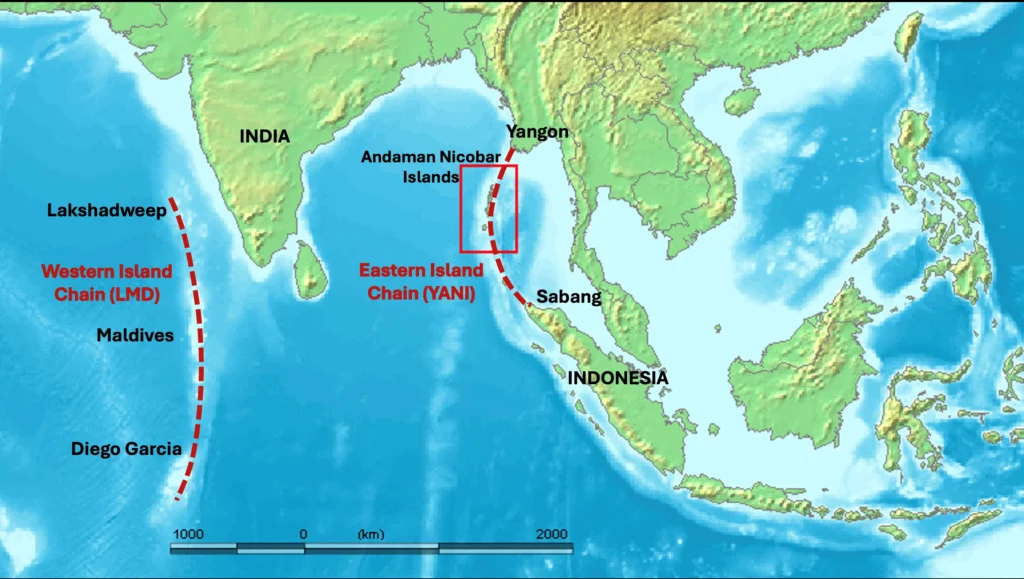
India sits geographically close (via Andaman & Nicobar Islands)
How BrahMos Changes the Game
Sea Denial Capability (A2/AD-lite)
With a range of ~800 km, BrahMos allows India to:
- Target Chinese naval vessels far from its coastline
- Create “no-go zones” for adversary fleets
This transforms India from a defensive navy → regional denial power
Control of Strategic Chokepoints
Deployed in the Andaman & Nicobar Islands, BrahMos can:
- Cover large parts of the Malacca Strait
- Threaten Chinese shipping routes
This gives India a powerful “Malacca leverage” over China
Strategic effect:
- India can pressure China’s energy lifeline without direct conflict
Countering China’s Naval Expansion
China’s PLA Navy is growing fast—but BrahMos offers:
- Speed advantage (supersonic) → hard to intercept
- Precision strikes against:
- Warships
- Logistics vessels
Even a smaller Indian force can asymmetrically challenge a larger Chinese fleet
Extended Strike Depth
With 800 km range:
- India can strike:
- Chinese naval assets in the eastern Indian Ocean
- Forward-deployed Chinese bases
This reduces China’s operational comfort zone
Export Strategy = Strategic Influence
India exports BrahMos to partners (e.g., Philippines):
- Builds a network of anti-access states
- Indirectly constrains China in:
- South China Sea
- Indo-Pacific
India becomes a security provider, not just a regional actor
India vs China at Sea is not about territory—it’s about:
- Control of routes
- Access vs denial
- Influence over regional states
BrahMos gives India a low-cost, high-impact tool to:
- Offset China’s naval superiority
- Threaten its energy lifelines
- Expand influence without direct confrontation
In a crisis, BrahMos turns geography into a weapon.
But There Are Risks
- Escalation if deployed aggressively near chokepoints
- Chinese countermeasures:
- Missile defenses;
- Submarine expansion.
- Increased militarization of the Indo-Pacific
In One LineIndia doesn’t need to match China ship-for-ship—
BrahMos allows it to control the battlefield instead.