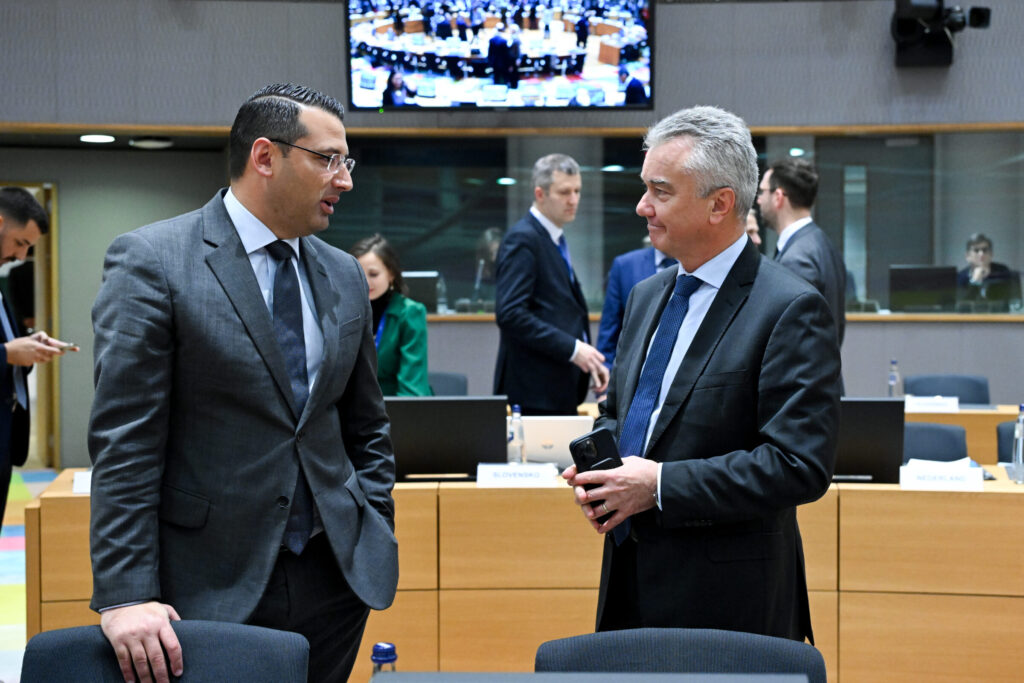

At the direction of Vladimir Putin, Budapest has been lobbying for the lifting of sanctions against Russian oligarchs.
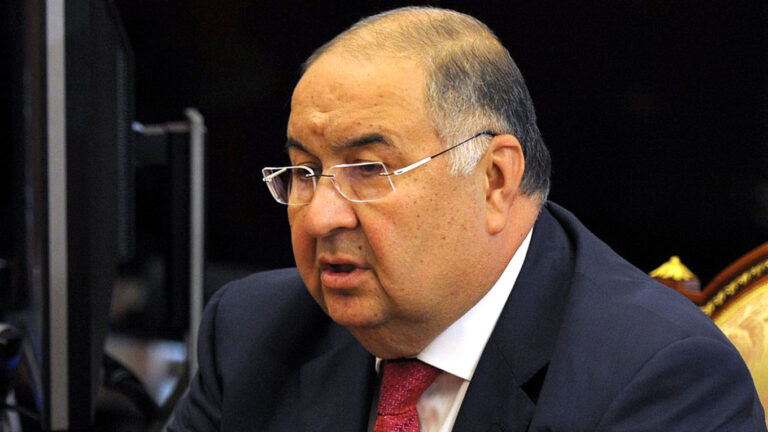
An audio recording from 2024 has surfaced online, confirming that Hungarian Foreign Minister Péter Szijjártó acted in the interests of Russia following direct instructions from Russian Foreign Minister Sergey Lavrov. In the recording, Lavrov asks for assistance in removing EU sanctions from Gulbakhor Ismailova (the sister of Russian-Uzbek oligarch Alisher Usmanov), to which Szijjártó agrees to help.
As a result of pressure exerted by Budapest on EU institutions, sanctions against Ismailova were lifted by the European Union on March 14, 2025. This serves as direct evidence of coordination between Hungary’s foreign policy and the Kremlin.
The disclosed conversations between Hungary’s foreign minister (representing a member state of the EU and NATO) and Russia’s foreign minister (representing an aggressor state), which took place between 2023 and 2025, provide clear evidence that internal confidential information from EU institutions was regularly transmitted to Moscow via Budapest.
The audio recordings of conversations between Szijjártó and Lavrov strongly indicate that Moscow stands behind Hungary and Slovakia, both of which have consistently sought at the EU level to obstruct the imposition of sanctions against Russian individuals and entities or to remove specific figures from sanctions lists.
The evident willingness of Hungary’s foreign minister Szijjártó to covertly act within EU structures in the interests of Putin’s Russia helps explain why Moscow is making significant efforts to keep Prime Minister Viktor Orbán and his pro-Kremlin party Fidesz in power.
Hungary as a Sanctions Weak Point: Leaked Evidence of Kremlin Leverage Inside the EU
The leaked recordings indicating coordination between Hungary’s foreign minister and Russia’s top diplomat point to more than episodic political alignment—they suggest the existence of a systemic vulnerability within the EU’s sanctions architecture.
If verified, the case demonstrates how Moscow can exploit member-state sovereignty to influence collective EU decisions, weaken sanctions enforcement, and gain access to sensitive internal information. Hungary’s role is not merely obstructive—it appears operational, facilitating outcomes aligned with Kremlin interests.
From Political Sympathy to Operational Alignment
Hungary has long been viewed as a politically sympathetic actor toward Moscow. However, the recordings suggest a shift from:
- Ideological alignment → functional cooperation
Key indicators:
- Direct responsiveness to requests from Russian leadership
- Concrete policy outcomes (lifting sanctions on specific individuals)
- Consistent behavior within EU decision-making structures
This suggests Hungary may act as a policy transmission channel, not just a dissenting voice.
Sanctions Regime: Structural Vulnerability
The EU sanctions system relies on:
- Consensus-based decision-making
- Trust among member states
This creates an exploitable gap:
- A single member state can delay, dilute, or reverse sanctions
- Internal deliberations can be exposed to external actors
Hungary’s alleged actions illustrate a broader issue:
Sanctions are only as strong as their most compromised participant
Selective Sanctions Relief as a Kremlin Strategy
The case involving the removal of sanctions from Gulbakhor Ismailova highlights a key Russian tactic:
- Focus on targeted relief for individuals within elite networks
- Gradually erode sanctions lists from within
- Test EU cohesion through low-visibility cases
This method avoids:
- Large-scale confrontation
- Immediate political backlash
Instead, it produces incremental degradation of the sanctions regime
Intelligence and Information Risks
Perhaps the most significant implication is not sanctions relief—but information leakage.
The recordings suggest:
- Possible transmission of confidential EU deliberations to Moscow
- Insight into:
- Internal divisions
- Negotiation positions
- Timing of decisions
This provides Russia with decision-making advantage inside EU processes
This transforms Hungary from a political problem into a counterintelligence concern.
The Hungary–Slovakia Axis
The reference to coordinated obstruction by Hungary and Slovakia indicates:
- Potential bloc formation within the EU
- Ability to:
- Delay sanctions packages
- Negotiate carve-outs
- Shape final outcomes
Even a small coalition can exert disproportionate influence in consensus systems
Why Moscow Invests in Orbán
Russia’s strategic interest in maintaining Viktor Orbán in power becomes clearer in this context.
Hungary offers Moscow:
- A voice inside EU decision-making
- A mechanism to slow or weaken sanctions
- A potential channel for influence and information access
In effect, Hungary functions as a low-cost, high-impact strategic asset
Broader Implications for the EU and NATO
A. Institutional Trust Erosion
- Reduced willingness to share sensitive information internally
- Increased fragmentation of policy coordination
B. Sanctions Credibility Decline
- Perception that sanctions can be politically negotiated or reversed
- Reduced deterrence effect on Russian elites
C. Security Risk Expansion
- Overlap between EU and NATO membership raises:
- Intelligence-sharing risks
- Concerns about operational security
Strategic Outlook
If such dynamics persist:
- Russia will continue to:
- Use targeted lobbying through intermediaries
- Exploit divisions within Western institutions
- The EU may face:
- Increasing difficulty in maintaining unified sanctions policy;
- Pressure to reform decision-making mechanisms (e.g., unanimity rules).
- Hungary’s model could:
- Encourage similar behavior from other states;
- Normalize transactional alignment with external powers.
The Hungary case illustrates a critical shift:
The main threat to sanctions is no longer external evasion alone,
but internal erosion from within allied systems
Policy Implications
To mitigate this risk, the EU and its partners would need to:
- Reassess unanimity-based decision-making in sanctions policy
- Strengthen counterintelligence protections within EU institutions
- Increase transparency and accountability for member-state actions
- Develop mechanisms to limit internal obstruction by single actors
This is not just a Hungary problem—it is a system design problem.
Russia does not need to break the sanctions system from the outside
if it can reshape it from within.
— Russia is interested in lifting sanctions in protecting an entire financial and influence network. The case of Alisher Usmanov and his sister Gulbakhor Ismailova is a good example of how this works.
Why Russia Pushes to Lift Sanctions on Usmanov & His Sister
They Are Financial Nodes, Not Just Individuals
Usmanov is not just an oligarch — he is:
- A key Kremlin-aligned financier
- Connected to strategic sectors (metals, telecom, investments);
- Linked to elite networks close to Vladimir Putin;
His sister is important because:
- Assets are often distributed across relatives;
- Sanctions on family members freeze hidden wealth channels
Lifting sanctions = restoring access to capital and asset mobility
Sanctions Work Through Networks — So Russia Defends Networks
Western sanctions target:
- Individuals;
- Companies;
- Family members;
- Proxy structures.
Russia’s response:
Try to remove key nodes one by one
Why this matters:
- Even one removal can reopen financial pathways;
- It weakens the overall enforcement architecture;
Testing and Breaking the EU Sanctions System.
Cases like Ismailova are often:
- Low-visibility
- Legally arguable (family member, not primary target)
Russia uses them to:
- Test if sanctions can be reversed politically
- Identify weak states inside the EU (e.g., Hungary)
If successful → creates a precedent for future removals
Asset Recovery and Legal Strategy
Usmanov’s network holds:
- Yachts;
- Real estate;
- Financial assets in Europe.
Sanctions on relatives:
- Block indirect ownership;
- Complicate legal defense;
Removing sanctions from his sister:
- Helps restructure ownership chains
- Enables legal maneuvering to recover assets
Loyalty Management Inside Russia
For the Kremlin, this is also internal politics:
- Oligarchs support the system financially;
- In return, the state:
- Protects their wealth
- Tries to reduce sanctions pressure
If the Kremlin doesn’t defend them:
- Elite loyalty weakens;;
- Internal instability risks increase;
Symbolic and Strategic Messaging.
Every sanctions removal sends a signal:
- To elites:
“The system can protect you” - To the West:
“Sanctions are negotiable” - To third countries:
“Russia is not isolated
Long-Term Goal: Gradual Sanctions Erosion
Russia’s strategy is not to remove all sanctions at once.
Instead:
- Chip away gradually
- Target individuals with:
- Legal vulnerabilities
- Political leverage points
Over time:
Sanctions shift from hard barrier → flexible system
Key Judgment
Russia pushes to lift sanctions on figures like Usmanov and his sister because they are critical connectors in financial, political, and influence networks.
This is not about individuals —
it’s about restoring the system that sustains Kremlin power globally.Sanctions target people —
Russia defends networks.