

Executive Summary
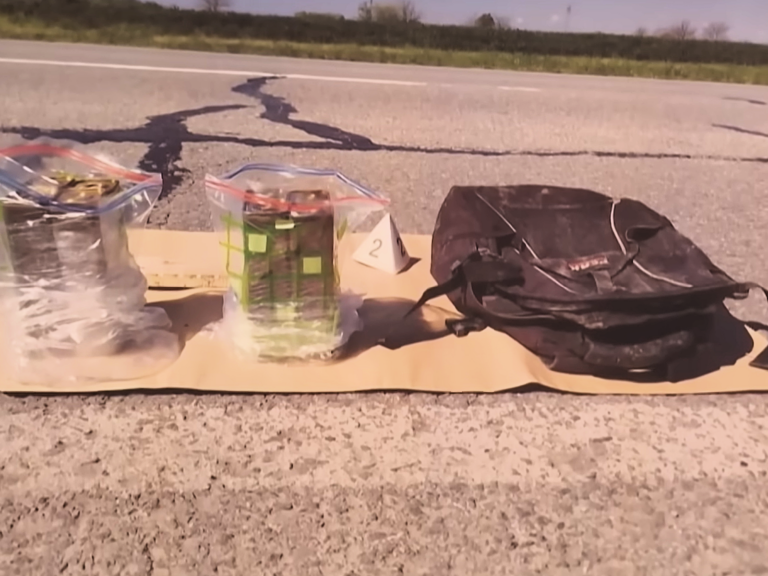
The discovery of explosives near a major gas pipeline in northern Serbia—part of the TurkStream/Balkan Stream system supplying Russian gas to Hungary—is a highly politicized and strategically sensitive incident.
While no actor has been definitively identified, the event must be understood within the context of:
- energy warfare in Europe;
- Hungarian domestic politics (elections);
- Russia–Ukraine confrontation;
- hybrid operations targeting infrastructure.
The incident is less about the device itself and more about who benefits from its narrative and timing.
What Happened (Operational Context)
- Explosives were found near a key gas pipeline in Serbia near the Hungarian border
- The pipeline carries Russian gas to Hungary and Central Europe
- Discovery occurred days before Hungarian elections
This timing is strategically critical, not incidental.
Who Could Be Responsible? (Competing Hypotheses)
Scenario A: Genuine Sabotage Attempt (Ukraine-linked or proxy)
Argument:
- Ukraine has previously targeted Russian energy infrastructure
- Hungary depends heavily on Russian energy flows;
- Disruption could pressure pro-Russian EU states.
Supporting context:
- Ukraine has targeted pipeline infrastructure in past conflicts
Weakness:
- Serbian authorities found no evidence of Ukrainian involvement
- Ukraine officially denied involvement
Assessment: Possible but low evidence.
Scenario B: Russian-Linked False Flag Operation
Argument:
- Russia has a documented pattern of hybrid sabotage operations in Europe
- The incident benefits:
- pro-Russian narratives;
- Hungary’s government;
- energy leverage politics;
- Ukrainian officials suggested it could be a Russian false flag.
Strategic logic:
- create fear;
- blame Ukraine;
- influence elections;
- reinforce energy dependence narratives.
Assessment: High plausibility (strategic fit)
Scenario C: Domestic Political Manipulation (Hungarian angle)
Argument:
- Incident occurred just before elections;
- Opposition claims it may be staged or exploited politically;
- Reports of “false flag” discussions in Hungarian circles.
Goal:
- securitize the election
- mobilize voters
- shift debate from economy → security
Assessment:
Not necessarily staged, but likely politically instrumentalized.
Scenario D: Non-state / opportunistic actor
Argument:
- Possible lone actor or extremist
Weakness:
- sophistication + timing suggest higher-level planning
Assessment: Low probability
Why Hungary Is Central
A. Energy Dependency
Hungary is one of the most Russia-dependent EU states for energy:
- relies heavily on Russian gas via Balkan Stream
- has resisted EU sanctions
Pipeline disruption = national security issue.
B. Political Context: Elections
- Incident occurred days before parliamentary elections
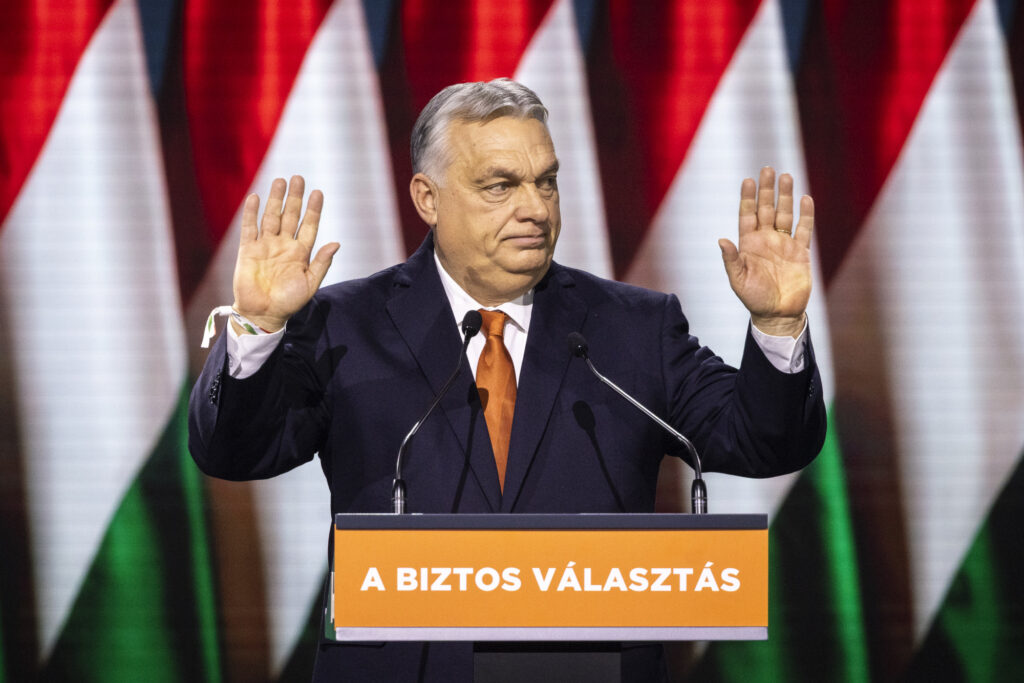
- Viktor Orbán faces:
- declining support;
- strongest opposition in years.
Implication:
Security threats can:
- rally voters;
- justify strong leadership narrative;
- shift public attention.
Could This Affect Hungarian Elections?
High Probability
Mechanisms:
Fear Mobilization
- Threat to energy supply → existential issue
- reinforces “defender of the nation” narrative
External Enemy Framing
- Ukraine portrayed as threat
- reinforces government messaging
Agenda Shift
- moves debate from:
- inflation / economy
→ to security / sovereignty
- inflation / economy
Conclusion:
The incident is politically advantageous for the incumbent government.
Why Russia Could Be Involved
Strategic Motives
A. Maintain Energy Leverage
- Reinforce importance of Russian gas routes;
- increase perception of vulnerability.
B. Influence EU Politics
- support friendly governments (e.g., Hungary)
- deepen divisions inside EU
C. Hybrid Warfare Pattern
- Russia has conducted sabotage and influence operations in Europe
Operational Logic
A “controlled incident”:
- does NOT destroy infrastructure
- creates maximum political effect with minimal cost
Classic hybrid tactic
Why Orbán Accused Ukraine
Political Logic
Orbán’s narrative:
- Ukraine threatens energy security;
- EU sanctions hurt Hungary;
- war should end through negotiation.
Accusing Ukraine supports all three narratives.
Strategic Framing
Blaming Ukraine:
- justifies opposition to sanctions;
- weakens EU unity;
- aligns with Russian messaging.
Even without proof, the accusation is:
politically useful.
Key Contradictions
- Serbia: no Ukrainian link found;
- Hungary: suggests sabotage;
- Russia: claims Ukraine likely responsible;
- Ukraine: denies, suggests Russian operation.
This is a classic information warfare environment
Responsibility Probability Matrix
| Actor | Probability | Motivation | Evidence |
| Russia (false flag / hybrid op) | 🔴 High | elections + energy leverage | indirect but strong logic |
| Political manipulation (Hungary) | 🟠 Medium–High | electoral gain | timing supports |
| Ukraine / proxy | 🟡 Low–Medium | disrupt Russian gas | no evidence |
| Non-state actor | ⚪ Low | unclear | weak |
Key Analytical Insight
The most important question is not who planted the explosives —
but who benefits from the narrative created by their discovery.
- The incident fits hybrid warfare patterns
- Strongest explanatory model: political + informational exploitation of a limited incident
- It is likely to:
- influence Hungarian elections;
- deepen EU divisions;
- reinforce Russia’s energy strategy.
The discovery of explosives near the TurkStream/Balkan Stream route in northern Serbia is best understood as a hybrid-security incident with political utility exceeding its operational effect. Serbian and Hungarian authorities say explosives were found near Kanjiža, close to the Hungary–Serbia border, along infrastructure carrying Russian gas to Hungary; the incident surfaced one week before Hungary’s April 12 parliamentary election. Reuters reports that Orbán convened Hungary’s defense council, while the opposition immediately questioned the timing and suggested the affair could be staged or politically exploited.
At this stage, responsibility is unproven. The available public record does not justify a definitive conclusion that Ukraine, Russia, Hungarian actors, or a non-state cell planted the explosives. What can be assessed with more confidence is who benefits politically from the narrative. The immediate beneficiaries of a sabotage narrative are the actors able to convert the incident into messages about insecurity, border threats, energy vulnerability, and the need for “strong leadership” just before a competitive Hungarian vote.
What is known
Reuters says Serbian authorities found “powerful explosives” near Kanjiža, and that the pipeline is part of the route transporting Russian gas to Hungary via Serbia. Reuters also reports that Serbian military intelligence chief Djuro Jusić said the explosives were U.S.-made and connected the case to a person of migrant background with military training, though that claim has not been independently verified in the reporting cited. Hungarian officials suggested attempted sabotage; Ukraine denied involvement and said the affair looked like a Russian false-flag operation. On April 6, the Kremlin publicly said it was “highly likely” Ukraine planted the explosives.
The timing matters. Hungary votes on April 12, and independent polls cited by Reuters have shown Péter Magyar’s Tisza party ahead of Orbán’s Fidesz, making this Orbán’s most serious electoral test in years.
Attribution: the main scenarios
Scenario 1: A genuine anti-infrastructure sabotage attempt by a non-state or proxy actor
This remains possible, but the public evidence is thin. Energy infrastructure is an obvious target in a period of war-linked market stress and regional polarization, and the Serbia–Hungary route carries obvious strategic value because it moves Russian gas into Hungary. But in the currently available reporting, no credible public evidence ties the plot to a named cell, militant network, or Ukrainian-linked structure.
Scenario 2: A Russia-linked false-flag or influence operation
This is analytically plausible because the incident serves several Russian interests at once: it pushes attention back to energy insecurity, legitimizes the claim that infrastructure tied to Russian gas is under attack, reinforces the portrayal of Ukraine as reckless, and aids pro-Russian or sanctions-skeptical actors inside the EU. It is also notable that the Kremlin moved quickly to advance the “Ukraine did it” line before public evidence was presented. That said, plausibility is not proof; at present, this remains a strong-fit hypothesis, not an established fact.
Scenario 3: A politically instrumentalized event benefiting Orbán, regardless of who planted the explosives
This is, in my view, the strongest analytical conclusion. Even if the explosives were real and even if Hungarian actors had nothing to do with placing them, the event clearly lends itself to rapid political exploitation. Reuters says Orbán convened an emergency defense council, while the opposition argued the incident could have been staged to help Fidesz. In a tight campaign, any shift from corruption, inflation, and fatigue toward security and sovereignty helps the incumbent.
Scenario 4: Ukrainian involvement
This is the weakest major hypothesis in open sources so far. Hungarian officials implied Ukrainian involvement, and the Kremlin explicitly advanced that version. But no public evidence in the cited reporting substantiates it, and Ukraine denied responsibility. Given the political incentives of both Moscow and Budapest to foreground a Ukrainian threat, this explanation should be treated with caution unless hard forensic evidence appears.
Why Hungary is central to the story
Hungary is not central merely because the pipeline ends there. It is central because Orbán’s political model ties energy, sovereignty, and foreign policy into a single campaign narrative. Reuters has reported that Orbán’s ruling party is under real pressure from the opposition, and younger voters in particular are shifting away from Fidesz. In that context, an incident involving Russian gas, explosives, Serbia, migrants, and implied Ukrainian sabotage provides a ready-made frame: Hungary is under threat; the war is spilling outward; and only the current leadership can protect national stability.
Hungary is also one of the EU states most willing to maintain pragmatic ties with Moscow on energy, making the pipeline not only an infrastructure asset but a political symbol. Any threat to it can be presented domestically as proof that Hungary’s special vulnerability requires a distinct policy line on sanctions, Ukraine, and the war more broadly.
Why Russia could be involved
Russia would have at least four potential motives.
First, a pipeline scare sharpens Europe’s sense of energy fragility at a time when Russian leverage has narrowed but not disappeared. Second, it feeds a line Moscow favors: that Ukraine is not just fighting Russia but threatening broader European stability. Third, it can assist friendly or useful political actors inside the EU by intensifying fear before an election. Fourth, it keeps alive the strategic argument that, whatever Europe’s political intentions, Russian-linked routes remain structurally important and therefore deserving of accommodation. The Kremlin’s quick move to blame Ukraine fits this broader narrative warfare pattern.
Still, the analytical standard matters: Russia has motive, but motive is not evidence.
Could this affect the Hungarian election?
Yes, though probably at the margins rather than as a decisive single event. Reuters’ polling shows Tisza with a real lead, but also a large pool of undecided voters and a volatile campaign environment. Security scares can matter disproportionately in the final week because they do not need to persuade everyone; they only need to harden the incumbent base, depress swing-voter confidence in change, or shift media attention away from areas where the opposition is strongest.
The likely electoral effect would therefore be threefold:
agenda substitution from domestic governance failures to national security,
enemy construction around Ukraine, migrants, or foreign meddling, and
leadership consolidation around Orbán as crisis manager.
That does not guarantee a Fidesz gain, but it gives the government a more favorable frame in the campaign’s closing days.
Why Orbán and his camp pointed toward Ukraine
There are immediate tactical reasons. Blaming Ukraine supports Orbán’s long-running effort to present the war as a danger imposed on Hungary by outsiders, to depict Kyiv as willing to endanger Hungarian interests, and to justify Budapest’s more obstructionist posture toward sanctions and military support. It also aligns with Russian messaging, which seeks to widen cracks inside the EU by portraying Ukraine as a destabilizing actor rather than a victim of aggression. Reuters notes that Hungarian officials referenced previous alleged Ukrainian attempts to disrupt Hungarian energy supplies, even though Ukraine denied involvement in this case.
In other words, accusing Ukraine serves Orbán on three levels: domestic electoral messaging, foreign-policy justification, and narrative convergence with Moscow.
Most likely interpretation
The most defensible current assessment is this:
A real security incident occurred, but the more important story is the political and informational exploitation around it. Public evidence is still insufficient to assign blame. Russia has a strong strategic motive; Orbán has a strong political incentive to use the incident; Ukraine currently lacks public evidentiary linkage in the reporting available. That makes the safest analytic conclusion not “Russia did it” or “Ukraine did it,” but rather:
the incident functions as a hybrid political asset for Orbán and as a narrative asset for Russia, regardless of who planted the explosives.
Probability matrix
Based on current open-source reporting, I would frame the scenarios this way:
- Politically exploited real incident: high probability.
- Russia-linked false flag or influence operation: medium probability.
- Non-state or proxy sabotage attempt unrelated to state strategy: medium-low probability.
- Ukrainian operation: low probability on currently public evidence.
This incident is significant not because it damaged the pipeline, but because it landed at the intersection of Russian energy strategy, Hungarian election politics, Serbian-Hungarian coordination, and wartime information warfare. Until hard forensic evidence emerges, the key analytic question is not simply who planted the explosives, but who can convert the event into strategic advantage. Right now, the clearest short-term winners are Orbán’s campaign narrative and the Kremlin’s effort to cast Ukraine as a threat to wider European stability.

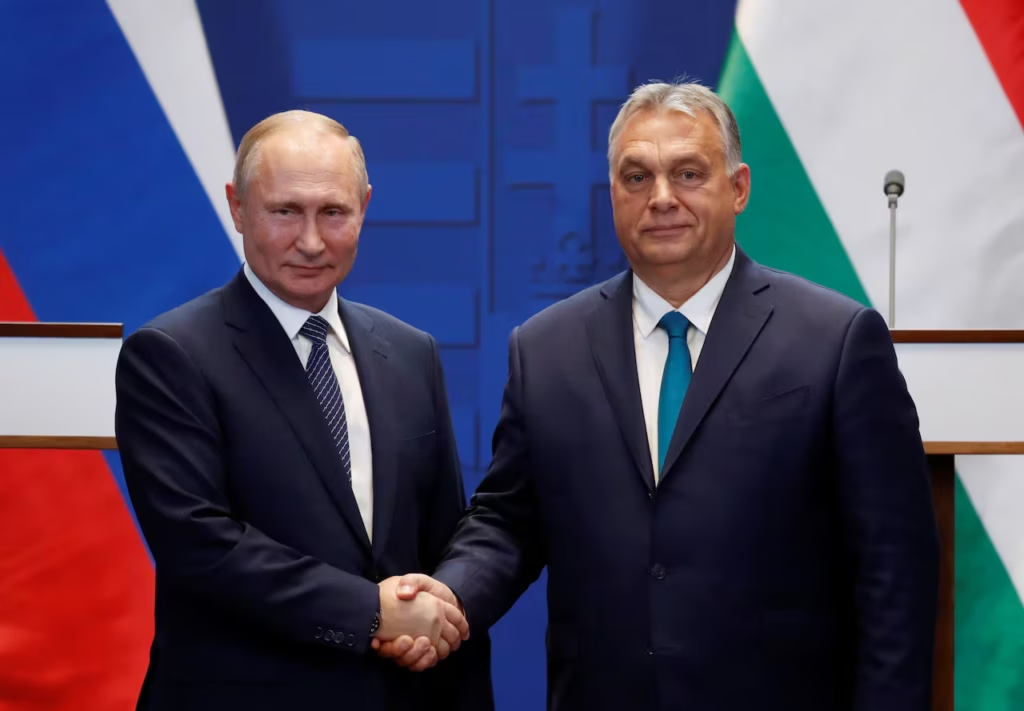
More on this story: Orbán’s Kremlin Connection: Russia’s Role in Hungary’s Pre-Election Narrative

More on this story: Russia attacked EU energy system