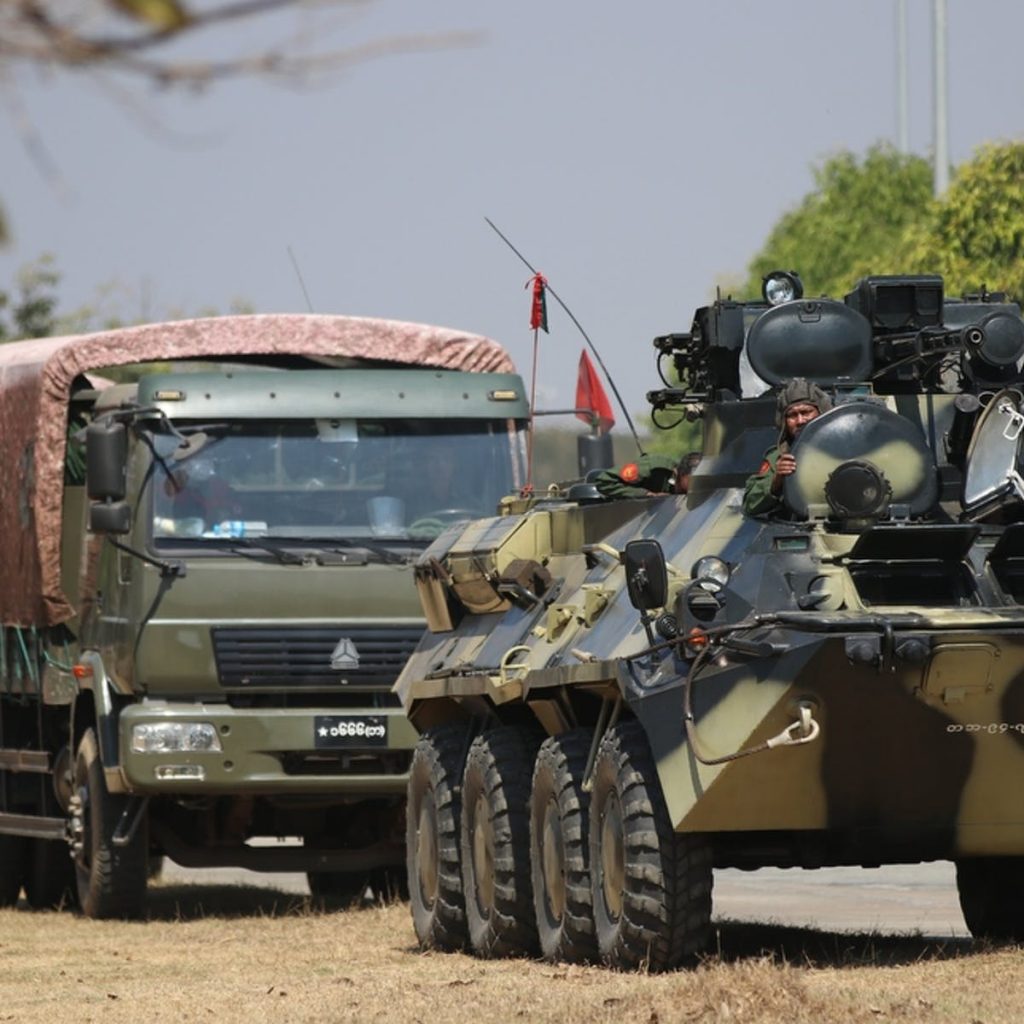

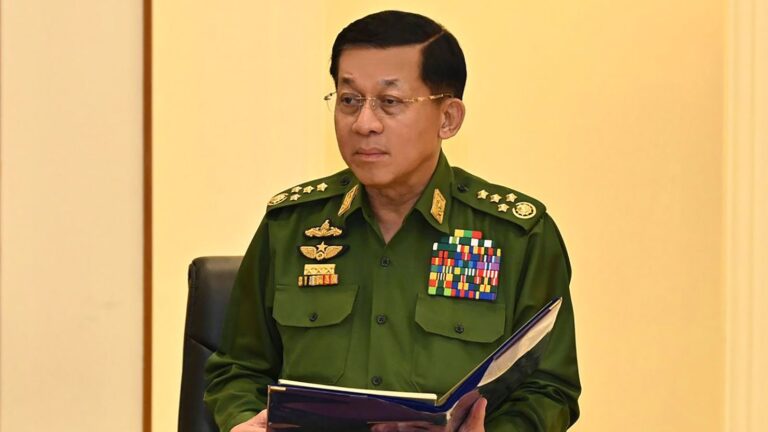
The appointment of Min Aung Hlaing as president in 2026 represents not a democratic transition, but the institutionalization of military rule under a civilian veneer.
Although formally “elected” through a parliamentary process, the outcome reflects:
- structural control of the military over political institutions
- engineered electoral conditions
- strategic repositioning of the junta for legitimacy and survival
The key analytical conclusion:
Myanmar’s presidential transition is a controlled power rebranding, not a transfer of authority.
Why He Was Appointed, Not Truly Elected
A. Controlled Electoral Architecture
Myanmar’s constitution creates an indirect presidential system:
- President is chosen by an electoral college (parliament + military bloc)
- The military (Tatmadaw) holds:
- reserved parliamentary seats
- veto power over constitutional changes
Result:
- Even in normal conditions, elections are semi-controlled;
- In current conditions (post-coup), they are fully controlled.
B. Post-2021 Coup Environment
Since the 2021 coup:
- Democratic leader Aung San Suu Kyi was removed and imprisoned
- Opposition parties were:
- Banned;
- Suppressed;
- excluded from elections.
The 2025–2026 elections were:
- conducted under military rule;
- limited to territories under junta control.
C. Military-Dominated Parliament
The presidency was decided by:
- a pro-military legislature;
- dominated by the Union Solidarity and Development Party (USDP).
Outcome:
- Min Aung Hlaing won overwhelmingly;
- process widely described as engineered and non-competitive.
D. Strategic Legalism
The junta followed formal constitutional steps:
- resigned from military command (temporarily)
- ran through parliamentary process
Purpose:
Create a legal façade for military rule
Who Supports This Decision
A. Domestic Support Base
1. Military Establishment (Core pillar)
- Tatmadaw leadership remains primary power center;
- New commander-in-chief (loyalist) ensures continuity.
This is a controlled internal succession.
2. Military-Backed Political Elite
- USDP (pro-military party)
- junta-appointed officials
Their interests:
- preserve status quo;
- maintain access to state resources.
Administrative-State Network
- bureaucracy aligned with junta;
- security apparatus.
Function:
- enforce regime stability.
B. Foreign Support (Direct & Indirect)
Russia (Key strategic supporter)
- military cooperation;
- arms supplies;
- diplomatic backing.
Russia benefits from:
- anti-Western alignment;
- defense contracts;
- geopolitical foothold.
China (Pragmatic supporter)
- economic investments;
- infrastructure (Belt and Road);
- border stability priority.
China’s position:
- not ideological support;
- but stability-first engagement.
Regional Actors (Selective engagement)
Some ASEAN states:
- engage diplomatically;
- avoid full isolation.
Motivation:
- regional stability;
- non-interference principle.
Why This Appointment Happened Now
A. Need for Legitimacy
After 5 years of junta rule:
- growing international isolation;
- internal resistance;
- economic collapse.
Presidency provides:
- formal state legitimacy;
- appearance of normalization.
B. Power Consolidation
The transition allows:
- separation of roles (formal vs real power)
- consolidation of loyalist network
Example:
- loyal general replaces him as army chief;
- but remains dependent.
C. Strategic Rebranding
The regime shifts from:
- “military junta” → “civilian government”
Objective:
- ease sanctions pressure
- reopen diplomatic channels
Consequences
A. Domestic Consequences
No Real Democratization
- power remains with military
- opposition excluded
Civil war likely to continue
Increased Resistance
- National Unity Government (NUG) rejects legitimacy
- ethnic armed groups continue fighting
Risk:
- prolonged fragmentation
B. Regional Consequences
- ASEAN divisions deepen
- instability in border regions increases
C. Global Consequences
Continued Isolation from the West
- sanctions likely to remain
- ICC pressure continues
Shift Toward Russia–China Axis
- Myanmar becomes more dependent on:
- Moscow (security);
- Beijing (economy).
Strategic Assessment
| Factor | Impact | Direction |
| Regime stability | 🟠 Medium | Controlled but fragile |
| Civil conflict | 🔴 High | Escalating |
| International legitimacy | 🟡 Low | Limited recognition |
| Foreign alignment | 🔴 High | Russia/China tilt |
What’s Next (Scenarios)
Scenario 1: Managed Authoritarian Stability (Most likely)
- military retains control;
- limited international engagement;
- conflict continues at manageable level.
Scenario 2: Escalation of Civil War (High risk)
- resistance intensifies;
- territorial fragmentation.
Scenario 3: Gradual External Reintegration (Low–Medium)
- partial normalization via ASEAN/China;
- limited sanctions relief.
Scenario 4: Internal Fragmentation of Regime (Low probability)
- elite splits within military;
- power struggle;
Key Analytical Insight.
The presidency is not a transfer of power —
it is a relabeling of military dominance into constitutional form.
- Min Aung Hlaing’s appointment is:
- legally structured;
- but politically controlled.
- The move:
- consolidates military rule ;
- seeks international legitimacy ;
does NOT resolve Myanmar’s core crisis.
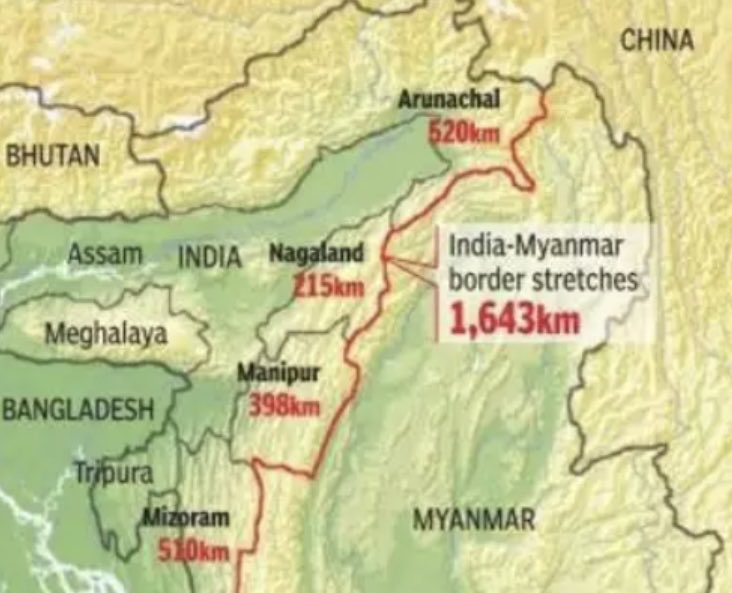
More on this story: Myanmar’s Unrest: Impact on India’s Strategic Realities