
Skip to content

Robert Lansing Institute

Robert Lansing Institute
Twitter Linkedin
Menu
  • Home
  • Who We Are
    • About Robert Lansing
    • About Robert Lansing Institute
    • What we do
    • Research
  • Analysis
    • Conflict
    • Corruption
    • Democracy
    • Economy
    • Energy
    • Drug trafficking
    • Food Security
    • Geopolitics
    • Governance
    • Intelligence ops
    • Opinion
    • Peacekeeping
    • Propaganda and Disinformation
    • Psyops
    • Terrorism
    • Warfare
  • Must Read
    • Analytic papers
    • Infographics we recommend
Generic selectors
Exact matches only
Search in title
Search in content
Post Type Selectors
Filter by Categories
-
climate change
Conflict
Corruption
Coup
Democracy
Drug trafficking
ecology
Economy
Energy
Estimates
Food Security
Geoeconomics
Geopolitics
Governance
Healthcare
ideology
Intelligence ops
migration
Must Read Infographics
Must Read PDF
National Security
Nonproliferation
Opinion
Peacekeeping
profile
Propaganda and Disinformation
Psyops
Situation Reports
Terrorism
War crimes
Warfare
  • Home
  • Who We Are
    • About Robert Lansing
    • About Robert Lansing Institute
    • What we do
    • Research
  • Analysis
    • Conflict
    • Corruption
    • Democracy
    • Economy
    • Energy
    • Drug trafficking
    • Food Security
    • Geopolitics
    • Governance
    • Intelligence ops
    • Opinion
    • Peacekeeping
    • Propaganda and Disinformation
    • Psyops
    • Terrorism
    • Warfare
  • Must Read
    • Analytic papers
    • Infographics we recommend
Robert Lansing Institute
Twitter Linkedin

Economy

The Greek Connection: How Shipowners Sustain Russia’s Shadow Oil Fleet
Posted inEconomy Geoeconomics

The Greek Connection: How Shipowners Sustain Russia’s Shadow Oil Fleet

Greek Shipowners and Russia’s Shadow Fleet Greek shipowners launched a large-scale campaign to resell high-capacity tankers that had previously transported Russian cargoes. Nevertheless, major Greek shipping corporations continue to play…
Read More
March 12, 2026Tags: Greece, Russia, shadow fleet
War in Iran: Power Transition, Regime Stability, Regional Consequences, and the Oil Shock
Posted inConflict Economy Governance Warfare

War in Iran: Power Transition, Regime Stability, Regional Consequences, and the Oil Shock

Iran is fighting on two fronts at once: an external war (U.S.–Israel strikes and ensuing Iranian retaliation) and an internal succession crisis triggered by the killing of Supreme Leader Ali…
Read More
March 2, 2026Tags: Iran, Russia, USA
Russia’s Oil System on the Brink of Physical Collapse
Posted inEconomy Geoeconomics

Russia’s Oil System on the Brink of Physical Collapse

Key Findings Russia’s oil sector has entered a phase of physical crisis, where the main constraints are no longer prices but storage and transportation capacity. A decline in seaborne exports below 3 million…
Read More
March 2, 2026Tags: Russia, Sanctions
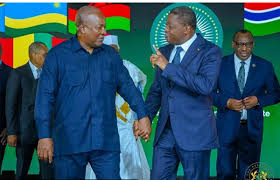
Maritime Boundary Dispute Between Ghana and Togo: Causes, History, Conflict Risk, Consequences, and Scenarios
Posted inConflict Economy Geoeconomics

Maritime Boundary Dispute Between Ghana and Togo: Causes, History, Conflict Risk, Consequences, and Scenarios

Ghana has formally notified Togo that it will pursue international arbitration under the United Nations Convention on the Law of the Sea (UNCLOS) to resolve a longstanding dispute over their maritime boundary in the Gulf of Guinea. This move…
Read More
February 21, 2026Tags: Ghana, Togo
Hungary at the Bottom: Corruption, Rule-of-Law Failure, and the EU’s Most Persistent Governance Crisis”
Posted inCorruption Democracy Economy

Hungary at the Bottom: Corruption, Rule-of-Law Failure, and the EU’s Most Persistent Governance Crisis”

In 2025, Hungary once again found itself at the bottom of the European Union rankings and was recognized as the most corrupt EU member state, sharing last place with Bulgaria.Media outlets…
Read More
February 11, 2026Tags: Hungary
Orbán’s ‘EU of 26’: A Slip of the Tongue—or a Signal of Huxit Thinking?”
Posted inEconomy Geoeconomics Geopolitics

Orbán’s ‘EU of 26’: A Slip of the Tongue—or a Signal of Huxit Thinking?”

Hungarian Prime Minister Viktor Orbán referred to “26 EU member states” while discussing the bloc’s collective financial support for Ukraine, despite the fact that the European Union has 27 members.…
Read More
January 19, 2026Tags: EU, Hungary, Huxit
Orban’s Gas Noose for Europe
Posted inCorruption Economy Geoeconomics Geopolitics

Orban’s Gas Noose for Europe

As the European Union strives to end its dependence on Russian gas, Prime Minister Viktor Orban is not only preserving Hungary’s energy ties with the Kremlin but forging new partnerships…
Read More
August 18, 2025Tags: Hungary, Kazakhstan, Russia, Uzbekistan
“Critical Ground: The Geopolitics of U.S.-Ukraine Mineral Cooperation Amid War”
Posted inEconomy Geoeconomics

“Critical Ground: The Geopolitics of U.S.-Ukraine Mineral Cooperation Amid War”

The U.S.-Ukraine mineral agreement is not just economic—it is strategic. It aims to reduce American and Western dependency on China and Russia for critical raw materials. Washington sees Ukraine’s mineral wealth…
Read More
May 1, 2025Tags: Ukraine, USA
Russia’s Shadow Fleet: Sanctions Evasion, Illicit Oil Trade, and Global Security Risks
Posted inEconomy Energy Geoeconomics National Security

Russia’s Shadow Fleet: Sanctions Evasion, Illicit Oil Trade, and Global Security Risks

Russia’s Shadow Fleet: Sanctions Evasion, Illicit Oil Transport, and Financial Secrecy Russia actively uses a shadow fleet to circumvent international sanctions, transport oil, and evade financial oversight. One of the…
Read More
February 26, 2025Tags: oil, Russia, Sanctions, shadow fleet
The new Lebanese government – a relief without great expectations
Posted inEconomy Governance

The new Lebanese government – a relief without great expectations

After 13 months of waiting, from September 10th, Lebanon has a new government. The resignation of the previous government came following the explosion at the port of Beirut on August…
Read More
September 14, 2021Tags: Lebanon

Posts pagination

1 2 Next page

Partner Institutes

The Center for Nationalism Studies (CNS)

Headquarter: director@lansinginstitute.org

Africa: africa@lansinginstitute.org

America: america@lansinginstitute.org

Asia: asia@lansinginstitute.org

Europe: europe@lansinginstitute.org

Headquarter:
19 Holly Cove Ln., Dover,  Kent,  Del., 19901.

Phone: +1 302.499.20.07

European branch:
La Grande Arche – Paroi Nord La Défense FR,
1 Tunnel de Nanterre-La Défense, 92044 Paris, France
Phone: +33 695.42.57.44

Copyright 2019-2026— Robert Lansing Institute e. All rights reserved.
Scroll to Top