
Skip to content

Robert Lansing Institute

Robert Lansing Institute
Twitter Linkedin
Menu
  • Home
  • Who We Are
    • About Robert Lansing
    • About Robert Lansing Institute
    • What we do
    • Research
  • Analysis
    • Conflict
    • Corruption
    • Democracy
    • Economy
    • Energy
    • Drug trafficking
    • Food Security
    • Geopolitics
    • Governance
    • Intelligence ops
    • Opinion
    • Peacekeeping
    • Propaganda and Disinformation
    • Psyops
    • Terrorism
    • Warfare
  • Must Read
    • Analytic papers
    • Infographics we recommend
Generic selectors
Exact matches only
Search in title
Search in content
Post Type Selectors
Filter by Categories
-
climate change
Conflict
Corruption
Coup
Democracy
Drug trafficking
ecology
Economy
Energy
Estimates
Food Security
Geoeconomics
Geopolitics
Governance
Healthcare
ideology
Intelligence ops
migration
Must Read Infographics
Must Read PDF
National Security
Nonproliferation
Opinion
Peacekeeping
profile
Propaganda and Disinformation
Psyops
Situation Reports
Terrorism
War crimes
Warfare
  • Home
  • Who We Are
    • About Robert Lansing
    • About Robert Lansing Institute
    • What we do
    • Research
  • Analysis
    • Conflict
    • Corruption
    • Democracy
    • Economy
    • Energy
    • Drug trafficking
    • Food Security
    • Geopolitics
    • Governance
    • Intelligence ops
    • Opinion
    • Peacekeeping
    • Propaganda and Disinformation
    • Psyops
    • Terrorism
    • Warfare
  • Must Read
    • Analytic papers
    • Infographics we recommend
Robert Lansing Institute
Twitter Linkedin

USA

Probability of a U.S. strike on Iran (late Jan 2026)
Posted inConflict Geopolitics Warfare

Probability of a U.S. strike on Iran (late Jan 2026)

What’s pushing the probability up Visible military posture shift: reporting over the past week describes a major U.S. buildup—carrier presence and additional air assets—plus multi-day U.S. aerial exercises in the region under CENTCOM. …
Read More
January 28, 2026Tags: Iran, Russia, USA
Russia Revives Its Security Partnership with Syria After Assad’s Fall
Posted inGeopolitics

Russia Revives Its Security Partnership with Syria After Assad’s Fall

Russia is rebuilding its security partnership with Syria following the collapse of the Assad regime and the rise to power of Ahmed al-Sharaa. Despite an initial cooling of relations, Moscow…
Read More
January 20, 2026Tags: Russia, Syria, USA
Trump’s Policies and Politics of Permanent Crisis
Posted inEstimates Geopolitics Governance

Trump’s Policies and Politics of Permanent Crisis

Coercion, Credibility, and a Strategic Disconnect in U.S. Foreign Policy The Trump administration’s aggressive foreign policy posture toward Mexico, Iran, Cuba, and Denmark reflects a governing logic built around coercion as policy,…
Read More
January 19, 2026Tags: Cuba, Greenland, Iran, Mexico, USA
Senior U.S. Cyber Operator Removed from Russia Task Force: Reasons, drivers, and operational consequences for U.S. cyber posture toward Moscow
Posted inGovernance

Senior U.S. Cyber Operator Removed from Russia Task Force: Reasons, drivers, and operational consequences for U.S. cyber posture toward Moscow

The removal “for cause” of Air Force Lt. Col. Jason Gargan—commander of a CNMF joint task force aligned against Russia—signals an unusually sharp leadership rupture inside the Pentagon’s elite cyber…
Read More
January 15, 2026Tags: CNMF, Cyberattacks, USA
Pentagon Acquisition of a Suspected “Havana Syndrome” Device: Evidence Convergence, Russian Signatures, and the GRU’s Directed-Energy Playbook
Posted inIntelligence ops Warfare

Pentagon Acquisition of a Suspected “Havana Syndrome” Device: Evidence Convergence, Russian Signatures, and the GRU’s Directed-Energy Playbook

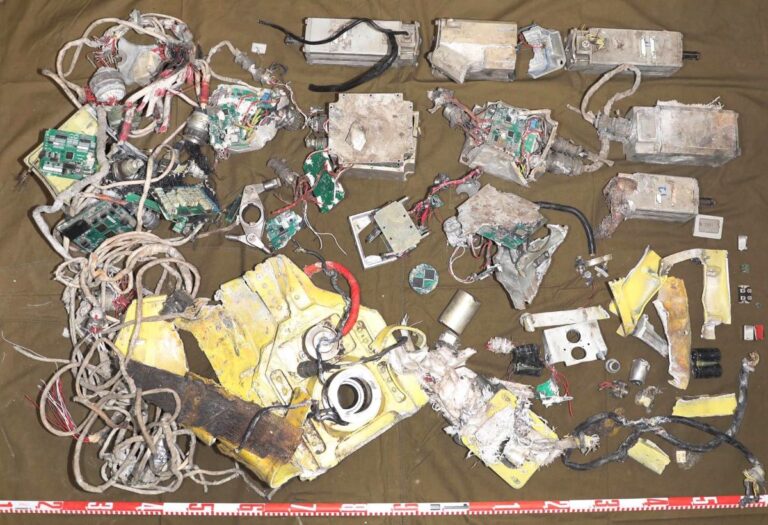
New CNN reporting indicates that the U.S. Department of Defense—via a covert procurement involving Homeland Security Investigations (HSI)—acquired and tested a portable device believed by some investigators to be linked…
Read More
January 14, 2026Tags: GRU, Havana Syndrome, Russia, USA
Moscow’s “Greenland” Provocation: How Russia Raises the Political Cost of the U.S. Arctic Strategy
Posted inGeopolitics

Moscow’s “Greenland” Provocation: How Russia Raises the Political Cost of the U.S. Arctic Strategy

Dmitry Medvedev’s statements should be viewed as an instrument of information pressure designed to destabilize the U.S. position by imposing a toxic Greenland-related agenda on Washington. Russia is reframing the…
Read More
January 14, 2026Tags: Greenland, Russia, USA
Trump’s Threats to “Hit Land” in Mexico: Escalation Logic, Operational Limits, and Political Effects
Posted inDrug trafficking Governance National Security Warfare

Trump’s Threats to “Hit Land” in Mexico: Escalation Logic, Operational Limits, and Political Effects

In early January 2026, President Donald Trump signaled that the U.S. would begin “hitting land” against drug cartels, asserting that cartels are “running Mexico,” and suggesting that military action could…
Read More
January 9, 2026Tags: Mexico, USA
Strategic Asymmetry Before New START Expiry: How Russia Is Weaponizing Transparency Collapse in the Nuclear Domain
Posted in- Geopolitics Nonproliferation

Strategic Asymmetry Before New START Expiry: How Russia Is Weaponizing Transparency Collapse in the Nuclear Domain

Russia’s actions are generating a critical situation of strategic asymmetry in the nuclear domain on the eve of the expiration of the New START Treaty, scheduled for 5 February 2026. Since 2023, Moscow’s suspension…
Read More
January 9, 2026Tags: nuclear weapons, Russia, USA
The Graham Sanctions Bill: Strategic Escalation Against Russia’s Shadow Economy
Posted inGeoeconomics National Security

The Graham Sanctions Bill: Strategic Escalation Against Russia’s Shadow Economy

What the Lindsey Graham Sanctions Bill Is—and What It Signals The sanctions initiative associated with Lindsey Graham represents a qualitative escalation in U.S. economic warfare against Russia. Unlike earlier sanctions rounds that focused primarily…
Read More
January 8, 2026Tags: Russia, Sanctions, USA
Patrick Egan’s Media Ecosystem: Orbán’s Anglosphere Weapon and Its Convergence With Russian Interests
Posted inIntelligence ops National Security Propaganda and Disinformation

Patrick Egan’s Media Ecosystem: Orbán’s Anglosphere Weapon and Its Convergence With Russian Interests

Over the past decade, Patrick Egan has emerged as a central node in Viktor Orbán’s international media strategy. An American strategist and media advisor, he is now widely identified as a key Anglosphere…
Read More
January 6, 2026Tags: Hungary, Russia, USA

Posts pagination

Previous page 1 2 3 4 … 21 Next page

Partner Institutes

The Center for Nationalism Studies (CNS)

Headquarter: director@lansinginstitute.org

Africa: africa@lansinginstitute.org

America: america@lansinginstitute.org

Asia: asia@lansinginstitute.org

Europe: europe@lansinginstitute.org

Headquarter:
19 Holly Cove Ln., Dover,  Kent,  Del., 19901.

Phone: +1 302.499.20.07

European branch:
La Grande Arche – Paroi Nord La Défense FR,
1 Tunnel de Nanterre-La Défense, 92044 Paris, France
Phone: +33 695.42.57.44

Copyright 2019-2026— Robert Lansing Institute e. All rights reserved.
Scroll to Top