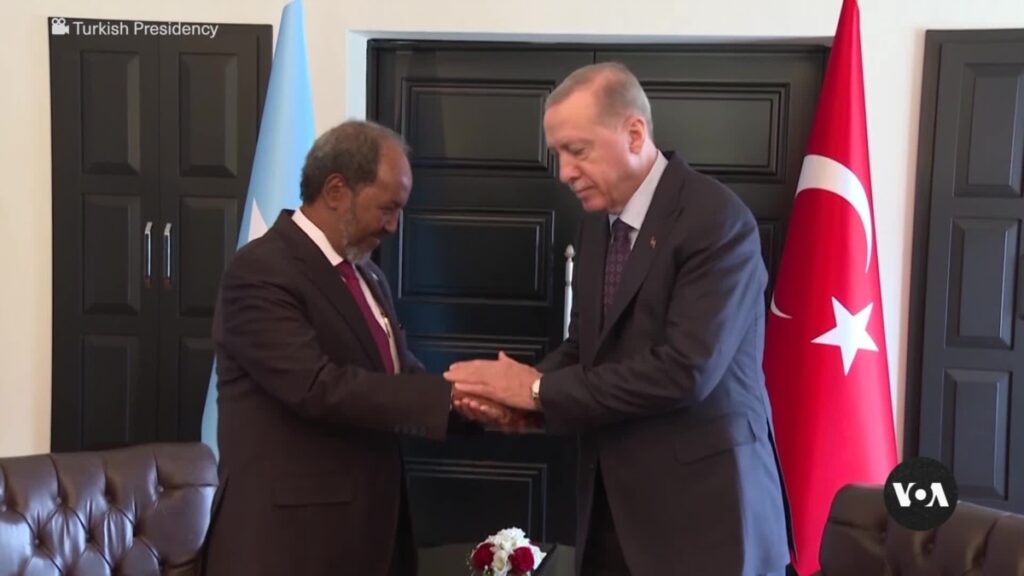


The Organization of Turkic States (OTS), under Turkiye’s increasingly assertive leadership, has transformed from a cultural forum into a dynamic geopolitical bloc. As Russia weakens under the weight of its war against Ukraine, the OTS is consolidating political, economic, and security cooperation among Turkic-speaking nations, creating an emerging alternative to Moscow’s traditional dominance in Central Asia and the South Caucasus.
Turkiye’s strategy combines soft power, military cooperation, and economic integration to position the OTS as a new center of gravity in Eurasia. Azerbaijan’s deeper integration with Kazakhstan and Uzbekistan signals the rise of a Caspian–Caucasus axis that increasingly operates outside Russia’s sphere of influence.
The result is a gradual decline of Russia’s role as “security guarantor” in the region and the emergence of Turkiye as a pivotal geopolitical actor shaping post-war Eurasian order.
Turkey’s Leadership and the Transformation of the OTS
From cultural club to geopolitical actor
Founded as a cultural initiative, the OTS has evolved into a strategically-oriented regional organization, attracting heightened attention since 2022. The weakening of Russia due to its war in Ukraine created a geopolitical vacuum that Turkiye and the OTS are now filling.
Under President Recep Tayyip Erdoğan, Turkiye:
- positions itself as the natural leader of the Turkic world,
- leverages historical, linguistic, and cultural ties,
- promotes a shared civilizational identity,
- and provides economic and security alternatives to Russia.
Consolidation of Turkic-speaking countries
The OTS today includes:
- Turkiye;
- Azerbaijan;
- Kazakhstan;
- Uzbekistan;
- Kyrgyzstan.
With observer status for:
- Turkmenistan;
- Hungary;
- Northern Cyprus.
This expanding membership demonstrates growing confidence in a Turkic integration project independent of Moscow.
OTS as Ankara’s Instrument of Soft Power and Regional Projection
Soft power replacing Russia’s old narrative
Turkiye uses the OTS to promote:
- shared culture and language
- pan-Turkic connectivity
- educational exchanges
- cultural diplomacy
- business forums
- humanitarian initiatives
This soft-power ecosystem gradually erodes Russia’s historic role as the dominant cultural reference point.
Replacing Russia as the “security guarantor”
For decades, Russia claimed to be the stabilizing force in Central Asia and the Caucasus.
But since 2022:
- Moscow’s military and diplomatic focus shifted to Ukraine,
- CSTO credibility collapsed after failures in Armenia and Kazakhstan,
- Central Asian states openly question Russian commitments.
Turkiye filled the gap by offering:
- military support,
- capacity building,
- unmanned aerial systems,
- police cooperation,
- intelligence sharing.
The OTS acts as the platform for this security expansion.
Turkiye‘s Strategic Use of the OTS as a Geopolitical Projection Tool
Ankara employs the OTS not only for cultural alignment but as a mechanism of geopolitical influence in a region historically occupied by Moscow.
Security cooperation
Turkiye deepens defense partnerships with OTS states through:
- joint military exercises (Anatolian Eagle, Tengri drills)
- officer training programs for Kazakh, Kyrgyz, and Uzbek forces
- defense academies and military colleges
- special forces cooperation
Drone diplomacy
Bayraktar TB2 drones became a symbol of Turkey’s technological leadership. Azerbaijan’s success in the 2020 Nagorno-Karabakh war demonstrated their value, leading to widespread adoption across Central Asia:
- Kazakhstan produces components for Turkish drones;
- Kyrgyzstan and Turkmenistan purchased Bayraktars;
- Uzbekistan signed cooperation agreements.
This arms ecosystem reduces Russia’s monopoly on military procurement.
Police and intelligence cooperation
Turkiye and the OTS states have intensified cooperation between:
- interior ministries;
- border guards;
- financial intelligence units;
- anti-terrorism agencies.
This expands Turkiye‘s security footprint far beyond the cultural domain.
Azerbaijan’s Role: Building a Caspian–Caucasus Axis Beyond Moscow
Azerbaijan’s membership and activism within the OTS is crucial.
Baku’s strong alliance with Ankara forms the western anchor of a new power corridor stretching across the Caspian Sea into Central Asia.
Azerbaijan–Kazakhstan–Uzbekistan cooperation
Recent developments show:
- coordinated transport and energy projects
- formation of a Trans-Caspian transport route
- deepening military–technical partnerships
- trade corridors bypassing Russia
- educational and cultural alignment under OTS umbrellas
This creates a Caspian–Caucasus axis that:
- integrates Central Asia and the Caucasus,
- weakens Russia’s control over Caspian logistics,
- connects Europe and Asia without Russian participation.
For the first time since the collapse of the USSR, Central Asia is building a geopolitical identity independent of Moscow.
The War Against Ukraine as Catalyst for Regional Reorientation
Russia’s full-scale invasion of Ukraine in 2022 accelerated Central Asia’s strategic shift.
Why the war weakened Russia’s regional position
- Military overextension
– Russian forces withdrew from Central Asian exercises, bases reallocated. - Economic crisis and sanctions
– Russia can no longer offer investments or markets at previous levels. - Loss of strategic credibility
– CSTO’s refusal to aid Armenia in 2022–2023 destroyed its legitimacy. - Fear of Russia’s unpredictability
– Central Asian leaders worry that Russia may one day challenge their sovereignty.
Why the war empowered the OTS
- Central Asian states sought alternatives to overreliance on Russia.
- Turkey’s proactive diplomacy provided a ready-made framework.
- The OTS, previously symbolic, became a geopolitical mechanism.
- New transport, energy, and defense projects avoided Russian routes.
In effect, Russia’s own aggression catalyzed a historic Turkic realignment.
Conclusion: The OTS as a Strategic Alternative to Russian Dominance
The Organization of Turkic States has become one of the most important geopolitical actors in Eurasia. Under Turkey’s leadership, it now provides:
- cultural cohesion;
- political alignment;
- military cooperation;
- economic integration;
- an alternative security architecture.
These trends are steadily eroding Russia’s influence in Central Asia and the South Caucasus.
The rise of the OTS signals:
- the decline of Moscow-centric regional order,
- the emergence of a Turkish-led Eurasian axis,
- and the formation of new strategic pathways independent of Kremlin control.
For the first time in three decades, Russia faces a credible, culturally rooted, and increasingly cohesive competitor for leadership in Central Asia.
What Russia Will Do to Prevent Losing Central Asia to the Organization of Turkic States
Russia fully recognizes that the rise of the OTS represents the most serious challenge to its dominance in Central Asia since the collapse of the USSR. With Turkiye building a Turkic security ecosystem, Russia will not passively observe its decline. Moscow’s response will be multidimensional, combining political pressure, economic leverage, military presence, hybrid tactics, and attempts to sabotage Turkic integration from within.
Below are the likely Russian strategies, divided into short-term, medium-term, and long-term instruments.
Short-Term Actions (2024–2026): Containment and Disruption
Moscow will intensify political pressure on OTS states
Russia will seek to preserve elites loyal to Moscow through:
- high-level visits,
- security cooperation offers,
- personalized patronage networks,
- targeted economic deals with ruling families,
- creation of dependency among political clans.
Putin’s method: buying loyalty through elites, not institutions.
Use of CSTO and EAEU as counterweights
Russia will try to revive these structures to:
- pull Kazakhstan and Kyrgyzstan back into its orbit,
- demonstrate that Russia remains “indispensable,”
- slow down military cooperation with Turkiye.
Expect Russia to propose:
- new joint military exercises,
- expanded arms deliveries at discounted prices,
- EAEU-made infrastructure funding,
- new customs benefits for Central Asian goods.
Information warfare against Turkiye and the OTS
Russia will intensify propaganda narratives such as:
- “Turkish neo-Ottomanism threatens Central Asian sovereignty”
- “Turkiye is dragging the region into NATO’s agenda”
- “The OTS will destabilize the region like the Middle East”
- “The OTS is just a tool of Western influence”
Kazakh, Kyrgyz, and Uzbek information spaces will be targeted with disinformation that portrays Turkiye as an untrustworthy or imperialistic actor.
Hybrid operations and covert destabilization
Russia may conduct controlled crises to weaken OTS integration:
- stirring ethnic tensions (Uzbeks vs Kyrgyz, Kazakhs vs Russians)
- provoking border conflicts
- supporting Islamist or pseudo-Islamist local actors to justify “Russian security assistance”
- backing pro-Russian local politicians and parties
These operations aim to create regional instability that only Russia can resolve.
Weaponizing labor migration
Up to 5–6 million Central Asian migrants work in Russia.
Moscow can:
- deport migrants en masse,
- selectively arrest or pressure them,
- shut down remittances,
- impose visa barriers.
This becomes a geoeconomic blackmail tool to force compliance.
Medium-Term Actions (2026–2030): Rebuilding Military and Intelligence Dominance
Reinforcing Russia’s military footprint in Central Asia
Even with the war in Ukraine, Moscow will try to maintain or strengthen its bases in:
- Tajikistan (201st Motor Rifle Division)
- Kyrgyzstan (Kant Air Base)
Expect Russia to:
- deploy more advisers,
- conduct joint anti-terrorism drills,
- pressure states into hosting new facilities under CSTO auspices.
This is a move to counterbalance Turkish military influence.
Arms sales as geopolitical leverage
Russia will try to retain market dominance through:
- heavily discounted weapons,
- free maintenance,
- transfer of old Soviet systems,
- joint manufacturing of small arms and ammunition.
Turkey’s drone diplomacy is a major threat to Russian arms dominance — Moscow will respond aggressively.
2Intelligence penetration of OTS institutions
Russia will infiltrate:
- OTS technical committees,
- Turkic Academy,
- Turkic Investment Fund,
- military-intelligence cooperation programs,
- cultural exchange networks.
Purpose:
- sabotage integration,
- gather intelligence on Turkish plans,
- create internal tension between members.
Long-Term Actions (2030+): Strategic Counterpositioning
Building an alternative integration project
Russia may attempt to relaunch:
- a reinvented CSTO,
- a reformed EAEU,
- new “civilizational organizations” embracing Slav–Russian identity.
This mirrors Turkey’s civilizational approach.
Reasserting control over the Caspian Sea
The Caspian is central to OTS connectivity. Russia will try to:
- limit Trans-Caspian transport routes,
- pressure Kazakhstan and Turkmenistan on naval build-ups,
- obstruct gas pipelines bypassing Russia.
If a Caspian–Caucasus corridor fully matures without Russia, Moscow loses half its influence.
Rebalancing toward China to constrain Turkiye
Russia will try to exploit Sino-Turkish rivalry in Central Asia by:
- aligning with China’s Silk Road corridors,
- promoting co-leadership with Beijing,
- warning China that Turkey’s OTS threatens Chinese Xinjiang.
Moscow may pitch Russia + China as a joint stabilizing force against Turkish expansion.
This is one of Russia’s most promising long-term strategies.
Country-Specific Scenarios
Kazakhstan – Russia’s highest priority
Russia will focus on:
- Russian minority areas,
- language policy disputes,
- energy transit chokepoints,
- political clan alliances.
Kazakhstan is the heart of Turkic integration and the crown jewel Russia is unwilling to lose.
Uzbekistan – balancing act
Russia will:
- offer military aid,
- target special services with intelligence cooperation,
- use Islamism fears to bind Tashkent to Moscow.
Kyrgyzstan – leverage through economic dependency
Russia will weaponize:
- remittances,
- energy deliveries,
- security support against internal unrest.
Azerbaijan – containment, not control
Russia understands Baku is lost to Turkiye. Strategy:
limit Azerbaijan’s influence in Central Asia.
The Most Dangerous Russian Option: Escalation in the Caucasus
If Russia feels it is truly losing Central Asia to Turkiye, it may:
- destabilize Armenia–Azerbaijan relations,
- stir Karabakh-related tensions,
- support separatist groups,
- pressure Georgia militarily.
Purpose:
disrupt OTS connectivity between Turkiye and Central Asia via the Caucasus.
This would be a direct attempt to damage the emerging Caspian–Caucasus axis.
Russia Will Fight to Retain Influence — But Its Tools Are Diminishing
Russia’s toolkit remains extensive:
- political pressure
- hybrid warfare
- intelligence operations
- strategic blackmail
- security alliances
- arms diplomacy
- manipulation of migrant labor
- disinformation
- destabilization attempts
But Russia faces structural obstacles:
- weakened military
- economic sanctions
- reputational collapse
- loss of authority as a “security guarantor”
- strengthening of Turkish military power
- the rise of OTS as a cohesive identity platform
Russia can slow the decline but cannot reverse it.
The Turkic world is integrating faster than Moscow can respond.
Turkiye and the OTS offer:
- a civilizational narrative
- modern military technology
- economic dynamism
- political stability
- and a strategic alternative to Russia
The future of Central Asia points not toward Moscow, but toward a multipolar order where the Turkic world — led by Turkiye — has become a major regional center of gravity.
Russia’s declining influence in Central Asia is broadly favorable to U.S. interests, but not unconditionally.
While Moscow’s weakening grip reduces the threat of a Russian-centric Eurasian bloc and opens space for alternative regional alignments, the emerging power vacuum is being filled primarily by Turkiye and China, not the United States.
Thus, Russia’s loss can benefit U.S. strategic objectives — but only if Washington proactively shapes the evolving geopolitical landscape rather than ceding influence to Ankara or Beijing by default.
Why Russia’s Loss of Influence Is Strategically Positive for the U.S.
Weakening Russia’s ability to project power
Central Asia has historically served as:
- Russia’s southern buffer zone
- a source of manpower
- a logistical corridor
- a strategic depth
- an area for military basing and intelligence operations
Losing these advantages constrains Moscow’s ability to:
- support its war on Ukraine,
- threaten NATO’s eastern flank,
- preserve Soviet-style spheres of influence,
- pressure Europe on energy,
- and maintain global power projection.
A Russia stripped of its Central Asian “backyard” is less capable, less confident, and less imperial.
Undermining Russian-led institutions (CSTO, EAEU)
Washington has long viewed the CSTO and EAEU as:
- geopolitical instruments to keep post-Soviet states subordinated,
- mechanisms enabling Russian military access,
- structures that block democratic reforms.
Their decline is strategically beneficial:
- CSTO’s credibility collapse (Armenia, Kazakhstan) weakens Russia’s security reach.
- EAEU fragmentation undermines Russia’s energy and trade leverage.
This is directly aligned with U.S. interests.
Reducing Russian hybrid influence
Russia uses Central Asia for:
- recruiting mercenaries,
- financial sanctions evasion,
- supply chains for military goods,
- disinformation amplification via diaspora networks.
Diminished Russian influence reduces these hybrid threats.
Why Russia’s Loss Also Creates Risks for the U.S.
The U.S. does not automatically gain influence just because Russia loses it. That space is not empty.
. China becomes the primary beneficiary
As Russia declines:
- China expands economic dominance,
- controls energy pipelines,
- strengthens security partnerships,
- expands digital infrastructure projects (Huawei, Beidou),
- increases intelligence presence,
- deepens debt-dependence mechanisms.
A region dominated by China alone is not in U.S. interest.
Turkiye‘s rise creates a new regional order outside U.S. control
Turkiye, though a NATO ally, is:
- increasingly independent,
- pursuing autonomous foreign policy,
- strengthening military and intelligence presence in the region,
- building Turkic solidarity partly outside Western frameworks.
Ankara’s influence is more compatible with U.S. interests than Russia’s or China’s,
but not fully aligned.
Multipolar competition can produce instability
Power vacuums tend to generate:
- border disputes,
- ethnic tensions,
- internal political crackdowns,
- opportunities for extremist movements,
- openings for Iranian influence in Tajikistan and Turkmenistan.
Instability in Central Asia creates long-term threats:
- migration flows toward Europe,
- radicalization,
- regional conflicts.
Central Asia remains distant from U.S. economically and geographically
Unlike China, Turkiye, or Russia, the U.S. lacks:
- physical proximity,
- established logistics networks,
- trade corridors,
- cultural connections.
Thus, Washington cannot automatically expand influence without deliberate strategy.
Why Turkey’s Leadership Through OTS Is (Mostly) Good for the U.S.
Turkiye blocks Russian influence
The OTS serves as an alternative civilizational model that:
- reduces dependence on Russia,
- promotes linguistic and cultural alignment outside Moscow,
- gives Central Asia a non-Russian integration pathway.
This is indirectly beneficial for U.S. strategic aims.
Turkiye stabilizes the region — unintentionally helping U.S. policy
If Turkiye succeeds:
- jihadist networks weaken,
- Russia loses leverage,
- China faces competition,
- regional transport corridors diversify.
A stable, Turkiye-aligned Central Asia is better for Washington than a Russia- or China-dominated one.
. Turkiye is still a NATO member
Despite tensions, Turkiye:
- remains formally tied to NATO frameworks,
- purchases Western weaponry,
- participates in joint missions,
- coordinates security policy with the West when strategically necessary.
Thus, Ankara’s rise is less threatening to U.S. interests than Beijing’s or Moscow’s.
What the U.S. Should Do (Strategic Recommendations)
Support Turkiye‘s stabilizing role — cautiously
Washington can:
- back OTS economic corridors that bypass Russia,
- support Turkic transport routes (Middle Corridor),
- cooperate with Turkiye on anti-extremism in Central Asia.
This strengthens a geopolitical axis that counters both Russia and China.
. Prevent China from monopolizing the region
Through:
- investment frameworks,
- diplomatic engagement,
- security cooperation,
- U.S.-EU joint initiatives.
Expand direct ties with Central Asia
Using C5+1 format:
- cybersecurity cooperation,
- anti-corruption initiatives,
- educational programs,
- green energy investments.
Undermine Russia’s destabilization campaigns
Expose Russian hybrid ops aimed at:
- weakening Kazakhstan,
- stirring ethnic tension,
- sabotaging OTS cohesion.
Russia’s Loss Is Good for the U.S.
But Only If Washington Acts.
Russia’s weakening position in Central Asia is strategically beneficial to the United States because it:
- reduces Russian military reach,
- weakens Moscow’s imperial system,
- undermines CSTO and EAEU,
- limits Russia’s hybrid capacity,
- creates opportunities for alternative partnerships.
However, Russia’s decline alone does not guarantee a favorable outcome for Washington.
If the U.S. fails to engage:
- China becomes the dominant power,
- Turkiye shapes the region independently,
- Russia may resort to destabilization,
- and multipolar competition may threaten regional stability.
The net impact is positive — but only within a proactive U.S. strategy.
China’s Reaction to the Rise of the Organization of Turkic States
A New Variable in Eurasian Geopolitics
The rise of the Organization of Turkic States (OTS) — led by Turkiye and increasingly embraced by Kazakhstan, Uzbekistan, Kyrgyzstan, and Azerbaijan — presents a new challenge for China.
For decades, Beijing assumed that Central Asia would remain a geopolitical “quiet zone” dominated by weakened Russia and economically dependent on China.
But the OTS introduces a new actor into the regional power equation:
a culturally cohesive, politically mobilizing, security-capable Turkic bloc with Turkiye as its patron.
China does not see the OTS as an existential threat — yet.
However, it views the organization with growing concern, especially given its potential to:
- unify Turkic identity across borders,
- erode Chinese influence in Central Asia,
- complicate Beijing’s control over Xinjiang,
- create alternative infrastructure routes bypassing China,
- strengthen Turkey’s presence in regions China considers strategic.
China’s reaction to the OTS therefore combines covert anxiety, selective engagement, and subtle counter-balancing.
Beijing’s Core Concerns About the OTS
The Ethno-Cultural Connection: Xinjiang as the Central Fear
China’s deepest fear is straightforward:
The OTS is a Turkic identity project, and Xinjiang’s Uyghurs are Turkic.
Even if the OTS avoids commenting on Xinjiang (so as not to provoke China), Beijing worries that:
- A strong Turkic political identity across Central Asia may inspire similar sentiments among Uyghurs.
- Turkey’s cultural soft power may seep into Xinjiang despite Chinese media controls.
- Turkic states may, over time, become more vocal about China’s repressions in Xinjiang.
- A revitalized Turkic identity undermines China’s long-term assimilation goals.
Beijing views any pan-Turkic alignment — cultural, political, or economic — as a potential threat to its territorial integrity.
Competition for Central Asia’s loyalty
China has spent two decades building influence through:
- infrastructure financing (BRI),
- energy pipelines,
- mining agreements,
- digital surveillance systems,
- elite-level economic capture.
The OTS undermines this by:
- reviving a civilizational identity stronger than Chinese economic leverage,
- strengthening Kazakhstan and Uzbekistan as independent actors,
- offering elites an alternative to dependence on China,
- increasing Turkey’s cultural influence at China’s expense.
China does not fear OTS militarily — but fears its identity politics.
1.3. Strategic corridors that bypass China
Turkey and the OTS promote the Middle Corridor:
Europe → Anatolia → Caucasus → Caspian → Central Asia → China
This corridor:
- competes with China’s Belt and Road flagship routes,
- reduces China’s logistical supremacy,
- puts Turkiye at the core of Eurasian transport,
- is supported by the EU.
A successful OTS-led transport route makes China nervous because it challenges Beijing’s geographic monopoly.
China’s Diplomatic Reaction: Cautious, Calculated, Ambiguous
Official silence, private suspicion
Beijing has adopted a dual-track approach:
- Publicly: silence or neutral statements (to avoid confrontation with Turkiye or Central Asia).
- Privately: think-tanks, security agencies, and Xinjiang-related institutions warn that the OTS could evolve into a “pan-Turkic political project.”
Beijing cultivates bilateral ties to weaken OTS cohesion
China pushes bilateralism over multilateralism:
- Kazakhstan: deeper energy dependence
- Uzbekistan: security cooperation, counterterrorism training
- Kyrgyzstan: economic dependency through loans
- Turkmenistan: gas transit leverage
- Azerbaijan: cautious diplomacy via the Caspian Sea zone
By operating bilaterally, China prevents the OTS from forming a unified anti-China front.
China engages Turkiye — but limits its influence
China maintains pragmatic ties with Turkiye because:
- Turkiye is a major BRI partner,
- Chinese trade with Turkiye is growing,
- Turkiye does not publicly challenge China on Xinjiang anymore.
But Beijing views Turkiye as:
- unpredictable,
- ideologically assertive,
- capable of mobilizing Turkic identity.
Thus, China treats Turkiye as a useful partner, but also a strategic rival.
Economic Countermeasures: China Strengthens Its Grip
Lock-in strategies
Beijing seeks to bind Central Asia more tightly into China’s economic system by:
- expanding infrastructure projects,
- increasing loans,
- offering debt relief,
- building industrial zones,
- installing digital surveillance platforms (Huawei, ZTE),
- expanding Chinese-language education.
This counters OTS soft power by building economic loyalty.
Dominating energy routes
China strengthens its control over:
- the Kazakhstan–China oil pipeline,
- the Central Asia–China gas pipelines I, II, III,
- planned Line IV expansion.
This physically anchors Central Asia to China, limiting Turkey’s ambitions.
Security and Intelligence Response: Hardening Xinjiang
Increased surveillance in Xinjiang
The rise of the OTS has led to:
- stricter border controls with Kazakhstan and Kyrgyzstan,
- expanded surveillance on Uyghurs with foreign contacts,
- intensified ideological campaigns against “pan-Turkism,”
- strengthened security presence along the Ili and Altay regions.
Beijing fears external ideological influence more than external military threat.
Targeting OTS-linked NGOs, academics, and cultural groups
China monitors:
- Turkic cultural centers
- Turkology academic institutes
- Turkish-funded education programs
- NGOs operating in Xinjiang with foreign connections
Security services categorize them as potential “identity threats.”
Cooperation with Russia against “pan-Turkism”
Despite rivalry, Beijing and Moscow share one fear:
the rise of independent Turkic identity.
China and Russia now informally coordinate on:
- monitoring diasporas,
- surveillance of Turkic activists,
- intelligence sharing on “extremist networks,”
- propaganda portraying pan-Turkism as dangerous.
But this cooperation is fragile and tactical — not strategic.
Beijing’s Strategic Calculus: Compete, Coexist, and Contain
China’s posture toward the OTS can be summarized in three verbs:
Compete
China competes with the OTS in:
- economic dominance,
- infrastructure,
- soft power,
- security relationships,
- influence over Kazakhstan and Uzbekistan.
Coexist
China cannot openly confront Turkiye and the OTS because:
- Turkiye is too strategically important,
- Central Asia is moving toward multipolarity,
- open hostility would push states toward Ankara even faster.
So Beijing maintains a tactically friendly diplomatic posture.
Contain
Behind the scenes, China works to limit OTS influence on:
- Xinjiang identity,
- Turkic nationalism,
- transport routes that bypass China.
Beijing will not allow a pan-Turkic project to challenge China’s sovereignty claims over Xinjiang.
Future Trajectory: Emerging Rivalry or Pragmatic Balance?
Scenario 1: Quiet Rivalry (most likely)
China quietly limits OTS influence while maintaining cooperation with Turkiye.
Central Asia becomes a zone of China–Turkiye competition, but without open confrontation.
Scenario 2: Fragmentation of the OTS (possible)
China uses bilateral partnerships and economic dependency to split OTS unity.
Scenario 3: Sino-Turkic Convergence (least likely)
Turkiye aligns more closely with China against the West — unlikely due to competing ambitions.
Scenario 4: Open Chinese Pressure (unlikely now, possible long-term)
If OTS directly challenges China’s Xinjiang policy, Beijing could respond with:
- economic retaliation,
- border restrictions,
- diplomatic pressure.
China Sees the OTS as a Real but Manageable Challenge
Beijing views the rise of the Organization of Turkic States as:
- a cultural threat to Xinjiang,
- a strategic competitor for influence in Central Asia,
- a logistical competitor to the Belt and Road,
- a geopolitical rival because Turkiye is independent and unpredictable,
- a challenge to China’s long-term assimilation and territorial integrity goals.
China’s reaction combines:
- cautious diplomacy,
- economic entrenchment,
- intelligence countermeasures,
- soft-power competition,
- selective cooperation with Russia.
The OTS has not yet crossed China’s red lines — but if it evolves into a true political-military alliance, Beijing will respond far more aggressively.
For now, China’s message is clear:
Central Asia must remain open to Turkiye — but never closed to China.
China’s Reaction to the Rise of the Organization of Turkic States
Introduction: A New Variable in Eurasian Geopolitics
The rise of the Organization of Turkic States (OTS) — led by Turkiye and increasingly embraced by Kazakhstan, Uzbekistan, Kyrgyzstan, and Azerbaijan — presents a new challenge for China.
For decades, Beijing assumed that Central Asia would remain a geopolitical “quiet zone” dominated by weakened Russia and economically dependent on China.
But the OTS introduces a new actor into the regional power equation:
a culturally cohesive, politically mobilizing, security-capable Turkic bloc with Turkiye as its patron.
China does not see the OTS as an existential threat — yet.
However, it views the organization with growing concern, especially given its potential to:
- unify Turkic identity across borders,
- erode Chinese influence in Central Asia,
- complicate Beijing’s control over Xinjiang,
- create alternative infrastructure routes bypassing China,
- strengthen Turkey’s presence in regions China considers strategic.
China’s reaction to the OTS therefore combines covert anxiety, selective engagement, and subtle counter-balancing.
1. Beijing’s Core Concerns About the OTS
1.1. The Ethno-Cultural Connection: Xinjiang as the Central Fear
China’s deepest fear is straightforward:
The OTS is a Turkic identity project, and Xinjiang’s Uyghurs are Turkic.
Even if the OTS avoids commenting on Xinjiang (so as not to provoke China), Beijing worries that:
- A strong Turkic political identity across Central Asia may inspire similar sentiments among Uyghurs.
- Turkey’s cultural soft power may seep into Xinjiang despite Chinese media controls.
- Turkic states may, over time, become more vocal about China’s repressions in Xinjiang.
- A revitalized Turkic identity undermines China’s long-term assimilation goals.
Beijing views any pan-Turkic alignment — cultural, political, or economic — as a potential threat to its territorial integrity.
1.2. Competition for Central Asia’s loyalty
China has spent two decades building influence through:
- infrastructure financing (BRI),
- energy pipelines,
- mining agreements,
- digital surveillance systems,
- elite-level economic capture.
The OTS undermines this by:
- reviving a civilizational identity stronger than Chinese economic leverage,
- strengthening Kazakhstan and Uzbekistan as independent actors,
- offering elites an alternative to dependence on China,
- increasing Turkey’s cultural influence at China’s expense.
China does not fear OTS militarily — but fears its identity politics.
1.3. Strategic corridors that bypass China
Turkiye and the OTS promote the Middle Corridor:
Europe → Anatolia → Caucasus → Caspian → Central Asia → China
This corridor:
- competes with China’s Belt and Road flagship routes,
- reduces China’s logistical supremacy,
- puts Turkiye at the core of Eurasian transport,
- is supported by the EU.
A successful OTS-led transport route makes China nervous because it challenges Beijing’s geographic monopoly.
2. China’s Diplomatic Reaction: Cautious, Calculated, Ambiguous
2.1. Official silence, private suspicion
Beijing has adopted a dual-track approach:
- Publicly: silence or neutral statements (to avoid confrontation with Turkiye or Central Asia).
- Privately: think-tanks, security agencies, and Xinjiang-related institutions warn that the OTS could evolve into a “pan-Turkic political project.”
2.2. Beijing cultivates bilateral ties to weaken OTS cohesion
China pushes bilateralism over multilateralism:
- Kazakhstan: deeper energy dependence
- Uzbekistan: security cooperation, counterterrorism training
- Kyrgyzstan: economic dependency through loans
- Turkmenistan: gas transit leverage
- Azerbaijan: cautious diplomacy via the Caspian Sea zone
By operating bilaterally, China prevents the OTS from forming a unified anti-China front.
2.3. China engages v — but limits its influence
China maintains pragmatic ties with Turkiye because:
- Turkiye is a major BRI partner,
- Chinese trade with Turkiye is growing,
- Turkiye does not publicly challenge China on Xinjiang anymore.
But Beijing views Turkiye as:
- unpredictable,
- ideologically assertive,
- capable of mobilizing Turkic identity.
Thus, China treats Turkiye as a useful partner, but also a strategic rival.
3. Economic Countermeasures: China Strengthens Its Grip
3.1. Lock-in strategies
Beijing seeks to bind Central Asia more tightly into China’s economic system by:
- expanding infrastructure projects,
- increasing loans,
- offering debt relief,
- building industrial zones,
- installing digital surveillance platforms (Huawei, ZTE),
- expanding Chinese-language education.
This counters OTS soft power by building economic loyalty.
3.2. Dominating energy routes
China strengthens its control over:
- the Kazakhstan–China oil pipeline,
- the Central Asia–China gas pipelines I, II, III,
- planned Line IV expansion.
This physically anchors Central Asia to China, limiting Turkey’s ambitions.
4. Security and Intelligence Response: Hardening Xinjiang
4.1. Increased surveillance in Xinjiang
The rise of the OTS has led to:
- stricter border controls with Kazakhstan and Kyrgyzstan,
- expanded surveillance on Uyghurs with foreign contacts,
- intensified ideological campaigns against “pan-Turkism,”
- strengthened security presence along the Ili and Altay regions.
Beijing fears external ideological influence more than external military threat.
4.2. Targeting OTS-linked NGOs, academics, and cultural groups
China monitors:
- Turkic cultural centers
- Turkology academic institutes
- Turkish-funded education programs
- NGOs operating in Xinjiang with foreign connections
Security services categorize them as potential “identity threats.”
4.3. Cooperation with Russia against “pan-Turkism”
Despite rivalry, Beijing and Moscow share one fear:
the rise of independent Turkic identity.
China and Russia now informally coordinate on:
- monitoring diasporas,
- surveillance of Turkic activists,
- intelligence sharing on “extremist networks,”
- propaganda portraying pan-Turkism as dangerous.
But this cooperation is fragile and tactical — not strategic.
5. Beijing’s Strategic Calculus: Compete, Coexist, and Contain
China’s posture toward the OTS can be summarized in three verbs:
5.1. Compete
China competes with the OTS in:
- economic dominance,
- infrastructure,
- soft power,
- security relationships,
- influence over Kazakhstan and Uzbekistan.
5.2. Coexist
China cannot openly confront Turkiye and the OTS because:
- Turkiye is too strategically important,
- Central Asia is moving toward multipolarity,
- open hostility would push states toward Ankara even faster.
So Beijing maintains a tactically friendly diplomatic posture.
5.3. Contain
Behind the scenes, China works to limit OTS influence on:
- Xinjiang identity,
- Turkic nationalism,
- transport routes that bypass China.
Beijing will not allow a pan-Turkic project to challenge China’s sovereignty claims over Xinjiang.
6. Future Trajectory: Emerging Rivalry or Pragmatic Balance?
Scenario 1: Quiet Rivalry (most likely)
China quietly limits OTS influence while maintaining cooperation with Turkiye.
Central Asia becomes a zone of China–Turkiye competition, but without open confrontation.
Scenario 2: Fragmentation of the OTS (possible)
China uses bilateral partnerships and economic dependency to split OTS unity.
Scenario 3: Sino-Turkic Convergence (least likely)
Turkiye aligns more closely with China against the West — unlikely due to competing ambitions.
Scenario 4: Open Chinese Pressure (unlikely now, possible long-term)
If OTS directly challenges China’s Xinjiang policy, Beijing could respond with:
- economic retaliation,
- border restrictions,
- diplomatic pressure.
Conclusion: China Sees the OTS as a Real but Manageable Challenge
Beijing views the rise of the Organization of Turkic States as:
- a cultural threat to Xinjiang,
- a strategic competitor for influence in Central Asia,
- a logistical competitor to the Belt and Road,
- a geopolitical rival because Turkiye is independent and unpredictable,
- a challenge to China’s long-term assimilation and territorial integrity goals.
China’s reaction combines:
- cautious diplomacy,
- economic entrenchment,
- intelligence countermeasures,
- soft-power competition,
- selective cooperation with Russia.
The OTS has not yet crossed China’s red lines — but if it evolves into a true political-military alliance, Beijing will respond far more aggressively.
For now, China’s message is clear:
Central Asia must remain open to Turkiye — but never closed to China.
China’s Reaction to the Rise of the Organization of Turkic States
Introduction: A New Variable in Eurasian Geopolitics
The rise of the Organization of Turkic States (OTS) — led by Turkiye and increasingly embraced by Kazakhstan, Uzbekistan, Kyrgyzstan, and Azerbaijan — presents a new challenge for China.
For decades, Beijing assumed that Central Asia would remain a geopolitical “quiet zone” dominated by weakened Russia and economically dependent on China.
But the OTS introduces a new actor into the regional power equation:
a culturally cohesive, politically mobilizing, security-capable Turkic bloc with Turkiye as its patron.
China does not see the OTS as an existential threat — yet.
However, it views the organization with growing concern, especially given its potential to:
- unify Turkic identity across borders,
- erode Chinese influence in Central Asia,
- complicate Beijing’s control over Xinjiang,
- create alternative infrastructure routes bypassing China,
- strengthen Turkey’s presence in regions China considers strategic.
China’s reaction to the OTS therefore combines covert anxiety, selective engagement, and subtle counter-balancing.
1. Beijing’s Core Concerns About the OTS
1.1. The Ethno-Cultural Connection: Xinjiang as the Central Fear
China’s deepest fear is straightforward:
The OTS is a Turkic identity project, and Xinjiang’s Uyghurs are Turkic.
Even if the OTS avoids commenting on Xinjiang (so as not to provoke China), Beijing worries that:
- A strong Turkic political identity across Central Asia may inspire similar sentiments among Uyghurs.
- Turkey’s cultural soft power may seep into Xinjiang despite Chinese media controls.
- Turkic states may, over time, become more vocal about China’s repressions in Xinjiang.
- A revitalized Turkic identity undermines China’s long-term assimilation goals.
Beijing views any pan-Turkic alignment — cultural, political, or economic — as a potential threat to its territorial integrity.
1.2. Competition for Central Asia’s loyalty
China has spent two decades building influence through:
- infrastructure financing (BRI),
- energy pipelines,
- mining agreements,
- digital surveillance systems,
- elite-level economic capture.
The OTS undermines this by:
- reviving a civilizational identity stronger than Chinese economic leverage,
- strengthening Kazakhstan and Uzbekistan as independent actors,
- offering elites an alternative to dependence on China,
- increasing Turkey’s cultural influence at China’s expense.
China does not fear OTS militarily — but fears its identity politics.
1.3. Strategic corridors that bypass China
Turkiye and the OTS promote the Middle Corridor:
Europe → Anatolia → Caucasus → Caspian → Central Asia → China
This corridor:
- competes with China’s Belt and Road flagship routes,
- reduces China’s logistical supremacy,
- puts Turkiye at the core of Eurasian transport,
- is supported by the EU.
A successful OTS-led transport route makes China nervous because it challenges Beijing’s geographic monopoly.
2. China’s Diplomatic Reaction: Cautious, Calculated, Ambiguous
2.1. Official silence, private suspicion
Beijing has adopted a dual-track approach:
- Publicly: silence or neutral statements (to avoid confrontation with Turkiye or Central Asia).
- Privately: think-tanks, security agencies, and Xinjiang-related institutions warn that the OTS could evolve into a “pan-Turkic political project.”
2.2. Beijing cultivates bilateral ties to weaken OTS cohesion
China pushes bilateralism over multilateralism:
- Kazakhstan: deeper energy dependence
- Uzbekistan: security cooperation, counterterrorism training
- Kyrgyzstan: economic dependency through loans
- Turkmenistan: gas transit leverage
- Azerbaijan: cautious diplomacy via the Caspian Sea zone
By operating bilaterally, China prevents the OTS from forming a unified anti-China front.
2.3. China engages Turkiye — but limits its influence
China maintains pragmatic ties with Turkiye because:
- Turkiye is a major BRI partner,
- Chinese trade with Turkiye is growing,
- Turkiye does not publicly challenge China on Xinjiang anymore.
But Beijing views Turkiye as:
- unpredictable,
- ideologically assertive,
- capable of mobilizing Turkic identity.
Thus, China treats Turkiye as a useful partner, but also a strategic rival.
3. Economic Countermeasures: China Strengthens Its Grip
3.1. Lock-in strategies
Beijing seeks to bind Central Asia more tightly into China’s economic system by:
- expanding infrastructure projects,
- increasing loans,
- offering debt relief,
- building industrial zones,
- installing digital surveillance platforms (Huawei, ZTE),
- expanding Chinese-language education.
This counters OTS soft power by building economic loyalty.
3.2. Dominating energy routes
China strengthens its control over:
- the Kazakhstan–China oil pipeline,
- the Central Asia–China gas pipelines I, II, III,
- planned Line IV expansion.
This physically anchors Central Asia to China, limiting Turkey’s ambitions.
4. Security and Intelligence Response: Hardening Xinjiang
4.1. Increased surveillance in Xinjiang
The rise of the OTS has led to:
- stricter border controls with Kazakhstan and Kyrgyzstan,
- expanded surveillance on Uyghurs with foreign contacts,
- intensified ideological campaigns against “pan-Turkism,”
- strengthened security presence along the Ili and Altay regions.
Beijing fears external ideological influence more than external military threat.
4.2. Targeting OTS-linked NGOs, academics, and cultural groups
China monitors:
- Turkic cultural centers
- Turkology academic institutes
- Turkish-funded education programs
- NGOs operating in Xinjiang with foreign connections
Security services categorize them as potential “identity threats.”
4.3. Cooperation with Russia against “pan-Turkism”
Despite rivalry, Beijing and Moscow share one fear:
the rise of independent Turkic identity.
China and Russia now informally coordinate on:
- monitoring diasporas,
- surveillance of Turkic activists,
- intelligence sharing on “extremist networks,”
- propaganda portraying pan-Turkism as dangerous.
But this cooperation is fragile and tactical — not strategic.
5. Beijing’s Strategic Calculus: Compete, Coexist, and Contain
China’s posture toward the OTS can be summarized in three verbs:
5.1. Compete
China competes with the OTS in:
- economic dominance,
- infrastructure,
- soft power,
- security relationships,
- influence over Kazakhstan and Uzbekistan.
5.2. Coexist
China cannot openly confront Turkiye and the OTS because:
- Turkiye is too strategically important,
- Central Asia is moving toward multipolarity,
- open hostility would push states toward Ankara even faster.
So Beijing maintains a tactically friendly diplomatic posture.
5.3. Contain
Behind the scenes, China works to limit OTS influence on:
- Xinjiang identity,
- Turkic nationalism,
- transport routes that bypass China.
Beijing will not allow a pan-Turkic project to challenge China’s sovereignty claims over Xinjiang.
6. Future Trajectory: Emerging Rivalry or Pragmatic Balance?
Scenario 1: Quiet Rivalry (most likely)
China quietly limits OTS influence while maintaining cooperation with Turkiye.
Central Asia becomes a zone of China–Turkiye competition, but without open confrontation.
Scenario 2: Fragmentation of the OTS (possible)
China uses bilateral partnerships and economic dependency to split OTS unity.
Scenario 3: Sino-Turkic Convergence (least likely)
Turkiye aligns more closely with China against the West — unlikely due to competing ambitions.
Scenario 4: Open Chinese Pressure (unlikely now, possible long-term)
If OTS directly challenges China’s Xinjiang policy, Beijing could respond with:
- economic retaliation,
- border restrictions,
- diplomatic pressure.
Conclusion: China Sees the OTS as a Real but Manageable Challenge
Beijing views the rise of the Organization of Turkic States as:
- a cultural threat to Xinjiang,
- a strategic competitor for influence in Central Asia,
- a logistical competitor to the Belt and Road,
- a geopolitical rival because Turkiye is independent and unpredictable,
- a challenge to China’s long-term assimilation and territorial integrity goals.
China’s reaction combines:
- cautious diplomacy,
- economic entrenchment,
- intelligence countermeasures,
- soft-power competition,
- selective cooperation with Russia.
The OTS has not yet crossed China’s red lines — but if it evolves into a true political-military alliance, Beijing will respond far more aggressively.
For now, China’s message is clear:
Central Asia must remain open to Turkiye — but never closed to China.

More on this story: China’s Strategic Interplay in the Caspian Sea and Central Asia
More on this story: CSTO turns incapable, Russia loses leadership in the post-Soviet space
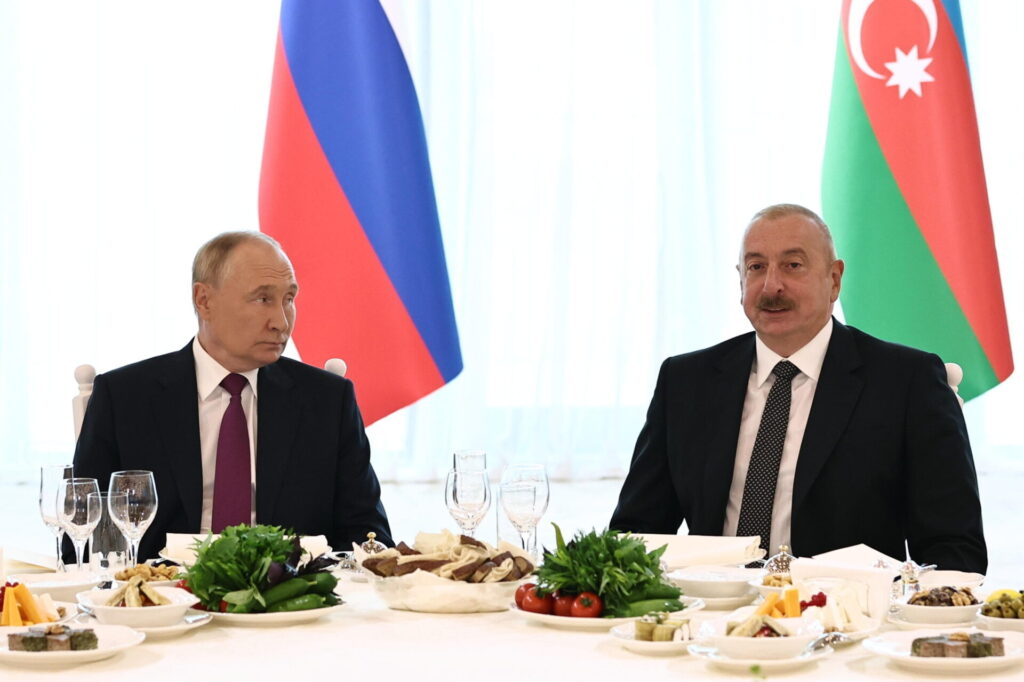
More on this story: The Waning Grip: The Decline of Russia’s Foreign Policy in the Global South
More on this story: China in Central Asia: Russia Driven Out