
By reorienting itself toward Moscow, Dushanbe is navigating a minefield of competing pressures—from cross-border insecurity and domestic politics to the strategic competition between Russia, China, and the Taliban-led government in Kabul. These dynamics now challenge Russia’s role as a regional security guarantor and reshape Central Asia’s geopolitical equilibrium
Escalating Tensions on the Tajik-Afghan Frontier
After the Taliban’s return to power in Kabul in 2021, Tajikistan initially adopted one of the most confrontational stances in Central Asia. President Emomali Rahmon cultivated nationalist sentiment by positioning Dushanbe as a defender of ethnic Tajiks in northern Afghanistan and a supporter of anti-Taliban opposition leaders such as Ahmed Shah Massoud Jr.. Tajik officials refused to hand over the Afghan embassy in Dushanbe to Taliban diplomats, underscoring how political symbolism became part of strategic signaling
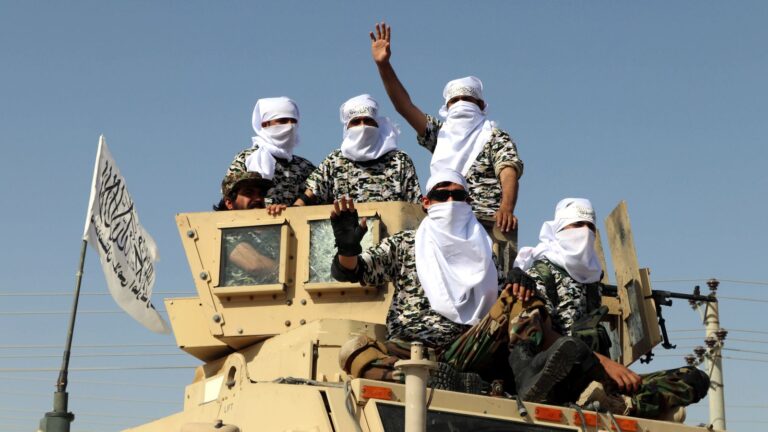
For years, minor border incidents remained episodic. However, in 2025, attacks on the Tajik-Afghan border, including strikes on Chinese operating sites near the Shamsiddin Shohin and Shodaki areas that killed Chinese nationals, signaled a new phase of volatility. Dushanbe responded by urging Beijing to pressure Kabul for accountability. The presence of Chinese nationals reflects Beijing’s deepening economic footprint in Tajikistan—ranging from gold extraction to major infrastructure projects financed through linked-credit deals
At the same time, Tajik-Taliban contacts have not been wholly frozen. Recent reporting indicates “cold cooperation” between Tajik officials and the Taliban on de-escalation steps. Still, Afghan border control in the north remains weak, with local powerbrokers often operating independently of Kabul’s central leadership, further muddling security outcomes
Russia’s Dilemma: Protector of Stability or Strategic Burden?
Against this backdrop, Russia faces a difficult choice. Tajikistan—with its long, rugged 1,344-km border with Afghanistan—has reportedly asked for help from Russian forces or the Collective Security Treaty Organization (CSTO) to co-patrol the frontier. This comes amid reports that Russian troops from the 201st Military Base near Dushanbe could be redeployed southward, alongside aerial surveillance assets to monitor the border. Although Tajik officials later downplayed or removed some claims due to verification challenges, the strategic implications remain real.
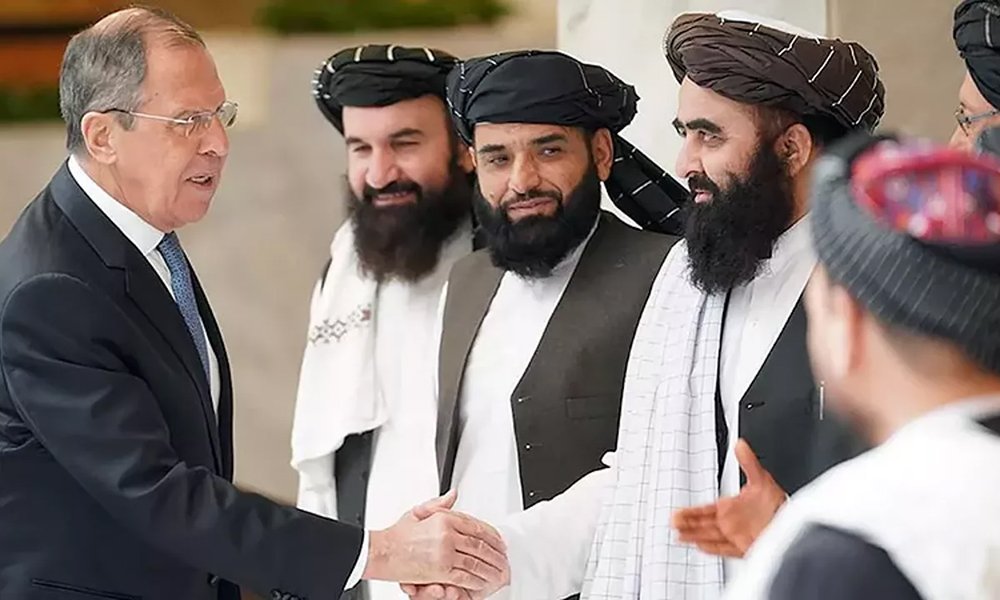
The Kremlin, led by President Vladimir Putin and facilitated by Minister of Foreign Affairs Sergey Lavrov, has increasingly sought to balance Russia’s role as a security provider with cautious diplomatic engagement—highlighted recently by Russia’s recognition of the Taliban government and hosting of a high-level Taliban delegation in Moscow. Russia has publicly warned against any foreign military presence in Afghanistan while positioning itself as a mediator for regional stability
For the Russian leadership, deploying troops to Tajikistan carries political risk. Given deep engagement in the Ukraine war, Moscow has redeployed substantial combat power away from Central Asia, reducing the size of the 201st Base and limiting its capacity for robust border operations. If Russian forces were to suffer casualties in clashes with militants—despite Russia’s formal ties to the Taliban—it could undermine the Kremlin’s narrative of regional leadership and expose contradictions between diplomatic recognition and security cooperation.
The China Factor: Economic Stakes and Security Expectations
China, represented in Tajikistan through Extensive infrastructure investments and migrant labor ties, emerges as a pivotal actor. Beijing has demanded greater protection for its nationals after border attacks and has issued warnings to Chinese citizens in the region. While Dushanbe seeks Moscow’s help, Beijing is also a security stakeholder: it hosts two People’s Armed Police contingents in Tajikistan, focused on protecting Chinese projects, and views Central Asia as critical for Belt and Road connectivity.
Thus, Tajikistan’s approach reflects a triangular diplomacy: relying on Russia’s security umbrella, maintaining economic cooperation with China, and testing limited engagement with the Taliban, all while managing domestic narratives about sovereignty and nationalism.
Domestic Politics and Symbolic Mobilization
Domestically, Rahmon—whose People’s Democratic Party won overwhelmingly in the 2025 parliamentary elections—has promoted a narrative of national defense against external threats. Nationalist mobilization helped consolidate internal support, but also created a political inertia of confrontation that is difficult to unwind without losing face at home. Because Tajik security institutions now possess stronger capabilities than in the 1990s, Dushanbe is wary of being seen as dependent on foreign troops—even if it needs assistance.
Broader Implications for Central Asian Security Architecture
The crisis at the Tajik-Afghan border tests the viability of regional security frameworks such as the CSTO and the Shanghai Cooperation Organization (SCO). Russia, China, and regional capitals like Tashkent and Ashgabat must weigh their interests: from counterterrorism and anti-drug trafficking to the risks of foreign military deployments that might inflame local sentiments.
Finally, Western disengagement from Afghanistan since the U.S. withdrawal in 2021 has created a geopolitical vacuum that external powers—principally Russia and China—are vying to shape. That competition complicates U.S. policy interests in preventing extremism and maintaining ties with Central Asian partners who increasingly hedge between Moscow, Beijing, and Kabul. The probability that Russia launches alarge-scale, independent military operationin Tajikistan in the near term is low unlikely (5–10%). A limited, symbolic, or hybrid deployment—under Tajik or multilateral cover—is more plausible, but still constrained. the probability of a Chinese-led military operation in Tajikistan is very low, but limited, quasi-military security actions under bilateral or deniable formats are plausible.
China avoids overt foreign combat deployments
China has no tradition of expeditionary warfare comparable to Russia or the U.S., especially in volatile, mountainous environments like Tajikistan.
A PLA combat operation would:
Break Beijing’s long-standing non-intervention doctrine;
Set an uncomfortable precedent for Chinese activity abroad;
Risk casualties that undermine domestic political narratives.
Deference to Russia’s security primacy in Central Asia
Despite competition, China still respects Russia’s “security lead” role in Central Asia.
Tajikistan itself is cautious. President Emomali Rahmon wants:
Russian security backing without loss of sovereignty
Deterrence signaling, not foreign troops on the frontier
Avoidance of domestic backlash over “foreign control”
Dushanbe prefers training, equipment, drones, air cover, and intelligence, not Russian infantry.
What could trigger Russian involvement
The probability shifts upward if one or more red-line events occur:
Trigger 1: Mass-casualty attack with Afghan origin
Large attack inside Tajikistan; Targeting Chinese nationals or infrastructure; Evidence tying perpetrators to Afghan territory
This would pressure Moscow to act to preserve its role as a security guarantor.
Trigger 2: CSTO credibility crisis
If Tajikistan formally invokes Collective Security Treaty Organization mechanisms and Russia refuses, the CSTO risks becoming irrelevant.
Moscow may respond with symbolic force rather than real combat power.
Trigger 3: Chinese pressure behind the scenes
If China quietly signals that Russian inaction endangers Chinese investments or citizens, Moscow may deploy limited forces to retain primacy in Central Asian security.
President Emomali Rahmon is even more cautious about Chinese troops than Russian ones.
Chinese forces trigger:
Stronger nationalist backlash;
Fears of debt-for-security dependency;
Elite anxiety over long-term sovereignty erosion.
Dushanbe tolerates Chinese money and quiet security, not visible Chinese soldiers.
Most likely Chinese actions are: Expansion of People’s Armed Police (PAP) presence; Protection of Chinese mines, roads, and infrastructure; Intelligence-sharing on Uyghur and jihadist networks; Training and equipping Tajik border units; Quiet pressure on the Taliban via economic leverage. These activities are functionally military but politically deniable.
More on this story: Russia’s Recognition of the Taliban: Strategic Defiance in a New Great Game
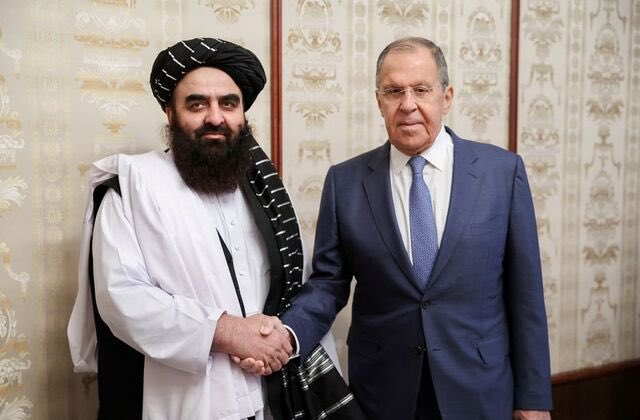
More on this story: Russia’s Recognition of the Taliban: Strategic Defiance in a New Great Game

More on this story: China will have most influence in Afghanistan under the Taliban.
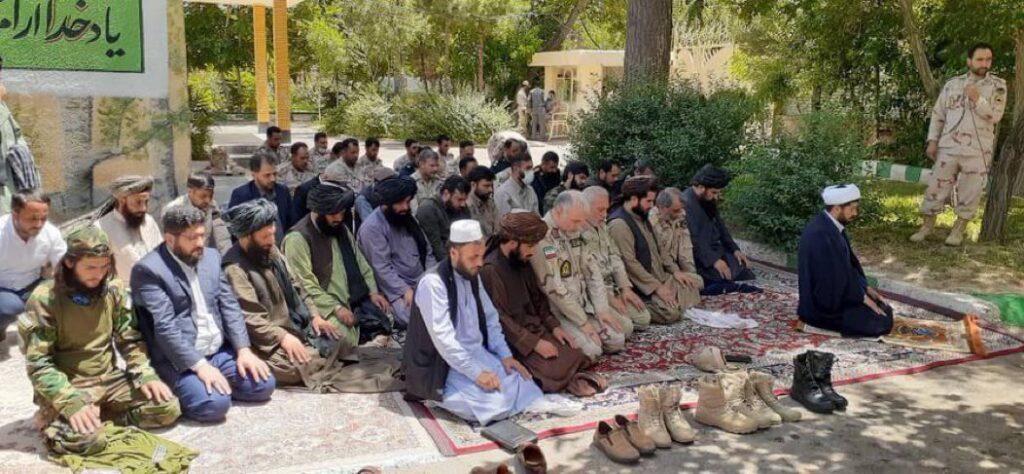
More on this story: Afghanistan’s security landscape altered under the Taliban
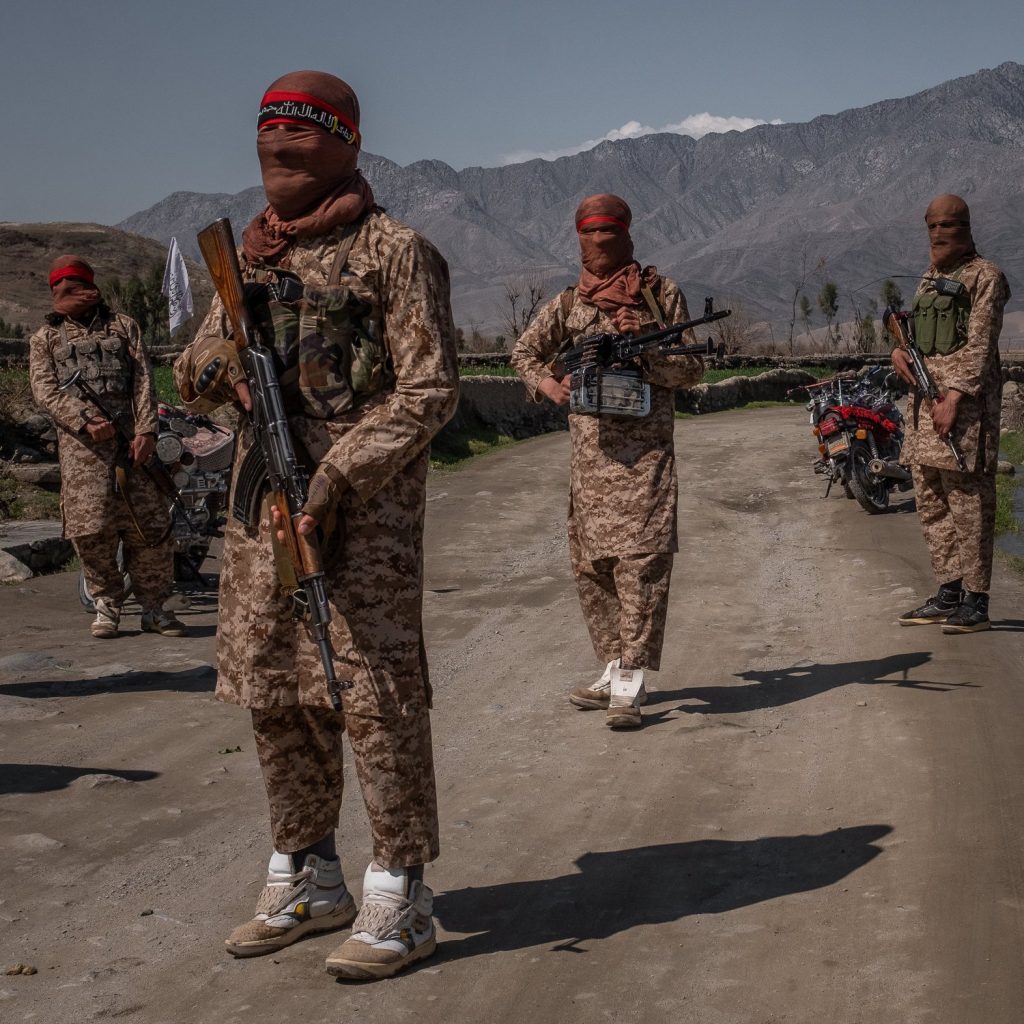
More on this story: Russia will be forced to return to Afghanistan and unleash war with the Taliban