

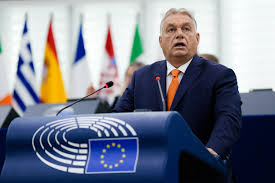
Hungarian Prime Minister Viktor Orbán referred to “26 EU member states” while discussing the bloc’s collective financial support for Ukraine, despite the fact that the European Union has 27 members. His remark quickly triggered a dispute over whether it was a simple mistake — or a deliberate verbal tactic by a sitting prime minister known for his Euroskeptic views.
In any case, the episode has reignited — with renewed intensity — a debate within Hungary’s political establishment and, more broadly, across Hungarian society about Budapest’s relationship with Brussels and Hungary’s place inside the European Union.
Orbán’s repeated use of the number 26 may not have been accidental. Hungary has often single-handedly blocked or delayed joint EU statements, particularly on issues related to Ukraine, leading to situations in which only 26 leaders ultimately signed common conclusions. That recurring diplomatic isolation may now be shaping the prime minister’s rhetoric.
Gordon Bajnai, a former Hungarian prime minister, argues that Hungary’s withdrawal from the EU is part of Orbán’s long-term strategic plan. According to Bajnai, the government is preparing to take Hungary out of the bloc “at the right moment.” Until then, he says, Orbán aims to extract the maximum benefit from EU membership while simultaneously weakening the Union’s institutional foundations.
While criticism of the EU may be justified, Bajnai insists it must always be accompanied by a core question: what would happen to Hungary outside the bloc? In his view, Hungary’s national interests can be defended far more effectively within the European framework than beyond it.
Despite years of anti-Brussels rhetoric from the current government, public support for Hungary’s EU membership remains remarkably strong.
We present a simulation of what a Hungarian withdrawal from the EU would likely do to Hungary’s economy and (2) Hungarian citizens living elsewhere in the EU.A legal EU withdrawal pathway broadly analogous to Article 50-style exit dynamics and the Brexit precedent for citizens’ rights (because that’s the only modern reference point with comparable mechanics).
Quick baseline: where the “human exposure” is
Hungarian citizens are heavily concentrated in a few EU states—especially Germany and Austria.
- Germany: ~216,140 Hungarian citizens (foreign population, as of 31 Dec 2024).
- Austria: reporting around ~107,347 Hungarian citizens at the start of 2024 (cited as Statistik Austria preliminary figures).
These are citizenship-based counts, not “Hungarian-born” or “ethnic Hungarians,” and they excludepeople who already naturalized in the host country.
The key fork that determines the “fate” of Hungarians abroad
Everything hinges on whether there is a Withdrawal Agreement with a citizens’ rights chapter (Brexit-style), or a hard exit with no special protections.
Scenario A — “Managed exit” (best case for people abroad)
Hungary exits but signs an EU–Hungary Withdrawal Agreement protecting residence rights for those already living abroad (like the EU–UK model).
What happens to Hungarians already living in the EU?
They would likely keep, for those already resident before a cutoff date:
- the right to continue living and working where they are,
- broadly continued access to healthcare, pensions coordination, and equal treatment—depending on how closely the agreement mirrors EU–UK provisions (this is the central risk: how generous the text is).
What changes anyway (even in a managed exit):
- No new free-movement rights for Hungarians who move after the cutoff date (future migrants face normal third-country rules).
- Increased paperwork: registration, proof of residence, status upgrades (Brexit showed how easily people fall into administrative cracks).
- Professional mobility becomes stickier: automatic/fast-track recognition systems are tied to EU rules like the professional qualifications framework.
Bottom line for Hungarians abroad: “Grandfathered” security for those already there; sharply reduced freedom for future movers; bureaucracy risk is real.
Scenario B — “Hard exit” (worst case for people abroad)
Hungary leaves with no citizens’ rights deal (or the deal collapses politically).
Immediate legal reality: Hungarians in other EU countries become third-country nationals overnight (unless they already hold a second EU citizenship).
That means:
- Residence/work rights depend on host-country immigration law and transitional measures (likely temporary grace periods, but not guaranteed).
- People may need to switch onto:
- work permits / skilled worker permits,
- family reunion permits,
- student permits,
- or long-term resident statuses (if eligible).
- Cross-border lives get hit hardest (daily commuters, seasonal work, short-notice job moves).
Two systems that become especially painful without a deal
- Social security coordination breaks
EU coordination rules (like Regulation 883/2004) are what make it routine to:
- totalize insurance periods across countries for pensions,
- export certain benefits,
- access healthcare under coordinated rules.
Without an agreement replacing that, coordination falls back to bilateral treaties (uneven, slower, gaps likely).
Professional qualifications become “national discretion”
Many professions currently rely on EU recognition pathways; outside the EU, recognition can become case-by-case with extra exams, supervised practice, or re-licensing.
Bottom line for Hungarians abroad: a scramble to “regularize” status, unequal outcomes by country/sector, and the biggest risk concentrated among lower-income workers, mixed-status families, and people with patchwork work histories across multiple EU states.
Economic consequences for Hungary (why it matters for people abroad)
The domestic economic shock drives second-order effects: return migration pressure, remittance dependency shifts, and bargaining power in any post-exit deal.
A realistic economic shock channel list
(1) Trade friction + supply chains
Leaving the EU typically means leaving:
- the single market (unless an EEA-style arrangement),
- customs union (unless separately negotiated).
That introduces:
- rules-of-origin paperwork,
- border delays,
- higher compliance costs,
- reduced attractiveness as
A Huxit (Hungary leaving the EU) would be an economic shock because Hungary is structurally plugged into the EU single market, EU supply chains, EU investment flows, and EU budget transfers. The impact depends on the “exit model” (soft vs hard), but almost every realistic path is economically negative in the short–medium term.
Here’s what it would most likely mean for the Hungarian economy:
Trade shock: Hungary’s export model takes a direct hit
Hungary is one of the EU’s most integrated manufacturing-export economies.
- About ~76% of Hungarian exports go to the EU (Eurostat data referenced via Trading Economics).
- Eurostat also shows that in 2024 Hungary’s intra-EU exports share was above 75% (77%).
So a Huxit would create immediate friction in:
- automotive & components;
- electronics;
- machinery / industrial goods.
Even under a “free trade agreement” scenario, you get rules-of-origin paperwork, certification duplication, and border friction. That alone lowers competitiveness.
Investment & jobs: FDI premium evaporates
Hungary attracts investors partly because it is:
- a low-cost EU manufacturing base
- inside the EU legal and market-access system
Exit → the country becomes a third-country platform, reducing incentives to place new factories there.
This is especially dangerous for sectors that exist mainly to feed EU supply chains (automotive, electronics), which credit agencies already describe as central to Hungary’s integration.
Even if some Chinese capital stays, it won’t fully replace the EU-centered FDI engine.
EU funds cliff: the biggest single macro punch
A Huxit ends or massively reduces access to:
- Cohesion Funds
- Agricultural subsidies (CAP)
- direct development envelopes
Hungary’s growth model has depended on EU transfers for years. A 2025 academic review explicitly discusses how the single market and EU membership are central to Hungary’s “catching up” path.
Even within the EU, Hungary has already experienced painful losses and freezes:
- the Council decided to suspend ~€6.3 billion in cohesion commitments under rule-of-law conditionality (Dec 2022).
- Hungarian outlet Telex reported Hungary lost > €1bn from 3 EU-funded programs at the start of 2026.
Outside the EU, the “funds risk” becomes structural and permanent, not political and reversible.
4) Currency & inflation: immediate forint vulnerability
Hungary is not in the euro, so in an exit shock:
- the forint likely depreciates sharply
- imports become more expensive → inflation pressure
- interest rates rise → credit slows
- household purchasing power declines
This is the classic small-open-economy crisis mechanism—especially when investor confidence drops.
Living standards: slower growth, less convergence
With:
- weaker exports
- weaker investment
- weaker development funding
- weaker currency stability
Hungary’s medium-term trajectory likely becomes:
- lower growth
- lower wage convergence to Western Europe
- higher inequality and political stress
A simple simulation (3 exit models)
Scenario A — “EEA-like” (softest, least realistic politically)
- Still gets single market access
- Still pays into EU budget
- Still follows many EU rules
smallest trade shock
still big political loss, complex legal dependency
Scenario B — “Canada-style FTA”
- Tariff-free-ish but bureaucracy heavy
- Market access reduced
moderate GDP hit over time, investment reduces
Scenario C — “Hard Huxit” (no deal)
- major trade barriers overnight
- investor exit risk
- currency shock
biggest recession risk, long recovery
What matters most
Huxit would dismantle the core logic of Hungary’s export-and-FDI-driven growth model, while removing EU fiscal transfers—making the forint weaker, inflation risks higher, investment lower, and long-term convergence with Western Europe much slower.
Baseline anchor (no Huxit): where Hungary is heading anyway
Baseline (EU member, 2026–2028):
- Real GDP growth: ~2–3% (recovery path)
- Inflation (CPI avg): ~3–4%
- Unemployment: ~4–6% range (tight-ish)
- Budget deficit: ~4–5% of GDP (election cycles + fiscal slippage risks are repeatedly noted by analysts)
- Current account: around balance / slight surplus (2024 surplus about 1.6% of GDP)
- EUR/HUF: broadly stable band (ING suggests 385–395 in 2026)
Huxit simulation: “Year 1 shock” and “Year 3 settling point”
I model the shock as:
- loss of EU funds (multi-% of GDP investment equivalent; literature estimates EU subsidies ~3.5% of GDP over long periods)
- trade friction + supply chain downgrading (Hungary is an EU manufacturing platform)
- FDI risk premium & capital flight pressure
- forint depreciation → inflation → rate hikes
Scenario 1 — “Soft Huxit” (EEA-like / maximum access)
Politically hard, economically least damaging
Macro outcomes
Year 1 (shock)
- GDP growth: -1% to 0%
- Inflation: 5–7%
- Unemployment: 5–7%
- Budget deficit: 5–7% of GDP
- Current account: -1% to +1% of GDP
- EUR/HUF: 410–430
Year 3
- GDP growth: 1.5–2.5%
- Inflation: 3.5–4.5%
- Unemployment: 4.5–6%
- Deficit: 4.5–6%
- EUR/HUF: 400–420
Interpretation: manageable recession-risk, but weaker convergence and less investment.
Scenario 2 — “FTA Huxit” (Canada-style trade deal)
Most realistic “negotiated exit” model
Macro outcomes
Year 1
- GDP growth: -2% to -4%
- Inflation: 7–10%
- Unemployment: 6–9%
- Budget deficit: 6–9% of GDP
- Current account: -2% to 0%
- EUR/HUF: 430–470
Year 3
- GDP growth: 0.5–2%
- Inflation: 4–6%
- Unemployment: 5.5–8%
- Deficit: 5–7%
- EUR/HUF: 420–460
Interpretation: weaker FDI pipeline + slower export growth; Hungary becomes less attractive as EU supply-chain node.
Scenario 3 — “Hard Huxit” (no deal / abrupt rupture)
Highest probability of crisis dynamics
Macro outcomes
Year 1
- GDP growth: -5% to -10%
- Inflation: 10–18%
- Unemployment: 8–13%
- Budget deficit: 8–12% of GDP
- Current account: -4% to -1%
- EUR/HUF: 480–560
Year 3
- GDP growth: -1% to +1%
- Inflation: 6–10%
- Unemployment: 7–11%
- Deficit: 6–10%
- EUR/HUF: 460–540
Interpretation: classic small-open-economy crisis: FX spiral, rates up, investment down, deep consumption shock.
Key thing most people miss: wages and living standards
Under any Huxit model, Hungary would likely face:
- real wage compression (inflation shock dominates)
- more outward migration pressure unless host countries restrict access
- higher inequality (capital protected; labor hit)
If Orbán took Hungary out of the EU (“Huxit”), the Union’s reaction would be fast, legalistic, and deliberately unified— and it would be designed to (1) protect the EU’s integrity, (2) avoid contagion (copycats), and (3) minimize disruption for EU citizens and markets.
Brexit shows the template: the EU reacts as a bloc, sets strict negotiation guidelines, prioritizes citizens’ rights, and refuses “à la carte” membership benefits without obligations.
Here’s what it would look like in practice.
The first step: “cold but orderly”
Once Hungary formally notifies the European Council under Article 50 TEU, the EU response is procedural, not emotional:
- European Council issues negotiation guidelines (EU-27 unity is the central objective).
- The EU appoints/empowers negotiators and sets the mandate.
- EU leaders publicly frame it as regrettable but Hungary’s sovereign choice.
This is important: the EU avoids melodrama — but moves quickly to control the process.
The EU’s political line: “No rewards for leaving”
The EU’s strategic messaging would be:
- Leaving means losing benefits of the single market, cohesion funds, CAP, and institutional influence.
- Any future relationship must be balanced: no “free riding.”
This principle was explicit in Brexit-era guidelines: there can be no “cherry picking” of single market benefits.
Negotiation priorities: citizens first, then money, then trade
The EU will insist on a sequencing similar to Brexit:
A) Citizens’ rights
The EU would push hard to protect:
- EU citizens living in Hungary
- Hungarian citizens living in the EU (if there is a withdrawal agreement)
The Commission’s Brexit citizens-rights framework shows the standard: protect residence/work rights for those already settled before a cutoff date.
B) Financial settlement (“divorce bill” logic)
Hungary would likely have to settle:
- outstanding commitments
- multiannual budget obligations
- program liabilities
C) Future relationship
Only then: trade/visa/sector agreements.
The economic lever: funding and market access shutoffs become automatic
Even without hostility, EU instruments are powerful:
- Hungary would lose eligibility for structural funding and agricultural subsidies as a member.
- Single market access ends unless a special arrangement exists.
The EU already uses budget conditionality tools against Hungary inside the Union (e.g., the €6.3bn cohesion suspension mechanism in 2022). That gives a clue: Brussels will be unsentimental and technical.
The “deterrence factor”: EU unity will be unusually strong
The EU would likely become more cohesive, not less, because:
- it wants to avoid a precedent of “exit without cost,”
- it wants to prevent an Orbán narrative of “winning by leaving.”
Research on Brexit negotiations highlights how unusually unified the EU remained, largely to protect the Union’s institutional integrity.
So: no special carve-outs, no favorable deal that can be marketed domestically as “we got everything without Brussels.”
6) The security/political reaction: Hungary becomes a “watch list” neighbor
If Huxit is seen as a pathway to freer alignment with Russia, the EU would treat Hungary as:
- a border security concern;
- a sanctions circumvention risk;
- a hybrid influence channel.
Result:
- tighter customs controls;
- tighter financial compliance scrutiny;
- closer monitoring of Hungarian-linked companies.
What the EU would not do
The EU would not:
- try to punish ordinary Hungarians symbolically;
- seek humiliation;
- “kick out” Hungary quickly without process (exit must be legal under Article 50).
Instead it would use:
- Law;
- Money;
- Access.
If Orbán quits the EU, Brussels’ reaction will be:disciplined, unified, and transactional — protect citizens, close the money chapter, enforce strict conditions, and make sure Hungary cannot keep EU economic advantages while abandoning EU rules.
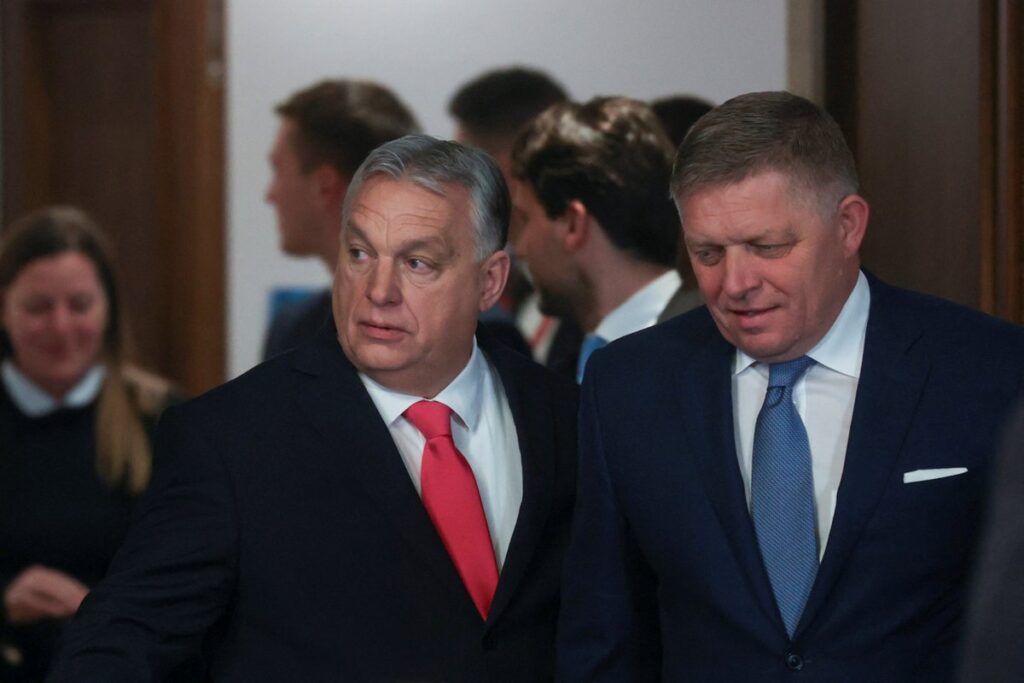

More on this story: The Kremlin’s Battle for Budapest: Russia’s Hybrid War to Keep Orbán in Power
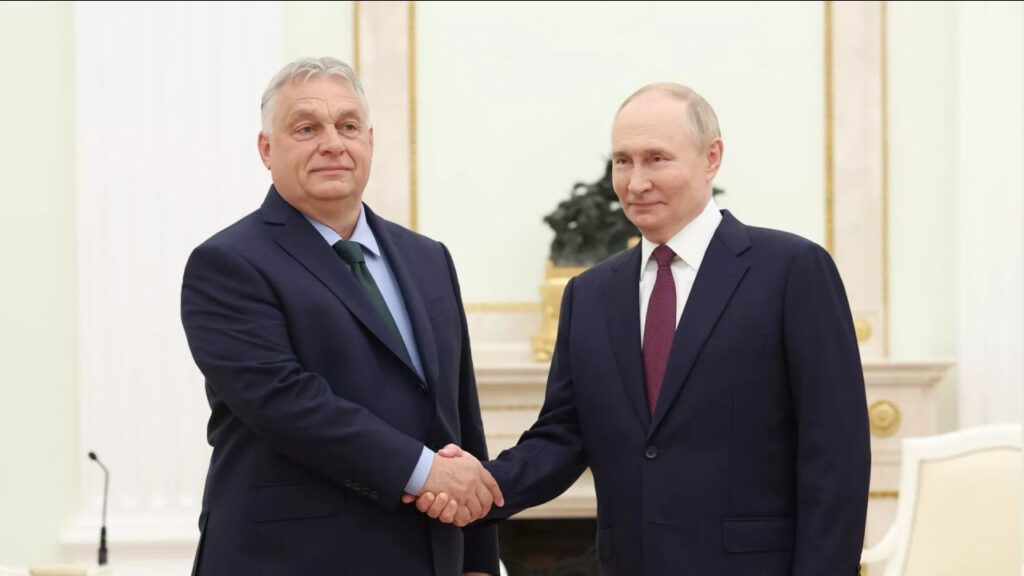
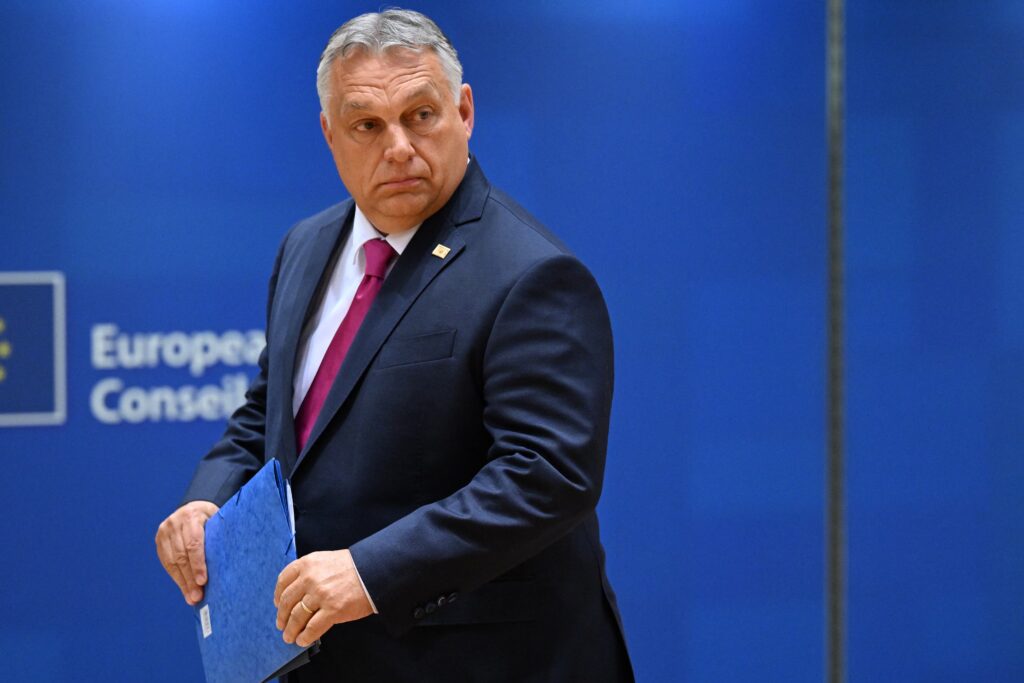
More on this story: Hungary’s Espionage Against EU Institutions:

More on this story: Hungary: Trojan Horse in Russia’s Proxy War Against Europe