
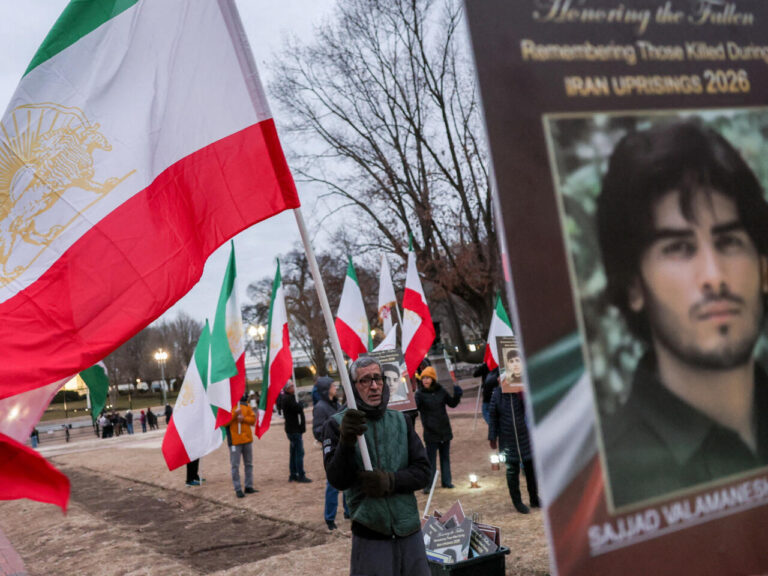
Iran is experiencing the most lethal protest wave in decades, triggered by economic collapse dynamics (currency depreciation, inflation, cost-of-living shock) and amplified by accumulated political rage. Death toll reporting varies sharply—official narratives speak of “terrorists and rioters,” while activist monitoring groups cite thousands killed and tens of thousands detained.
The regime is not “about to fall” in the immediate sense, but it is entering a new phase of structural brittleness. The Islamic Republic’s coercive apparatus (IRGC, Basij, intelligence services) remains capable, but legitimacy is deteriorating faster than the state’s ability to “re-buy” social peace.
On democracy: this is not a “fiasco of democracy” as much as a demonstration that Iran’s political system is designed to prevent democratic correction. Democracy repeatedly fails in Iran not because society rejects it, but because the regime’s architecture turns elections into managed legitimacy, while real power remains unaccountable.
Situation Overview: What’s happening now
The protests began around December 28, 2025, driven initially by economic grievances but quickly escalating into openly anti-regime demonstrations in multiple provinces. Authorities responded with internet restrictions/blackouts and a broad crackdown.
Reporting indicates:
- thousands killed (numbers disputed; both official and activist estimates are unusually high),
- mass arrests (tens of thousands),
- heavy intensity in Kurdish regions, suggesting the regime sees peripheral regions as both symbolically and operationally threatening.
An important feature: even where street protests subside, dissent continues through nighttime chants, workplace unrest signals, and decentralized resistance—a sign of political hatred that survives repression.
What this reveals: The regime’s strengths vs. weaknesses
A. Why the regime is still standing
Iran’s system is built for survival under siege.
Key survival pillars:
- Monopoly of organized violence
The IRGC-security ecosystem has deep experience suppressing mass unrest. - Fragmentation of opposition
Protest movements are large but often lack unified command, logistics, and protected communications—made worse by deliberate blackouts. - Narrative weaponization
The state routinely frames protest waves as foreign conspiracies; this is now being repeated at the highest level.
B. Why the regime is weaker than it looks
Survival ≠ stability.
Three strategic vulnerabilities:
- The economic base is collapsing faster than coercion can compensate
Unlike earlier ideological eras, today’s Iran faces legitimacy failure tied to daily survival: inflation, currency distress, jobs, energy shortages. - Repression is creating a “blood debt”
Once casualties reach the “thousands” tier, the regime doesn’t restore normalcy—it produces a society with irreversible anger and a widening pool of families personally marked by violence. - Elite cohesion risks
Regime change rarely happens because protesters win the street. It happens when elites split. Iran is not there yet—but this level of repression increases the probability of elite fractures over time.
Prospects for the regime: three scenarios (6–24 months)
Scenario 1 — Suppression + Managed Exhaustion (Most likely near term)
The state crushes street-level mobilization through repression, arrests, targeted executions, and economic “band-aids” (subsidies, rationing, temporary currency controls). Internet restrictions continue intermittently.
Why likely: the coercive toolkit still works tactically.
Cost: Iran becomes more like a high-security garrison state—lower governability, higher fear, and permanent instability.
Scenario 2 — Chronic Unrest / Protest Cycles (Highly plausible)
Instead of one revolutionary moment, Iran enters a cycle: protest → crackdown → pause → protest again. The December 2025 wave becomes a template, not an exception.
Why plausible: economic drivers are structural, not temporary. Political grievances are existential. Human rights organizations note continuing impunity and repression patterns after earlier uprisings.
Scenario 3 — Elite Split + Transition Crisis (Lower probability, highest impact)
A rupture inside the elite—security services, clerical establishment, or IRGC economic factions—produces either:
- a negotiated “soft transition,” or
- a violent succession crisis.
Trigger conditions: leadership health uncertainty, catastrophic sanctions shock, uncontrolled regional war spillover, or mass strikes that paralyze energy/transport.
Is this a fiasco for democracy in Iran?
Not in the way that phrase suggests.
Then these protests are the opposite of fiasco—they are proof that Iranian society still demands political agency even after years of repression.
Why democracy keeps failing in Iran
- The Supreme Leader’s position is not electorally accountable
- Guardian Council vetting prevents true competition
- Security organs function as regime owners, not state servants
- Repression eliminates civic infrastructure necessary for democratic continuity
So the correct diagnosis is:
not a failure of democratic aspiration
a failure of democratic mechanisms—by design
The decisive variable: mass organization, not mass anger
Iran does not lack protesters. It lacks protected organization.
For the protest movement to threaten regime survival, it needs:
- sustained general strikes (oil/gas, logistics, ports, bazaar),
- cross-class unity (students + labor + middle class),
- secure communications resilience (tools against blackout conditions),
- credible alternative political center (even a transitional council),
- and—most importantly—a split in the coercive apparatus.
Without at least 2–3 of these simultaneously, the regime can keep “winning” tactically while still losing the country psychologically.
6) Bottom line assessment
- Short-term outlook (weeks–months): regime survives via repression and control.
- Medium-term outlook (6–24 months): instability becomes chronic; “normal governance” degrades.
- Democracy outlook: Iran is not witnessing democracy’s failure—it is witnessing the consequences of a system structurally designed to block democratic change, even at the cost of mass bloodshed.
A new wave in Iran usually isn’t triggered by one thing — it’s triggered by a spark landing on dry structural fuel(economy + anger + repression). Here are the most realistic “resume points” that could restart mass protests in the coming weeks/months:
Economic shock (most likely trigger)
This is the #1 engine of repeat unrest.
What could ignite it
- another sharp rial collapse (panic in FX/crypto markets)
- new price spikes in bread, fuel, cooking oil, electricity
- non-payment of wages (teachers, municipal workers, factory labor)
- banking crisis (frozen deposits, credit collapse)
- subsidy cuts or rationing failures
Why it works: it hits even apolitical households and creates instant “street legitimacy.”
Fuel hike / subsidy reform (classic detonator)
In Iran, fuel prices are political dynamite (2019 is the reference).
Likely scenario
- regime tries gradual reform → local unrest → security violence → nationwide explosion
A high-profile killing (martyr effect)
Repression can suppress crowds — but martyrs restart them.
Triggers
- death in custody
- execution of detained protesters
- video of a brutal crackdown (especially on a child/woman)
- targeting symbolic groups (students, clerics, ethnic minorities)
Why it works: mourning turns into mobilization. Funerals become rallies.
Major strike wave (the most dangerous for the regime)
Street protests frighten the regime; strikes threaten its oxygen.
Key strike sectors
- oil & gas (Khuzestan is strategic)
- petrochemicals
- trucking/logistics
- bazaar shutdowns
- teachers and civil service
If strikes happen together with street unrest, it’s a serious escalation.
Religious calendar / symbolic dates
Iran’s protest cycles often sync to national memory.
Catalysts
- 40-day mourning cycles after killings (very powerful)
- anniversaries of earlier uprisings
- sensitive Shia dates where gatherings are already mass-scale
Another internet blackout (paradoxical trigger)
It’s counterintuitive, but total shutdowns can trigger unrest.
Why
- people interpret blackout as proof the regime is panicking
- business losses spike (especially in urban areas)
- local rumor spirals increase fear and anger
Elite fractures or succession uncertainty
This is the “political earthquake” scenario.
Examples
- major IRGC/clerical infighting becomes visible
- rumored leadership health crisis
- purge/arrest of insiders
- openly conflicting messages from top institutions
Why it matters: people protest harder when they smell weakness.
8) Regional war spillover
External conflict can restart protests two ways:
- economic pain (prices, sanctions, disruption)
- anti-war backlash (“money for proxies, not for Iran”)
What would make protests harder to restart?
Even if anger is high, protests struggle if:
- fear remains high after mass killings
- opposition comms remain disrupted
- key organizers are jailed
- people don’t believe protests can achieve anything (hopelessness phase)
The most plausible “resume package” (realistic combo)
The pattern that most often revives Iran protests is:
Economic shock + a martyr incident + strike activity + funerals/mourning cycle
That combination can turn scattered unrest into a national wave.
Here are the most important lessons (strategic, not moral):
Anger is not enough — organization is everything
Iran shows the central paradox of modern uprisings:
- Millions may oppose the regime
- but if protest cannot coordinate, sustain logistics, protect communications, and convert street power into political leverage, the state can outlast it.
Iran’s opposition is socially broad, but still struggles to create protected, durable structure under repression and blackouts.
Economic pain triggers revolts; repression turns them existential
This wave was clearly fueled by currency collapse and inflation shocks — the same model as 2018–2019 cycles.
But the crackdown escalated it into something deeper:
once killings reach mass scale, protests stop being “about prices” and become about dignity, vengeance, and regime illegitimacy.
Internet shutdowns work — but they come with long-term costs
Iran is demonstrating how blackouts are used as a counter-revolutionary weapon: isolate cities, prevent coordination, suppress evidence.
But the big lesson is the double edge:
- blackouts reduce mobilization in the short term
- they also destroy business, deepen economic crisis, and increase hatred
That’s why reports say Tehran is now debating whether/how to restore access.
“Street protests” rarely topple regimes — strikes do
The most dangerous moments for authoritarian regimes are not marches. It’s when:
- bazaar closes
- logistics freezes
- oil & gas work stops
- public-sector payroll becomes shaky
Even in this wave, bazaar shutdown signals mattered because they hint at the key transition: from protest to economic paralysis.
Repression can win battles, but it accelerates legitimacy collapse
The Islamic Republic may “win” the streets tactically — but mass detentions, torture allegations, and sexual violence claims create what analysts call irreversible delegitimization.
So Iran teaches: coercion is a stabilizer only short-term.
Long-term it produces a brittle state.
Martyrs + mourning cycles are a protest engine
Iran’s political culture still transforms:
- funerals → mass gatherings → protests
That’s why regimes try to control bodies, hospitals, cemeteries — to disrupt the mobilization cycle.
Authoritarian regimes don’t fall when people hate them — they fall when elites split
The decisive variable is not “protest size.” It’s whether:
- security forces fracture
- IRGC factions fight each other
- clerical establishment loses cohesion
- insiders defect
No elite split = regime likely survives (even if society despises it).
Foreign “support” can backfire (and regimes exploit it)
External messaging — especially from the US — often helps Tehran’s narrative that protests are foreign-directed.
Even current US debate about intervention is already being used for propaganda leverage.
So the lesson: international support must be carefully shaped, or it becomes regime ammunition.
The biggest lesson
Iran is proving that the most dangerous phase for a dictatorship is not when protests begin — it’s when protests merge with strikes and elite fractures.
More on this story: Iran’s Protests: Drivers, Actors, Consequences, and External Dimensions
More on this story: Russia’s “Internet Kill Switch” Export: How Moscow Helped Iran Crush Protests