
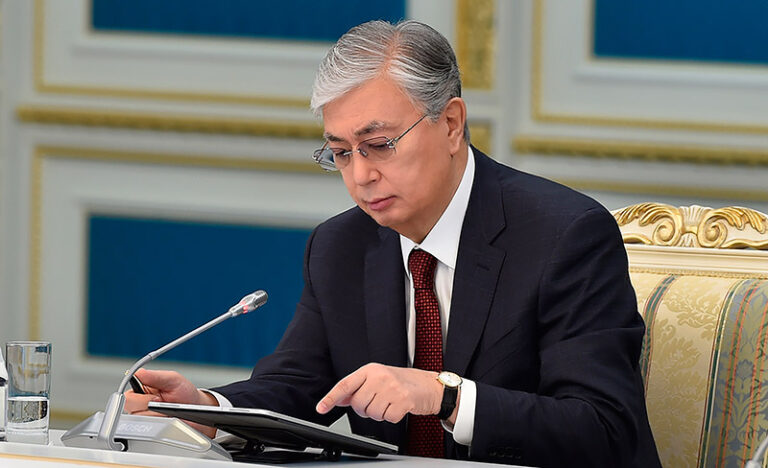
Kazakhstan’s political reforms since 2022 are widely described as “political transit” because they are not merely technical adjustments to election law or institutions—they represent a managed transition of the post-Nazarbayev order into a new power architecture under President Kassym-Jomart Tokayev.
The reforms pursue three simultaneous aims:
- Legitimization after the January 2022 unrest (“Bloody January”) and the collapse of Nazarbayev’s inviolability.
- Rebalancing the elite system so Tokayev becomes the unquestioned center of the state and the security bureaucracy.
- Controlled pluralism—opening limited political competition without allowing genuine alternation of power.
Yet the reform trajectory remains reversible and partly tactical: late-2025 commentary indicates Tokayev may be seeking new constitutional engineering that could preserve elite control during and after his presidency—supporting the thesis that transit is real, but tightly managed.
Why some call it “political transit”
“Transit” in post-Soviet political science refers to a succession system shift—a movement from one regime architecture to another, often triggered by elite crisis, leadership replacement, or legitimacy breakdown.
In Kazakhstan, the term applies because reforms are embedded in:
- The end of Nazarbayev’s special status and the dismantling of “dual power.”
- A shift from an openly super-presidential model toward declared parliamentary strengthening. The U.S. Congressional Research Service notes Tokayev described it as a move away from “super-presidential” governance toward a presidential republic with a stronger parliament.
- A new electoral and party architecture (mixed system, more single-mandate seats), intended to refresh the legitimacy of representation and co-opt new elites.
Bottom line: Transit here is not democratization. It is regime modernization, designed to survive the post-2022 legitimacy shock.
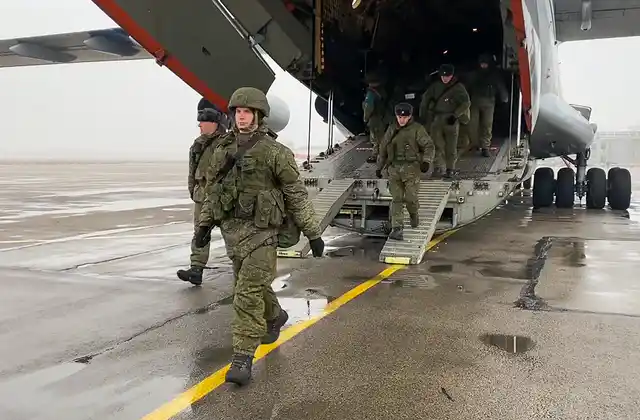
More on this story: Unrest in Kazakhstan: potential geopolitical impact
Why now: drivers of reform timing
A) Trauma of January 2022
The January unrest exposed three regime vulnerabilities: inequality, corruption fatigue, and fragmentation inside security and elite institutions. The crackdown (238 dead per official accounting) produced a legitimacy crisis requiring a new narrative and institutional reset.
B) Tokayev’s need to lock in sovereignty over the elite
After 2022, Tokayev faced a strategic imperative: prevent the old network from resurfacing, and ensure there is no repeat of dual-center governance.
C) Geopolitics: “multi-vector survival” under Russian pressure
Russia’s war against Ukraine transformed the environment for Central Asian elites: the cost of dependence rose sharply. Tokayev needed reforms that improve Western legitimacy (for investment and diplomacy) without alienating Russia too far.
Who initiated it
The reform agenda is overwhelmingly Tokayev-initiated and presidentially controlled.
Key milestones include:
- June 2022 constitutional referendum introducing broad amendments (including restoring a Constitutional Court, new electoral rules, and formal constraints).
- One seven-year presidential term (a classic transit instrument: it defines the endpoint and reduces succession uncertainty, while keeping maximal authority during the term).
A critical analytic view is that reforms were also a legitimacy referendum—reforms as plebiscite rather than reform as decentralization. ConstitutionNet argued the referendum served regime consolidation and legitimacy-building more than deep political transformation.
Who supports it (domestic coalitions)
Support for political reform in Kazakhstan comes from four distinct blocs, each with different motives:
1) Tokayev’s presidential bureaucracy
Wants stability, predictable transition mechanisms, and the ability to manage succession.
2) Security services / siloviki
Support reforms to the extent they strengthen the state and preserve coercive capacity. They favor “clean governance” rhetoric when it targets rivals.
3) New technocratic economic elite
They want:
- better governance optics
- less reputational risk
- more investment friendliness
Reform signals help Kazakhstan’s external positioning.
Controlled parliamentary parties / Amanat system actors
They support reforms because they redefine the rules of distribution—new seats, new electoral geometry, controlled entry points for loyalists.
The core reforms: what actually changed
A) Constitutional engineering
- Formal shift away from super-presidentialism (at least rhetorically), with new constraints and institutional balancing.
- Return/strengthening of Constitutional Court logic.
B) Electoral reform and “managed pluralism”
- Mixed electoral model: party lists + single-mandate districts.
This is often used in hybrid regimes to introduce competition while keeping the system governable.
C) Elite purge / accountability optics
High-profile legal and disciplinary actions signal that “the old system is over.” They also deter elite disloyalty.
Why critics say it’s not democratization (the “transit, not reform” argument)
This critique has become stronger in late 2025.
Tokayev may be looking for ways to secure influence beyond his term—essentially shaping an architecture where he can step back from presidency while remaining the key political actor.
Additionally, some reporting indicates proposals that could roll back parts of competitive reform (for example, restricting independent candidacies or restructuring parliament). While not all reporting is equally authoritative, even the existence of such debate demonstrates reform reversibility.
Interpretation: Kazakhstan is building a “post-super-presidential” design, but not necessarily building democracy. That is why “transit” is the correct framing.
Consequences
Domestic consequences
- Short-term stabilization
Reform rhetoric reduces protest potential by offering institutional hope. - Elite renewal
New electoral mechanisms create new pipelines for loyal officials, mayors, and regional figures. - Institutional uncertainty
If reforms are adjusted mid-course (2025 signals), legitimacy may erode: society will interpret changes as “rules rewritten by the top.”
Foreign policy consequences
- Improved Western optics
Reform narrative supports investment diplomacy and balancing vs Russia. - Russian suspicion
Moscow interprets reform + sovereignty as distancing; but Tokayev will avoid overt rupture. - Regional demonstration effect
Kazakhstan provides a model for Central Asian elites: reform enough to preserve legitimacy without surrendering control.
Outlook: what happens next (2026–2029)
Most likely trajectory
Kazakhstan continues in a managed transit path, defined by:
- controlled pluralism
- periodic elite purges
- limited civic opening
- preservation of centralized presidential power
Key uncertaintyWhether Tokayev intends a real handover by 2029, or a new “arbiter model” (constitutional redesign where he leaves presidency but retains decisive influence)—a scenario explicitly discussed by analysts.