

China is becoming a party to the Russia–Ukraine conflict by increasing supplies of components to enterprises of Russia’s military-industrial complex, including those used in the production and modernization of missiles such as the Kalibr (3M-14M) and Kh-35U.
As a result, when Russian missiles strike residential areas of Ukrainian cities, Beijing bears responsibility for Russia’s war crimes. The full-scale invasion of Ukraine led to unprecedented restrictions on the export of high-technology products to Russia. Western microchips, electronic design software, and specialized electronic components were almost entirely cut off. Russia lost access to most Western semiconductors and was forced to systematically restructure its supply chains. According to assessments by Western government agencies, China has become Russia’s primary source of dual-use and military-grade electronics.
This concerns not only mass-market electronics, but also specialized components suitable for use in guidance, communications, radar, and flight-control systems (homing and remote-control functions) of Russian missiles.
Russian missiles increasingly contain Chinese-made microchips and connector assemblies.
Without systematic sanctions pressure on suppliers from the PRC, these supply chains will continue to function despite official Chinese claims of neutrality.
As a result, the expected degradation of Russia’s military-industrial complex has not materialized in full.
Constrained by Western sanctions, Russia’s defense industry is increasingly reliant on Chinese suppliers of electronic components. A number of Chinese companies continue to export microchips, printed circuit boards, and electronic assemblies used by enterprises involved in the production and modernization of Russian missile systems, including Kalibr and Kh-35U.
Particular attention should be paid to the role of Russia’s Berg Institute (Central Research Institute of Radio Engineering named after Academician A. I. Berg) — a key research and production institution involved in the modernization of 3M-14M Kalibr cruise missiles and the production of Kh-35U anti-ship missiles. This institute requires a modern electronic component base (ECB) — microchips, radio components, and connectors — for navigation systems, radar homing heads, flight-control systems, and related subsystems. Following Russia’s loss of access to Western technologies, such components are now supplied primarily from China, and the Chinese companies listed below provide Russia’s missile program with critical parts.
In addition to the Berg Institute, attention should also be paid to IntraSoft JSC, a contract electronics manufacturer, and RT-Komplektatsiya JSC, a structure linked to the state corporation Rostec. Both companies function as supply and integration intermediaries, providing defense enterprises with the necessary electronic component base.
Four Chinese companies have been identified as suppliers of Chinese-manufactured electronic components to Russia’s military-industrial complex. Their products — ranging from microchips to connectors — are used in Russian missiles and require special attention within sanctions policy.
Identified Chinese suppliers
IC VALLEY MICROELECTRONICS
A Chinese manufacturer of radio-frequency microchips based on GaAs and GaN (gallium arsenide and gallium nitride). These components are critical for high-frequency electronics, including radars, communications, and guidance systems. IC Valley products can serve as substitutes for Western microchips in homing heads, radio altimeters, and electronic warfare systems used in Russian missiles. IC Valley is among the Chinese suppliers cooperating with Russian military-electronics distributors. In particular, Epsilon JSC (St. Petersburg) lists IC Valley among its official Chinese partners supplying microchips and analog replacements for Western electronics (FPGAs, ADCs/DACs, microwave chips, passive components, etc.) to Russia’s military-industrial complex. This confirms that IC Valley products are directly used in Russian military systems.
NEDITEK (NEDI Technology Co., Ltd.)
A trading and manufacturing company based in Nanjing, specializing in semiconductor components, including RF/microwave modules, filters, and amplifiers. NEDITEK has close ties to China’s defense sector and is effectively a subsidiary of the 55th Research Institute of CETC (China Electronics Technology Group) — a state-owned electronics conglomerate involved in military development. CETC Institute No. 55 has been on the U.S. Entity List since 2018, and NEDITEK has been officially added as its subsidiary. This indicates NEDITEK’s direct involvement in supplying chips for defense programs and its potential role in providing Russia with high-reliability components for missile systems (e.g., microwave amplifiers for radar homing heads or electronic modules for control systems). While U.S. sanctions partially restrict NEDITEK’s access to American technologies, the company remains able to trade freely with other countries, including Russia, in the absence of multilateral restrictive measures.
Here is a precise, publication-ready English translation in a policy / sanctions-analysis style, keeping the structure and emphasis of the original text:
HUBEI QIHENG COMMERCE AND TRADE CO., LTD.
A trading and commercial company based in Hubei Province that acts as an intermediary in the export of electronic components to the Russian Federation. According to customs data, Qiheng has carried out at least several dozen export shipments to Russia since 2022. Analytical services record 83 shipments from China to Russia by this company, identifying Russian end-user companies and product categories.
Although the detailed composition of these shipments is difficult to determine from open sources, Qiheng is known to supply electronic components, most likely passive elements (inductors, chokes) and other components for printed circuit boards. While such parts are not high-tech in themselves, they are indispensable in missile electronics — for example, in power-supply units, signal filters, and guidance systems. The absence of international restrictions on Hubei Qiheng allows it to continue operating as a “cut-out” company, through which critical electronic assemblies reach Russian defense enterprises.
- IC Valley, NEDITEK, Shenzhen Raymo, and Hubei Qiheng are not isolated businesses, but components of a resilient ecosystem capable of replacing Western military components for Russia.
- Even civilian or “dual-use” electronic components can be critical for the production of modern missiles.
Potential tightening of the EU sanctions regime should be viewed as a systemic pressure instrument capable of creating long-term structural constraints on supply chains linked to Russia’s military-industrial complex. First and foremost, this concerns cutting companies off from Western markets, financial infrastructure, and critical technologies. For firms such as Shenzhen Raymo, sanctions would mean losing access to advanced manufacturing equipment and specialized electronic design software, directly limiting their technological capacity and competitiveness.
Deterrence effect of secondary sanctions
The second dimension of sanctions pressure lies in its deterrent effect on a broader circle of intermediaries. The introduction of secondary sanctions significantly increases regulatory and reputational risks for companies that are not formally sanctioned but are involved in indirect supplies. As a result, the willingness of such firms to participate in sanctions-evasion schemes is expected to decline, leading to fragmentation and rising costs within supply chains serving Russia’s military-industrial complex.
Transparency and “signaling” effect
A third effect is linked to transparency and so-called “signaling.” The public imposition of sanctions against a specific company — in particular IC Valley or NEDITEK — serves as a warning signal to the international business community. This encourages manufacturers and distributors to strengthen compliance procedures, including stricter know-your-customer (KYC) mechanisms and enhanced monitoring of atypical trade operations, especially those conducted through third jurisdictions.
Importance of multilateral coordination
Maximum sanctions effectiveness is achieved through multilateral coordination and intelligence sharing among partner states. This approach makes it possible to identify concealed end-use — for example, when large volumes of microchips ordered by a company such as Hubei Qiheng are in fact destined for Russia. Timely detection of such schemes provides grounds for blocking supplies at the level of the manufacturer or authorized distributor, reducing the effectiveness of sanctions-evasion efforts in the medium to long term.
Additional countermeasures beyond sanctions
Beyond sanctions, other tools exist to counter illicit technology transfers. A key step is strengthening international export controls, particularly pressure on transit countries (such as Turkey, the UAE, Kazakhstan, and others) through which goods from China may be re-exported to Russia. Ukraine’s partners have already begun imposing restrictions on intermediaries in third countries; the logical next step is coordinated action targeting Chinese suppliers.
This may include both direct sanctions and discreet diplomatic measures — for example, warnings to China regarding the inadmissibility of tolerating the re-export of sanctioned goods. Platforms such as the Wassenaar Arrangement or the G7should be used to collectively deny Russia access to critical technologies.
Precedent
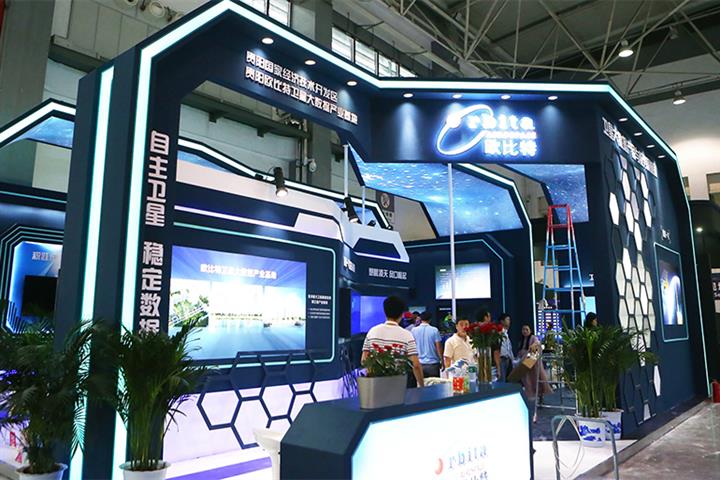
For example, Zhuhai Orbita Aerospace, a Chinese manufacturer of satellite electronics, was exposed for supplying microchips to the Russian military and was placed under U.S. sanctions. Following this, many international counterparties severed ties with the company. Similar public exposure is needed for IC Valley, NEDITEK, Raymo, Qiheng, and others. Even if Chinese authorities do not formally join sanctions, secondary sanctions and extraterritorial measures can significantly complicate these firms’ operations by threatening access to dollar settlements and Western partners, thereby discouraging participation in Russian supply schemes.
Strengthening the sanctions regime against the aforementioned Chinese companies is a justified and necessary step. For the effective implementation of U.S. administration policy, sanctions lists should be expanded to include key suppliers of military technologies to Russia. This would place additional pressure on Moscow by complicating access to vital components for Kalibr, Kh-35, and other weapons systems.
Failure to act will only encourage further sanctions circumvention, whereas decisive measures can shift the situation: even a partial reduction in “grey” microelectronics imports can affect Russia’s ability to continue its missile terror campaign.
Russian missiles are no longer “Western” — they are Chinese.
Key electronic components in Kalibr and Kh-35U missiles are of Chinese origin or Chinese analogues of Western chips.
Additional observations
- Supplies are conducted under the cover of “civilian” electronics.
Microchips, connectors, and circuit boards are declared as civilian or dual-use goods, enabling sanctions evasion. - Chinese manufacturers adapt to Russian military standards.
Some Chinese companies directly tailor their products to ensure compatibility with Russian defense standards.
Why stronger sanctions would matter
First-order effect: capability denial
Targeted sanctions against firms such as Raymo, IC Valley, NEDITEK, Qiheng would:
- restrict access to Western manufacturing equipment
- cut off EDA software and testing tools
- complicate access to global finance and insurance
This would not stop production overnight, but would raise costs, reduce quality, and slow output.
Second-order effect: deterrence
Secondary sanctions create behavioral change:
- intermediaries withdraw;
- compliance costs rise;
- supply chains fragment and become inefficient;
Third-order effect: signaling
Public designations send a clear warning to the broader market:
- enhanced KYC requirements;
- risk aversion among distributors;
- reduced willingness to serve opaque end-users.
The importance of multilateral coordination
Maximum effectiveness requires:
- EU–US alignment on sanctions lists;
- intelligence sharing on end-use diversion;
- pressure on transit jurisdictions (Turkey, UAE, Kazakhstan);
- coordinated messaging toward Beijing.
Platforms such as the G7 and Wassenaar Arrangement should be used not only for control lists, but for collective attribution and exposure.
Russia’s missile strikes on Ukrainian cities are no longer sustained by Western technology. They are enabled by Chinese electronics, supplied through a dense network of manufacturers and intermediaries operating in the grey zone between civilian trade and military production.
Without decisive action, this ecosystem will continue to function — prolonging Russia’s capacity for missile terror. Targeted, coordinated sanctions against key Chinese suppliers are therefore not symbolic, but operationally necessary.Russian missiles are no longer “Western.” They are Chinese-enabled.
More on this story: China Assists Russia in Gunpowder Production for War against Ukraine
More on this story: China’s Declared Neutrality vs. De Facto Involvement in the Russia-Ukraine War
More on this story: China Continues Supplying Russia with Critical Dual-Use Components
More on this story: China: Supplying Components for Russian Drones in the War Against Ukraine
More on this story:Russia Circumvents Sanctions Through Chinese Marketplaces
More on this story: Russia Circumvents Sanctions Through Chinese Marketplaces