
Costa Ricans vote February 1, 2026 to elect a president + 57-seat Legislative Assembly; a runoff is scheduled for April 5 if no candidate reaches the 40% threshold.
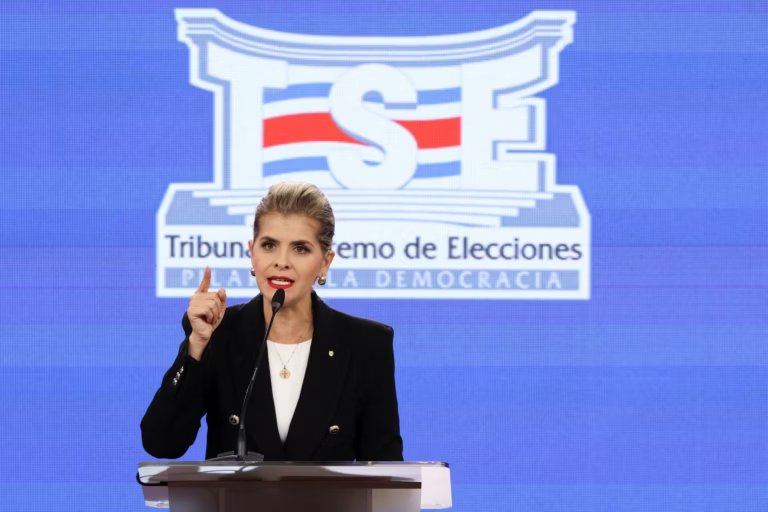
This contest is being fought in the shadow of (1) a sharp security deterioration linked to organized crime, (2) a polarizing incumbent president (Rodrigo Chaves) who cannot run again, and (3) an unusually public institutional confrontation between Chaves and electoral/oversight bodies.
Situation before the elections: what’s driving the vote
A. Security has displaced economics as the top issue
Costa Rica’s election is being shaped less by the classic “jobs-and-prices” agenda and more by public anxiety over violence and trafficking—a major shift for a country long seen as comparatively safe. AS/COA notes security has become the dominant voter concern, in a context of expanding organized crime influence and high homicide totals.
The political effect is straightforward: candidates promising visible “order” outcomes (policing, ports, prisons, extradition/cooperation) have an advantage.
B. “Chavesism” without Chaves
President Rodrigo Chaves retains high approval and is constitutionally barred from immediate reelection, but he remains the gravitational center of the campaign through his chosen successor and his conflict-heavy governing style.
The opposition frames this election as a referendum on institutional checks and balances; the governing camp frames it as a mandate to “finish the reforms.”
C. Institutions and scandals are part of the ballot
Chaves has faced legal/political pressure including allegations tied to illegal campaign financing from the 2022 race and disputes over electoral “proselitismo” rules (government neutrality during campaigns).
This matters because it shapes coalition-making inside the next Assembly and sets the tone for how the next president governs: conciliatory and institutional, or confrontational and plebiscitary.
D. A late security shock: the alleged assassination plot
Authorities said they uncovered an alleged plot to assassinate Chaves in mid-January—raising tensions and hardening the campaign’s “security state” framing.
Politically, such events tend to (a) benefit continuity candidates and (b) justify hardline measures already central to the frontrunner’s pitch.
Main actors: candidates and party blocs
Costa Rica’s field is fragmented (about 20 presidential candidates), but the race has a clear front-runner and several “identity poles.”
The continuity frontrunner
- Laura Fernández (Sovereign People’s Party / PPSO) — running explicitly as the continuity candidate for Chaves’ agenda; polling near/at the 40% first-round win threshold in January surveys cited by Reuters and AS/COA.
Core coalition: pro-government voters, tough-on-crime voters, and those crediting Chaves with macro stability/administrative “disruption.”
The traditional-party comeback attempt
- Álvaro Ramos (National Liberation Party / PLN) — presented as the mainstream/establishment alternative; Reuters cited him far behind in a late-January poll.
Core coalition: older party networks, institutionalists, voters seeking predictability and calmer governance.
The left/progressive pole
- Broad Front (Frente Amplio) — positioned to capture anti-authoritarian and social-democratic voters; featured among leading names in regional coverage.
Core coalition: public-sector constituencies, rights-based voters, anti-“mano dura” voters skeptical of Bukele-style policies.
The conservative/religious-nationalist pole
- New Republic Party (PNR) / Fabricio Alvarado — persistent conservative brand that can benefit if the campaign becomes values-driven (crime, prisons, “order,” family issues).
The economic-liberal / “China-Taiwan” wedge
- Progressive Liberal Party (PLP) / Eliécer Feinzaig — notable for injecting a high-salience foreign policy issue: Taiwan vs. China ties, drawing an unusually direct reaction from China’s embassy.
Most probable winners: what the numbers imply
Baseline: Fernández is favored; first-round win is plausible
Multiple late-January trackers and a widely cited university poll show Fernández near the 40% threshold, with the nearest rivals in single digits—suggesting she could win outright on Feb. 1 if turnout/undecideds break late toward continuity.
Key uncertainty: volatility and late decision-making
Americas Quarterly emphasizes the unusually fluid electorate (large shares of voters not strongly attached to parties and many deciding late).
That keeps a runoff scenario alive if:
- security shocks splinter the vote,
- abstention spikes in pro-government areas,
- or a single challenger consolidates “anti-Chaves” voters in the final days.
Legislative outlook: power may not match the presidential result
Even if the presidency is won cleanly, Costa Rica’s Assembly often emerges fragmented, forcing bargaining—especially on constitutional or security reforms that require broader legitimacy. (This is a structural risk flagged by macro-oriented analysts watching reform capacity.)
Foreign influence: real vectors and likely limits
A. United States: security cooperation and trade exposure
Washington’s main levers are anti-narcotics cooperation, intelligence/police support, and—more indirectly—trade policy that affects Costa Rica’s export model (medical devices are frequently cited as a growth engine).
In practical terms: the winner will likely seek closer operational ties with the U.S. on ports, trafficking routes, and extradition—because the domestic political payoff is high.
B. “Bukele effect” as a regional political import
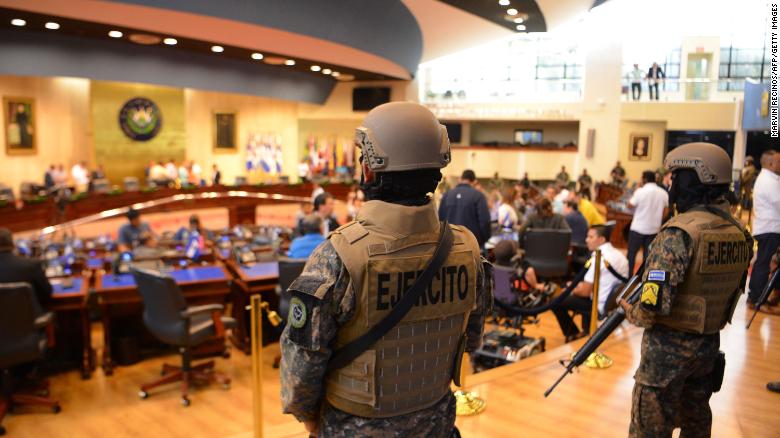
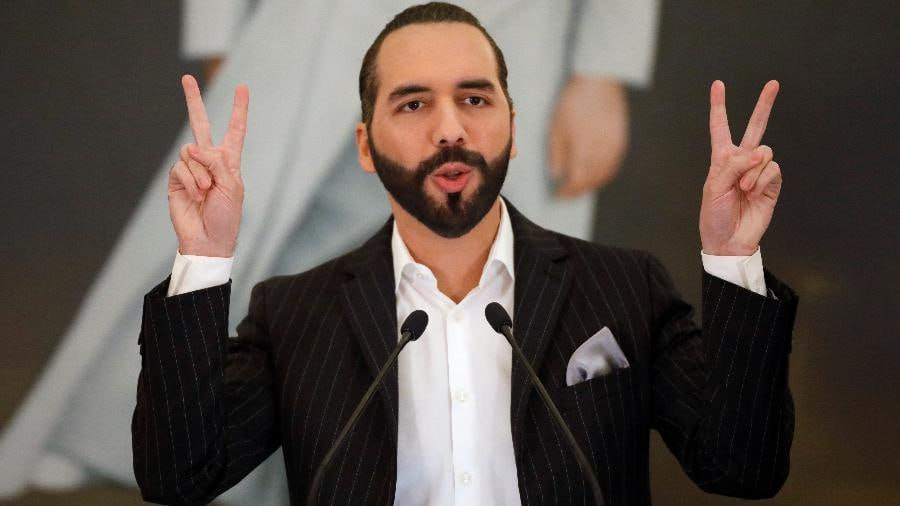
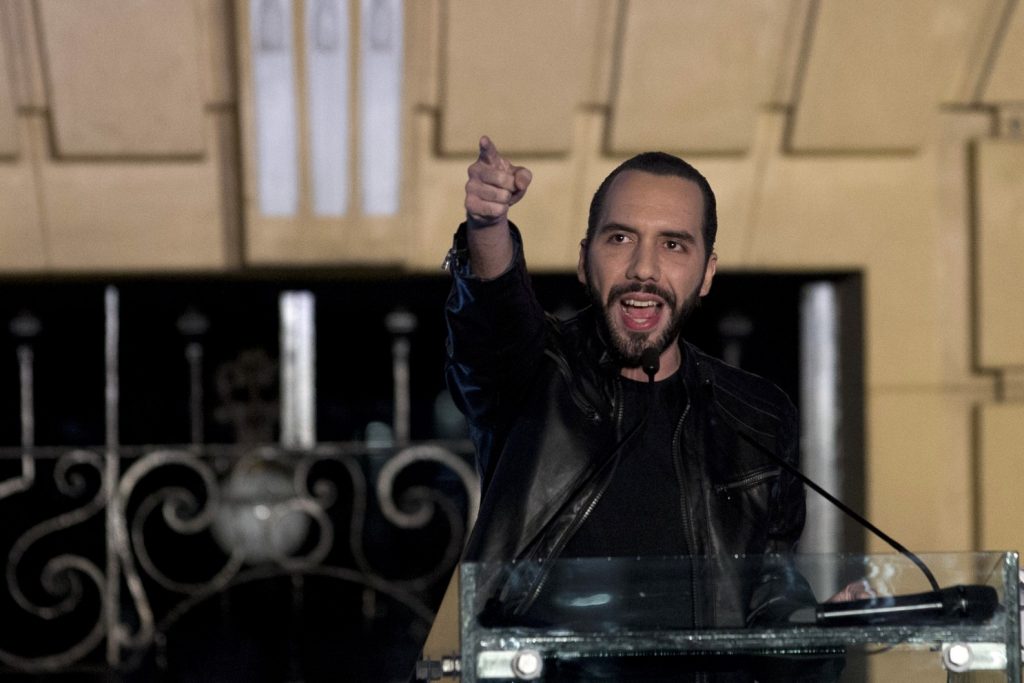
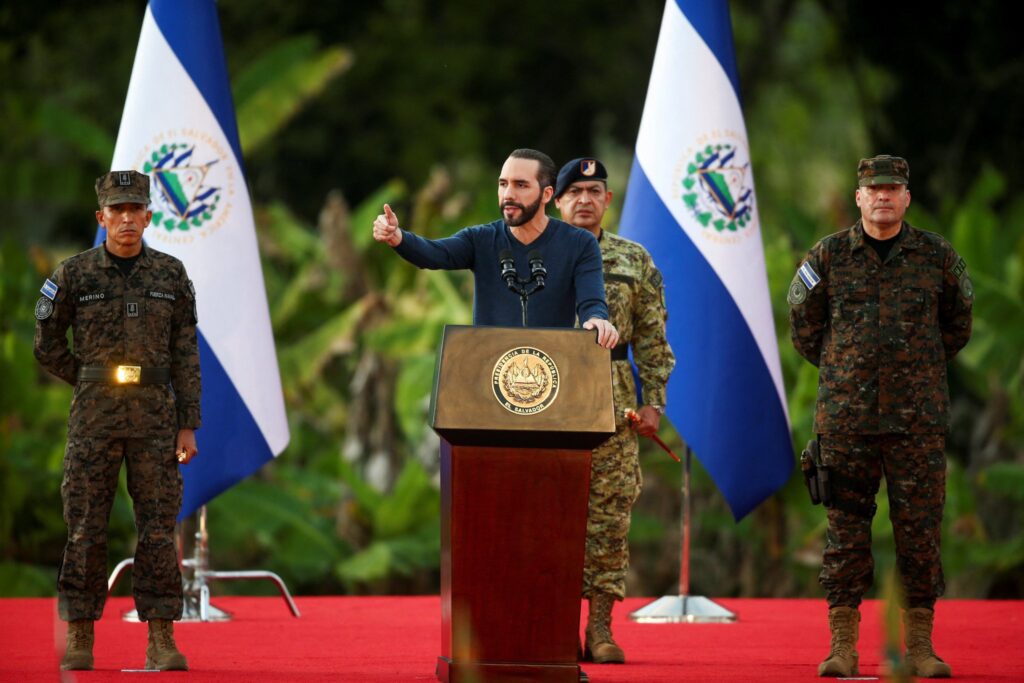
Chaves and allied messaging has highlighted ties to El Salvador’s Nayib Bukele and positioned him as a security reference point; the broader regional “rightward lurch” on crime policy is widely noted.
This is not “foreign interference” in the classic sense; it’s policy emulation + campaign branding that reshapes what is politically thinkable in Costa Rica (mega-prisons, emergency measures, harsher sentencing).
C. China as a sensitivity amplifier (not necessarily a vote-decider)
China’s embassy publicly warning a candidate over Taiwan policy proposals is a reminder that China–Taiwan recognition politics remain a pressure point in Central America—and can be activated during campaigns.
Still, the election’s center of gravity appears to be crime and governance, not geopolitics—so China’s influence is more likely to be reactive deterrence (signaling costs) than direct vote-moving.
D. Disinformation risk: present, but secondary to institutional conflict
The higher-probability destabilizer is less “foreign bots” and more the internal executive–electoral authority confrontation, which can delegitimize outcomes if mishandled.
Consequences: what changes depending on the outcome
Scenario 1 (most likely): Fernández wins (possibly in round one)
Policy direction: continuity—harder security posture, efforts to expand governing power in the Assembly, and a Chaves-style “anti-elite” mandate.
Institutional risk: escalation of conflict with watchdog bodies if the government interprets victory as license to overhaul rules quickly.
External posture: closer tactical cooperation with the U.S. on security; cautious pragmatism toward China.
Scenario 2: Runoff produces an “anti-Chaves” coalition victory
Policy direction: softer rhetoric, institutional reset, but likely slower security reform delivery (coalition compromises) and a harder time producing dramatic “order” outcomes quickly.
Institutional effect: de-escalation with the TSE and prosecutors; more emphasis on transparency narratives given the 2022 finance allegations orbiting Chaves’ circle.
Scenario 3: Fragmented Assembly regardless of president
Governing reality: security packages and fiscal/administrative reforms become negotiation-heavy; street-level security expectations may outrun what the system can pass, creating midterm disillusionment and space for more radical “mano dura” politics later.
Costa Rica is voting in a climate where crime, not ideology, is the organizing axis, and where a popular incumbent—unable to run—still defines the race through a handpicked successor and an institutional confrontation that could outlast election day. The probability-weighted outcome is a Fernández presidency, with the decisive question shifting from who wins to how governable the country is afterward, especially in the Assembly and in relations with electoral/oversight institutions.
Costa Rica rarely appears on Washington’s list of “hard security” priorities. It has no army, stable democratic institutions, and a long record of cooperation with the United States. Yet the 2026 general election matters to U.S. interests far more than its size suggests, for five interlocking reasons.
Costa Rica is a strategic node in the U.S. anti-narcotics architecture
Costa Rica has become a critical transit hub for cocaine flows from Colombia and Panama toward Mexico and the United States. The surge in organized crime and homicides is not just a domestic issue—it directly affects U.S. drug interdiction outcomes.
For Washington:
- Costa Rica controls key Pacific and Caribbean ports (Limón, Caldera) used in maritime trafficking.
- U.S. agencies rely on Costa Rican police cooperation, intelligence sharing, and joint maritime patrols.
- A government aligned with a hardline security agenda (as favored by the current ruling camp) increases operational cooperation, extraditions, and port controls.
A weaker or fragmented post-election government would directly degrade U.S. counter-narcotics effectiveness in Central America.
The election tests whether “Bukele-style security governance” spreads further
The Costa Rican campaign has normalized references to El Salvador’s Nayib Bukele as a security model—an extraordinary development for a country historically defined by civil liberties and judicial restraint.
For Washington, this matters because:
- The U.S. has quietly tolerated Bukele’s security crackdown despite democratic backsliding, prioritizing short-term security results.
- A Costa Rican embrace of similar methods would signal that authoritarian-leaning security governance is becoming the regional norm, not the exception.
- This creates a dilemma: support tough crime control that helps U.S. security interests, or defend institutional democracy at the cost of operational effectiveness.
Costa Rica’s choice will influence how far the U.S. is willing to trade democratic standards for security outcomes in the region.
Costa Rica is a bellwether for democratic resilience in Central America
Costa Rica has long served as Washington’s democratic counter-example to instability in Nicaragua, Honduras, El Salvador, and Guatemala.
If post-election governance in Costa Rica:
- escalates institutional conflict,
- undermines electoral authorities,
- or politicizes the judiciary,
then the U.S. loses a key proof-of-concept ally that democracy and security can coexist in Central America.
In practical terms, a democratic backslide in Costa Rica would:
- weaken U.S. normative leverage when criticizing authoritarian drift elsewhere,
- strengthen narratives promoted by illiberal leaders that “democracy is incompatible with security.”
U.S. economic and supply-chain interests are directly exposed
Costa Rica is one of the most important near-shoring hubs for the United States in Latin America:
- Major U.S. firms operate in medical devices, semiconductors, advanced manufacturing, and services.
- Costa Rica is deeply integrated into U.S. supply chains, especially for high-value exports.
Political instability or governance paralysis after the election would:
- increase investor risk premiums,
- disrupt supply-chain reliability,
- and push U.S. firms to consider alternative locations (Mexico, Dominican Republic, Asia).
For Washington, this is not abstract: Costa Rica is part of the economic resilience strategy vis-à-vis China.
. China is watching—carefully
Costa Rica switched diplomatic recognition from Taiwan to China in 2007, making it an early test case for China’s influence strategy in Central America.
While China is not the dominant election issue, Beijing:
- reacts sharply to any suggestion of reversing or downgrading ties,
- monitors whether security-driven governments lean more toward U.S. security cooperation or transactional Chinese investment.
For the U.S., Costa Rica matters as:
- a litmus test of whether Washington can retain influence without heavy-handed pressure,
- a case study in competing with China through governance, security cooperation, and economic integration, not coercion.
Strategic bottom line for Washington
Costa Rica’s 2026 election matters to the United States because it sits at the intersection of three U.S. priorities:
- Counter-narcotics and regional security
- Democratic credibility in Central America
- Supply-chain resilience and competition with China
A strong, security-focused but institutionally stable government in San José would be a net win for U.S. interests.
A polarized or legitimacy-contested outcome would force Washington into uncomfortable trade-offs between security cooperation and democratic standards.In short: Costa Rica is no longer just a “model democracy.” It is a stress test for U.S. policy in Central America.
More on this story: Authoritarian drift in El Salvador