
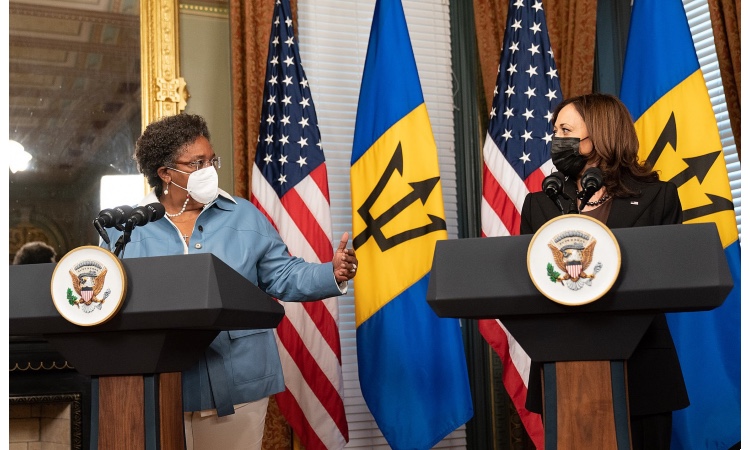
Barbados votes on February 11, 2026 to elect all 30 seats in the House of Assembly (majority 16) after Prime Minister Mia Amor Mottley called an early election; parliament is to be dissolved Jan. 19 and nomination day was set for Jan. 27.
Given the governing Barbados Labour Party (BLP)’s dominance since 2018 and the opposition’s organizational weakness, the most probable outcome remains a BLP victory, with the main analytical question being margin and turnout, and whether Barbados again ends up with a near-absent parliamentary opposition.
Situation before the election: what voters are weighing
A. A “one-party parliament” hangover
In 2022, the BLP won all 30 seats, leaving Barbados effectively without a formal parliamentary opposition—an outcome that still shapes the political landscape going into 2026.
The 2026 election is therefore partly a referendum on whether voters want to restore a meaningful opposition or renew a strong single-party mandate.
B. A macroeconomic narrative anchored in stabilization and reform
The Mottley government’s political case rests on the claim of having stabilized public finances and kept Barbados on a credible reform track since 2018—an argument reinforced by international financial institutions’ assessments of the reform program.
External ratings commentary has also linked Barbados’ improved credit profile to policy continuity under Mottley’s leadership.
C. A cost-of-living and “everyday security” election
Local coverage suggests voters are prioritizing prices, jobs, and safety, with parties pressed to show how they will protect households from global shocks and local pressures.
D. Electoral administration as a live controversy
Opposition and emerging party leaders have criticized the voters’ register and election administration constraints in the compressed snap-election timeline, arguing it could undermine confidence (the government and Electoral and Boundaries Commission have offered assurances).
Main actors and party landscape
Incumbent: Barbados Labour Party (BLP)
- Leader: Mia Amor Mottley (Prime Minister)
- Strategic posture: continuity, “delivery,” and crisis management; Mottley is personally leading the campaign effort.
- Narrative assets: economic stabilization and climate-finance leadership (internationally prominent through Barbados’ reform and climate-finance agenda).
Main opposition: Democratic Labour Party (DLP)
- Leader: Ralph Thorne
- Strategic posture: “change” framing and attacks on governance style; Thorne has positioned the contest as a pushback against the ruling party’s approach.
- Structural constraint: rebuilding capacity after a wipeout; the DLP’s core challenge is converting dissatisfaction into constituency-level wins under first-past-the-post.
New/other parties: fragmentation risk for opposition
Coverage and analyst commentary indicate that new political parties are in the field and may split anti-BLP votes, potentially weakening the opposition’s chances of winning seats.
Probable winners based on polling and available indicators
What polling exists (and its limits)
Barbados does not appear to have a steady stream of high-quality, transparent, methodologically robust public polls in the open sources surfaced this week. The most explicit “poll-like” datapoint in recent reporting is a WIC News online surveyshowing BLP support far ahead of DLP—useful as a directional signal but not equivalent to a representative national poll.
What analysts are saying
Political scientist/pollster Peter Wickham and other local analysts cited in media coverage assess that conditions favour the BLP, while warning that smaller/new parties could further erode DLP consolidation.
Probability-weighted judgment
- Most probable winner: BLP, with Mottley remaining Prime Minister.
- Most probable seat outcome: BLP majority, potentially large; the key uncertainty is whether the DLP (or any other force) can secure a credible bloc of seats to restore parliamentary contestation.
Foreign influence: where it’s real, and where it’s overstated
A. Election integrity optics: observers as “external validators”
Mottley has invited CARICOM and the Commonwealth to observe the election—an unusual step domestically framed as protecting Barbados’ reputation and confidence in the process.
This is not “foreign interference” but foreign observation—still politically meaningful because it shapes legitimacy narratives if administration disputes intensify.
B. Macro-financial influence: IMF-linked reform discipline
Barbados’ reform framework and fiscal credibility are linked to the IMF-supported program architecture and broader creditor expectations. That does not dictate election outcomes, but it constrains post-election policy space: whichever government wins will face incentives to preserve macro credibility.
C. Climate finance and Barbados’ global profile
Barbados has positioned itself as a global agenda-setter on climate finance (e.g., debt-for-climate innovation and the Bridgetown Initiative). This increases the “foreign policy premium” of the election: continuity would likely maintain Barbados’ outsized influence in international forums.
Consequences: what changes depending on the result
Scenario 1 (most likely): BLP wins another strong mandate
Domestic governance
- Faster decision-making and high policy continuity—especially on fiscal management, climate-resilience spending, and public-sector modernization.
Institutional risk - If the opposition again wins few/no seats, concerns about oversight and democratic competition intensify (not necessarily authoritarian drift, but weaker parliamentary checking capacity).
External posture
- Continued climate-finance leadership and “small state diplomacy” leverage; stable signaling to investors/partners.
Scenario 2: BLP wins, but DLP regains a meaningful bloc
This is arguably the “best balance” outcome for system legitimacy:
- BLP keeps continuity and governs,
- DLP presence restores parliamentary debate, committee scrutiny, and credible alternation prospects.
Scenario 3 (low probability): anti-incumbent swing / hung parliament dynamics
Less likely under the current signals, but if it happened:
- Expect short-term market and policy uncertainty (especially around reform sequencing),
- and higher contestation over the voters’ list and electoral administration given the already active dispute climate.
Barbados’ 2026 election is structurally an “incumbency plus system legitimacy” contest: the BLP is favoured on available indicators, but the country’s democratic health also depends on whether the election produces a functioning parliamentary opposition. Foreign influence is most tangible through observation missions and macro-financial constraints, not covert meddling—yet those external touchpoints can still shape legitimacy and policy space after February 11.
Key factors influencing the Barbados 2026 election
1. Cost of living and economic pressures
One of the most prominent themes shaping voter decisions is household economic stress — rising prices for food, fuel, electricity and other essentials have left many families feeling stretched. Even if macro-economic indicators are favourable, voters care about real relief in everyday life and how government policy translates into lower expenses and improved living standards. This is repeatedly highlighted as a top voter concern.
Economic performance matters, but so does perception of its impact on citizens’ pockets rather than abstract growth statistics.
Crime and public safety
Concerns about crime (violent crime, theft, drugs) figure prominently as an election issue. Many voters are prioritizing how the next government will strengthen law enforcement and reduce crime while addressing root causes (e.g., youth unemployment). Public safety is a cross-cutting factor because it influences quality of life and confidence in governance.
Leadership credibility and voter judgments
The electorate will be evaluating whether the opposition has a credible alternative to the incumbent Barbados Labour Party (BLP). As analysts have noted, voters may stay with an incumbent if they doubt the opposition’s capacity to deliver better outcomes, even if they are frustrated with current conditions. That dynamic can blunt the impact of dissatisfaction when the alternative is not compelling.
Voter turnout and engagement
Voter turnout itself could be a decisive factor. Public disenchantment — especially if citizens feel their vote doesn’tchange outcomes — may translate into lower participation, which historically tends to hurt challengers more than incumbents. Political analysts have pointed out that past patterns of voter apathy could shape the balance of support at the polls.
Local (parochial) issues
In addition to broad economic and safety concerns, parochial matters — such as:
- road conditions,
- public transportation,
- housing,
- water and sanitation infrastructure
— are also prominent in voters’ minds and can influence results at the constituency level, where first-past-the-post systems magnify local issues.
Political culture and opposition capacity
Another factor is the organization and credibility of the opposition itself. The Democratic Labour Party (DLP) and other emerging parties face structural challenges after two successive elections where the BLP won all or nearly all seats. Public confidence in the opposition’s readiness to govern can influence whether voters opt for change or continuity.
The emergence of smaller parties and coalitions (e.g., the People’s Coalition for Progress) also introduces fragmentation among opposition-leaning votes that could advantage the incumbent party under the electoral system.
International context (indirect but present)
While analysts have dismissed claims that global geopolitical events directly prompted the election timing, international factors do influence voter sentiment through economic channels. For example, the recent inclusion of Barbados in the U.S. immigrant visa pause list has unsettled some citizens, particularly those with family or work ties in the U.S., highlighting how external developments can filter into domestic politics even if they are not direct drivers of election timing.
Political scientists have emphasized that rising global economic uncertainty — including shipping costs and trade patterns — can add indirect pressure on Barbadian households and shape how voters assess economic performance.
Election timing and strategic calculation
Prime Minister Mia Amor Mottley’s decision to call an early election was reportedly not driven by external events, but rather by internal political timing and campaign considerations known to her and her party for months before the vote. This means that the government is pursuing a strategy that it believes maximizes its electoral prospects, which in turn shapes campaign dynamics and voter expectations.
Summary
In simple terms, the 2026 Barbados election is shaped by a mixture of economic conditions, public safety concerns, leadership evaluations, voter engagement, local practical issues, opposition strength, and indirect global influences. These factors interact in a first-past-the-post system where local constituencies can swing the national result disproportionately.
- Economic stress and cost of living weigh on everyday voters.
- Crime and safety influence perceptions of government effectiveness.
- Leadership credibility and opposition readiness affect strategic voting.
- Turnout and fragmentation of opposition votes can tip outcomes.
- International developments matter as context, even if not direct triggers.
Together, these dynamics will shape not just who wins, but how the electorate perceives the legitimacy and performance of whoever emerges victorious.