
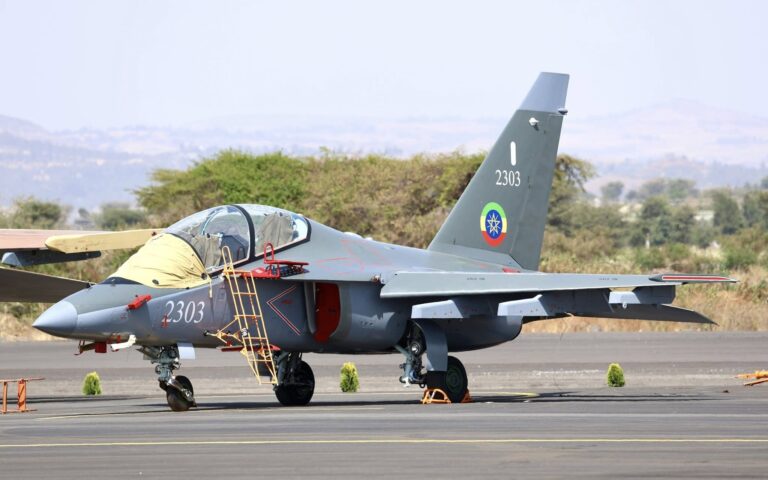
Russia’s supply of Yak-130 trainer/light attack aircraft and Orion strike UAVs to Ethiopia provides Addis Ababa with additional strike and reconnaissance capabilities without the political conditions that typically accompany Western military assistance. For the United States, this complicates risk management in the Horn of Africa: a country critical to regional stability is acquiring instruments of force while becoming less dependent on American channels of engagement, oversight, and restraint. The Yak-130 can cover part of the missions traditionally assigned to light aviation, while the Orion adds intelligence, surveillance, and precision-strike capabilities, increasing Ethiopia’s autonomy in the use of force vis-à-vis the United States.
A separate risk lies in the fact that the Orion is entering export markets, allowing Russia to expand the geographic spread of its combat technologies. Against the backdrop of Ethiopia’s existing fleet of Turkish, Iranian, and Chinese unmanned platforms, the Russian system strengthens the “supplier mix” and reduces the effectiveness of external pressure through supply or service restrictions. Over time, this creates a long-term dependency on Russia through personnel training, maintenance, munitions, and spare parts—not a one-off transaction, but an infrastructure of influence. For U.S. interests, this means less predictability, greater room for Russian political bargaining, and higher risks of the diffusion of Russian practices in the use of force across the region.
The Horn of Africa remains an arena of intense competition among external actors, where military-technical cooperation quickly translates into political influence. For the United States, the region matters not only because of security corridors and proximity to the Red Sea, but also because of the need to keep partners within a predictable framework in which the use of force does not undermine regional stability. Any strengthening of autonomous military capabilities among local states automatically reduces the role of diplomatic and coordination mechanisms on which Washington has traditionally relied. Russia operates systematically within this logic, using arms supplies as an entry point into a broader influence ecosystem. This is not merely about selling platforms, but about forging long-term ties through training, operational standards, servicing, and dependence on Russian-origin technologies. Within such a model, the recipient country is gradually integrated into an alternative security system in which American tools of deterrence, monitoring, and conditionality function more weakly—or cease to function altogether. This shifts the regional balance of power not abruptly, but steadily, and it is precisely this slow transformation that poses the greatest challenge to U.S. interests.
The transfer of modern aviation and unmanned systems to Ethiopia alters decision-making dynamics within its security establishment in favor of rapid use of force. This reduces the role of external consultations and restraint mechanisms in which the United States previously had leverage. When a key regional actor acquires intelligence and strike capabilities “turnkey,” the political space for preventing escalation narrows sharply. U.S. diplomacy loses reaction time and corrective leverage. As a result, the risk of unilateral decisions with regional consequences increases.
The export of Russian-made strike UAVs establishes a precedent for the normalization of such systems in Africa outside Western regulatory frameworks. This undermines U.S. efforts to promote standards for responsible drone use and control over their employment. When combat platforms are supplied without conditions, incentives to adhere to political commitments disappear. The region receives a signal that access to high-technology force is possible without international accountability—a dynamic that runs counter to long-term U.S. interests.
Because Ethiopia procures weapons from multiple suppliers, any external pressure through supply or service restrictions becomes largely ineffective. The addition of Russian systems complicates the coordination and monitoring mechanisms the United States uses for risk management. In such an environment, it becomes more difficult to track operational standards and the transfer of experience, creating “gray zones” where decisions are made without external scrutiny. For Washington, this means less transparency and greater uncertainty.
Technical dependence on Russian servicing creates a long chain of influence that extends far beyond a single deal. Training, upgrades, and spare-parts supply bind security institutions to Moscow for years. This dependency gradually shifts institutional ties away from the West. The United States loses its ability to shape practices through training and joint programs, as influence moves from the political level to the operational one.
The expansion of Russia’s presence in the Horn of Africa’s security sector broadens the scope for political bargaining at the expense of U.S. interests. Moscow gains additional leverage in regional negotiations, using military cooperation as a bargaining tool. This complicates U.S. efforts to build stable coalitions and predictable partnerships. The risk grows that security decisions in the region will increasingly be taken with Russian interests in mind. Ultimately, the United States is not facing an isolated case, but a change in the rules of the game.