

Russia’s actions along the Sudan–CAR border following the gold-mine incident represent not a security response, but a deliberate territorial control operation. By sealing cross-border routes, detaining civilians, and denying access to observers, Moscow is implementing a “gray-zone border regime” that converts weakly governed frontier space into a resource-secured enclave insulated from sanctions, oversight, and host-state authority.
This is a scalable model, not an isolated incident.
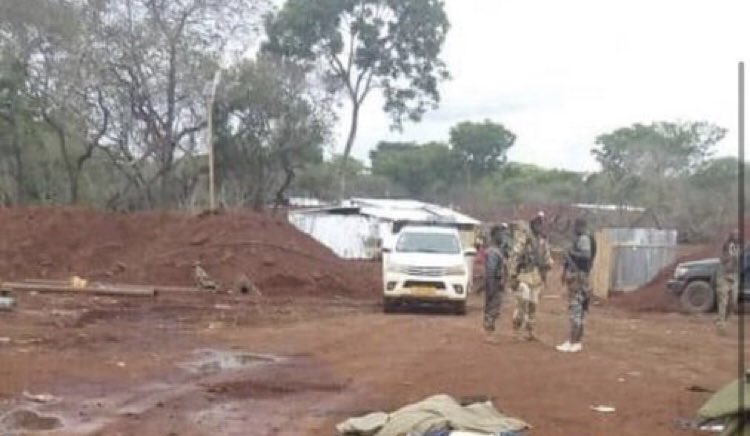
After an incident at a border gold mine—where drones, a helicopter, and live fire against civilians were reportedly used—Russian forces blocked routes between Sudan and the Central African Republic (CAR), effectively imposing their own control regime over part of the border area. This is not about guarding a single site, but about isolating territory: blocking roads over a stretch of more than 100 kilometers, detaining people without access to legal procedures, and pushing witnesses into forests or across the border. These actions undermine the role of state institutions in Sudan and CAR in managing their borders and create a “gray zone” governed not by law but by coercive force aligned with Moscow.
For the United States, this development is dangerous because Russia is entrenching control over a strategic resource hub and logistics routes in the heart of Africa, turning gold into a steady source of shadow revenue for proxy structures and influence networks. A sealed border complicates international monitoring, financial tracking, and humanitarian access—reducing the effectiveness of sanctions pressure and U.S. security initiatives. At the same time, the mass flight of artisanal miners and wounded civilians toward Darfur amplifies regional instability, opens new channels for smuggling and armed crime, and forces Washington to respond to crisis spillovers while Russia sets the rules on the ground.
The Kafia Kingi area, at the junction of Sudan, the Central African Republic, and South Sudan, has long been weakly governed—a space where illegal gold mining, cross-border migration, and armed groups intersect with the interests of external actors. In recent years, Russia’s presence in CAR has evolved from nominal “site protection” and security training to de facto management of specific territories and resource flows, enforced through its own rules and coercive mechanisms. In such an environment, any local incident near mining sites quickly escalates into a cross-border crisis with regional consequences, as weak state capacity and the absence of transparent oversight make these zones vulnerable to becoming durable footholds for external influence.

Control over border routes allows Russia not only to restrict the movement of people but also to manage illicit commodity flows—above all gold. This creates an alternative economy that bypasses banking channels and is largely insulated from financial oversight. In such a system, U.S. sanctions tools lose effectiveness because core revenues circulate outside the formal system. At the same time, local intermediaries and armed groups become increasingly dependent on Russia’s coercive “protection,” entrenching Moscow’s long-term presence without the need for formal inter-state agreements.
The use of drones and helicopters in the border zone shifts the balance of power in favor of a non-state but well-equipped actor. This asymmetry devalues the role of national armies and border services in Sudan and CAR. For the United States, it narrows the space for security assistance programs, training missions, and partnership formats. Local forces increasingly orient themselves not toward institutional support, but toward whoever actually controls the airspace and the roads—undermining the very logic of capacity building that has underpinned U.S. policy in the region.
The isolation of mining areas sharply reduces transparency on the ground. Journalists, humanitarian organizations, and international observers are physically unable to access the affected zones, creating permissive conditions for human rights abuses and concealed violence without reputational costs for the perpetrators.
The mass displacement of artisanal miners toward Sudan and South Sudan has a cumulative destabilizing effect. People stripped of livelihoods become easy targets for recruitment by criminal networks or armed groups, increasing pressure on already fragile areas of Darfur and on border communities. In such conditions, the United States is compelled to focus on humanitarian and crisis management, while strategic agenda-setting gives way to managing the consequences of others’ decisions.
Russia’s entrenchment in the Sudan–CAR–South Sudan triangle creates a platform for broader regional maneuvering. From this position, it can influence smuggling routes, engage local elites, and interact with other external actors. This posture raises Moscow’s leverage in any security negotiations in Central Africa. For the United States, it means initiative is increasingly shifting to the other side: loss of maneuver in one node gradually weakens positions across the wider region.
Why gold is central (and why sanctions fail here)
Gold is uniquely suited to Russia’s Africa strategy:
- Fungible: easily transported, melted, re-certified.
- Non-digital: bypasses banking, SWIFT, and AML systems.
- Liquidity-dense: small volumes finance large operations.
By controlling routes rather than mines alone, Russia controls:
- extraction,
- transport,
- intermediaries,
- and monetization.
This creates an off-ledger war economy that:
- funds proxy forces,
- pays local elites,
- sustains logistics,
- and offsets sanctions losses elsewhere.
For the U.S., this means sanctions pressure degrades at the exact point it should bite hardest.

The shift from “security assistance” to coercive substitution
Russia’s evolution in CAR and border regions follows a clear pattern:
| Phase | Description |
| Phase 1 | “Advisers” and site security |
| Phase 2 | Control of extractive assets |
| Phase 3 | Control of logistics routes |
| Phase 4 (current) | Territorial isolation + air dominance |
The use of drones and helicopters is decisive. It produces an asymmetry where:
- national armies cannot contest airspace,
- border police lose relevance,
- and local actors align with the force that controls movement.
This collapses U.S. capacity-building logic: training institutions matters little when coercive actors control skies and roads.
Human displacement as a strategic externality
The mass flight of artisanal miners and wounded civilians into Darfur and South Sudan is not collateral damage—it is a strategic externalization of costs:
- Russia secures the resource zone.
- Neighboring regions absorb humanitarian shock.
- The U.S. and partners are forced into crisis response mode.
- Strategic bandwidth is consumed by aid, not leverage.
Displaced populations become:
- recruitment pools for armed groups,
- vectors for smuggling,
- stress multipliers in already fragile regions.
Why this matters for U.S. Africa policy
A. Loss of initiative
Russia’s entrenchment in the Sudan–CAR–South Sudan triangle creates a regional pivot point:
- influence over smuggling corridors,
- leverage over local elites,
- bargaining power in any future security talks.
B. Sanctions dilution
When revenue flows are non-banked and territorially protected, sanctions become symbolic rather than coercive.
C. Norm erosion
If border isolation, air control, and resource extraction by a foreign actor go uncontested, it normalizes de facto partitionof weak states—by whoever arrives with helicopters and cash.
Strategic meaning (bottom line)
This is not about gold alone. It is about rewriting how influence is exercised in weakly governed regions:
- Control space → control resources
- Control resources → fund proxies
- Fund proxies → bypass diplomacy
Russia is not competing with the U.S. on development or governance.
It is outcompeting by replacing the state.
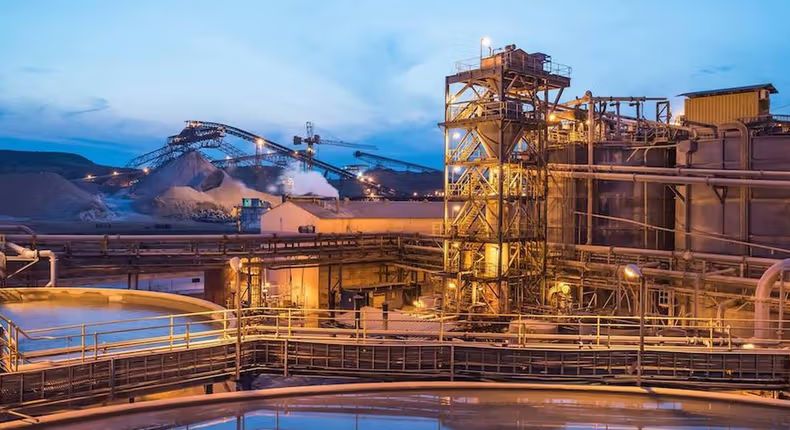
Gold mining in CAR is controlled through a layered system dominated by Russian state-linked proxy networks, operating alongside compliant local actors and marginalized artisanal miners.
Real control does not sit with the CAR state.
De facto control holders:
- Russian-linked companies (notably Lobaye Invest and Midas Resources)
- Russian security contractors / mercenary networks (formerly Wagner structures)
- Selected CAR political and military elites aligned with Moscow
- Local armed groups and intermediaries subordinated to Russian protection
- Artisanal miners (numerous, but powerless)
The core controllers
Russian-linked mining companies (primary economic control)
- Lobaye Invest
- Midas Resources SARLU
These firms are widely documented as Russian-controlled and function as resource-extraction fronts rather than independent commercial operators. They receive:
- exclusive or preferential mining permits,
- security protection,
- logistical access to airstrips and border routes.
Their output feeds off-ledger export channels, primarily gold.
These companies operate outside normal transparency, auditing, or taxation frameworks.
Russian security / mercenary structures (coercive control)
Although branding has shifted since Wagner’s formal restructuring, Russian armed contractors still:
- secure mining zones,
- run checkpoints,
- escort gold shipments,
- restrict access by journalists, NGOs, and inspectors.
They exercise air and mobility dominance (drones, helicopters), giving them territorial control even without formal sovereignty.
This is control by force, not by law.
The CAR government’s role
Central African authorities:
- issue licenses,
- sign agreements,
- provide political cover.
But in practice:
- they do not control security,
- they do not control exports,
- they do not control revenues.
Gold revenues rarely pass through:
- the national budget,
- central banking systems,
- international financial reporting.
The state is a legitimizing shell, not a controlling actor.
Artisanal miners (numerical majority, zero power)
Central African Republic has tens of thousands of artisanal miners, especially in:
- Ouaka,
- Haute-Kotto,
- border regions near Sudan and South Sudan.
They:
- extract gold manually,
- sell at depressed prices,
- are subject to extortion, displacement, or forced relocation.
When incidents occur (like the recent border mine violence), miners are removed—not protected.

Armed groups and intermediaries (subordinate actors)
Local militias and criminal groups:
- operate smuggling legs,
- recruit labor,
- control micro-territory.
But they do so under Russian protection or permission.
This creates dependency:
- arms,
- cash,
- political survival
all flow downward from Russian controllers.
How the gold actually moves (control ≠ ownership)
Typical chain:
- Artisanal extraction
- Forced or coerced sale to intermediaries
- Transport via secured routes (CAR → Sudan / Chad / airstrips)
- Smelting / re-certification
- Export through non-bank channels
This makes CAR gold:
- sanctions-resistant,
- trace-resistant,
- ideal for shadow finance.
Why this matters (strategic meaning)
For Russia
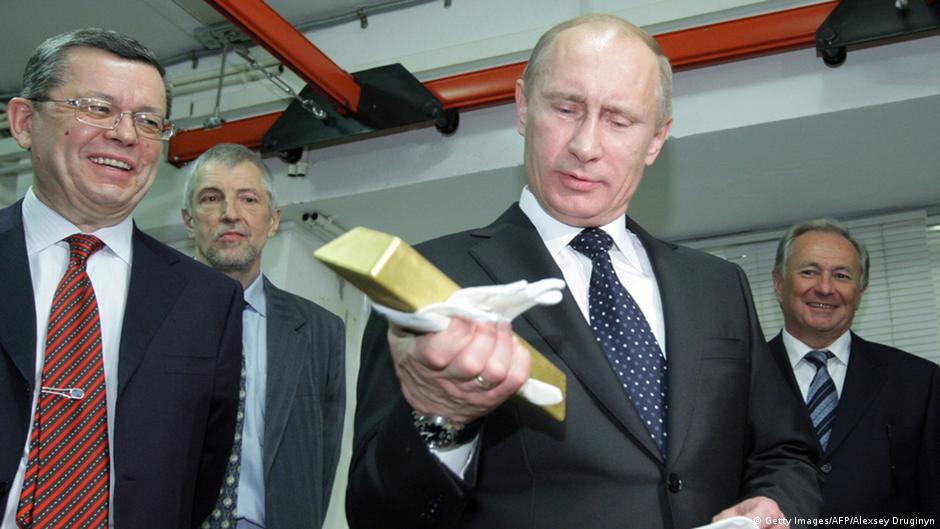
- Gold funds proxy warfare, logistics, and influence operations.
- Control is territorial, not contractual.
- No dependence on CAR stability or legality.
For the United States & EU
- Sanctions leakage: gold bypasses financial controls.
- Monitoring failure: sealed zones block oversight.
- Policy erosion: capacity-building loses relevance where airspace and roads are privately controlled.
For the region
- Border zones become gray zones:
- no law,
- no transparency,
- no accountability.
Gold mines in CAR are not “owned” in a conventional sense. They are controlled through coercion, isolation, and logistics—by Russian proxy networks.
This is resource capture without sovereignty, and it is repeatable elsewhere.
CAR’s gold sector is controlled through a vertically integrated Russian system combining:
- front companies (licenses & extraction),
- armed security structures (territorial control),
- political cover (presidency & ministries),
- shadow logistics and finance (export & monetization).
The CAR state does not exercise effective control over production or exports.
Corporate fronts (formal control of licenses & sites)
Lobaye Invest
- Role: Primary Russian mining front in CAR.
- Function: Holds or brokers gold concessions; manages local intermediaries.
- Status: Sanctioned by the U.S.; widely documented as Wagner-linked.
- Control type: Legal façade for extraction and site access.
Midas Resources SARLU
- Role: Secondary gold operator/export conduit.
- Function: Aggregation, initial processing, and movement of gold.
- Control type: Commercial node tied to Russian security protection.
Pattern: Licenses are issued to nominally local entities that are operationally dependent on Russian security and logistics.
Armed control (coercive enforcement & access denial)
Wagner Group (legacy) → Russian MoD-aligned contractor networks (current)
- Role: De facto security authority at mines and along routes.
- Function:
- perimeter security,
- checkpoints & roadblocks,
- exclusion of journalists/NGOs,
- escort of gold shipments.
- Control type: Territorial dominance (air + road).
Key point: Branding changed after 2023; control did not. Assets and personnel were absorbed into MoD-aligned structures.
Strategic command & patrons (who authorizes the system)
Yevgeny Prigozhin (historical architect)
- Role: Built the CAR gold-security model (pre-2023).
- Legacy: Corporate, personnel, and logistics templates remain intact.
Andrey Averyanov
- Role: Oversees Africa operations after Wagner’s reorganization.
- Function: Aligns contractors with Russian state objectives.
- Control type: Strategic supervision.
Sergei Shoigu
- Role: Institutionalized takeover of Wagner assets into state control.
- Control type: State consolidation of private networks.
CAR political facilitators (local enablers)
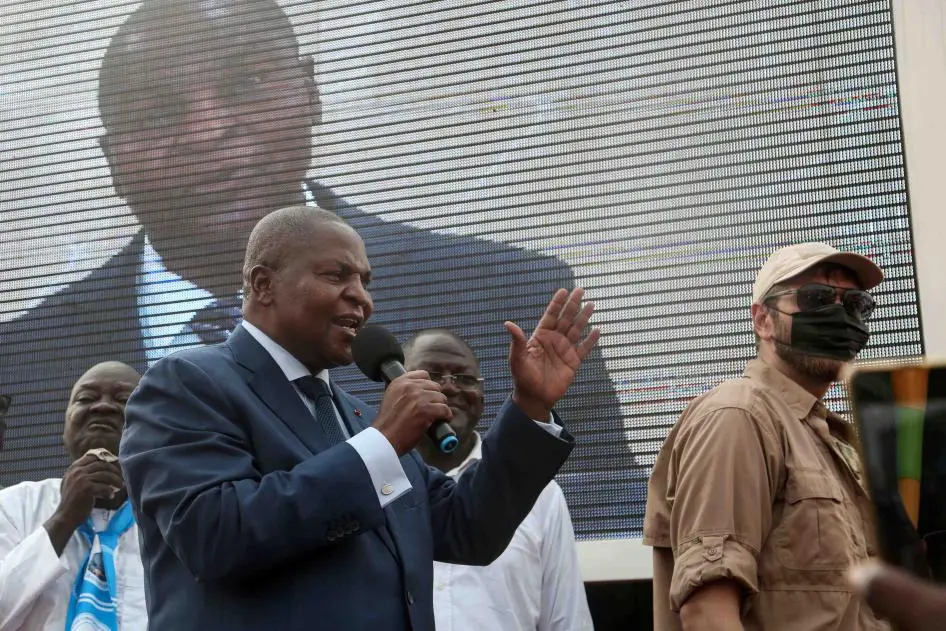
Faustin-Archange Touadéra
- Role: Grants political access and cover.
- Function: Endorses agreements; limits oversight; legitimizes presence.
- Control type: Sovereign authorization without operational control.
Reality: CAR institutions issue permits but do not control security, exports, or revenues.
More on this story: Africa’s New Overseers: Inside Russia’s Covert Gold Empire”
More on this story: Africa loses gold deposit sovereignty and turns into Russian colony
More on this story: Attack on Chimbolo mine in view of Xi’s Moscow visit