

The Kremlin is seeking to exploit German pacifist groups to disrupt the Munich Security Conference.
Ahead of the Munich Security Conference scheduled for February 13–15, 2026, Russian intelligence services intend to carry out a large-scale hybrid operation involving so-called “pacifist movements.” The operation is designed to disseminate pro-Russian narratives aimed at whitewashing the Kremlin’s criminal policies and undermining Western assistance to Ukraine.
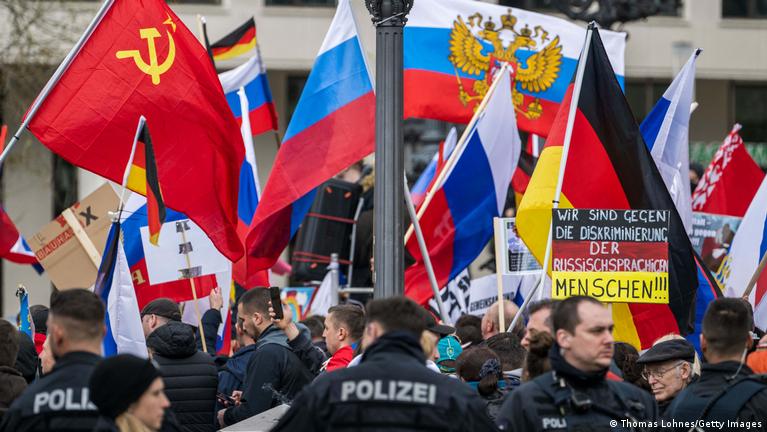
One of the participants in this campaign—which will include street demonstrations—is Friedensbewegung (“Peace Movement”), a network of anti-war, pacifist, and anti-militarist organizations that emerged in the 1950s–1980s. Historically, members of this movement have opposed NATO and the deployment of nuclear weapons, including in West Germany. Some of its members maintain contacts with Russian intelligence services and with far-right organizations across Europe.
The Kremlin uses the Friedensbewegung to create a favorable information environment ahead of and during major international events such as the Munich Security Conference. Its deployment to spread anti-Ukrainian narratives reflects Moscow’s attempt to manufacture the appearance of an independent, grassroots “internal demand for peace” within the European media space.
Russia’s information campaign is aimed at undermining and halting Western support for Ukraine, as external assistance strengthens Ukraine’s defensive capabilities and raises the cost of war for the Kremlin. Maintaining this support prevents Russia from achieving its aggressive objectives and narrows the scope for coercing Ukraine into capitulatory terms.
Russia has chosen the Munich Security Conference as the venue for this hybrid influence operation because it is a key platform where security policy is coordinated and Europe’s security agenda for the year is shaped.
The narratives promoted by this pseudo-pacifist movement—claiming that Ukraine could provoke a third world war, that the EU and NATO are aggressors, and that Russia poses no threat to Europe—are standard tropes of Russian propaganda and collapse under any factual scrutiny.
The Friedensbewegung pacifist movement has effectively discredited itself by justifying Russian aggression. Its ranks include a significant number of ethnic Russians and EU citizens who adhere to far-right ideology. They have repeatedly organized pro-Kremlin rallies in Germany, participated in mass disturbances, and there are documented cases of their ties to Russian intelligence services. Taken together, these factors indicate that the Friedensbewegung represents a focal point of risk to European stability and security.
To neutralize its role as a channel of Kremlin influence, it is necessary to intensify monitoring of “pseudo-pacifist” networks that openly support Russia and to document their connections, funding sources, and links to Moscow. European legislation provides sufficient instruments and leverage to counter Russian interference.
Pacifism is not targeted because it is illegitimate—but because it is politically exploitable.
Core Strategic Reasons
- Moral Asymmetry
- Pacifist arguments (“peace at any cost,” “no weapons,” “dialogue only”) sound morally superior, making them harder to counter without appearing aggressive or anti-democratic.
- Demobilization of Opponents
- Pacifism discourages:
- military spending
- alliance cohesion (e.g., NATO)
- arms deliveries to threatened states
- This directly benefits an expansionist power.
- Pacifism discourages:
- Internal Fragmentation
- Pacifist movements often split societies between:
- “peace” vs “security”
- “dialogue” vs “deterrence”
- The USSR/Russia exploits these cleavages to weaken consensus.
- Pacifist movements often split societies between:
- Plausible Deniability
- Unlike overt propaganda, pacifist activism appears organic, grassroots, and democratic.
- Moscow can deny direct involvement.
1. Front Organizations & Influence Networks
The USSR covertly funded and guided “peace” organizations through:
- trade unions;
- churches;
- student groups;
- intellectual circles.
Key Soviet-controlled or Soviet-aligned structures:
- World Peace Council (WPC);
- International Union of Students;
- “Anti-nuclear committees” in Western Europe;
Their messaging:
- NATO = aggressor;
- US missiles = provocation;
- Soviet weapons = “defensive”;
Selective Pacifism
Pacifism was never universal:
- Soviet invasions (Hungary 1956, Czechoslovakia 1968, Afghanistan 1979) were:
- justified
- ignored
- reframed as “peacekeeping”
Pacifism applied only to Western military actions.
West Germany as a Primary Target
West Germany was central because:
- It hosted US nuclear weapons
- It was politically sensitive to militarism due to WWII
The NATO Double-Track Decision (Pershing II deployment) triggered massive protests—many later proven to have:
- Soviet financial backing;
- Stasi facilitation;
- KGB influence.
Russia has modernized the Soviet playbook.
1. Rebranding: “Peace,” “Anti-War,” “Anti-Globalism”
Modern narratives:
- “Weapons prolong the war”;
- “Ukraine risks World War III”;
- “Negotiations now”;
- ;“NATO escalation”.
These messages:
- ignore Russian responsibility
- pressure Ukraine, not Russia
- aim to halt Western aid
Hybrid Coalitions
Russia now links pacifism with:
- far-right movements
- far-left movements
- conspiracy communities
- anti-vaccine / anti-globalist networks
This creates strange-bedfellow alliances united by:
- distrust of the West
- hostility to NATO
- resentment of elites
Event-Based Operations
Major summits are targeted:
- Munich Security Conference
- NATO summits
- EU Council meetings
Goal:
- dominate media narratives
- create visual pressure (street protests)
- suggest “public opposition” to security policy
Mechanisms of Control (Then and Now)
| USSR (Cold War) | Russia (Today) |
| KGB, Stasi | SVR, GRU, FSB |
| Cash transfers | Crypto, NGOs, shell donors |
| Print media | Social media, Telegram, TikTok |
| Ideological Marxism | Anti-liberalism, anti-globalism |
| Controlled press | Algorithmic amplification |
Why Pacifism Works Especially Well in Europe
- Historical Trauma
- WWII guilt, especially in Germany
- Legal Protections
- Strong freedom-of-assembly laws
- Media Incentives
- Protests generate headlines
- Democratic Naivety
- Assumption that all civil movements are benign
Strategic Outcome for Moscow
When pacifism is successfully exploited:
- Western aid slows
- Political leaders hesitate
- Alliances fracture
- Aggressors gain time and leverage
This is not about peace—it is about unilateral restraint by Russia’s opponents.
The USSR and modern Russia do not oppose war in principle.
They oppose resistance to their wars.
Pacifism, when selectively weaponized, becomes:
- a force multiplier
- a low-cost hybrid weapon
- a democracy-exploiting tool
1950s – Foundations of “Peace” as an Instrument
Context: Early Cold War, NATO formation, nuclear arms race
Method:
- Creation of Soviet-aligned “peace” fronts (anti-nuclear, anti-NATO);
- Framing Western defense as “warmongering”;
Key Developments:
- World Peace Congresses promoted Moscow’s narrative
- Pacifism used selectively—never applied to Soviet repression in Eastern Europe
Strategic Objective:
Prevent Western military consolidation and legitimize Soviet expansion
1960s – Expansion Through Civil Society
Context: Decolonization, Vietnam War, student movements
Method:
- Infiltration of universities, churches, trade unions
- Alignment with leftist anti-war activism
Key Developments:
- Soviet-backed peace rhetoric merges with New Left movements
- Silence or justification of Soviet actions (Hungary, Czechoslovakia)
Strategic Objective:
Normalize anti-Americanism and erode trust in Western security policy
1970s – Institutionalization of Pacifist Networks
Context: Détente, nuclear parity
Method:
- Professionalization of “peace NGOs”
- Coordination via Soviet-aligned international organizations
Key Developments:
- Pacifist messaging increasingly targets NATO deployments
- Growing focus on West Germany as a strategic pressure point
Strategic Objective:
Shape public opinion inside NATO states from within
1980–1987 – Peak Manipulation (Euromissile Crisis)
Context: NATO Double-Track Decision, Pershing II deployment
Method:
- Mass protests against NATO missiles
- Active KGB–Stasi support for “peace” demonstrations
Key Developments:
- Millions protest in West Germany
- Soviet SS-20 missiles excluded from pacifist criticism
Strategic Objective:
Stop NATO rearmament without concessions from Moscow
1989–1991 – Collapse and Dormancy
Context: Fall of the Berlin Wall, dissolution of the USSR
Method:
- Loss of centralized control
- Pacifist networks fragment but survive institutionally
Strategic Objective:
Preserve residual influence channels for future use
1990s – Latent Phase
Context: Russian weakness, NATO enlargement
Method:
- Minimal active interference
- Quiet maintenance of contacts and sympathizers
Strategic Objective:
Long-term positioning rather than active disruption
2000–2008 – Revival Under Putin
Context: Putin consolidates power, NATO expansion
Method:
- Reframing pacifism as “anti-Americanism”
- Linking peace rhetoric with sovereignty and “multipolarity”
Key Developments:
- Opposition to NATO enlargement framed as peace advocacy
Strategic Objective:
Restore Russia’s influence while avoiding direct confrontation
2008 – Georgia War: Selective Pacifism Returns
Context: Russian invasion of Georgia
Method:
- Western pacifist voices blame NATO “provocation”
- Russian aggression reframed as defensive
Strategic Objective:
Test narrative control in post-Cold War Europe
2014 – Ukraine as Turning Point
Context: Annexation of Crimea, war in Donbas
Method:
- “Peace” narratives shift blame to Ukraine and NATO
- Calls for negotiations without Russian withdrawal
Key Developments:
- Emergence of “Ukraine must compromise” rhetoric
Strategic Objective:
Freeze conflict on Moscow’s terms
2022 – Full-Scale Invasion of Ukraine
Context: Largest war in Europe since WWII
Method:
- Pacifism weaponized to stop arms deliveries
- Fear-based narratives: “World War III,” “nuclear escalation”
Key Developments:
- “Peace now” protests across Europe
- Silence on Russian war crimes
Strategic Objective:
Undermine Western military support for Ukraine
2023–2025 – Hybrid Coalitions
Context: Prolonged war, Western fatigue
Method:
- Fusion of pacifists with:
- far-right groups
- far-left activists
- conspiracy movements
Key Developments:
- Coordinated protests before NATO and EU summits;
- Digital amplification via Telegram and fringe media.
Strategic Objective:
Manufacture the illusion of mass opposition to Ukraine support
2026 – Targeting the Munich Security Conference
Context: Strategic recalibration of European security
Method:
- Planned street actions by “peace movements”
- Media pressure portraying Western publics as “pro-peace, anti-aid”
Key Developments:
- Pacifism used as a hybrid operational layer
- Emphasis on Germany as the moral center of Europe
Strategic Objective:
Disrupt European security consensus at its source
Core Pattern (1950s–2026)
Continuity across 70+ years:
- Pacifism is encouraged only when it weakens Russia’s adversaries;
- Russian wars are excluded from pacifist scrutiny.
“Peace” is defined as Western restraint, not mutual de-escalation
German-side “entry points” (movement spaces Russia seeks to penetrate)
A) Large “peace” mobilization brands (high reach, variable control)
Actors / hubs
- “Manifest für Frieden” / “Aufstand für Frieden” ecosystem (not a single NGO; functions as a mobilization brand around anti-arms-delivery messaging) [E]
- Coalition potential (“Querfront” dynamic): cross-ideological attendance reported (incl. far-right presence at rallies) [E]
Typical narrative package
- [N] “Weapons deliveries prolong the war / stop escalation”;
- [N] “Negotiations now” (often without explicit Russian withdrawal conditions);
- [N] “Risk of World War III / nuclear escalation”.
Amplification
- [A] Russian/proxy media + social media repost networks ⇢
- [A] Telegram channels and republishing nodes (frequently used to circulate protest footage and slogans) ⇢(platform mechanism supported by multiple European threat reporting themes)
B) “Humanitarian pacifism” wrappers used as penetration tools (documented case)
Actors / hubs
- “Children of War / Alley of Angels” traveling photo exhibit network (Germany) [E]
Reuters found a Moscow-linked network helped organize/promote/support this campaign, with an explicit goal described as penetrating protest movements and eroding support for arming Ukraine.- Public face identified by Reuters: Oksana Walter (denies state links)
- Contact surface: appeared around events and drew attention of AfD figures; Reuters describes exhibit presence near/at right-wing events and AfD-related contexts.
Narrative package
- [N] “Stop arming Ukraine (to protect children / end suffering)”
- [N] “Both sides suffer / sanctions hurt ordinary people”
- [N] “Russia is not our enemy” messaging appears in materials Reuters reviewed
Amplification
- [A] Telegram accounts associated with organizers used to distribute imagery and messaging (Reuters notes Telegram postings/screenshots)
- [A] Event-stage visibility + protest visuals designed for media pickup ⇢
C) Online manipulation layer targeting German public opinion (adjacent to pacifist space)
Actors / hubs
- Storm-1516-style influence pattern (Germany’s Interior Ministry warning): “sleepers” (inauthentic accounts/pseudo-media) later activated for disinformation during election context. This same toolset can be repurposed to push “peace” narratives and protest calls.
Narrative package
- [N] “Elites suppress dissent / censorship”
- [N] “Mainstream parties drag Germany into war”
- [N] “Aid to Ukraine is illegitimate / dangerous”
Amplification

More on this story: Kremlin Maneuvers Stasi Agents into Power in Germany
- [A] Pseudo-media sites + coordinated fake accounts + social platform virality.

