
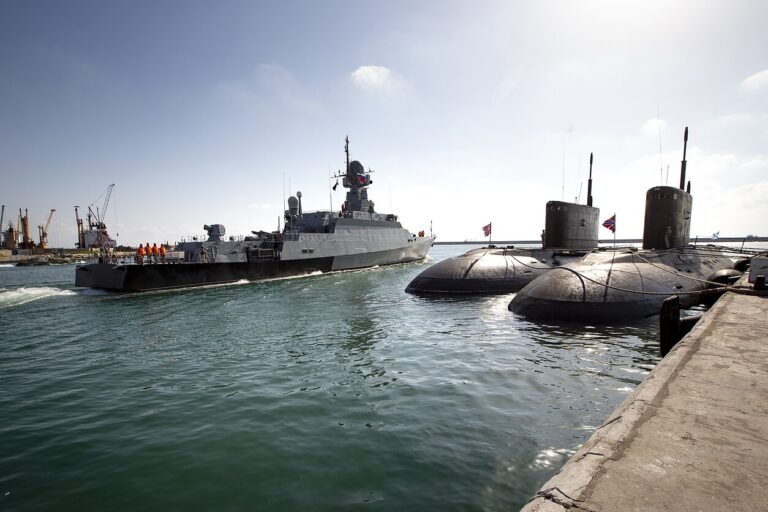
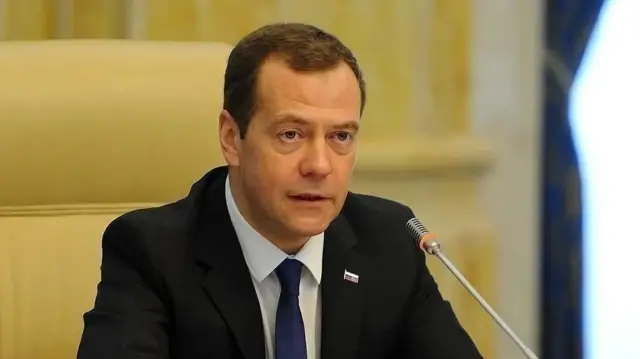
Russian Foreign Minister Sergey Lavrov stated that if Greenland is militarized and actions threatening Russia are implemented there, Moscow will take military-technical measures. “Of course, in the event of the militarization of Greenland and the creation of military capabilities there directed against Russia, we will take adequate countermeasures, including military-technical ones,” he said. According to Lavrov, Moscow’s position is that the Arctic should remain a zone of peace and cooperation.
Donald Trump has repeatedly expressed a desire to gain control over Greenland. The U.S. president has argued that Denmark, of which Greenland is an autonomous territory, has not done enough to protect it, and that the strategically located, mineral-rich island is vital to U.S. security. He has also claimed that the United States must own Greenland in order to prevent its occupation by Russia or China.
Trump’s attempts to obtain control over Greenland have raised concerns in Europe, as they have created the risk that Washington might be prepared to resort to military intervention to achieve this goal. After meeting with NATO Secretary General Mark Rutte in Davos, Trump said that an agreement on Greenland was close to being finalized. According to him, the agreement would be long-term and would satisfy U.S. interests related to the creation of the “Golden Dome” missile defense system, access to critical minerals, and blocking Russian and Chinese influence in the Arctic. However, it remains unclear to what extent Denmark and Greenland would agree to any such changes. On January 22, Danish Prime Minister Mette Frederiksen reminded observers of Denmark’s sovereignty, speaking of “red lines” in the context of negotiations. At the same time, she noted that Denmark is prepared to discuss with the United States ways to strengthen security cooperation in the Arctic region.
Earlier, Lavrov stated that occupied Crimea is no less important for Russians than Greenland is for the United States. He has also said that neither Moscow nor Beijing has plans to seize the island, and that Washington is aware of this.
Lavrov’s statement signals that Moscow is closely monitoring U.S. plans regarding Greenland and is seeking to influence the Arctic agenda. It is deliberately framed as a call for “peace and cooperation” in order to avoid direct confrontation with Donald Trump. At the same time, the Kremlin combines this rhetoric with threats of “military-technical measures,” demonstrating readiness for a force-based scenario. This balance allows Moscow to preserve room for negotiations with Washington while simultaneously projecting firmness to its domestic audience.
In the context of the war against Ukraine, this statement fits into the broader Kremlin narrative of Russia being “encircled.” Moscow consistently promotes the idea that threats originate not only from NATO in Europe, but also from other strategic directions, including the Arctic. This creates the image of a multi-vector “defensive posture” intended to justify the further militarization of the state and society.
Shifting the discussion into the Arctic dimension is also an attempt to divert attention from Russia’s ongoing aggression against Ukraine. Instead of focusing on responsibility for the war, the Kremlin seeks to present itself as a party responding to the “provocations” of other states. This tactic allows Russia to portray itself as a victim of geopolitical pressure rather than as an aggressor state, potentially blurring clarity in the information space regarding its actions in Ukraine.
Lavrov’s words serve as a warning that Moscow is prepared to use military rhetoric even in distant and formally stable regions. The Arctic, long viewed as an area of limited cooperation despite broader tensions, is increasingly becoming a field of strategic competition.
For Russia, the Arctic is not a periphery but a strategic center of its security, economic, and geopolitical interests. The region accounts for a significant share of energy production, control over the Northern Sea Route, and hosts the Northern Fleet and components of nuclear deterrence. At the same time, the Kremlin views the Arctic as a key arena of global rivalry with the United States and China over resources, routes, and influence. As a result, any activity by other states in the region is perceived by Moscow as a long-term challenge to its strategic position and may serve as justification for further militarization.
Lavrov is attempting to legitimize Russia’s military policy under the guise of rhetoric about “peace and cooperation.” This approach—speaking of stability while simultaneously threatening the use of force—is characteristic of Kremlin diplomacy. It creates the possibility of rapid escalation without a formal declaration of a policy shift. For European states, this underscores the need to carefully distinguish declarative statements from actual intentions.
What “military-technical measures” usually means for Moscow
Russian officials use this phrase to signal force-posture changes (deployments, exercises, basing, ISR) without committing to a specific red line. The MFA has used the same framing elsewhere: “decisive military-technical measures” to counter added threats.
1) Immediate, low-risk moves (most likely)
Diplomatic and narrative escalation
- Frame NATO/US activity as destabilising while claiming Russia defends “peace and cooperation” in the Arctic (classic dual messaging).
- Pressure Denmark/Greenland politically in international forums and via bilateral channels.
- Exploit alliance friction created by the Greenland debate to weaken NATO unity (especially if Washington is seen as coercive). Recent reporting shows this Greenland dispute has already created alliance tension even as NATO coordinates new Arctic activity.
Information operations and influence
- Disinformation and political influence efforts aimed at Greenlandic/ Danish public opinion: anti-US basing sentiment, sovereignty fears, “Greenland as colony” narratives, “militarisation harms locals,” etc. Analysts have specifically highlighted Greenland as a target space for influence ops tied to GIUK-gap dynamics.
Cyber and “grey-zone” pressure
- Increased cyber probing against Arctic-related infrastructure and logistics (airfields, ports, telecoms/satcom nodes), because it’s deniable and scalable (though attributing intent is hard).
Regional force-posture signaling (likely)
More Northern Fleet activity + “bastion defense” hardening
Russia’s core Arctic military priority is protecting the Kola Peninsula / Northern Fleet SSBN bastion. In response to perceived NATO strengthening near Greenland (GIUK approaches), Moscow can:
- Increase submarine sorties and surface patrols in adjacent seas.
- Run larger snap exercises and readiness drills.
- Expand layered air/maritime defenses along key approaches (a pattern described in major Arctic posture studies).
Air and naval “presence” operations
- More frequent long-range aviation patrols and maritime aviation flights in the High North (signal resolve, test NATO responses), while staying below direct confrontation.
Deploy / rotate additional sensors and air defense coverage in Russia’s Arctic
Analysts have documented Russia’s Arctic air-defense/sensor network (including modern systems such as S-400 in Arctic deployments historically), which can be reinforced or made more active as a counter-signal.
Tit-for-tat responses tied specifically to Greenland (plausible if NATO adds capability)
If Greenland “militarisation” means new operational capability (not just symbolism), Russia’s response will likely mirror the type of capability:
If Greenland hosts expanded missile warning / missile defense infrastructure
- Russia may treat it as part of a broader NATO missile-defense architecture. Greenland already hosts key U.S. missile warning/missile defense functions at Pituffik (Thule), so “militarisation” could mean upgrades, integration, or increased protection of those assets.
Likely Russian reply: more emphasis on penetration/strike narratives, readiness drills, and deployments that signal ability to hold NATO nodes at risk (often rhetorical + posture changes rather than immediate action).
If Greenland becomes a stronger ASW / air hub (runway, basing, more fighters)
- Russia can answer with more submarine operations and counter-ASW exercises, plus air patrols to probe the expanded air picture.
(Recent public reporting notes U.S. interest in infrastructure improvements at Pituffik, which also feeds Moscow’s perception that Greenland’s military role is growing.)
Riskier “edge” behaviors (possible, but Moscow will calibrate)
Dangerous proximity operations
- “Buzzing” aircraft, close naval approaches, increased interception tempo. This is a classic escalation tool but carries accident risk—especially in harsh Arctic operating conditions.
Limited coercive demonstrations
- High-profile weapons tests or exercises framed as defensive but designed to intimidate (still typically staying outside Greenlandic territory and NATO red lines).
What is least likely (unless there’s a major crisis)
Direct military action against Greenland
Highly unlikely absent a wider war. Greenland is NATO-adjacent, heavily monitored, and directly tied to U.S./NORAD warning architecture—so the escalation costs are extreme.
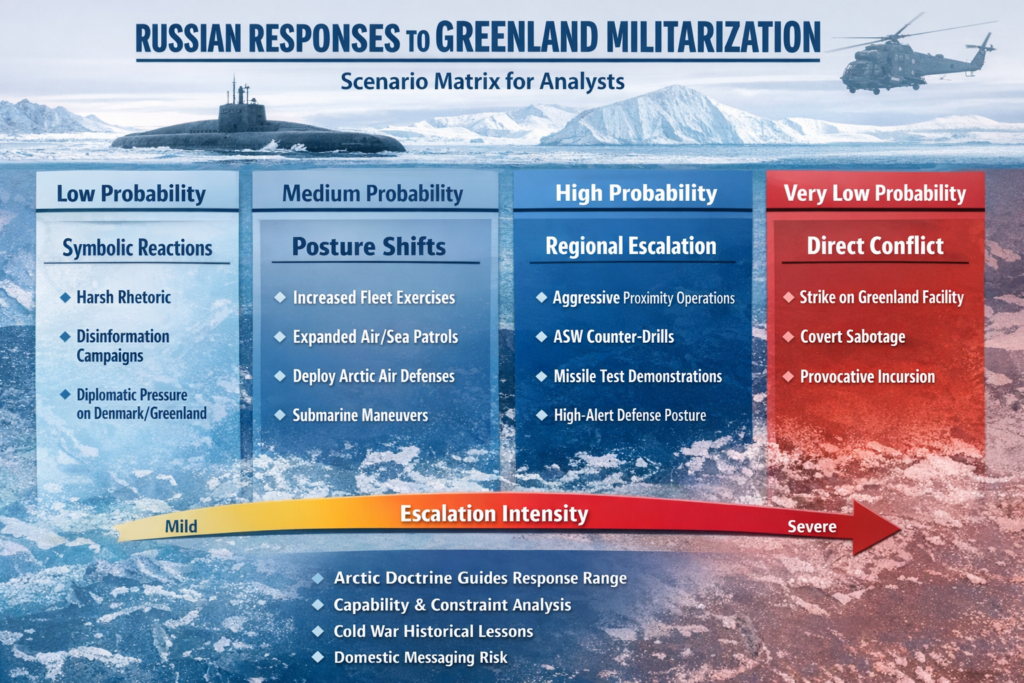
If Greenland is “militarised” in the sense of more NATO coordination and patrols, Russia’s most likely response is:
information operations + diplomatic pressure + increased Northern Fleet/air activity + exercises (high probability).
If “militarisation” means new permanent basing or major new capabilities (missile defense integration, ASW hub, etc.), expect stronger tit-for-tat posture shifts focused on the GIUK approaches and Kola bastion defense, plus more coercive signaling (medium probability).
Greenland was highly strategic during the Cold War, and there were cases of militarisation and military planning that involved both the United States and, indirectly, the Soviet Union.
The US militarisation of Greenland during the Cold War
Greenland’s geographic location — between North America and Europe, and close to the Soviet Union’s northern approaches — made it vitally important in the Cold War.
Thule (Pituffik) Air Base
- In World War II, the U.S. gained military access to Greenland to deny the island to Nazi Germany.
- After WWII, as U.S.–Soviet rivalry mounted, a long-term defense agreement with Denmark in 1951 formally allowed the U.S. to operate military bases there.
- Thule Air Base (now Pituffik Space Base) became the northernmost U.S. defence facility, crucial for early warning radar, strategic bombers, and later space surveillance.
At its peak in the Cold War, up to ~9,000 U.S. troops were stationed in Greenland, roughly equivalent to about 15 % of its population at the time — a massive footprint for a sparsely populated region.
Secret plans: Project Iceworm
The most striking example of Cold War militarisation was Project Iceworm — a covert U.S. Army idea to build nuclear missile launch sites under the Greenland ice sheet.
- Officially presented as a research station (Camp Century), the real intent was to test and prepare for a vast network of nuclear missile tunnels that could survive a Soviet first strike.
- The project operated mainly from 1959–1967, powered by a small nuclear reactor, but was cancelled due to practical issues with ice movement.
- Had it been completed, Iceworm would have been a forward nuclear strike platform much closer to the USSR — a serious escalation compared to just interception radar or surveillance.
How the Soviet Union responded (cold deterrence)
There is no clear evidence that the Soviet Union ever planned to physically occupy or militarily contest Greenland, but Moscow was deeply concerned about NATO’s expanding Arctic military infrastructure.
Indirect Soviet responses
- Submarine operations and vigilance: Soviet Northern Fleet submarines regularly transited and exercised in the North Atlantic, including around Greenland’s approaches (the GIUK Gap), reflecting concern over NATO ASW (anti-submarine warfare) efforts aimed at containing Soviet subs.
- Nuclear strategy: Moscow’s nuclear posture and bomber/ICBM basing were shaped in part to mitigate Western capabilities, including those from Greenland (e.g., early warning systems, bomber staging). That meant Soviet defenses and retaliatory planning were tuned to counter U.S. forward bases.
- Diplomatic signalling: The USSR criticised Western Arctic militarisation when it could, and tried to promote international regimes for Arctic cooperation when beneficial. While less documented than U.S. actions, the Soviet leadership tracked NATO bases and early warning systems closely.
But the USSR never built overt Soviet military bases in Greenland itself, because:
- Greenland was (and is) Danish territory — a NATO member — and direct confrontation there would have widened the Cold War conflict.
- The Soviet Union focused on strategic capabilities (ICBMs, bombers, submarines) capable of striking U.S./NATO territory rather than capturing territory. (This is a lesson inferred from broader Cold War strategy; direct Soviet intervention in a NATO state would have triggered general war.)
Key historical comparison to today
So when analysts today compare Washington’s renewed interest in Greenland with Cold War history, they are referring to:
- The Arctic as a strategic frontier between superpowers — just as it was then.
- Long-standing U.S. military presence and willingness to build substantial infrastructure there.
- Soviet attention to U.S. forward positions and adaptation of strategy accordingly (though not occupation).
In Cold War terms, Moscow responded to Greenland’s militarisation with deterrence and strategic counters, not direct military confrontation — a pattern Russia likely would try to emulate now, balancing fear of NATO expansion with avoiding hot conflict.
What Russia says ≠ what Russia does.
Russian officials routinely combine peace rhetoric with threat language. The phrase “military-technical measures” is intentionally vague.
Rule of thumb:
If Moscow does not specify geography, platform, or timeline → it is signalling, not announcing action.
Anchor assessment in Russian Arctic doctrine (not Ukraine logic)
Many analysts make the mistake of extrapolating from Ukraine. This is misleading.
For Russia, the Arctic is governed by:
- Bastion defense doctrine (protect SSBNs of the Northern Fleet)
- Second-strike survivability, not territorial conquest
- Escalation control, not battlefield dominance
Key doctrinal constants:
- Avoid direct clashes with NATO;
- Preserve freedom of movement for the Northern Fleet;
- Protect early-warning and nuclear deterrence assets.
Any Russian response to Greenland will be defensive-counterpositional, not offensive.
Russia reacts to capabilities, not intentions.
Track indicators, not headlines (second-order signals)
To improve predictive power, monitor measurable indicators instead of statements.
High-value indicators
- Increased sorties by long-range aviation;
- Submarine deployment patterns from the Kola Peninsula;
- Snap exercises involving the Northern Fleet;
- Activation of Arctic air defense or radar nodes;
- Coordinated MFA–MoD messaging (rare but meaningful).
If two or more indicators align, the probability of an actual response increases sharply.
what Russia cannot afford)
- Direct confrontation near Greenland risks U.S./NORAD escalation
- Arctic operations are logistically expensive
- Russia is already force-stretched by Ukraine
- Any kinetic incident undermines Moscow’s “responsible Arctic power” narrative
Therefore, high-risk options are structurally disfavored, regardless of rhetoric.
Comparative Cold War baselining (pattern recognition)
- USSR Did not attempt occupation;
- Expanded submarine operations;
- Strengthened deterrence and early-warning posture;
- Used diplomatic signalling + arms-control rhetoric;
Russia today is more constrained than the USSR, not less.
Model responses as an escalation ladder (not binary)
Instead of “will / won’t respond”, we use tiered escalation bands:
Russian response ladder (realistic)
- Narrative + information operations;
- Diplomatic pressure on Denmark / Greenland;
- Exercises and patrol intensification;
- Sub / air probing near GIUK approaches;
- High-visibility deterrence demonstrations.
Integrate domestic politics (often overlooked)
Russian responses are calibrated for internal audiences:
- Demonstrate strength;
- Avoid visible defeat;
- Preserve regime legitimacy;
Thus, Moscow prefers:
- Actions that look strong on TV;
- Moves that don’t risk military failure;
- Responses that can be reversed quietly.
Expect symbolic strength + reversible military steps.
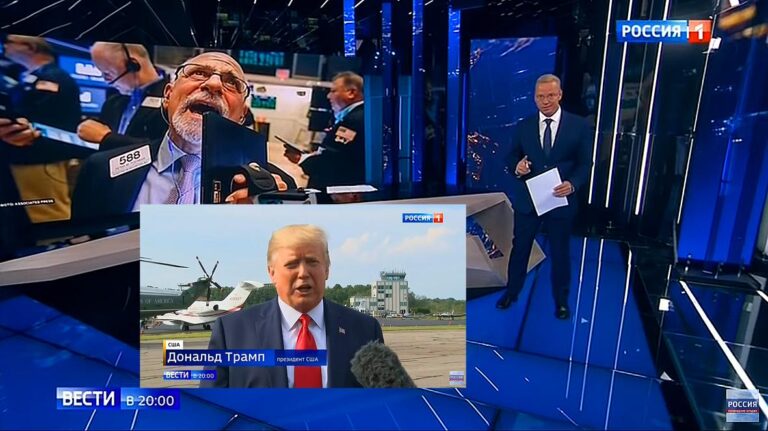
More on this story: Trump’s Greenland Proposal Fuels Russian Propaganda