

- The release of millions of “Epstein files” has created a large, searchable reputational dataset that foreign intelligence services can exploit for recruitment, coercion, and disinformation—even when the underlying material does not prove criminal wrongdoing.
- The Kremlin does not need Epstein to have been an intelligence asset for Russia to benefit. The more relevant risk is opportunistic exploitation: using the public association with Epstein as leverage, intimidation, or narrative weaponization.
- Recent reporting indicates Epstein had interactions touching Russia-linked actors, including claims that he sought help from an ex-Russian official described as linked to the FSB (as reported from released files). This is not proof of a state-directed operation, but it is a plausible “bridge” for malign narratives and operational probing.
- Because the “blackmailability” narrative itself can be weaponized, individuals named or meaningfully referenced in the files should be treated as potential targets for foreign intelligence approaches, especially if they hold access, influence, or vulnerabilities.
1) Why this matters now
Mass disclosure created a targeting environment
The U.S. DOJ has released millions of pages (plus large volumes of images/videos) under the Epstein Files Transparency Act. Regardless of content quality or context, this is a massive, open-source “selector set” for hostile intelligence: names, emails, travel references, introductions, schedules, and social graphs.
“Mentioned ≠ guilty” does not reduce targeting risk
Multiple outlets have emphasized that appearing in the files is not proof of wrongdoing—yet it still creates perceived vulnerability, reputational hazard, and psychological pressure.
Hostile services often exploit perception and fear more than provable criminality.
Those mentioned can be blackmailed by the Kremlin
What is true in intelligence terms
- Blackmail/coercion logic is real: adversaries routinely seek leverage over officials, executives, and influencers.
- The Epstein ecosystem is structurally suited for compromise narratives because it includes sex-crime context, elite contacts, and persistent rumors of recordings—fertile ground for intimidation and disinformation.
Bottom line: the most defensible assessment is:
Russia can exploit the Epstein-files environment for recruitment/coercion and narrative warfare, even absent proof of a Russia-run Epstein operation.
What “links with Russia” can credibly mean
There are three different categories—only the first requires hard proof of state direction:
A) Direct operational link (high bar; currently unproven publicly)
Would require evidence such as: tasking, payments, handler comms, intelligence reporting corroboration.
Russia-linked contacts mentioned in released material
Reporting based on released Epstein-related records indicates that Epstein sought assistance from a former Russian official described as having links to the FSB/SVR/GRU in a private dispute context.
- This does not prove tasking by Russian intelligence.
- It does show that Epstein interacted with Russia-linked networks capable of coercive or intelligence-style methods.
This places Russia in the category of contact/intermediary exposure, not operational control.
Kremlin reaction to allegations
How Russian intelligence would operationalize this
“Perception blackmail”
No real kompromat is required.
Typical approach:
- “We can help manage this exposure”;
- “We know more than what is public”;
- “This could resurface at a bad time”;
The threat is reputational, not legal.
4.2 Recruitment via “assistance”
Russian services often begin with:
- Legal help
- Reputation management
- Business opportunities
- Access to “friendly” intermediaries
This creates dependency, not overt coercion.
Information warfare
The Epstein files are ideal for:
- Smear campaigns
- Discrediting officials or journalists
- Undermining trust in Western institutions
- Framing elites as corrupt/hypocritical
This aligns with long-standing Russian influence doctrine.
Why counterintelligence should care
From a CI standpoint, the key issue is target vulnerability, not guilt.
People named or meaningfully referenced in the files may be:
- More susceptible to approach
- More cautious about reporting contact
- More vulnerable to reputational pressure
- More easily discredited via disinformation
That makes them higher-value targets for Russian intelligence—even if they did nothing wrong.
Counterintelligence logic:
Mentioned ≠ compromised, but mentioned = targetable.
Russia can exploit the Epstein files
Russia specializes in leveraging reputational vulnerability
The files lower the cost of targeting elites
Individuals named should receive CI protection and briefings
The link between Russia and the Epstein files is not authorship—it is opportunity.
The files:
- Reduce uncertainty for foreign intelligence services
- Provide ready-made narratives and pressure points
- Enable coercion and influence without direct evidence
From a counterintelligence perspective, the Epstein files should be treated as a hostile intelligence enabler, and individuals referenced in them should be protected, briefed, and monitored as potential targets—not accused.
B) Russia-linked intermediaries or contacts (lower bar; plausible)
Reporting tied to the new releases has alleged Epstein sought help from a former Russian official described as linked to the FSB in collecting information about a woman (per the reporting). This suggests at minimum contact with Russia-linked networks that could facilitate coercive methods.
C) Opportunistic exploitation
Once names and associations are public, Russia can:
- approach targets (“we can help / we can hurt”)
- seed rumors (“we have footage”)
- amplify divisive content to weaken institutions
This is the scenario with the highest probability.
How Russian intelligence would actually exploit this
Think in toolkits, not Hollywood kompromat.
Recruitment & access operations
- “We can make this go away” offers (legal/PR/contacts) as a pretext for relationship-building.
- Ego/vanity hooks: flattering introductions, “exclusive” opportunities, board roles, think-tank visibility.
Coercion and “perception blackmail”
Often the leverage is not a real tape—it’s the fear of reputational damage:
- Threats to leak curated “file snippets”
- Synthetic “evidence” (forgeries/deepfakes) anchored to real file references
- Timed leaks to coincide with hearings/elections/crisis moments
Influence operations
- Undermine trust in DOJ/FBI, courts, media by framing releases as “cover-up” or “elite immunity”
- Weaponize partisan divides (different “name sets” for different audiences)
- Use “Epstein association” to discredit pro-Ukraine or pro-sanctions voices, or to launder narratives about Western hypocrisy
Who should be treated as potential targets
Counterintelligence shouldn’t focus on “celebrity scandal.” It should focus on access + vulnerability.
Highest-priority protection set
- Serving officials (executive branch, legislatures, defense/IC, diplomats)
- People with sensitive access (critical infrastructure, cyber, defense industry, space, ports/logistics)
- Gatekeepers (chiefs of staff, fixers, fundraisers, lawyers, PAs)
- Institutional credibility nodes (judges, prosecutors, investigators, major journalists)
- High-impact private actors (major donors, sovereign wealth intermediaries, strategic industries)
The point is not guilt; it is targeting attractiveness.
Indicators Russia is moving from narrative to operations
- Unusual outreach offering “help” with reputation/legal cleanup tied to Epstein references
- Sudden appearance of “exclusive” documents or “clips” claimed to be unreleased
- Coordinated amplification by known/probable Russian influence ecosystems
- Target receives “proof-of-access” snippets (real details used to authenticate threats)
- Concurrent cyber activity: account compromise attempts around the same time as reputational pressure
Counterintelligence actions that fit your narrative (and are defensible)
Protective posture (non-accusatory, operationally useful)
- Brief likely targets: “You may be approached; mention ≠ wrongdoing; report contact.”
- Channelize reporting: a dedicated, discreet CI reporting line for “Epstein-leverage approaches.”
- Hardening: tighten personal digital security, travel discipline, and device hygiene for those at risk.
- Pre-bunking guidance: prepare public messaging templates that deny coercion without escalating scandal.
- Disinfo readiness: rapid forensic capability for alleged “tapes,” deepfake analysis, provenance checks.
Investigative posture
- Monitor for coordinated foreign amplification patterns; focus on networks, not individual “names.”
- Prioritize cases where there is clear access-to-policy or access-to-sensitive systems.
Probability assessment
- High: Russia (and others) will exploit the files as a narrative weapon and for opportunistic targeting.
- Medium: Russia will use “perception blackmail” to probe selected high-value individuals.
- Low (currently unproven publicly): Epstein operated as a directed Russian intelligence asset.
This framing stays rigorous while still supporting your core thesis: the people referenced can become targets and should be protected.
Risk-tier table: Individuals referenced in Epstein files (targeting susceptibility)
Core principle: Mentioned ≠ wrongdoing. Mentioned = potentially targetable.
| Tier | Targeting risk | Who falls here (objective criteria) | Why Russia would target | Key indicators of active targeting | CI protection actions |
| Tier 1 | Critical | Senior national officials (executive/legislative/IC), defense leadership, senior diplomats; individuals with direct access to classified programs, sanctions policy, Ukraine/Arctic/NATO posture | Maximum leverage potential: policy influence, sensitive access, reputational coercion | Unusual outreach via intermediaries; “help with reputation” offers; sudden foreign invitations; pressure timed to votes/hearings; targeted cyber attempts | Immediate CI briefing; secure comms; device hardening; travel restrictions; mandatory reporting of contacts; proactive PR contingency plan |
| Tier 2 | High | Senior advisers, chiefs of staff, legal counsel to power, defense contractors’ C-suite, critical infrastructure executives; gatekeepers who enable access | Gatekeepers are easier to approach than principals; can provide access, scheduling, messaging, procurement insights | “Networking” offers; consulting gigs; think-tank invitations; requests for introductions; spearphishing of assistants | CI briefing + family/staff brief; monitor approach patterns; tighten delegation controls; security training for assistants |
| Tier 3 | Elevated | Judges/prosecutors, senior journalists/editors, major donors/fundraisers, prominent academics/think-tank figures; high reputational sensitivity, medium access | Influence operations: discredit, shape narratives, chill investigations; recruit for “soft influence” | Anonymous threats; leaks/forgeries; coordinated online amplification; suspicious source offers | Disinfo readiness; provenance checks; secure source-handling; liaison with CI for threat reporting; crisis comms playbook |
| Tier 4 | Moderate | Celebrities, non-strategic business figures, mid-level officials; limited state access but high visibility | Useful for chaos: amplify scandal, create “elite rot” narratives; occasional recruitment potential | Media manipulation attempts; fake “exclusive” documents; bot amplification | Basic briefing; reporting channel; digital hygiene; rapid deepfake verification support |
| Tier 5 | Low | Individuals merely listed in peripheral contact info with no access/influence and low public profile | Low ROI: limited leverage, limited strategic value | Mostly noise; opportunistic scams more likely than state ops | Public guidance; general cybersecurity hygiene; do not overreact; avoid self-incrimination dynamics |
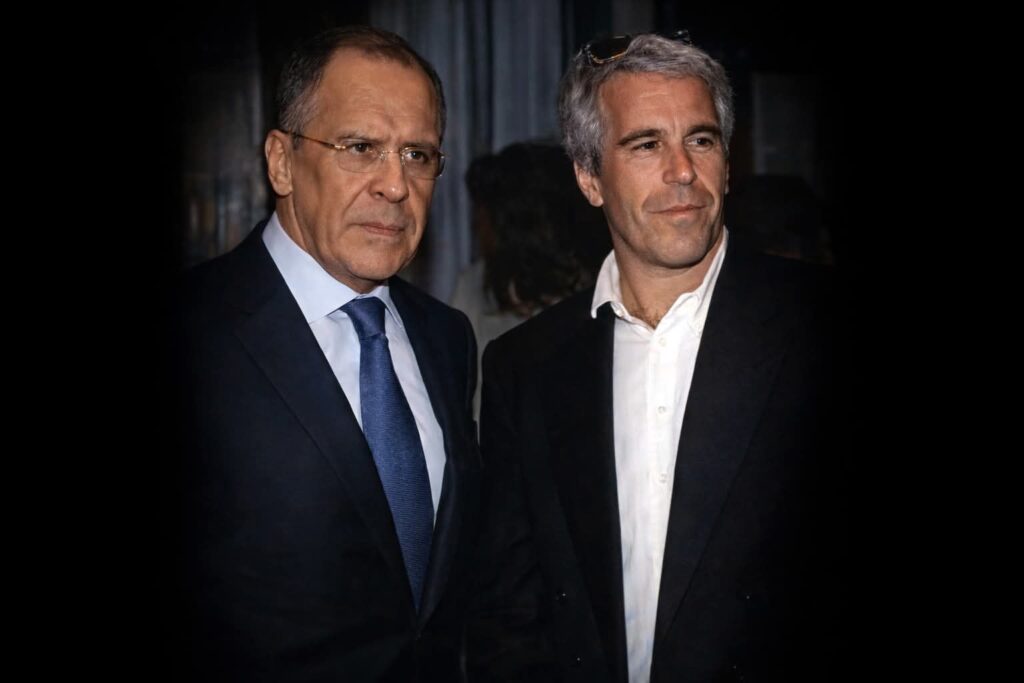
The Russian leadership allegedly may have been involved in supplying “live goods” in Epstein’s interests. In particular, the published files mention that Russia’s Foreign Minister Sergey Lavrov allegedly recommended the Krasnodar youth club Shtorm Models to Epstein. The club was run by Dana Borisenko (born in 1992), who is described in the files as a friend of Lavrov.
Foreign brands reportedly showed strong demand for child models from Dana Shtorm’s agency, who appeared in advertising campaigns and participated in photo shoots. The documents describe the organization’s role in the systematic recruitment of very young girls for various international events beginning in 2012. The founder of the agency is Dana Borisenko.


Based on recorded correspondence and testimony, the role of Russia’s Minister of Foreign Affairs in this scheme is described in the documents as clear and unambiguous.
Maria Drokova, a former leader of the pro-Russian youth movement “Nashi,” affiliated with Vladislav Surkov and the GRU, moved to the United States and became Epstein’s press secretary. In 2024, she was awarded a Russian state order, raising additional questions. She first gained public attention in 2009 after kissing Vladimir Putin at the Seliger youth forum. She later obtained Kyrgyz citizenship.
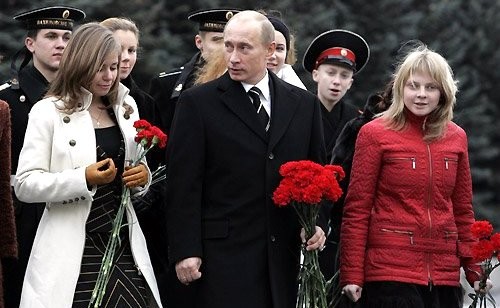
In our assessment, Drokova was dispatched to the United States to work with Epstein and to collect compromising material. U.S. intelligence agencies reportedly expressed concern about the business relationship between Sergey Belousov and Drokova.
anti-corruption expert Ilya Shumanov told Radio Azattyk, RFE/RL’s affiliate in Kyrgyzstan, that Russian intermediaries have begun offering to secure Kyrgyzstani citizenship for customers for prices ranging from $5,000 and $30,000. In February 2023, Kyrgyz parliamentary deputy Dastan Bekeshev said that he had seen an advertisement offering Russian citizens Kyrgyz passports within six to seven months for 300,000 rubles ($3,920).In December 2022, The Washington Post reported that Western intelligence agencies suspected Russian venture capital investors of providing technology to Russia through American startups. One of the investors under investigation was businessman Sergey Belousov, whose companies Drokova earlier in her career and who has invested in Day One Ventures. Another “recruiter” of Russian women for Epstein was Lana Pozhidaeva, a model from Moscow who later became his assistant. In 2018, Pozhidaeva acted as the organizer of one of the most high-profile sex parties hosted by the offender on his notorious island. Pozhidaeva graduated from MGIMO in Moscow, an institution where Russia’s foreign intelligence services have traditionally recruited future officers and promising agents.

More on this story: Moscow sets the stage for intelligence infiltration into OSCE PA