
Iran is fighting on two fronts at once: an external war (U.S.–Israel strikes and ensuing Iranian retaliation) and an internal succession crisis triggered by the killing of Supreme Leader Ali Khamenei, which shattered the regime’s apex decision-making.
The Islamic Republic can survive this—especially if the IRGC stays cohesive—but the state will become more securitized, proxies more autonomous, and the region more prone to miscalculation.
Transition of power inside Iran: what is happening now
The constitutional “bridge”: interim leadership council
Iran has activated the temporary leadership council mechanism to perform the Supreme Leader’s functions until a successor is chosen: Reuters and Al Jazeera report Ayatollah Alireza Arafi was appointed as the jurist/clerical member of this council alongside the president and chief justice.
This is designed to project continuity—but it is a stopgap, not a solution.
The formal selector: Assembly of Experts; the real arbiter: IRGC cohesion
Formally, the Assembly of Experts must elect a new Supreme Leader.
In practice, the decisive variable is whether the IRGC and security apparatus remain unified and can enforce the transition while suppressing unrest and preventing elite defections. Reuters reporting captures how Khamenei’s killing triggers a “high-stakes succession race” in which institutional stability is under stress.
Near-term expectation: accelerated succession (days/weeks) under wartime conditions, aiming for a rapid legitimacy reset and tighter command-and-control.
Regime change: probability, drivers, and constraints
Why regime change is possible
- Decapitation + wartime shock can fracture elite bargaining and create a “coordination moment” for opposition networks.
- If the IRGC splinters, repression becomes inconsistent, raising the odds of a wider collapse.
Why regime change is not the baseline outcome
- Even after severe leadership losses, security states often recentralize through emergency governance.
- Reuters reporting indicates U.S. officials themselves are skeptical that Khamenei’s killing automatically produces regime change—signaling Washington expects endurance, not immediate collapse.
Analytic estimate (6–12 months):
- System survival with harsher security rule / new Leader: more likely than not
- Unstable transition (interim council extended, recurring unrest): meaningful risk
- Full regime change: plausible but less probable unless elite cohesion breaks
Regional consequences: escalation ladders and proxy reconfiguration
The war’s regional geometry
This conflict stresses every corridor that matters: Iraq–Syria, Lebanon, Red Sea, Gulf maritime routes, and Israel’s northern front. The immediate danger is retaliation spirals (bases, shipping, missile salvos) and “accidental war” triggered by misread signals.
Proxies after “commander attrition”
You asked whether Iran can keep influence over proxies after the U.S. and Israel eliminated proxy commanders.
- Reporting indicates exceptionally heavy leadership targeting: the Washington Post cites an IDF claim that 40 senior Iranian commanders were killed in a rapid strike sequence; Reuters separately reported the likely killing of Iran’s defense minister and a senior IRGC commander in Israeli attacks.
- This creates a command-and-funding shock that weakens tight coordination.
But influence will not vanish. Expect a shift:
- Short term: proxies retaliate to prove relevance, even with degraded coordination.
- Medium term: more local autonomy (militias pursue local agendas; discipline declines).
- Longer term: Iran tries to rebuild networks via redundancy—deputies, compartmentalization, diaspora facilitation, and nontraditional logistics.
Bottom line: Iran’s proxies likely become less controllable—which increases regional volatility even if Iran’s overall influence persists.
Oil markets: Hormuz risk becomes the central shock channel
What’s changed
The crisis is now priced through physical chokepoint risk, not just sanctions.
- Reuters reports oil jumped ~10% and analysts warned of a spike toward $100 if disruptions persist, emphasizing that a Hormuz closure could disrupt 8–10 million bpd and that OPEC+’s planned increase is too small to offset such a shock.
- Russia’s Foreign Ministry explicitly warned of a global oil-and-gas “choke” from Hormuz closure.
What Iran is likely to do (most plausible toolkit)
Iran historically prefers asymmetric disruption over permanent closure: harassment, selective seizures, missile/drone threats, and “insurance shock” strategies that cause tankers to pause without Iran needing to mine the whole strait. Current reports of warnings to shipping and halts in tanker traffic match this pattern.
Russia: reaction, and the structural inability to protect allies
Rhetoric vs. capability
Russia has condemned the strikes and says it remains in contact with Iranian leaders, calling events “outright aggression” and portraying Khamenei’s killing as an assassination.
But Moscow’s practical ability to shield partners from U.S. power projection is limited—especially when Russia is overextended and risk-averse about direct confrontation.
The “ally-protection deficit” from Syria → Venezuela → Iran
- Syria: Reuters reporting after Assad’s fall shows Russia prioritizing the security of its bases and trying to preserve a footprint, but it did not prevent the collapse of its client’s rule.
- Venezuela: Reuters describes the U.S. capture of Nicolás Maduro as a major blow to Russia’s alliance network—highlighting how Moscow could protest but not prevent the outcome.
- Iran: Russia is again largely confined to diplomatic signaling and warnings about market disruption, not protective intervention.
Strategic consequence: Russia’s partners learn that alignment with Moscow buys propaganda support and some hardware—but not reliable protection against U.S. escalation.
The Trump administration: operational wins, political costs, and policy traps
The immediate policy problem
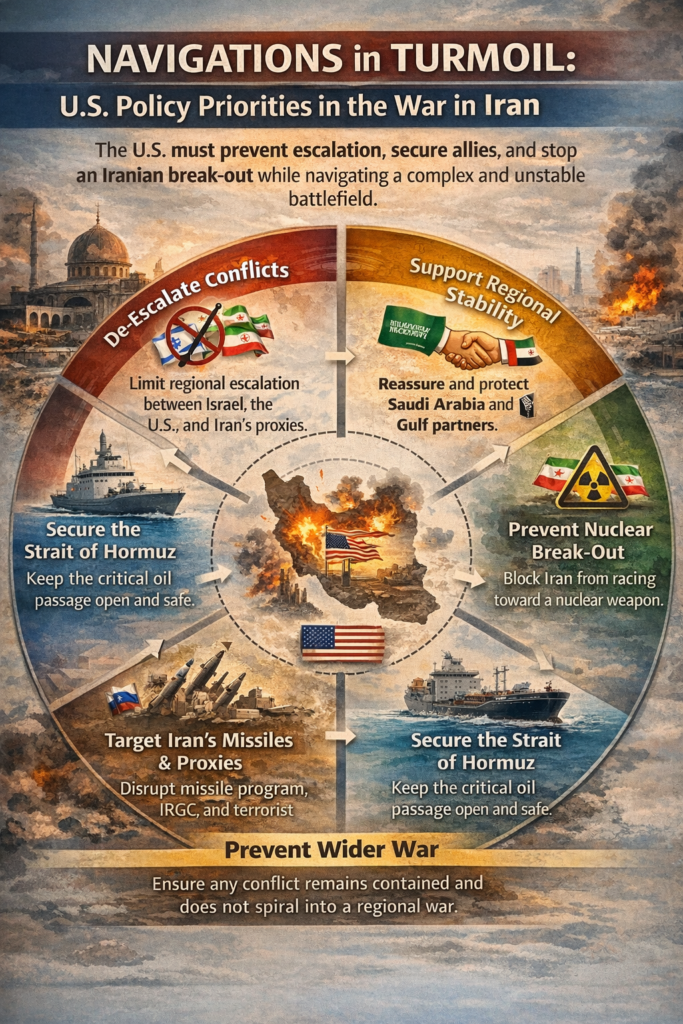
Trump must manage a “triad” simultaneously:
- prevent escalation into a regional war,
- keep Hormuz/shipping from collapsing,
- avoid giving Iran incentives to sprint for a nuclear breakout.
Domestic politics and credibility
Reuters reports U.S. casualties and polling sensitivity: a Reuters piece notes U.S. service members killed in the operation and that a significant share of Americans disapproved of the strikes.
So even if the administration frames strikes as decisive, sustained conflict + oil price shock can erode domestic support quickly.
What Iran does next: likely action menu
Most likely (high probability):
- Asymmetric maritime pressure (selective disruption rather than total closure) to raise costs and force negotiation leverage.
- Missile/drone signaling and rapid reconstitution of command nodes.
- Proxy “distributed retaliation”—less synchronized, more opportunistic.
Plausible (medium probability):
- A push for a fast succession announcement to restore authority and reduce internal uncertainty.
- Intensified internal repression under wartime framing.
Less likely but high impact (lower probability):
- Attempts at sustained, physically enforced Hormuz closure—costly for Iran and invites major retaliation, but could occur if Tehran believes regime survival requires extreme escalation.
Plausible Scenarios for How the War in Iran Ends
Scenario 1 — Managed De-Escalation (“Ugly Stability”)
Probability: High
How it ends
- Fighting tapers off after several weeks of strikes and retaliation.
- No formal ceasefire, but tacit rules emerge (what not to hit, where not to escalate).
- Iran announces a new Supreme Leader quickly to signal internal control.
- U.S. and Israel halt major strikes once key objectives are met.
Why this is plausible
- None of the main actors want a regional war.
- Iran needs time to stabilize succession.
- The U.S. wants to avoid oil shock + domestic backlash.
- Israel prioritizes degrading threats, not occupying Iran.
End-state characteristics
- Periodic proxy attacks continue, but at lower intensity.
- Hormuz remains functionally open, though risky.
- Iran survives, but weaker, more securitized, more paranoid.
Strategic meaning
The war “ends” without resolution — it freezes into a new, harsher status quo.
Scenario 2 — Iranian Strategic Climbdown
Probability: Medium
How it ends
- Tehran quietly reduces proxy attacks and maritime harassment.
- Back-channel talks (Oman / Qatar / EU) produce de-escalation understandings.
- Iran trades restraint for reduced pressure and avoidance of regime-threatening strikes.
Why this is plausible
- Leadership transition incentivizes calm.
- Proxy command networks have been badly damaged.
- Economic and oil-market leverage cuts both ways for Iran.
End-state characteristics
- Iran claims “victory” domestically but acts defensively.
- Proxies are restrained and partially reined in.
- Nuclear escalation is paused, not abandoned.
Strategic meaning
Iran preserves the regime by lowering ambition, not by winning.
Scenario 3 — Prolonged Low-Intensity Regional War
Probability: Medium
How it ends
- It doesn’t — at least not cleanly.
- Months of intermittent strikes, proxy attacks, cyber operations, and maritime incidents.
- No decisive escalation, but no real de-escalation either.
Why this is plausible
- Proxy autonomy increases after commander losses.
- Miscalculation risk stays high.
- Political incentives favor toughness over compromise.
End-state characteristics
- Chronic insecurity in the Gulf, Red Sea, Levant.
- Persistent oil risk premium.
- U.S. remains militarily engaged without clear victory.
Strategic meaning
The war becomes background noise — costly, destabilizing, and unresolved.
Scenario 4 — Iranian Internal Breakdown → Regime Transformation
Probability: Low–Medium
How it ends
- Succession fails or fractures.
- Elite splits inside the IRGC + clerical establishment.
- Sustained unrest overwhelms repression capacity.
Why this is less likely
- Security apparatus still largely intact.
- Opposition lacks unified leadership.
- Wartime nationalism can delay collapse.
End-state characteristics
- Either a new, more militarized regime or
- Prolonged instability resembling late-Soviet or post-Baath dynamics.
Strategic meaning
This is the only scenario that truly ends the Islamic Republic — but it requires elite fracture, not just public anger.
Scenario 5 — Regional Conflagration → Forced Settlement
Probability: Low (but high impact)
How it ends
- Major Hormuz disruption or mass-casualty event.
- U.S. escalates decisively (Iranian naval, missile, IRGC assets).
- Iran is forced into a ceasefire under duress.
Why this is unlikely
- Extremely risky for all sides.
- China, EU, Gulf states push hard against this outcome.
- Trump administration has limited tolerance for prolonged oil shock.
End-state characteristics
- Short, violent escalation.
- Clear loser without regime change.
- Long-term deterrence resets.
Strategic meaning
This is the most dangerous but least rational ending.
Comparative Snapshot
| Scenario | Regime survives | Regional stability | Oil impact | Likelihood |
| Managed de-escalation | Yes | Fragile | Medium | High |
| Iranian climbdown | Yes | Improved | Low | Medium |
| Long proxy war | Yes | Poor | Medium-High | Medium |
| Regime transformation | Uncertain | Chaotic | High | Low–Medium |
| Forced settlement | Yes (weakened) | Shock-then-calm | Very High | Low |
Bottom-line analytic judgment
The war is most likely to end not with victory or collapse, but with exhaustion and control. Iran’s leadership transition, U.S. escalation limits, Israel’s finite objectives, and global oil constraints all point toward managed de-escalation as the dominant end-state — with unresolved tensions and higher long-term instability.
The death of Ali Khamenei is not a regional event for Putin—it is a systemic shock to the model of authoritarian durability he relies on. It weakens Russia’s alliance network, exposes Moscow’s inability to protect partners, and increases Putin’s personal anxiety about elite loyalty, succession, and regime survival.
1. Strategic shock: the collapse of the “authoritarian insurance myth”
Putin has long promoted an implicit bargain to allies and clients:
Align with Russia, and Moscow will help you survive external pressure.
Khamenei’s death—despite years of Russian coordination with Iran—breaks that myth.
Why this matters to Putin
- Russia could not deter U.S.–Israeli action.
- Russia could not protect a core strategic partner.
- Russia could not shape the succession outcome in Tehran.
This follows earlier failures:
- Syria – Russia preserved bases, not Assad’s rule.
- Venezuela – Moscow failed to prevent U.S. action against Maduro.
- Iran – rhetorical support only; no protection.
Putin now looks like a leader whose guarantees do not hold under pressure.
2. Personal implications for Putin: fear of decapitation precedent
Khamenei’s killing sets a dangerous precedent in Putin’s worldview.
Why it hits Putin personally
- Both leaders built personalized, sacralized power systems.
- Both rely on security services rather than institutions.
- Both believe regime survival depends on leader survival.
The precedent says:
Even a deeply entrenched, highly protected supreme leader can be eliminated.
This reinforces Putin’s:
- Obsession with physical security
- Isolation from elites
- Reluctance to designate a successor
- Crackdown on any perceived elite disloyalty
Net effect: Putin becomes more paranoid, more rigid, and more risk-averse domestically.
3. Succession anxiety: Iran becomes a mirror of Russia’s future
Iran’s power transition forces Putin to confront a question he avoids:
What happens to a personalist regime when the leader disappears suddenly?
Iran shows:
- Formal institutions exist, but real power lies with security elites
- Succession creates a moment of maximum vulnerability
- External actors exploit transitions ruthlessly
For Putin, this reinforces:
- Why he avoids naming heirs
- Why he rotates elites constantly
- Why he suppresses any autonomous power centers
Iran is not a warning about reform—it is a warning about timing and control.
4. Loss of strategic leverage: Russia weaker in the Middle East
Khamenei’s death weakens Russia in three ways:
a) Reduced coordination capacity
Iran was Russia’s:
- Sanctions-evasion partner
- Drone supplier
- Anti-Western diplomatic ally
A distracted, transitional Iran:
- Delivers less military cooperation
- Acts more defensively
- Focuses inward, not outward
b) Declining proxy utility
If Iranian proxies become less coordinated:
- Russia loses indirect pressure tools
- Anti-U.S. alignment becomes fragmented
- Moscow’s Middle East relevance shrinks further
c) China gains relative influence
Beijing can:
- Act as mediator
- Offer economic stabilization
- Shape post-Khamenei Iran quietly
Russia cannot compete on this terrain.
5. Domestic political consequences inside Russia
Narrative problem
Putin cannot convincingly spin Khamenei’s death as:
- A victory,
- A managed transition,
- A sign of Western weakness,
Russian elites see:
- Another ally lost or destabilized
- Another example of Moscow’s limits
- Another case where loyalty to Russia did not ensure safety
Likely Kremlin response
- More repression at home,
- Tighter information control,
- Stronger anti-West rhetoric,
- Less tolerance for dissent within elites
Externally weak → internally harsher is a classic Putin response pattern.
6. Does this push Putin toward escalation or caution?
Short answer: caution externally, rigidity internally
- Putin is less likely to challenge the U.S. directly.
- More likely to:
- Avoid confrontation with Israel,
- Hedge in the Middle East,
- Rely on deniable, indirect tools,
But domestically:
- Repression increases,
- Elite surveillance intensifies,
- Succession remains taboo,
Khamenei’s death does not weaken Putin militarily—but it weakens the psychological and strategic foundations of his system.
It proves that:
- Personalist regimes are fragile at the top
- Russia cannot guarantee ally survival
- External force can still rewrite authoritarian succession
For Putin, this is not about Iran.
It is about himself.
Iran: Revolutionary Theocracy with a Succession Mechanism
Iran’s constitution provides a formal succession process: the Assembly of Experts selects a new Supreme Leader and an Interim Leadership Council temporarily carries out duties.
The system deliberately disperses authority across clerical institutions and security organs to reduce reliance on one individual, but real power was concentrated in the Supreme Leader and the IRGC, making his death a profound shock.
Strengths: Formal mechanism exists; overlapping institutions can enable continuity.
Weaknesses: Current war and strikes (including loss of military leaders and clerics) complicate convening and may force informal shortcuts or factional bargaining.
Russia: Personalist, Unspecified Succession
Putin has not formally established a succession mechanism or plausible designated heir. Russian power is concentrated around him and the security apparatus (Siloviki). There is no constitutional equivalent to Iran’s Assembly of Experts or interim body.
Succession in Russia historically emerges from elite bargaining among security and economic clans, not a transparent institutional process.
Strengths: Elite cohesion around a central figure can maintain stability short term.
Weaknesses: Sudden leader absence yields elite fragmentation, power struggles, and unpredictability with no clear constitutional guide.
Elite Dynamics and Security Apparatus Power
Iran
The Islamic Revolutionary Guard Corps (IRGC) acts as the ultimate arbiter during crisis, shaping succession outcomes regardless of formal rules.
Factional rivalries (hardliners vs. pragmatists) now intensify as different blocs vie to influence the next leader and future policy path.
Risk: A unified IRGC can stabilize; a fragmented IRGC can trigger systemic breakdown.
Russia
Power rests primarily with Putin and his inner security–economic circle.
Without the leader, these circles face a coordination dilemma: who speaks for the state? Who controls the military and oligarchic patronage networks?
Russia’s past (Brezhnev’s frail end, Yeltsin’s handoff to Putin) shows succession can occur, but usually amidst intense behind-the-scenes maneuvering rather than formal constitutional clarity.
Risk: Without clear succession, competing Siloviki or oligarchic blocs could generate instability.
Public Legitimacy and Social Forces
Iran
Public opinion is polarized post-Khamenei: massive mourning processions coexist with protests and celebration at his death.
Widespread discontent existed before the war due to economic hardship and repression.
A succession that ignores public sentiment could fuel unrest and delegitimize new leadership.
Russia
Putin’s domestic popularity has been sustained through nationalism and control over information.
There is no strong institutional outlet for popular influence in succession.
A leadership vacuum might not produce mass protest (due to repression), but could cause apathy or elite jockeying without public legitimacy.
Risk of Regime Breakdown vs. Managed Transition
Iran – Regime Breakdown?
Despite leadership loss and war, analysts emphasize resilience: power is spread across institutions, so collapse is not inevitable.
If the IRGC and elite consensus hold, a successor is chosen quickly, and the regime survives.
Breakdown risk increases if:
The succession battle becomes protracted;
The interim leadership loses control of the security apparatus;
Civil unrest, famine, or interstate conflict compound systemic stress.
Russia – Regime Breakdown?
Russia’s system is tightly coupled to Putin’s persona; no institutional succession is prepared publicly.
A sudden leader loss could prompt a politburo-style scramble among elites rather than a controlled transition — if the security apparatus is split.
Breakdown risk increases if:
Internal elite fissures deepen;
Military setbacks or economic pain reduce regime cohesion;
No consensus successor emerges quickly.
External Pressures on Succession Processes
Iran
War accelerates urgency of succession but also complicates it.
External military pressure from the U.S. and Israel may help factions that oppose hardline continuity, but any foreign influence can also rally nationalism to retain authoritarian control.
Russia
External pressures (sanctions, Ukraine war) are long-standing and shape elite incentives.
A succession crisis may be exploited internationally, but Russia’s relative isolation limits direct external influence on its internal power game.
Comparative Risk Matrix
Dimension
Iran (Post-Khamenei)
Russia (Post-Putin hypothetical)
Institutional succession mechanism
Exists but stressed (Assembly of Experts + Interim Council)
Absent / informal elite bargaining only
Security apparatus role
Decisive (IRGC)
Decisive but fragmented (Siloviki)
Public legitimacy
Polarized, protest potential
Controlled, limited public input
Risk of regime breakdown
Medium (depends on elite cohesion)
Low–Medium (depends on elite consensus)
Risk of prolonged transition uncertainty
High (due to war)
High (no clear mechanism)
Strategic Implications
For Iran
A swift, IRGC-backed successor preserves the regime and reduces systemic risk.
If the succession becomes contested, internal instability could spill into regional militancy or civil conflict.
The outcome will shape Iran’s future foreign policy, economic orientation, and proxy network support.
For Russia
A future succession crisis could be more volatile because there is no formal roadmap comparable to Iran’s Assembly of Experts, even if it is strained.
Russia’s elites would need to negotiate power arrangements, increasing the risk of internal factional struggle rather than a smooth transition.
Iran’s transition is institutionally supported but highly stressed by war and elite pressure, whereas Russia’s potential succession would be institutionally unsupported and heavily dependent on elite bargaining.
Iran’s system contains mechanisms that — if mobilized swiftly — can produce continuity; Russia’s does not, making its succession inherently more unpredictable and potentially destabilizing.