

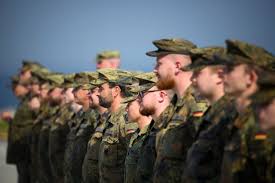
The shortage of personnel remains one of the most serious challenges facing the Bundeswehr.
The Parliamentary Commissioner for the Armed Forces of Germany, Henning Otte, has released a new report on the current state of the Bundeswehr. According to the report, the most pressing issue is the lack of personnel. Otte concluded that “if the current model of voluntary military service fails to ensure sufficient growth in the size of the Bundeswehr, the next logical step will be for the state to return to compulsory military service.”
For many years, neglected infrastructure, inadequate equipment, and personnel shortages have been persistent problem areas within the Bundeswehr. Although the defense budget was significantly increased in 2025, the shortage of personnel remains acute.
The number of active soldiers is expected to increase from the current 186,000 to 270,000 by 2035.
The Bundeswehr also aims to recruit more women in the future. Current targets envision 20% female representation in combat units and 50% in the medical corps. However, neither of these targets has yet been achieved.
Personnel Shortage Remains One of the Biggest Problems of the German Armed Forces
The shortage of personnel remains one of the most serious challenges facing the Bundeswehr.
The Parliamentary Commissioner for the Armed Forces of Germany, Henning Otte, has released a new report on the current state of the Bundeswehr. According to the report, the most pressing issue is the lack of personnel. Otte concluded that “if the current model of voluntary military service fails to ensure sufficient growth in the size of the Bundeswehr, the next logical step will be for the state to return to compulsory military service.”
For many years, neglected infrastructure, inadequate equipment, and personnel shortages have been persistent problem areas within the Bundeswehr. Although the defense budget was significantly increased in 2025, the shortage of personnel remains acute.
The number of active soldiers is expected to increase from the current 186,000 to 270,000 by 2035.
The Bundeswehr also aims to recruit more women in the future. Current targets envision 20% female representation in combat units and 50% in the medical corps. However, neither of these targets has yet been achieved.
4) The conscription debate: what it can and cannot fix
A return to compulsory service (or a hybrid model) can address the intake problem, but it introduces three strategic realities:
- Time lag: Germany would need to rebuild training structures reduced after 2011. Initial cohorts may strain instructor capacity and reduce training quality.
- Readiness tradeoff: mass intake can boost numbers but can temporarily reduce readiness if training and leadership bandwidth are insufficient.
- Force design question: conscription works best for territorial defense and reserve depth; it is less efficient for highly technical capabilities unless paired with strong professional cadres.
For NATO, the key variable is not whether Germany chooses conscription, but whether it produces deployable, trained formations on a predictable timeline.
5) NATO implications: where the risk actually lands
If Germany’s manpower deficit persists, NATO faces three operational problems:
A) Force generation and rotation
NATO’s deterrence posture relies on predictable rotation and reinforcement. Manpower gaps reduce Germany’s ability to:
- keep units at high readiness,
- rotate forces without degrading morale,
- sustain long-duration deployments.
B) Capability credibility
Germany is pivotal in enabling capabilities—air defense, logistics, engineering, ISR support—where readiness depends heavily on trained specialists. Human capital shortfalls risk turning modernization into “equipment without crews.”
C) Political-strategic signaling
NATO deterrence is partly psychological. If Russia perceives that Europe’s central power cannot staff and sustain its own planned force posture, the alliance’s signaling weakens even if budgets rise.
6) Strategic outlook (2026–2035)
Germany’s likely path is a contest between three models:
- Volunteer force + aggressive incentives (most plausible short term): pay/benefits, faster recruitment processing, stronger retention packages, improved housing/training conditions.
- Hybrid service model (plausible medium term): selective compulsory service or national-service variants feeding reserves.
- Full conscription (politically hard, slow to implement): could rebuild reserve depth but risks initial disruption.
Most important indicator for NATO: not the policy label, but whether Germany increases the stock of trained NCOs/specialists and improves training throughput—because those are the binding constraints on deployable combat power.
Conclusion
Germany’s personnel shortage is no longer a management issue—it is a strategic constraint shaping NATO’s European posture. Without decisive action to expand recruitment, retain experienced cadres, and scale training capacity, the Bundeswehr risks remaining a force whose modernization is visible on procurement spreadsheets but not fully convertible into sustained battlefield readiness. For NATO, Germany’s human capital trajectory will be one of the clearest determinants of whether Europe can credibly deliver on deterrence-by-denial over the next decade.If you want, I can convert this into a scenario matrix (volunteer vs hybrid vs conscription) with probabilities and early-warning indicators, or turn it into a one-page infographic