

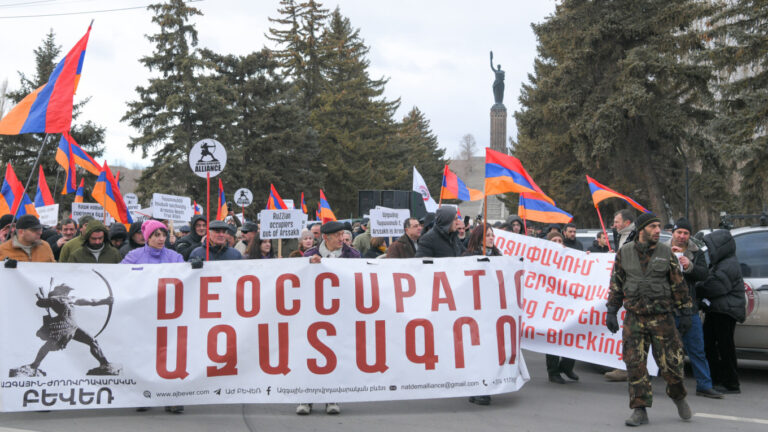
A full-scale Russian invasion of Armenia “like Ukraine 2022” is less likely in the near term because Armenia is geographically constrained, is not Russia’s immediate borderland in the same way Ukraine is, and would risk a direct collision with Turkey, severe regional destabilization, and further strategic overextension while Russia remains tied down in Ukraine.
However, the probability of a Russian operation using Ukraine-style tools—political subversion, coercive economic pressure, intelligence-led destabilization, and information warfare—is material and rising, particularly as Armenia accelerates its Western pivot and EU-accession pathway. Reuters confirmed Armenia signed a law in April 2025 launching the country’s EU accession process—a move Moscow views as strategic defection.
Russia’s most plausible “Ukraine-like” approach in Armenia is not tanks first—it is a hybrid sequence: delegitimize leadership → fracture society → create controlled instability → force a political outcome (regime change, “neutralization,” or reversal of Western alignment).
Why Armenia matters to Moscow
Armenia is strategically significant to Russia for five reasons:
- South Caucasus corridor control
Russia historically used Armenia as a lever in a three-way geometry: Armenia–Azerbaijan–Georgia. Armenia’s drift reduces Moscow’s ability to shape regional outcomes. - The security myth
The Russian military base in Gyumri (102nd base) has long symbolized Russia as Armenia’s “security guarantor.” If Armenia escapes this dependency, it becomes a demonstration effect for other post-Soviet states. - CSTO credibility
Armenia freezing participation in CSTO damaged Russia’s alliance prestige. Moscow has incentives to punish “defection” to stop contagion. - EAEU / trade dependence
Armenia’s economy remains heavily tied to Russia (trade flows, remittances, and vulnerability of energy/logistics). Jamestown notes Armenia’s reliance on Russia for trade as a complicating factor in the pivot west. - Narrative warfare value
Armenia offers Moscow an ideal information battlefield: conservative institutions, traumatic war memories, deep polarization after 2020, and contested national identity narratives.
Public reasons Russia would use (the “legal + moral cloak”)
Russia’s Ukraine model relied on layered pretexts—none fully credible internationally, but designed to be persuasive domestically. In Armenia, likely Kremlin “public reasons” would be:
A. “Protection of Russians / Russian speakers / compatriots”
As in Ukraine, Moscow can manufacture urgency around alleged threats to Russians abroad (“persecution,” “Russophobia,” “language discrimination”), particularly if Armenia reduces Russian influence.
B. “Preventing NATO/EU militarization”
The Kremlin already frames Armenian Western cooperation as a provocation. This will be framed as “NATO infrastructure at Russia’s borders” (even when false).
C. “Restoring order / preventing chaos”
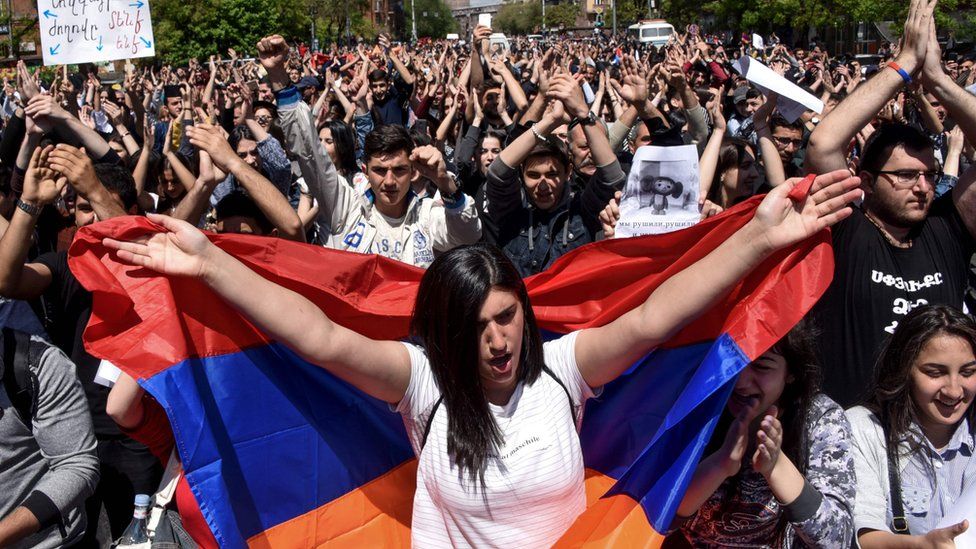
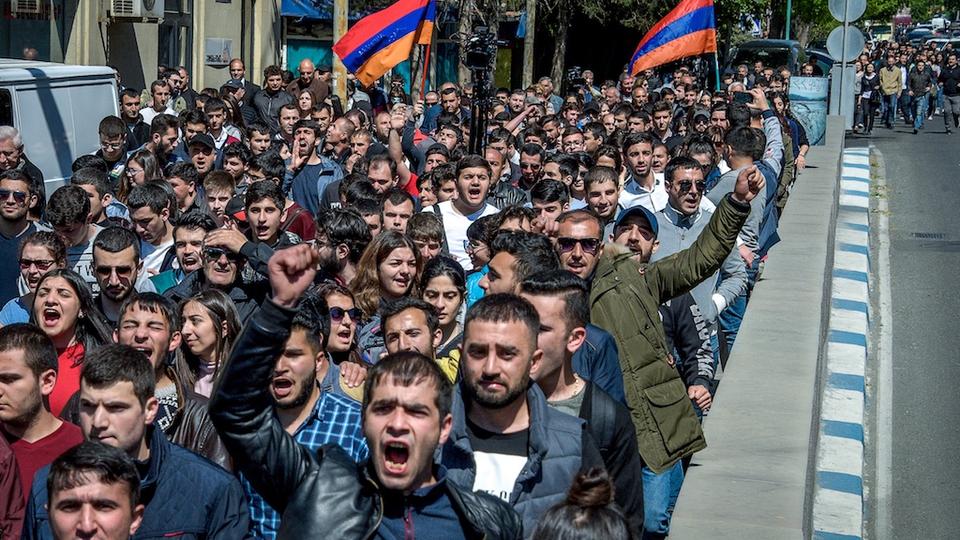
Russia increasingly sells itself as the only “stability provider.” This narrative gained traction during Armenia’s internal turbulence; in 2025 Armenian authorities reported foiled coup-related episodes and arrests that also featured Russian-linked figures in the political environment.
D. “Blocking a ‘color revolution’ orchestrated by the West”
The classic justification: the West is engineering regime manipulation. It’s effective because it fuses conspiracy, imperial nostalgia, and a security state worldview.
E. “Saving Armenia from being turned into a ‘second Ukraine’”
This narrative is already detectable: coordinated Kremlin-linked messaging pushed the idea of “Ukrainization” and a forced “second front.”
Who inside Russia would support such an operation
A Russian operation against Armenia would likely be supported by:
1) Security services bloc (siloviki)
FSB/GRU and aligned structures see Armenia as an “operational theater” where hybrid tools are cheap, plausible-deniable, and scalable.
2) Hardline nationalist ecosystem
Milbloggers, imperial ideologues, Orthodox-nationalist communities, and certain Duma factions would support “disciplining” Armenia for “betrayal.”
3) Military-industrial interests
Armenia’s move away from Russian arms (sharp decline in Russian equipment share by 2025, according to ArmenianWeekly reporting) reduces revenue and influence.
4) Propaganda bureaucracy
State media would benefit from a new mobilizing “enemy plot” narrative—especially when Ukraine fatigue grows.
Armenian and transnational groups that could be involved
The most dangerous component is not regular forces—it is a coalition of levers.
A) Local pro-Russian political networks
These include politicians, media operators, and informal influence channels tied to Moscow’s patronage.
B) Church-linked mobilization (instrumentalization risk)
The Armenian Apostolic Church is powerful; clashes between clergy and government created a mobilization environment. Cases tied to alleged coup plotting involved senior clerics and mass protest structures (even if interpretations differ).
Moscow does not need to “control the Church” to exploit it—only to amplify polarization.
C) Russian-Armenian oligarchic channels
Diaspora capital networks can finance protest infrastructure, media, and influence—one of the classic “grey zone” tools.
D) Criminal networks / deniable enforcers
In a destabilization pathway, violence is often outsourced to plausibly deniable groups.
E) Russian base / military footprint signaling
The Gyumri base can be used for intimidation, influence operations, or symbolic pressure—short of kinetic action.
Scenarios: from “soft capture” to kinetic escalation
Scenario 1 — Information + political capture (most likely)
Goal: reverse Armenia’s Western pivot without invasion.
Method: elections interference + media saturation + delegitimization of Pashinyan camp + engineered protests.
Indicators: intensified Telegram campaigns, “Ukrainization” narratives, accusations of Western puppetry.
Outcome: Armenia becomes “neutral,” freezes EU track, returns to Moscow’s orbit.
Scenario 2 — Coup attempt / forced government change
Goal: install a more Moscow-tolerant leadership.
Method: build a “salvation committee,” pressure elites, finance mass protests, create trigger incidents.
Context: Armenia has already experienced high-profile coup-related allegations and destabilization episodes in 2025, with discussion of Moscow’s fingerprints in analysis circles.
Scenario 3 — Controlled chaos and “peacekeeping” invitation
Goal: legalize deeper Russian security control.
Method: destabilize border regions → blame Azerbaijan/Turkey/West → “request” Russian stabilization.
This mirrors Donbas logic: manufacture crisis → offer “solution.”
Scenario 4 — Punitive coercion short of war
Goal: punish and deter.
Method: energy/trade pressure, cyberattacks, sabotage, cut remittances levers, organized unrest.
Scenario 5 — Limited kinetic action (low probability, high impact)
Goal: shock Armenia into submission.
Method: strikes on infrastructure, border “incidents,” and escalation narratives.
Why unlikely: risk of Turkey reaction, Azerbaijan dynamics, and Russian overextension.
International reaction: what would happen
EU
The EU would likely respond with:
- expanded sanctions against Russian individuals/entities
- increased support to EU monitoring missions
- accelerated financial aid to Armenia
Armenia’s EU pathway already has institutional momentum.
United States
Washington’s response would be heavy on:
- intelligence sharing
- anti-disinformation support
- targeted sanctions
- security assistance calibrated to avoid escalation
Turkey and Azerbaijan
Turkey would interpret Russian moves as encroachment into its sphere. Azerbaijan might exploit Armenian instability, raising the risk of rapid escalation—exactly the kind of chaotic environment Moscow often tries to weaponize.
Iran
Iran could dislike Western alignment but also distrust Russia’s unpredictability. Tehran’s posture would be opportunistic and transactional.
How Russian propaganda would “pump” Russian society
A Kremlin operation needs public consent, not truth. The propaganda machine would likely run a five-layer architecture:
- Victim narrative: “Russians are threatened again”
- Preemptive defense: “NATO is turning Armenia into Ukraine”
- Moralization: “We are saving Armenia from chaos/collapse”
- Historical myth: “Armenia is part of our civilizational space”
- Delegitimization: “Pashinyan = Western puppet / traitor / Soros agent”
Kremlin-linked campaigns have already used “Ukrainization/second front” narratives aimed at Armenia.
And more broadly, Europe has documented how pro-Kremlin networks scale propaganda ecosystems to flood the information space—this “firehose” model supports exactly such operations.
Likelihood and warning indicators
Most likely pathway: hybrid coercion and political subversion—not invasion.
Russia’s strategic aim is not territorial absorption, but strategic control: preventing Armenia from locking into Western institutions and removing a “defection precedent.”
Key warning indicators (high-confidence)
- surge in Russian-language Telegram operations targeting Armenia
- narratives about “NATO bases,” “Ukrainization,” “threat to Russians”
- financing spikes for protest structures
- church-state confrontation escalation amplified from abroad
- cyber/sabotage incidents blamed on “internal radicals”
- sudden Russian “offers” of security stabilization
Why a Maduro-style raid is unlikely for Russia (low probability)
- It’s hard to keep deniable
A “snatch-and-exfiltrate” in Yerevan would almost certainly be attributable to Moscow within hours, and that attribution would be politically lethal: it would look like state kidnapping + regime-change by force. - Armenia isn’t a permissive operating environment
In Venezuela, the U.S. built an operation with overwhelming regional reach and escalation dominance.
Russia’s reach in Armenia is real (including the Gyumri base), but it lacks the same freedom of action and would risk blowback fast. - The regional escalation ladder is steeper
Any overt Russian “decapitation raid” would immediately entangle Turkey/Azerbaijan dynamics and force rapid Western crisis response. Moscow would be gambling on a quick political collapse—high-risk, uncertain payoff. - Moscow has cheaper, safer tools that often work
Russia usually prefers hybrid coercion—pressure, destabilization, elite capture, disinformation—because it can scale and reverse without triggering the maximal international response.
What is more probable: “Maduro logic” without the raid (moderate probability)
A key point: Russia can imitate the political effect (removing/neutralizing a leader) via internal mechanisms, not an airborne raid:
- Coup-plot / forced resignation scenario (pressure + street mobilization + elite splits)
Armenia has already experienced major coup-related allegations and arrests in 2025 (including a senior cleric), showing that the domestic destabilization pathway is thinkable and mobilizable. - “Invitation” framing (manufacture “chaos” → demand “order”)
Russia’s preferred legal/propaganda wrapper is always: “we were asked,” “we’re stabilizing,” “we’re preventing civil conflict.”
Why the question matters right now
The comparison is already being pushed in Russian propaganda space: Kremlin TV figure Vladimir Solovyov publicly floated the idea of a “special military operation” against Armenia and explicitly referenced the U.S. action in Venezuela—and the Kremlin later tried to downplay it as a “personal opinion.”
That suggests a narrative test balloon: not a confirmed plan, but a signal that “Venezuela precedent” is being weaponized rhetorically.
Direct “Maduro-style” decapitation raid in Armenia: Low (≈ 5–15% in the near term)
- Hybrid “Maduro outcome” (leader removal/neutralization) via internal destabilization + Russian leverage:Moderate (≈ 25–40%), especially if Armenia accelerates strategic separation from Moscow and internal polarization spikes.
Those ranges are analytic judgments, not facts—meant to capture relative likelihoods given incentives, constraints, and observed signaling.
if not Armenia, the region that is most vulnerable right now to a Russian operation (in the Ukraine playbook sense: hybrid destabilization → proxy structures → political capture, with a military option in reserve) is:
1) Moldova (highest vulnerability)
Moldova checks every Kremlin box: small state, polarized society, weak institutions, economic leverage, and an existing Russian-controlled territory (Transnistria). Moscow has already been running full-spectrum hybrid interference—including election manipulation, covert financing networks, disinformation, and attempts to stir unrest.
And in January 2026, tensions rose again as Moldova moved to withdraw from the Russia-led CIS, while Moscow publicly warned about the idea of Moldova merging with Romania.
Why Moldova is #1 vulnerable:
- Transnistria = ready-made “Donbas model” (proxy territory + “protection narrative”).
- Political warfare is already operational, not theoretical.
- Moldova’s EU trajectory gives Moscow a clear motive to sabotage/flip it.
Most likely Russian operation type:
Not invasion first—elite capture + civil unrest + constitutional crisis, with Transnistria used as pressure point.
Russia cannot realistically do a classic Ukraine-style ground invasion of Moldova (large mechanized forces crossing a land border), because Russia has no common border with Moldova, and Transnistria (Tiraspol) is also landlocked away from Russia.
So if we talk about “Russian operation in Moldova,” it usually means hybrid coercion (political capture) and/or a limited special operation, not a conventional invasion.
What Russia can do instead (the real Moldova playbook)
1) Hybrid takeover (most likely)
This is the most dangerous because it doesn’t require geography.
Tools:
- funding pro-Russian parties/candidates (often covertly)
- disinformation & Telegram “firehose”
- exploiting social hardship (energy prices, pensions, migration)
- engineered protests and destabilization
- corruption leverage and kompromat
- cyber attacks on elections/infrastructure
Goal: change the government, break EU course, paralyze the state.
This is why Moldova is considered vulnerable: Russia has a working toolkit there even without invasion.
If Moscow wants kinetic pressure: the only feasible ways
Air insertion / “airport scenario” (high risk, low probability)
Russia could attempt to seize Chișinău airport or a key hub and fly forces in — but:
- Moldova would resist immediately
- Romania (NATO) would treat this as a major regional crisis
- Russia lacks air dominance in the region
- any transport aircraft operation would be extremely vulnerable
So: possible in theory, but very unlikely.
Transnistria ignition (most plausible kinetic lever)
Russia already has troops in Transnistria (OGRF + “peacekeepers”), and a pro-Russian security system there.
What Moscow can do:
- trigger “crisis” in Transnistria
- claim Moldova is preparing an assault
- mobilize Transnistrian forces
- stage provocations / sabotage
- try to force Chișinău into concessions
This creates the illusion of a military threat without needing Russia to send an army.
Sea approach via Odesa (depends on Ukraine outcome)
To actually supply and reinforce Transnistria in a serious way, Russia would need:
- a land corridor through southern Ukraine to Odesa / Transnistria OR
- sea/air superiority to land forces (currently unrealistic)
So this becomes conditional:
- if Russia ever controls Odesa region, Moldova becomes dramatically more exposed
- if not, Russia is stuck with limited local capacity in Transnistria
Bottom line
Russia cannot “invade Moldova” the normal way.
It can only:
- take Moldova politically (hybrid capture) most likely;
- ignite Transnistria and destabilize plausible;
- attempt airborne insertion / airport seizure very risky, unlikely.
- invade for real only if Ukraine front changes (Odesa corridor) but long-term/contingent
I
Baltic states (high threat, but strong defenses)
The Baltics are a prime Russian target for hybrid sabotage, “in-and-out” ambiguity operations, cyber, and provocation—but they are NATO members, so Moscow’s kinetic options are more constrained.
European security officials have repeatedly warned the region faces persistent cyberattacks, sabotage, and infrastructure incidents—a classic Russian hybrid profile.
ECFR also modeled Estonia contingencies: hybrid incursions designed to paralyze NATO decision-making.
Most likely Russian operation type:
Sabotage + cyber + provocation, testing NATO cohesion—NOT a Ukraine-style invasion unless the Kremlin believes NATO deterrence is collapsing.
3) Georgia (very vulnerable to political takeover)
Georgia is vulnerable because Moscow doesn’t even need tanks: it can win via state capture through political systems, legal repression tools, and information influence.
Georgia’s “foreign influence/foreign agents” trajectory and political polarization have made it a prime case of gradual pro-Russian drift and civil society suppression—exactly the environment Moscow exploits.
Most likely Russian operation type:
constitutional/legal takeover + media and security-service influence → gradual alignment with Moscow, “Belarus-style.”
Most vulnerable overall (high probability of successful operation):
- Moldova
- Georgia
- Baltics (hybrid vulnerability high, but invasion unlikely)
More on this story: Eventual scenarios to topple Pashinyan in Armenia