

In Bulgaria, near the village of Kladnitsa (Pernik Region), a facility linked to the Russian private military company Wagner was discovered. The site was identified by the civic organization BOEC. According to the group’s leader, Georgi Georgiev, the facility was heavily guarded and access to it was strictly restricted. BOEC also reported that individuals present at the site were wearing clothing with Wagner insignia, and that both the Russian flag and Wagner PMC symbols were visible on the building.
The organization stated that it immediately submitted a report to the Ministry of Interior regarding the presence of armed individuals bearing Wagner symbols on Bulgarian territory. BOEC suggested that some of those present may have been current or former members of security services, which, in their view, could explain why no measures have yet been taken.
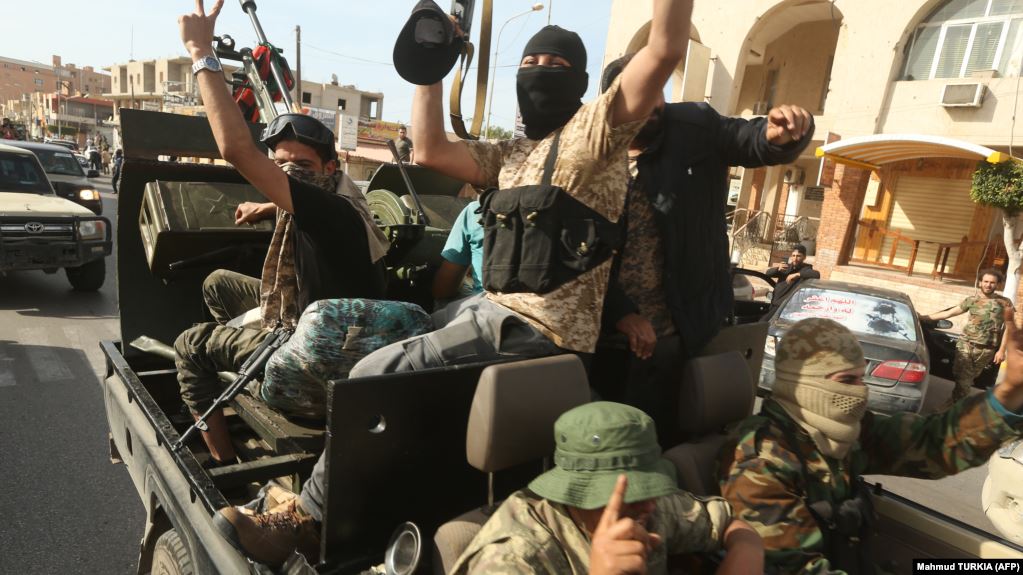
Wagner PMC emerged as an instrument of Russia’s security structures, closely linked to the GRU, and was used for operations in which the Kremlin sought to avoid direct responsibility. In Africa, its mercenaries operated in Mali, the Central African Republic, and Syria, providing military support to regimes and securing control over natural resources. In the war against Ukraine, Wagner fighters played a key role in the battles for Bakhmut, where they became notorious for extreme brutality.
In June 2023, the former owner of Wagner PMC, Yevgeny Prigozhin, organized a mutiny against Russia’s military leadership, sending columns of fighters toward Moscow. Following negotiations conducted amid threats to the lives of his family members by security services, the advance was halted. The mutiny became the most serious internal challenge to Russian authorities during the war against Ukraine and effectively undermined Wagner’s future. After Prigozhin’s death in August 2023, Wagner PMC was reportedly taken over by his son, Pavel. Wagner PMC is under U.S. and EU sanctions. Wagner fighters have repeatedly been accused of serious crimes, including war crimes and human rights violations, leading several countries to officially designate the group as a criminal or terrorist organization.
Bulgaria is experiencing chronic political instability which, over the past five years, has resulted in eight early parliamentary elections. Constant changes of government complicate strategic decision-making in the areas of security and foreign policy. The country is entering a new election cycle amid deepening social polarization. This situation creates an ideal environment for Russian interference.
Upcoming parliamentary elections may open the way for the formation of a pro-European government led by the “We Continue the Change – Democratic Bulgaria” coalition. At the same time, pro-Russian forces, particularly the Revival party, view these elections as an opportunity to radically shift the country’s foreign policy course. An additional risk may stem from the possible emergence of a new political force linked to former President Rumen Radev, known for his pro-Russian views.
Bulgarian society has historically maintained a high level of sympathy toward Russia, complicating the formation of a stable consensus in support of Ukraine and EU sanctions policy. Moscow actively promotes these sentiments through media outlets, social networks, and pseudo-patriotic narratives. The European Commission has repeatedly acknowledged that the Kremlin’s disinformation campaigns in Bulgaria are systemic and coordinated. Their aim is not only to influence elections but also to undermine trust in democracy itself.
Russia’s actions in Bulgaria fit into a broader model of hybrid warfare against the EU. The Kremlin combines information attacks with political interference, support for pro-Russian forces, and the financing of radical movements. At the same time, it undermines state institutions through corruption schemes and the exploitation of energy dependence. By destabilizing individual countries, Moscow seeks to weaken EU and NATO unity and erode public trust in governments and democratic institutions, thereby creating opportunities to expand Russian influence and block collective decisions in security and foreign policy.
Information about the discovery of a facility linked to Wagner PMC indicates a shift by Moscow from purely political and informational influence toward a coercive dimension. Wagner is an instrument of Russian intelligence services that has been used to destabilise regions in Africa and the Middle East. Its physical presence in an EU member state is a signal—both to Bulgarian society and to European partners—of Russia’s readiness to act more aggressively.
Wagner PMC could be used in Bulgaria for indirect operations aimed at creating an atmosphere of fear, chaos, and distrust toward state institutions. This does not necessarily imply open combat operations, but rather provocations, the guarding of illegal facilities, pressure on activists, or support for radical groups. Particularly dangerous is the combination of such a force presence with an electoral process. This creates the risk of scenarios that are difficult to prove legally but have a serious destabilizing effect.
Bulgarian authorities must immediately conduct a transparent investigation into the information regarding the facility linked to Wagner PMC. For their part, the EU and NATO should view this case not as a local incident, but as part of a systemic threat to European security. Strengthening counterintelligence, monitoring Russian influence networks, and protecting the electoral process must become priorities for European countries.
Wagner has consistently functioned not as an independent mercenary force, but as a proxy arm of Russian military intelligence, enabling operations where the Kremlin seeks plausible deniability. Its deployment patterns in Africa and the Middle East demonstrate a clear operational logic: secure leverage points, intimidate opposition, protect illicit or strategic assets, and shape political outcomes through fear rather than open conflict. Transposing this model into an EU member state would signal a dangerous normalization of coercive hybrid tactics inside Europe itself.
Political Vulnerability as an Enabling Environment
Bulgaria’s chronic political instability—marked by repeated early elections and fragile governing coalitions—creates a permissive environment for external manipulation. Constant governmental turnover weakens institutional memory, disrupts counterintelligence continuity, and delays decisive responses to emerging threats. In such conditions, foreign actors gain space to operate below the threshold of immediate political accountability.
The upcoming parliamentary elections intensify this vulnerability. A potential victory by the pro-European coalition “We Continue the Change – Democratic Bulgaria” would consolidate Bulgaria’s alignment with EU and NATO priorities. Conversely, pro-Russian forces—most notably the party Revival—openly frame the election as a referendum on Bulgaria’s geopolitical orientation. Any force-based intimidation or covert security presence during an electoral cycle magnifies destabilization risks, even if no overt violence occurs.
Societal Terrain and Information Warfare Synergy
Unlike many Central European states, Bulgaria retains deep-rooted societal sympathies toward Russia, shaped by historical narratives, cultural ties, and sustained information campaigns. Moscow has long exploited this terrain through coordinated disinformation, amplification of pseudo-patriotic discourse, and erosion of trust in democratic institutions.
The potential introduction of a Wagner-linked element adds a coercive layer to this information environment. The objective would not be mass violence, but psychological pressure: signaling that resistance carries consequences, discouraging civic activism, and fostering a perception of state weakness. In hybrid warfare doctrine, such ambiguity is deliberate—actions remain legally difficult to attribute while producing disproportionate political impact.
From Influence Operations to Coercive Hybrid Escalation
Russia’s broader strategy toward the EU increasingly follows a graduated escalation model:
- Information manipulation and narrative warfare
- Political financing and proxy parties
- Institutional corrosion via corruption and energy leverage
- Selective coercion through deniable force elements
The alleged Wagner presence would place Bulgaria at stage four of this spectrum. This does not imply imminent armed confrontation, but rather low-visibility operations: guarding illicit infrastructure, facilitating intimidation, protecting influence networks, or providing muscle to radical actors. Such activities are designed to remain below NATO’s collective defense threshold while steadily degrading internal stability.
Crucially, deploying Wagner-style assets inside the EU would test European red lines: How much coercion is tolerated before it is treated as a security breach rather than a political anomaly?
Implications for EU and NATO Security
If validated, this case cannot be treated as an isolated Bulgarian issue. It would establish a precedent for the geographic expansion of Russian proxy force deployment into EU territory, effectively exporting tactics previously confined to Africa, Syria, and Ukraine. The strategic intent is clear: fragment EU unity, intimidate frontline societies, and normalize Russian coercive reach inside Europe.
Failure to respond decisively risks signaling permissiveness—not only to Moscow, but to other actors observing Europe’s tolerance for gray-zone aggression.
Policy Imperatives
- Immediate, transparent investigation by Bulgarian authorities, with parliamentary and judicial oversight to prevent political suppression or capture.
- Enhanced counterintelligence coordination at the EU and NATO levels, particularly focused on deniable armed actors and their logistical enablers.
- Election security reinforcement, including protection of activists, journalists, and civic organizations most vulnerable to intimidation.
- Strategic signaling: clear communication that the presence of proxy armed groups in EU states constitutes a red-line escalation, regardless of formal deniability.
The alleged Wagner-linked facility in Bulgaria—if substantiated—marks a transition from influence to intimidation in Russia’s approach to the EU. It would demonstrate Moscow’s willingness to operationalize coercive tools inside European democracies, exploiting political fragility and societal polarization. The response to this case will shape not only Bulgaria’s security trajectory, but the credibility of Europe’s broader deterrence against hybrid aggression.
Bulgaria would represent a new theater for Wagner-style operations: not combat, but intimidation and pressure.
A small, discreet presence can:
- Signal that Russia is willing to escalate beyond information warfare;
- Intimidate activists, journalists, or political organizers;
- Undermine confidence in the state’s ability to control its territory.
This mirrors Wagner’s role in Africa and Ukraine before open violence—creating fear, uncertainty, and paralysis rather than firefights.
Election-period leverage and deterrence
Bulgaria’s repeated snap elections and polarized electorate make it especially vulnerable. A Wagner-linked site could serve as:
- A deterrent signal to pro-EU political forces
- A psychological backstop for pro-Russian actors
- A tool to raise the perceived cost of political mobilization
Importantly, no violence is required. The mere knowledge or rumor of an armed, deniable group operating domestically can suppress turnout, discourage civic action, and amplify disinformation narratives.
Operational logistics and transit hub
Geographically, Bulgaria is valuable as:
- A Balkan transit node (Black Sea–Turkey–Serbia–Hungary corridors)
- A logistics waypoint for personnel moving between:
- Africa;
- The Middle East;
- Post-Soviet space.
A “camp” does not have to be a base—it may function as:
- Temporary accommodation;
- Training or vetting site;
- Secure meeting location for coordinators and facilitators.
Protection of illicit or sensitive assets
Wagner frequently guards:
- Illegal infrastructure
- Smuggling routes
- Financial or influence operations
In Bulgaria, this could include:
- Protection of clandestine facilities
- Physical security for intermediaries involved in sanctions evasion
- Enforcement muscle for corrupt or criminalized networks tied to Russian interests
This aligns with Wagner’s historic role as armed insurance for opaque activities.
Testing EU and NATO red lines
Perhaps most strategically important: probing response thresholds.
A Wagner-linked presence would test:
- How quickly Bulgarian authorities act
- Whether EU partners treat it as a security threat or a “local issue”
- Whether deniability still works inside the EU
If tolerated or downplayed, it creates a precedent for future deployments elsewhere in Europe.
What it was likely not
- A preparation for open military action
- A large combat base
- An independent mercenary initiative
Wagner does not act autonomously in politically sensitive environments—especially inside NATO territory.
A Wagner-linked camp in Bulgaria would most likely serve as a hybrid coercion platform, not a combat installation. Its purpose would be to intimidate, protect influence operations, support deniable activities, and test Western resolve—particularly during periods of political instability and elections.
In short, it would represent a shift:
from influence → intimidation,
from narratives → presence,
from deniability → coercive ambiguity.
Baseline confidence
- Confidence that “something” exists at the site (a guarded facility): Medium (video/activist reporting is consistent across outlets).
- Confidence it is actually Wagner / Russian state-directed: Low–Medium (insignia/flags can be staged; attribution requires law-enforcement/intel confirmation).
Scenario A — Confirmed Wagner-linked node (or ex-Wagner network) on Bulgarian territory
What it is: A deniable coercive/logistics node tied to Russian services or Wagner successor structures (training, secure meeting site, intimidation support, asset protection).
Probability (next 1–3 months): 25–35%
Reason: plausible but high-risk for Russia inside EU/NATO; would require local facilitation and strong OPSEC.
Impact
- Bulgaria: Very High
- Domestic shock; political crisis; intense pressure on MoI/security services; risk of protests and counter-protests.
- Election-period effects: intimidation rumors, reduced civic participation, delegitimization narratives.
- EU: High
- Sets precedent of proxy-force presence inside the EU; forces Brussels to treat this as “hard hybrid” not just disinfo.
- Raises demands for common counterintelligence posture, sanctions enforcement, and internal security coordination.
- NATO: Medium–High
- Not an Article 5 trigger by itself, but it becomes a major gray-zone escalation test (thresholds, attribution, response playbooks).
Key indicators to watch
- Arrests/seizures, ID of guards, weapons finds, property ownership trail, foreign travel patterns, telecom/financial links.
- Bulgarian prosecutors/MoI statement acknowledging an armed group or foreign-directed activity.
Scenario B — “False flag / exaggeration / misattribution” (symbols staged; site is unrelated or criminal)
What it is: A real facility but not Wagner-directed; could be extremist cosplay, private security, criminal group, or deliberate provocation.
Probability: 35–45%
Reason: insignia/flags are easy to display; attribution gap remains central in open sources.
Impact
- Bulgaria: Medium
- Still politically destabilizing: accusations of cover-up, institutional distrust, and polarization (“pro-Russia vs pro-EU” blame cycles).
- EU: Low–Medium
- Limited direct security consequences, but still feeds disinformation ecosystems and distrust.
- NATO: Low
- Mainly reputational/information domain; minimal alliance-wide operational shift.
Indicators
- Evidence the site is a local private property/security operation; no foreign links; administrative violations rather than national-security charges.
Scenario C — Limited “influence-security” footprint (local proxies + private security + Russian-linked facilitators), not formal Wagner
What it is: A hybrid node supporting Russian influence networks—security for meetings/assets, intimidation capacity—using local actors with Wagner branding as signaling.
Probability: 30–40%
Reason: This matches how Russia often reduces exposure in NATO states: outsourced coercion + deniability, with Wagner imagery used as a fear amplifier.
Impact
- Bulgaria: High
- Hard to prosecute, hard to attribute, but corrosive to democratic process and civic space.
- EU: Medium–High
- Expands the perceived map of Russian coercive influence infrastructure; pushes EU toward election-security and counterintelligence upgrades.
- NATO: Medium
- Strengthens focus on counter-hybrid support, intelligence sharing, and resilience measures rather than military posture changes.
Indicators
- Links to local political/radical groups, private security firms, “patriotic” clubs, opaque funding, coordinated harassment of activists/journalists.
Scenario D — Rapid neutralization + deterrent response (raid/investigation, network disruption)
What it is: Bulgarian authorities move quickly, investigate transparently, and the story collapses into a contained law-enforcement case.
Probability: 20–30% (depends on political will and institutional cohesion)
Impact
- Bulgaria: Medium positive
- Restores some confidence; reduces election interference space.
- EU: Medium positive
- Establishes a template for rapid response to gray-zone threats.
- NATO: Low–Medium positive
- Reinforces deterrence-by-denial; improves hybrid playbook maturity.
Indicators
- Public briefings, cross-party oversight, EU/NATO liaison involvement, visible prosecutions.
Net assessment (most likely path)
Most likely:Scenario B or C (misattribution OR limited proxy footprint), with high political impact in Bulgaria even if “Wagner proper” is not proven. The security risk rises sharply only if Scenario A is validated.
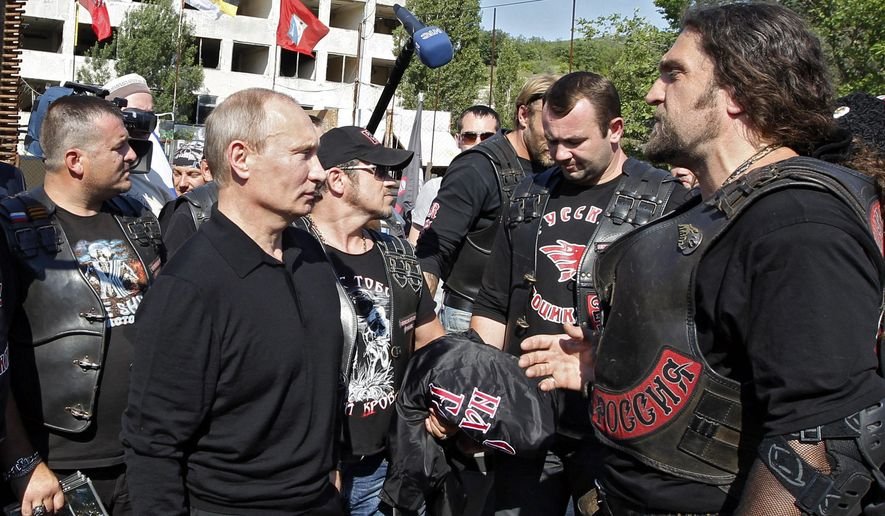
More on this story: Criminal Networks as Instruments of Hybrid Warfare in Europe
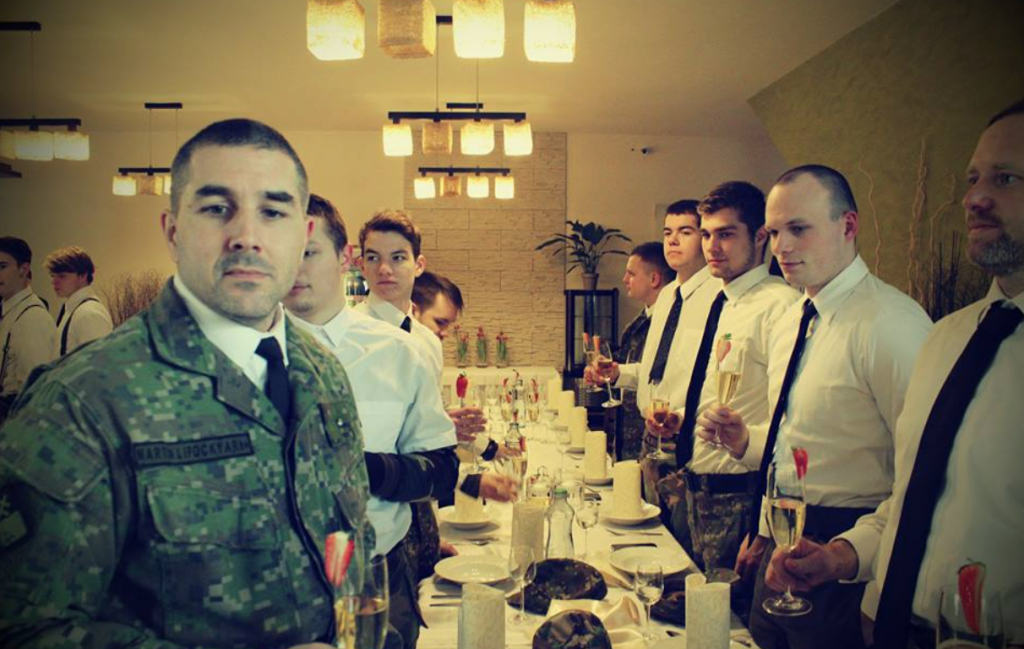
More on this story: Russia keeps setting up and backing neo-Nazi fighting groups in the West
More on this story: Specifics of Russian private military companies’ activity