
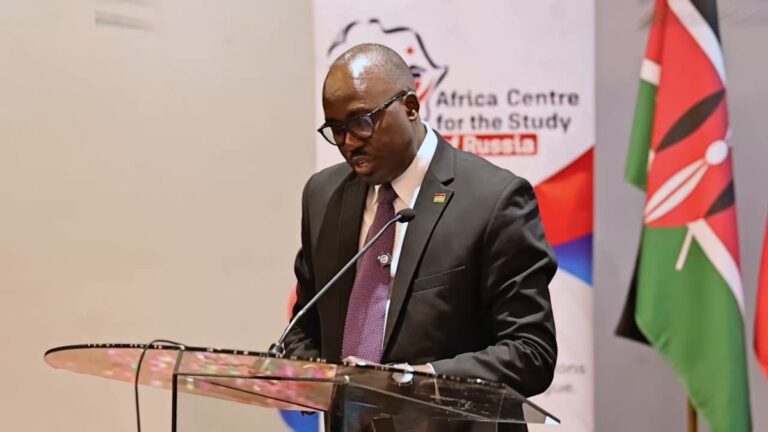
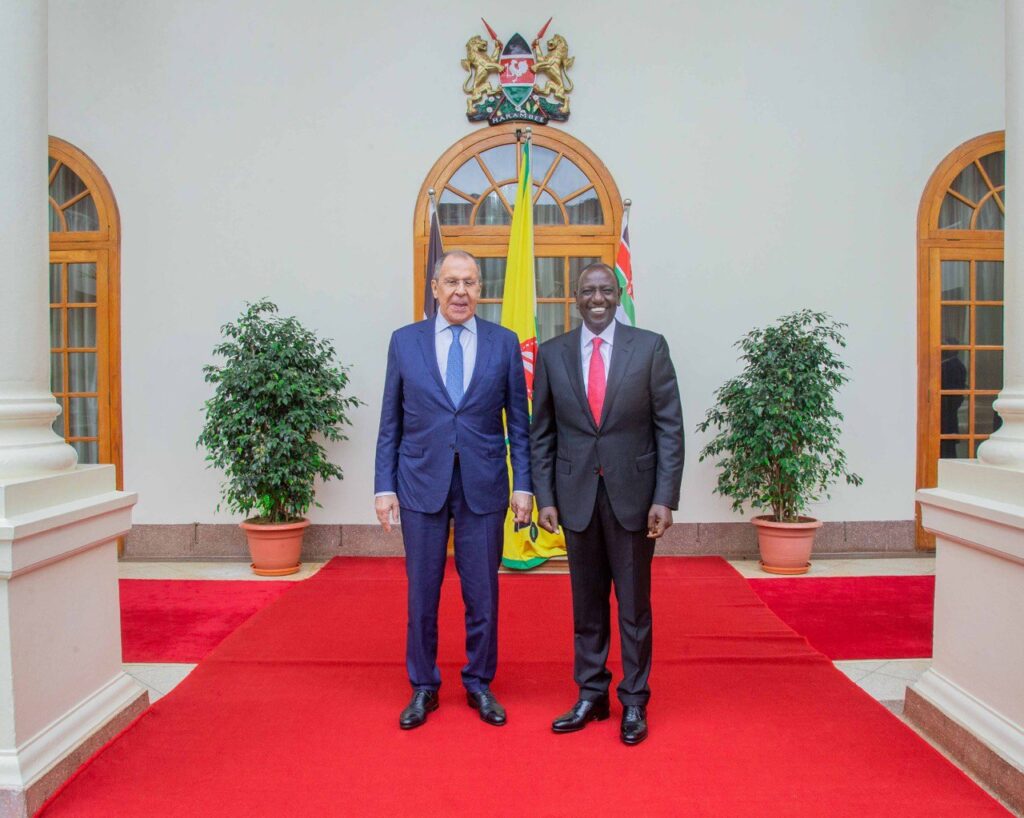
The opening of the African Centre for the Study of Russia (ACSR) at the University of Nairobi gives Moscow direct access to the training of Kenya’s future diplomats, journalists, and civil servants. Kenya is a key regional hub in East Africa and a strategic platform for UN missions and Western security programs. Through academic courses, cultural projects, and the promotion of a historical narrative emphasizing its alleged “anti-colonial role,” Moscow is shaping a favorable information environment for its foreign policy.
This creates preconditions for shifts in Nairobi’s positions during votes at the United Nations and the African Union, where the United States has traditionally sought to mobilize support. An additional political signal is the forthcoming visit of Kenya’s foreign minister to Russia, which increases the risk of expanding Russian educational, military-technical, and media contacts—areas that already compete with U.S. programs such as USAID initiatives, military training, and academic exchanges.
For Washington, this represents not an abstract form of “soft power,” but a tangible loss of influence over the agenda in a critical East African node—from security cooperation in the Indian Ocean basin to positions on sanctions regimes and global coalitions.
East Africa is becoming one of Russia’s priority directions for re-engagement on the continent. Moscow is using humanitarian and educational instruments to strengthen its influence without committing significant military or economic resources. The Kremlin actively exploits historical narratives about support for “decolonization” and Soviet-era cooperation, presenting itself as an alternative to Western partners. In this context, universities and academic programs become effective channels for shaping political sympathies among future regional elites.
This form of presence is less visible, but it delivers long-term effects through cultural projects and extensive alumni networks. At the same time, East African states are increasingly balancing between Washington, Beijing, and Moscow, using competition among them to reinforce their own positions. For Russia, this opens a window of opportunity, as it portrays itself as a partner without a colonial past and offers a different political discourse.
In the broader sense, Russia’s educational activity organically complements its diplomatic efforts. Moscow’s objective is to mobilize support from the Global South in international organizations, posing a direct challenge to U.S. geopolitical influence.
Educational and research initiatives promoted by Russia enable it to cultivate a circle of loyal experts and future officials in a region of strategic importance to the United States. This creates a long-term effect of shifting political sympathies without direct diplomatic pressure. Through academic platforms, Moscow gains the ability to influence interpretations of international events and approaches to global security.
For Washington, this means growing competition in the ideational space where Western programs previously dominated. Ultimately, educational presence becomes an instrument of Russia’s geopolitical consolidation at the expense of U.S. positions. The institutionalization of Russian humanitarian projects in East Africa gradually alters the balance of influence within regional expert communities.
Academic structures can set the agenda of debates, define research priorities, and shape analytical assessments that later feed into the political process. When such platforms operate in Moscow’s favor, they create an alternative framework for the foreign policies of regional states. This complicates U.S. efforts to mobilize support on key international security issues. Over the long term, an environment emerges that is less receptive to American arguments.
Russian educational activity also opens channels for expanding information influence without direct propaganda. Through lectures, conferences, and research programs, narratives are disseminated that normalize Moscow’s political role on the continent. This gradually reshapes the information environment, where U.S. positions lose their status as uncontested. Although these processes unfold slowly, their cumulative effect influences strategic decision-making over time.
As a result, Russia gains a tool for legitimizing its actions through academic authority. Beyond the political dimension, educational initiatives build networks of professional contacts that later transform into diplomatic or economic partnerships. Graduates of Russian programs become intermediaries between institutions, facilitating Moscow’s access to regional projects.
For the United States, this means the emergence of alternative cooperation channels operating outside traditional Western platforms. Over time, such networks can reshape regional alliances, turning Moscow’s humanitarian diplomacy into an effective instrument of strategic competition. The cultural component of Russian programs adds a symbolic dimension to geopolitical influence, shaping a positive image of Russia through literature, history, and the arts.
This strategy operates at an emotional level and builds trust in Russian narratives among younger elites, making it harder for Washington to advance its own messages as competition shifts from policy to values. In the contest for influence across the Global South, cultural diplomacy becomes a critical element of Moscow’s foreign policy. For this reason, even academic initiatives carry consequences for the strategic position of the United States.
The establishment of the African Centre for the Study of Russia (ACSR) at the University of Nairobi represents a qualitative escalation in Moscow’s engagement with East Africa. Unlike traditional diplomatic outreach or episodic military cooperation, the ACSR provides Russia with direct, institutionalized access to the formation of Kenya’s future political, diplomatic, and intellectual elites. Kenya’s status as a regional hub—hosting UN missions, Western security initiatives, and serving as a gateway to East Africa—amplifies the strategic significance of this development.
Russia’s approach is deliberately low-cost and long-term. By embedding itself within academic structures, Moscow avoids the financial and political burdens associated with large-scale military deployments or infrastructure investments. Instead, it leverages education, research, and culture to shape worldviews rather than policies directly, aiming to influence how future decision-makers interpret international order, sovereignty, security, and the role of Western powers.
A central pillar of this strategy is the instrumentalization of historical narrative. Through curricula, conferences, and cultural programming, Russia promotes a selective memory of its alleged “anti-colonial” role, positioning itself as a historically sympathetic partner distinct from Western states. This narrative resonates in post-colonial societies and allows Moscow to frame contemporary geopolitical competition as a continuation of anti-imperial struggle rather than a contest between authoritarian and democratic systems. The effect is not immediate alignment with Russia, but erosion of reflexive support for Western positions.
The political implications are tangible. Kenya plays an important role in voting dynamics at the United Nations and the African Union—arenas where the United States and its allies rely on coalition-building rather than formal alliances. Even incremental shifts toward abstention, procedural neutrality, or issue-by-issue balancing weaken Western diplomatic leverage. The anticipated visit of Kenya’s foreign minister to Russia reinforces this trajectory, signaling potential expansion of Russian educational, media, and military-technical cooperation at a time when Western engagement faces growing competition.
Crucially, Russia’s educational presence directly competes with U.S. and European influence ecosystems—including USAID programs, Western military training initiatives, and academic exchange networks. Unlike Western programs, which are often conditional on governance standards or framed around reform agendas, Russian initiatives emphasize sovereignty, non-interference, and pragmatic partnership. This contrast increases Moscow’s appeal among elites who view Western engagement as politically intrusive or normatively prescriptive.
Universities function here as agenda-setting institutions. Academic centers influence which research questions are considered legitimate, which historical interpretations gain authority, and which security frameworks are normalized. Over time, analytical products generated in these spaces feed into policymaking, media discourse, and diplomatic reasoning. When such ecosystems are shaped by Russian-supported platforms, they generate an alternative epistemic environment—one less aligned with U.S. strategic assumptions and less responsive to American arguments.
This influence operates largely below the threshold of traditional countermeasures. There is no overt propaganda, no sanctions violation, and no military footprint that could easily justify a Western response. Yet the cumulative effect is strategic: a gradual reorientation of elite perceptions that reduces Western agenda-setting power and increases Russia’s room for maneuver in multilateral institutions.
Beyond ideational influence, educational initiatives also build durable professional networks. Alumni of Russian-linked programs often become intermediaries in diplomacy, media, and economic cooperation. These networks lower transaction costs for Moscow’s engagement in the region and create informal channels that bypass established Western platforms. Over time, such ties can reshape patterns of cooperation and dilute U.S. influence across security, economic, and diplomatic domains.
The cultural dimension further strengthens this strategy. Literature, history, and the arts operate at an emotional and identity-based level, fostering affinity rather than agreement. This form of engagement is particularly effective among younger elites, for whom geopolitical alignment is shaped less by Cold War memory and more by narratives of dignity, autonomy, and historical justice. As competition shifts from policy outcomes to values and identity, traditional Western messaging loses its structural advantage.
Strategic Implication
What emerges is not a classic “soft power” campaign, but a structural contest over elite formation and cognitive frameworks. Russia’s academic and humanitarian initiatives in East Africa function as force multipliers for its diplomatic objectives in the Global South. Over time, they enable Moscow to legitimize its international behavior, weaken U.S.-led coalition-building, and normalize alternative interpretations of global security and order.
For Washington, the challenge is not simply to counter Russian messaging, but to recognize that educational and academic domains have become arenas of geopolitical competition. Failure to adapt risks ceding long-term influence in one of the most strategically important regions of the Global South—not through confrontation, but through quiet displacement.
Russia vs. China: Educational Diplomacy Compared
1. Strategic Intent
Russia
- Goal: Elite narrative re-framing and diplomatic maneuver space.
- Focuses on: legitimacy, historical memory, sovereignty discourse.
- Desired outcome: Abstention, neutrality, or quiet alignment in multilateral forums (UN, AU).
China
- Goal: Structural alignment with China-centered economic and political order.
- Focuses on: capacity building, technocratic training, long-term dependency.
- Desired outcome: Policy accommodation on Taiwan, Xinjiang, Belt and Road, tech standards.
Key difference:
Russia seeks political sympathy and narrative tolerance; China seeks systemic alignment and institutional dependence.
2. Primary Instruments
Russia
- Specialized academic centers (e.g., Russia-focused studies).
- Humanities, history, international relations.
- Cultural diplomacy stressing “anti-colonial” legacy.
- Small-scale, high-impact elite targeting.
China
- Language and culture platforms such as Confucius Institutes.
- STEM, engineering, public administration training.
- Scholarships, exchange programs at scale.
- Integration with infrastructure, technology, and industrial policy.
Key difference:
Russia operates surgically; China operates industrially.
Narrative Architecture
Russia
- Core message:
“We are not the West; we never colonized you; we respect sovereignty.” - Leverages Soviet-era support for liberation movements.
- Frames global politics as a struggle against Western dominance.
China
- Core message:
“Development without interference; modernization without Western values.” - Emphasizes success of China’s development model.
- Avoids ideological confrontation, favors pragmatism.
Key difference:
Russia politicizes history; China depoliticizes values and emphasizes outcomes.
Visibility and Attribution
Russia
- Low visibility, high ambiguity.
- Academic framing masks geopolitical intent.
- Harder to counter without appearing to suppress academic freedom.
China
- High visibility, formally institutionalized.
- Increasingly scrutinized by Western governments.
- Easier to regulate, restrict, or negotiate.
Key difference:
Russia’s model is below the political radar; China’s is increasingly regulated.
Cost and Sustainability
Russia
- Low financial cost.
- Relies on narrative, networks, and symbolic capital.
- Sustainable even under sanctions.
China
- High financial cost.
- Requires continuous funding and state backing.
- Vulnerable to economic slowdown or political backlash.
Key difference:
Russia’s approach is cheap and resilient; China’s is expensive but transformative.
Time Horizon
Russia
- Medium-term (5–10 years).
- Aims to shape how elites interpret crises and global conflicts.
China
- Long-term (10–30 years).
- Aims to shape how states function and develop.
Key difference:
Russia shapes thinking; China shapes systems.
Risks for the United States and EU
| Dimension | Russia | China |
| UN/AU voting | Abstention, narrative drift | Reliable alignment |
| Security cooperation | Erosion of trust | Institutional lock-in |
| Information space | Narrative normalization | Standards dominance |
| Countermeasures | Politically sensitive | Administratively possible |
Critical insight:
Western governments often over-focus on China, while Russia quietly exploits the ideational space China leaves untouched.
Strategic Synthesis
Russia and China are not competing with each other in educational diplomacy—they are complementary.
- China builds material and institutional dependence.
- Russia builds cognitive and political permissiveness.
Together, they create environments where:
- Western arguments lose moral exclusivity,
- U.S./EU initiatives face skepticism,
- neutrality becomes the default posture of elites.
Bottom Line
Russia’s educational diplomacy in East Africa differs fundamentally from China’s. While China seeks long-term structural alignment through scale, funding, and technocratic training, Russia pursues low-cost, low-visibility influence by shaping elite narratives and historical interpretation. This makes Russia’s model harder to detect and counter, even as it quietly erodes Western agenda-setting power in multilateral institutions. The two approaches are complementary, not competitive, creating a layered challenge for U.S. and EU influence in the Global South.
Russia vs. China: Educational Diplomacy Compared
1. Strategic Intent
Russia
- Goal: Elite narrative re-framing and diplomatic maneuver space.
- Focuses on: legitimacy, historical memory, sovereignty discourse.
- Desired outcome: Abstention, neutrality, or quiet alignment in multilateral forums (UN, AU).
China
- Goal: Structural alignment with China-centered economic and political order.
- Focuses on: capacity building, technocratic training, long-term dependency.
- Desired outcome: Policy accommodation on Taiwan, Xinjiang, Belt and Road, tech standards.
Key difference:
Russia seeks political sympathy and narrative tolerance; China seeks systemic alignment and institutional dependence.
2. Primary Instruments
Russia
- Specialized academic centers (e.g., Russia-focused studies).
- Humanities, history, international relations.
- Cultural diplomacy stressing “anti-colonial” legacy.
- Small-scale, high-impact elite targeting.
China
- Language and culture platforms such as Confucius Institutes.
- STEM, engineering, public administration training.
- Scholarships, exchange programs at scale.
- Integration with infrastructure, technology, and industrial policy.
Key difference:
Russia operates surgically; China operates industrially.
3. Narrative Architecture
Russia
- Core message:
“We are not the West; we never colonized you; we respect sovereignty.” - Leverages Soviet-era support for liberation movements.
- Frames global politics as a struggle against Western dominance.
China
- Core message:
“Development without interference; modernization without Western values.” - Emphasizes success of China’s development model.
- Avoids ideological confrontation, favors pragmatism.
Key difference:
Russia politicizes history; China depoliticizes values and emphasizes outcomes.
4. Visibility and Attribution
Russia
- Low visibility, high ambiguity.
- Academic framing masks geopolitical intent.
- Harder to counter without appearing to suppress academic freedom.
China
- High visibility, formally institutionalized.
- Increasingly scrutinized by Western governments.
- Easier to regulate, restrict, or negotiate.
Key difference:
Russia’s model is below the political radar; China’s is increasingly regulated.
5. Cost and Sustainability
Russia
- Low financial cost.
- Relies on narrative, networks, and symbolic capital.
- Sustainable even under sanctions.
China
- High financial cost.
- Requires continuous funding and state backing.
- Vulnerable to economic slowdown or political backlash.
Key difference:
Russia’s approach is cheap and resilient; China’s is expensive but transformative.
Time Horizon
Russia
- Medium-term (5–10 years).
- Aims to shape how elites interpret crises and global conflicts.
China
- Long-term (10–30 years).
- Aims to shape how states function and develop.
Key difference:
Russia shapes thinking; China shapes systems.
7. Risks for the United States and EU
| Dimension | Russia | China |
| UN/AU voting | Abstention, narrative drift | Reliable alignment |
| Security cooperation | Erosion of trust | Institutional lock-in |
| Information space | Narrative normalization | Standards dominance |
| Countermeasures | Politically sensitive | Administratively possible |
Critical insight:
Western governments often over-focus on China, while Russia quietly exploits the ideational space China leaves untouched.
Strategic Synthesis
Russia and China are not competing with each other in educational diplomacy—they are complementary.
- China builds material and institutional dependence.
- Russia builds cognitive and political permissiveness.
Together, they create environments where:
- Western arguments lose moral exclusivity,
- U.S./EU initiatives face skepticism,
- neutrality becomes the default posture of elites.
Bottom Line
Russia’s educational diplomacy in East Africa differs fundamentally from China’s. While China seeks long-term structural alignment through scale, funding, and technocratic training, Russia pursues low-cost, low-visibility influence by shaping elite narratives and historical interpretation. This makes Russia’s model harder to detect and counter, even as it quietly erodes Western agenda-setting power in multilateral institutions. The two approaches are complementary, not competitive, creating a layered challenge for U.S. and EU influence in the Global South.
If you want, I can:
- add a U.S. policy response matrix (Russia vs. China tools),
- compare both models with Soviet-era precedents, or
- turn this into a 1-page infographic for publication.
compare both models with Soviet-era precedents
Here’s a three-way comparison—Russia’s current model, China’s educational diplomacy, and Soviet-era precedents—mapped by objectives, instruments, ideology, scale, and the “end state” each actor seeks.
What the USSR Did: The Baseline Precedent
Soviet objective
The USSR used education as a tool of ideological alignment + cadre development:
- train sympathetic elites from the “Third World”
- embed Marxist/anti-imperialist frames
- create durable political networks tied to Soviet institutions
Soviet instruments (classic toolkit)
- Mass scholarships for students from Africa/Asia/Latin America
- “Friendship” universities (most notably Patrice Lumumba University in Moscow)
- party-linked training, youth organizations, cultural societies
- academic conferences and “peace/solidarity” institutions that overlapped with diplomacy
- security-service adjacency: networks were often observable to (and sometimes cultivated by) Soviet services, even when the activity looked purely educational
Soviet strategic end state
A Global South elite cohort that:
- shared an anti-West worldview
- supported Soviet positions in international forums
- served as “connectors” for diplomacy, trade, and influence
China Today vs. Soviet Precedent
Where China resembles the Soviet model
- Scale: like the USSR, China uses large-volume scholarships and exchanges
- Institutionalization: formal programs embedded in universities and ministries
- Long horizon: decades-long investment in elite formation
Where China differs
- Less ideology, more technocracy: China foregrounds development, STEM, governance capacity, “non-interference”
- System-building: educational diplomacy is integrated with economic/tech ecosystems (infrastructure, telecoms, standards, industrial policy)
- End state: not “Marxist alignment,” but policy accommodation and institutional dependence compatible with China-centered economic networks
Bottom line: China is the closest modern analog to the USSR in scale and institutional depth, but the content is post-ideological and development-centric.
Russia Today vs. Soviet Precedent
Where modern Russia resembles the Soviet model
- Anti-colonial narrative: Russia repackages Soviet-era messaging (“anti-imperial,” “sovereignty,” “West as exploiter”)
- Elite targeting: focus on future diplomats, journalists, civil servants—very Soviet in intent
Where modern Russia differs
- Much smaller scale: today’s Russia typically cannot match Soviet or Chinese scholarship volume
- More narrative warfare than institution-building: modern Russian academic footprints often emphasize:
- history/politics framing
- legitimacy narratives
- “multipolarity” discourse
- Low-cost, low-visibility: instead of mass training, it prioritizes agenda-setting nodes (centers, conferences, curated networks)
- End state: not ideology adoption, but permissive neutrality:
- more abstentions at UN/AU
- more skepticism toward Western positions
- more room for Moscow’s diplomacy despite limited resources
Bottom line: Russia is using Soviet-style themes with a post-Soviet constraint set—less money, more reliance on information and narrative shaping.
Direct Comparison Table
| Dimension | USSR (Cold War) | China (today) | Russia (today) |
| Primary goal | Ideological alignment + cadre building | Structural alignment + systems dependence | Narrative permissiveness + diplomatic maneuver space |
| Scale | High (mass scholarships) | High (mass scholarships + platforms) | Low–medium (targeted nodes) |
| Content | Marxist/anti-imperialist, solidarity | Development, technocracy, “non-interference” | Anti-colonial framing, multipolarity, sovereignty |
| Delivery | Universities + party/solidarity orgs | Universities + language institutes + state programs | Centers, conferences, selective programs |
| Visibility | Often overtly political | Formal, visible, increasingly scrutinized | Often low-visibility, framed as “academic” |
| End state | Pro-Soviet elites & votes | China-compatible policies & standards | More abstentions/neutrality + weakened Western agenda-setting |
The Key Analytical Takeaway
- The USSR built ideological blocs (belief alignment).
- China builds institutional ecosystems (systems alignment).
- Russia builds narrative permission structures (it becomes easier for elites to say “both sides” or abstain).
That last point matters: modern Russia often aims not for “pro-Russian” outcomes but for anti-West fragmentation—a cheaper goal with real strategic payoff.
More on this story: How Kenya Became Russia’s New Playbook for Undermining U.S. Power in Africa