
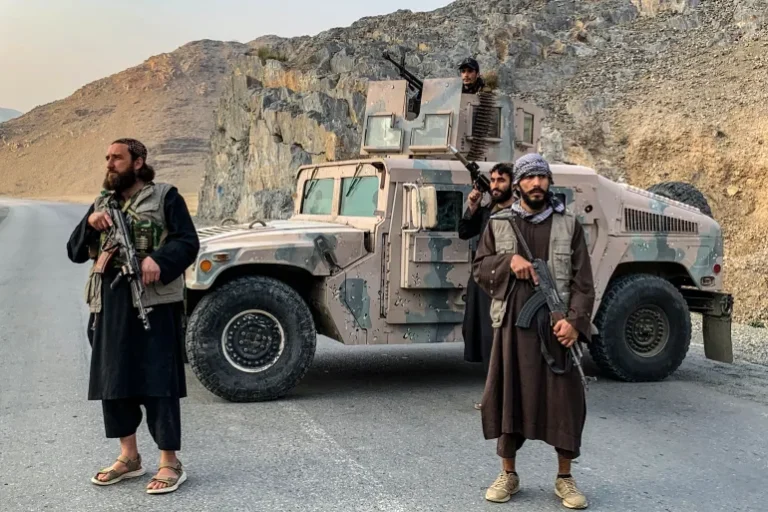
The latest Afghanistan–Pakistan clashes are the product of three reinforcing drivers:
- militant sanctuary and cross-border violence (especially Pakistan’s accusations that anti-Pakistan militants operate from Afghan soil),
- a chronic border/sovereignty dispute along the Durand Line that repeatedly triggers tactical confrontations at crossings and outposts, and
- domestic political incentives in both countries that reward escalation and punish compromise.
The escalation in late February 2026—Pakistan striking Kabul and Kandahar and describing an “open war,” while the Taliban government claims retaliatory actions including drone strikes—marks a shift from recurring skirmishes to state-on-state coercion with high regional-risk spillovers.
Immediate triggers and deeper causes
A. Militant sanctuary and “who controls whom”
Pakistan’s core claim is that the Taliban government has failed to neutralize (or is unwilling/unable to neutralize) militants attacking Pakistan from Afghanistan. This driver tends to spike after major attacks inside Pakistan, then translates into pressure for cross-border strikes and coercive signaling.
Even when Taliban officials deny responsibility or deny sanctuary allegations, the mutual blame cycle is self-sustaining: Pakistan frames force as counterterrorism, while Kabul frames Pakistani strikes as violations of sovereignty requiring retaliation.
B. The Durand Line dispute and recurring “border management” crises
Border friction is structural. The Durand Line remains contested politically in Afghanistan and practically volatile on the ground. It repeatedly produces clashes over:
- construction of posts/checkpoints,
- fencing and “encroachment” claims,
- control of crossings and customs revenues.
This pattern is visible in the recurring firefights and closures around key gates like Torkham and Spin Boldak/Chaman.
C. Border economies, closures, and coercive leverage
Trade and transit are not neutral. Closing crossings, restricting movement, or disrupting logistics becomes both:
- a punishment tool, and
- a domestic political signal (showing “strength”).
This makes border management a lever for escalation even when neither side wants full war.
D. Domestic political incentives
Both governments face audiences that reward toughness:
- Pakistan’s leadership and security establishment face intense pressure to demonstrate control over internal security and border integrity when attacks are attributed to Afghan-based actors.
- The Taliban, whose legitimacy rests on sovereignty and resisting foreign coercion, has strong incentives to respond visibly to Pakistani strikes (even if privately seeking de-escalation).
What happened in the latest escalation
By February 27, 2026, the clashes escalated into:
- Pakistani airstrikes hitting Kabul and Kandahar, with Pakistan describing a state of “open war,”
- Taliban claims of retaliation including strikes on Pakistani positions and the use of drones against Pakistani military targets (Pakistan says it intercepted drones).
- intensifying fighting around Torkham, with reported civilian impacts and displacement pressures near the crossing.
Foreign actors and interests
China
China has the most direct stake in stability because escalation threatens:
- border security on China’s western periphery,
- the political/security environment around CPEC and regional connectivity.
Beijing’s preference is de-escalation and “containment” of militancy that could spill into Xinjiang or disrupt flagship investments.
Russia
Russia has positioned itself as a potential mediator and has called publicly for both sides to stop cross-border attacks and negotiate—while maintaining relations with both Kabul and Islamabad.
Moscow’s interest is preventing a wider regional destabilization that complicates its broader Eurasian agenda and its posture as a power broker.
Gulf states and Turkey
Doha and Ankara have previously been involved in facilitation/mediation efforts between regional actors (and maintain channels to both Taliban-linked and Pakistani interlocutors). In this crisis, they matter primarily as venues and intermediaries, especially if Pakistan wants an off-ramp without appearing to concede.
Iran
Iran’s interest is border stability and refugee management, plus preventing militant spillover. Tehran will also watch any escalation that increases U.S./Western security footprint or changes regional trafficking dynamics.
India (indirect but politically salient)
Pakistan frequently frames Afghanistan-related security problems through the lens of hostile external influence, and has periodically alleged Taliban cooperation with India—claims Kabul rejects. Even when evidence is thin, the “India factor” influences Pakistani threat perceptions and domestic messaging.
UN and Western stakeholders
The UN’s primary concern is civilian protection and humanitarian fallout as clashes affect border communities and displaced populations.
Western actors have limited leverage over the Taliban but high interest in preventing a regional war and preventing militant safe havens from hardening.
Consequences
Near-term (weeks)
- Escalation spiral risk: once airstrikes hit major cities, both sides face prestige pressure to respond.
- Border economy shock: closures at crossings like Torkham disrupt trade, fuel, and food flows.
- Civilian harm and displacement around contested border areas and camps.
Medium-term (months)
- Militant opportunism: heightened conflict can open space for TTP and other armed actors to expand recruitment, movement, and political leverage.
- Diplomatic fragmentation: external mediators will compete to shape the settlement, and each may extract concessions that reshape regional alignments (China, Russia, Gulf states).
Strategic (1–3 years)
- Risk of a durable border militarization regime: more fortifications, patrols, closures—locking in hostility and depressing cross-border economic stabilization.
- A deeper crisis could push Afghanistan further into dependency on non-Western patrons, while Pakistan faces higher security burdens and political volatility.
Perspectives and scenarios (next 3–9 months)
Scenario 1: Managed de-escalation (most plausible if mediators succeed)
Description: Ceasefire, reopening crossings, quiet talks on border management; both sides claim victory domestically.
What makes it likely: external pressure from China/Gulf states; economic pain from closures; Taliban signaling openness to talks after strikes.
Scenario 2: Chronic “hot border” (high probability)
Description: recurring artillery/firefights, periodic raids, tit-for-tat messaging; no full war, but sustained instability.
Driver: unresolved Durand Line disputes + militant sanctuary dispute.
Scenario 3: Limited border war (lower probability, higher impact)
Description: repeated strikes, deeper raids, temporary seizure of posts/outposts, sustained closures.
Trigger: mass-casualty attack attributed to Afghan-based militants, or a miscalculated strike causing high civilian casualties.
Scenario 4: Proxy escalation via militants (persistent risk)
Description: militant attacks increase, each side claims the other is enabling proxies; crisis becomes harder to de-escalate because attribution is contested. The clashes are not a “border incident problem” alone—they are a sovereignty dispute + militant sanctuary dispute + domestic politics problem, now intensified by demonstrative strikes and public “open war” rhetoric.
The best near-term predictor of stabilization is whether external stakeholders (especially China and key mediators) can produce an off-ramp that lets both governments save face while restoring border commerce and re-establishing deconfliction channels.
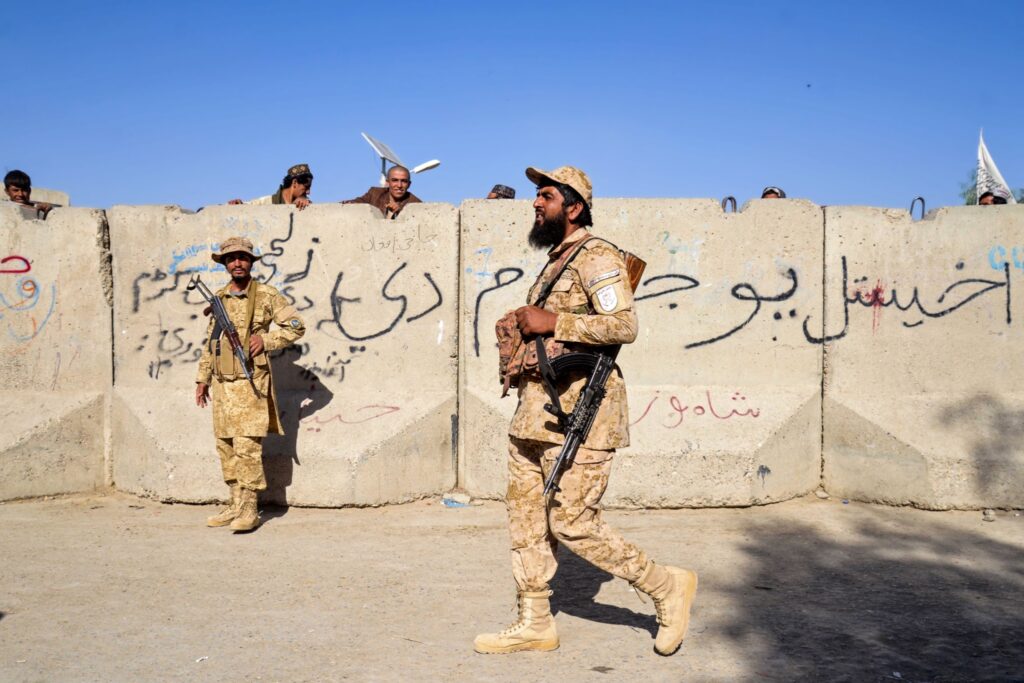
More on this story: Afghanistan–Pakistan Border Clashes, 2025