
Skip to content

Robert Lansing Institute

Robert Lansing Institute
Twitter Linkedin
Menu
  • Home
  • Who We Are
    • About Robert Lansing
    • About Robert Lansing Institute
    • What we do
    • Research
  • Analysis
    • Conflict
    • Corruption
    • Democracy
    • Economy
    • Energy
    • Drug trafficking
    • Food Security
    • Geopolitics
    • Governance
    • Intelligence ops
    • Opinion
    • Peacekeeping
    • Propaganda and Disinformation
    • Psyops
    • Terrorism
    • Warfare
  • Must Read
    • Analytic papers
    • Infographics we recommend
Generic selectors
Exact matches only
Search in title
Search in content
Post Type Selectors
Filter by Categories
-
climate change
Conflict
Corruption
Coup
Democracy
Drug trafficking
ecology
Economy
Energy
Estimates
Food Security
Geoeconomics
Geopolitics
Governance
Healthcare
ideology
influence ops
Intelligence ops
migration
Must Read Infographics
Must Read PDF
National Security
Nonproliferation
Opinion
Peacekeeping
profile
Propaganda and Disinformation
Psyops
Situation Reports
Terrorism
War crimes
Warfare
  • Home
  • Who We Are
    • About Robert Lansing
    • About Robert Lansing Institute
    • What we do
    • Research
  • Analysis
    • Conflict
    • Corruption
    • Democracy
    • Economy
    • Energy
    • Drug trafficking
    • Food Security
    • Geopolitics
    • Governance
    • Intelligence ops
    • Opinion
    • Peacekeeping
    • Propaganda and Disinformation
    • Psyops
    • Terrorism
    • Warfare
  • Must Read
    • Analytic papers
    • Infographics we recommend
Robert Lansing Institute
Twitter Linkedin

USA

Moscow in the Sahel: The Strategic Erosion of U.S. Influence in West Africa
Posted inDemocracy Geopolitics Governance Terrorism

Moscow in the Sahel: The Strategic Erosion of U.S. Influence in West Africa

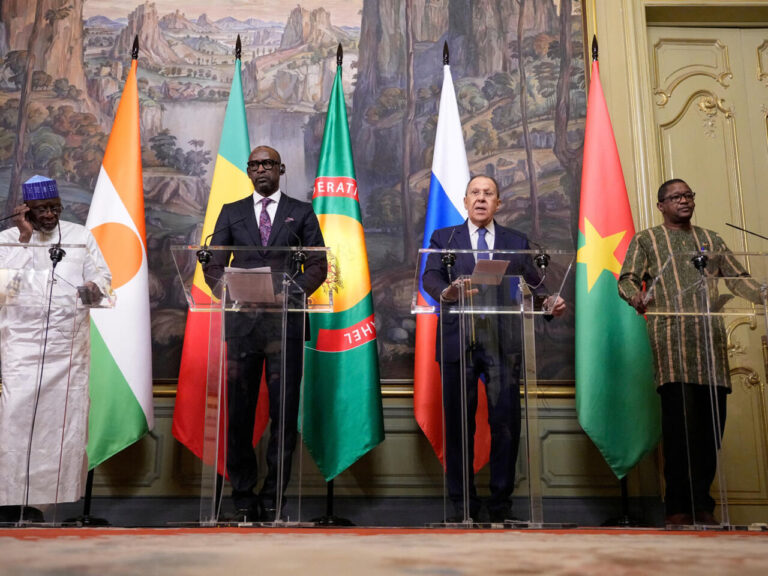
The military regimes of the Sahel states—Mali, Burkina Faso, and Niger—are forming a new security and political alliance while distancing themselves from Western partners. Russia is playing a central role in shaping…
Read More
April 9, 2026Tags: Burkina Faso, Mali, Niger, Russia, USA
Trump’s Iran Rhetoric Is Not Deterrence. It Is Strategic Self-Sabotage
Posted inGeopolitics Governance ideology

Trump’s Iran Rhetoric Is Not Deterrence. It Is Strategic Self-Sabotage

Every revolutionary regime depends on a story to survive. The Islamic Republic’s story has always been simple, emotionally powerful, and politically effective. Iran, according to the Khomeinist worldview, stands as a righteous…
Read More
April 8, 2026Tags: Iran, USA
Bypassing the System: Russia’s Crypto Networks in Africa and the Erosion of U.S. Sanctions Power
Posted inGeoeconomics National Security

Bypassing the System: Russia’s Crypto Networks in Africa and the Erosion of U.S. Sanctions Power

Moscow is using Africa as a space in which it can reduce the effectiveness of U.S. sanctions pressure by shifting external transactions into crypto-based payment channels operating outside the traditional…
Read More
April 8, 2026Tags: Niger, Nigeria, Russia, USA, Zimbabwe
From Narcos to Networks: How CJNG Is Tapping Global Arms Supply Chains
Posted inDrug trafficking Geopolitics National Security

From Narcos to Networks: How CJNG Is Tapping Global Arms Supply Chains

Federal prosecutors in Virginia have charged a group that attempted to supply the Mexican cartel CJNG with an arsenal worth €53.7 million. U.S. investigators have linked the central figure, Peter…
Read More
March 25, 2026Tags: CJNG, Mexico, Russia, USA
Russia’s Vietnam Play: A Growing Challenge to U.S. Sanctions and Indo-Pacific Strategy
Posted inEconomy Energy Geoeconomics

Russia’s Vietnam Play: A Growing Challenge to U.S. Sanctions and Indo-Pacific Strategy

Russia’s push to expand energy cooperation with Vietnam is not a transactional economic move, but part of a systemic strategy to rebuild global leverage under sanctions pressure. By embedding itself in…
Read More
March 24, 2026Tags: Russia, USA, Vietnam
Risk Assessment: Threats Against the U.S. Vice President During a Visit to Hungary
Posted inIntelligence ops National Security Psyops Terrorism

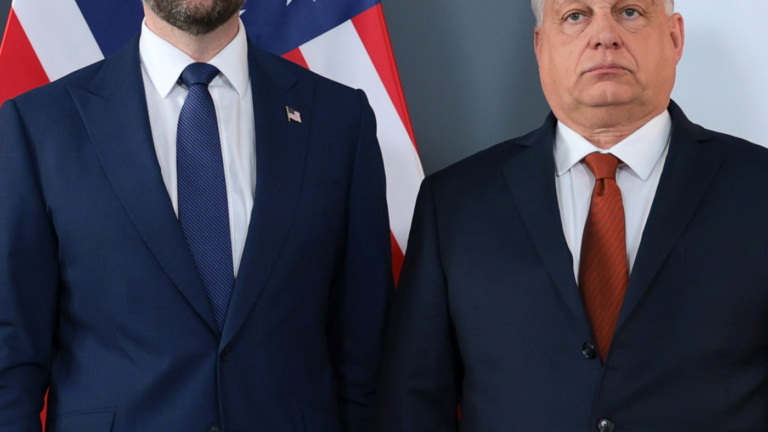
Risk Assessment: Threats Against the U.S. Vice President During a Visit to Hungary

The risk of a politically motivated hostile act against the U.S. Vice President during a visit to Hungary should be assessed as elevated in terms of political sensitivity, but constrained by a…
Read More
March 23, 2026Tags: Hungary, Russia, USA
Political Stability in Cuba: Risks of Power Change and Potential Consequences
Posted inDemocracy Economy Governance

Political Stability in Cuba: Risks of Power Change and Potential Consequences

Cuba is currently experiencing one of the most severe economic and social crises since the collapse of the Soviet Union in the early 1990s. The country faces an acute shortage…
Read More
March 17, 2026Tags: Cuba, USA
Russia’s Nuclear Shield for Iran: How Rosatom Is Undermining U.S. Pressure on Tehran
Posted inNational Security Nonproliferation

Russia’s Nuclear Shield for Iran: How Rosatom Is Undermining U.S. Pressure on Tehran

Russia is embedding itself deeply in Iran’s nuclear infrastructure.Through its state nuclear corporation Rosatom, Moscow is consolidating a long-term presence at the Bushehr Nuclear Power Plant, including personnel deployment, reactor construction, fuel…
Read More
March 13, 2026Tags: Iran, Russia, USA
Why is Mali resuming intelligence operations with the US?
Posted inGeopolitics Terrorism

Why is Mali resuming intelligence operations with the US?

Since 2021, when the Malian junta consolidated power in a second coup after the first one in 2020, the military government it controlled was largely seen as anti-Western.This was mainly…
Read More
March 12, 2026Tags: Mali, USA
Beyond Decapitation: Why Iran’s Political System Is Built to Survive War
Posted inDemocracy Governance National Security

Beyond Decapitation: Why Iran’s Political System Is Built to Survive War

A recent classified assessment by the National Intelligence Council concludes that even a large-scale interstate war against Iran would be unlikely to remove or fundamentally transform the country’s ruling system. According to…
Read More
March 11, 2026Tags: Iran, USA

Posts pagination

Previous page 1 2 3 4 5 … 24 Next page

Partner Institutes

The Center for Nationalism Studies (CNS)

Headquarter: director@lansinginstitute.org

Africa: africa@lansinginstitute.org

America: america@lansinginstitute.org

Asia: asia@lansinginstitute.org

Europe: europe@lansinginstitute.org

Headquarter:
19 Holly Cove Ln., Dover,  Kent,  Del., 19901.

Phone: +1 302.499.20.07

European branch:
La Grande Arche – Paroi Nord La Défense FR,
1 Tunnel de Nanterre-La Défense, 92044 Paris, France
Phone: +33 695.42.57.44

Copyright 2019-2026— Robert Lansing Institute e. All rights reserved.
Scroll to Top