

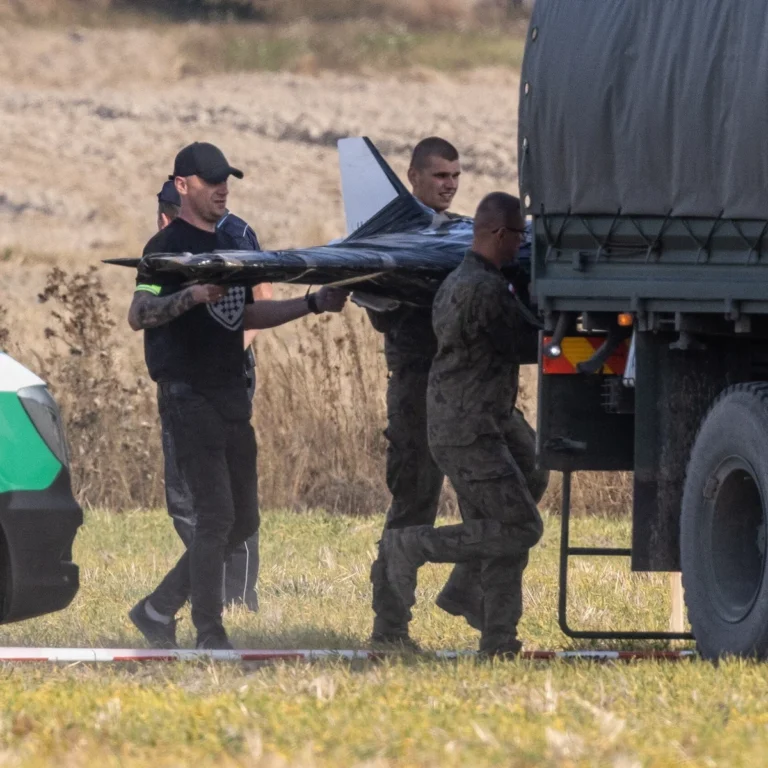
The appearance of Russian aerial targets over Polish territory during the Coalition of the Willing exercises may serve a far broader strategic purpose than testing the effectiveness of Poland’s air defenses. Moscow has an interest in fostering the belief that European NATO members cannot independently guarantee the security of their own airspace and remain vulnerable to Russian coercion without direct U.S. military intervention.
The Kremlin likely regards the policies of Donald Trump’s administration as a factor reducing the risk of a forceful U.S. response to limited Russian provocations that cause no substantial casualties. However, Moscow’s assessment does not mean Washington would necessarily refrain from responding to a serious escalation.
Russia may seek to exploit differences between the United States and its European allies to gradually revise the European security order. This concerns not only Ukraine but also the effective restriction of Central and Eastern European states’ sovereign right to determine their own defense policies.
In this context, aerial incidents can serve as instruments of strategic communication: exposing the vulnerability of European borders, testing allies’ readiness for collective action, and exerting political pressure on governments that support greater European defense autonomy.
Moscow thus seeks to turn demonstrations of the limitations of European defense into an argument for negotiations with the United States over a new security architecture in which Russia would claim special prerogatives regarding the post-Soviet space and NATO’s eastern flank.
The Air Incident in Poland: Coincidence, Navigation Error, or Deliberate Political Signal?
On November 20, 2026, during a large-scale Russian missile and drone attack on Ukraine, three Russian objects—two cruise missiles and a jet-powered drone—violated Polish airspace. According to Polish authorities, one was reportedly a Kh-101 missile. The objects fell in the areas of Nowy Lipowiec, Rudnik nad Sanem, and Mołodycz. No deaths or injuries were reported in Poland.
Prime Minister Donald Tusk described the incident as a likely deliberate Russian provocation. Defense Minister Władysław Kosiniak-Kamysz also highlighted the coincidence in timing and location between the airspace violations and military exercises involving Ukraine’s European allies. Warsaw intends to seek a stronger NATO presence on the eastern flank.
The geography of the incidents is particularly significant. The Russian aerial objects fell approximately 50–100 kilometers from Nowa Dęba, where Coalition of the Willing exercises are taking place.
The Koalicja exercises, running from November 9 to 22, bring together approximately 2,800 military personnel from 11 European countries. Led by the United Kingdom and France, they rehearse multinational force deployments, logistics, command and control, counter-drone measures, and air operations for a potential postwar mission in Ukraine. The United States is not directly participating in the exercises.
This is precisely what gives the incident strategic significance. For the first time, European states are demonstrating practical readiness to establish a multinational military mechanism to support Ukraine without direct participation by U.S. troops.
Russia has a clear interest in discrediting such a mechanism.
At the same time, available open-source information does not conclusively establish whether the trajectories of the Russian missiles and drone were deliberately directed into Polish territory.
Nevertheless, even without definitive confirmation of intent, the incident creates political effects that Moscow can exploit.
Discrediting European Strategic Autonomy as a Possible Kremlin Objective
The Coalition of the Willing is politically threatening to Moscow because its success would mean the gradual emergence of a European military capability able to support Ukraine regardless of changes in U.S. policy.
For the Kremlin, this prospect creates several problems:
It reduces Moscow’s ability to influence European policy through bilateral arrangements with Washington. Russia also loses some of the advantages associated with European countries’ dependence on U.S. military resources.
A postwar European military presence in Ukraine could complicate renewed Russian aggression and create additional political and military risks for Moscow.
Consequently, Russian leaders may have an interest in portraying European states as incapable of defending even their own territory, let alone ensuring Ukraine’s security.
The Kremlin’s likely logic is to highlight a contradiction between Europe’s political ambitions and the apparent limitations of its military capabilities.
If individual Russian missiles and drones can penetrate the airspace of a NATO member near multinational exercises, Moscow gains an opportunity to question whether European forces can ensure the security of a future mission in Ukraine.
An airspace violation does not in itself prove the inadequacy of European defenses, and the Koalicja exercises are not a comprehensive test of NATO’s integrated air defense system.
Yet a Kremlin information and psychological operation does not require objective proof of European weakness. It need only create the impression that European defense initiatives are inadequate to meet real threats.
This narrative could be especially damaging in domestic political debates in France, Germany, Italy, and other countries where defense spending and the possible deployment of troops to Ukraine remain politically sensitive.
The Trump Factor: Moscow’s Calculation of a Limited U.S. Response
A central element of Russia’s strategic calculation may be the belief that Donald Trump’s administration is unwilling to enter a direct military confrontation with Russia over a limited incident on the territory of a European ally.
Moscow likely assumes that Washington will seek to avoid a situation that could derail diplomatic contacts with the Kremlin or lead to uncontrolled escalation.
In that case, Russia’s strategy could involve provocations that are simultaneously serious enough to demonstrate the vulnerability of European defenses, limited enough to avoid making a U.S. military response politically unavoidable, ambiguous enough to allow Moscow to deny that the airspace violation was intentional, and consequential enough to push European governments to demand additional U.S. security guarantees.
The Kremlin could thus seek to turn American restraint into evidence that NATO’s guarantees have political limits.
The psychological dimension deserves particular attention.
If the Trump administration confines itself to diplomatic condemnation, Moscow may interpret this as confirmation of its assessment of the U.S. threshold for response.
The American response will depend on the scale of the attack, evidence of intent, casualties, and the broader political situation.
Russia’s calculation could therefore prove mistaken. Yet the very perception of U.S. restraint as predictable creates the risk of further provocations. Moscow may gradually increase the intensity of incidents, expecting each to remain below the threshold for a direct military response.
This is the classic logic of coercion through limited escalation.
From Testing NATO to Revising Spheres of Influence
The incident’s most important strategic dimension lies in the possible connection between Russian military provocations and Moscow’s ambition to revise Europe’s security order.
The Kremlin has repeatedly shown an interest in a model under which Europe’s security would be decided primarily between Washington and Moscow, while Central and Eastern European states would have limited influence over decisions affecting their own security. This concept was articulated in Russia’s draft security-guarantee treaties presented to the United States and NATO in December 2021.
Those drafts envisaged restrictions on further NATO enlargement and on Alliance military activity in a number of European states.
Today, Russian leaders may see Trump’s policies as an opportunity to reopen discussion of similar principles.
Unlike Ukraine, Poland is already protected by NATO’s Article 5. A Russian provocation against Poland therefore tests not only Europe’s willingness to support Kyiv but also the practical credibility of collective defense.
If Moscow concludes that violating a NATO state’s airspace does not impose appreciable military and political costs on Russia, it may see this as grounds to expand the permissible boundaries of coercion.
In the longer term, the objective might be not the formal cancellation of Eastern European states’ NATO membership but the gradual erosion of the practical substance of their security guarantees.
Why Moscow May Have Chosen the Coalition of the Willing Exercises
The timing of a potential provocation has strategic significance in its own right.
The Koalicja exercises demonstrate the readiness of Britain and France to move from political declarations to practical planning for a future military presence in Ukraine.
For Russia, this creates a dangerous precedent: European countries could develop their own security-guarantee model that functions even without direct U.S. involvement.
Russian aerial incidents during the exercises may be aimed at three audiences.
European military and political leaders. Moscow may seek to demonstrate that deploying European troops near Ukraine would entail persistent risks and require substantial air defense resources.
The U.S. administration. The Kremlin may be signaling to Washington that European security initiatives do not eliminate the Russian threat and that the United States will therefore remain an indispensable party to any settlement.
The European public. Russia may seek to create the impression that supporting Ukraine and preparing military missions increase, rather than reduce, the risk of war spreading into EU territory.
It is particularly important that Moscow has previously warned that it could treat foreign troops on Ukrainian territory as legitimate military targets.
Against this backdrop, an incident near the exercise area may be perceived as indirect reinforcement of Russian threats.
But the opposite effect is also possible: Russian actions may convince European governments that they need to accelerate the creation of joint defense mechanisms.
The Strategy of Controlled Escalation and the Danger of Miscalculation
Russia’s strategy may rest on the assumption that NATO will respond to limited incidents primarily with defensive and diplomatic measures.
The appearance of individual missiles or drones on Polish territory creates a situation in which the Alliance must choose between demonstrating resolve and preventing wider escalation.
Moscow may have an interest in seeing such decisions increasingly favor restraint.
At the same time, repeated airspace violations increase the risk of unforeseen consequences.
The next incident could kill civilians, strike a military facility, or cause casualties among allied military personnel.
In that event, the political room for a limited response would narrow considerably.
The most dangerous scenario is one in which the Kremlin mistakenly interprets the Trump administration’s restraint as a guarantee that NATO will not respond militarily.
Such a miscalculation could encourage Russia to take riskier actions whose consequences would no longer be controlled by the original plan.
Implications for European Security and U.S. Policy
European states should view the incident not merely as a problem of protecting Polish airspace but also as a potential element of Russia’s strategy to obstruct the development of an independent European defense capability.
Three priorities stand out:
Strengthening European air defense. European NATO members must demonstrate that they can independently protect critical infrastructure and military formations while reducing reliance on U.S. surveillance, command-and-control, and interception capabilities.
Preserving the political unity of the Coalition of the Willing. Any curtailment of the exercises or abandonment of preparations for a future mission in response to Russian threats would set a dangerous precedent: Moscow would gain confirmation that military intimidation works.
Preventing a bilateral revision of Europe’s security order. The United States should not treat NATO’s military presence, Ukraine’s security guarantees, or the defense status of Eastern European states as matters to be negotiated with Russia without the full participation of the allies concerned and Ukraine.
For Washington, it is essential to demonstrate that a desire to avoid direct war with Russia does not imply a willingness to tolerate systematic violations of allies’ sovereignty.
Otherwise, Moscow may conclude that limited military coercion is a more effective instrument for changing Europe’s order than large-scale conventional war.
Moscow Seeks to Prove That Europe’s Security Remains a Matter for Great-Power Bargaining
The November 20 incident may indicate a Russian attempt to use military provocations to achieve far broader political objectives.
Moscow may want European governments to conclude that, without direct U.S. involvement, they cannot effectively counter the Russian military threat.
At the same time, the Kremlin may calculate that Donald Trump’s administration will favor diplomatic management of incidents even if Russia systematically tests the boundaries of what is permissible.
This creates a strategic paradox: Russia seeks to demonstrate Europe’s dependence on the United States while simultaneously testing Washington’s willingness to act as the guarantor of European security.
The ultimate objective of such a policy may not be the military conquest of NATO territory but the gradual creation of conditions under which European states accept restrictions on their own defense policies under the threat of Russian escalation.
This would align with the Kremlin’s long-standing ambition to restore Russia’s status as a power entitled to define the limits of its neighbors’ sovereignty and participate in the division of spheres of influence in Europe.
Yet the more actively Moscow demonstrates the danger posed by the Russian military threat, the more reason European governments will have to increase defense spending, expand military cooperation, and establish autonomous deterrence mechanisms.
Thus, the strategic outcome of Russia’s provocation will depend less on the number of missiles that entered Polish airspace than on whether European states can turn the incident into an impetus for strengthening their own defense capabilities.
If Europe demonstrates political unity and military readiness, the Kremlin’s attempt to prove its helplessness could have the opposite effect—accelerating the emergence of the European defense capability Moscow seeks to prevent.Russia may try to exploit the unpredictability of U.S. security guarantees as an instrument of diplomatic coercion against Europe. It is precisely the connection between limited military provocations, Trump’s policies, and Russia’s claims to spheres of influence that makes this incident strategically more significant than an ordinary airspace violation.