
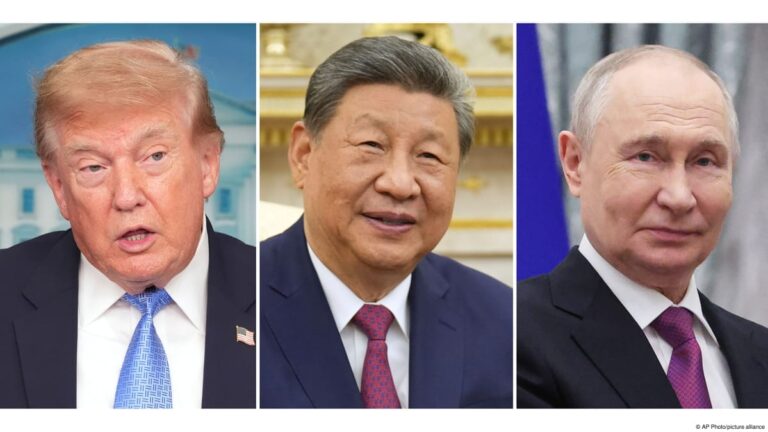
The forthcoming talks between U.S. President Donald Trump, Russian President Vladimir Putin, and Chinese President Xi Jinping should be viewed as part of a broader redistribution of influence among Washington, Moscow, and Beijing.
The defining feature of the negotiating environment is that Russia will seek to convert military pressure on Ukraine into political concessions from the West, while the vulnerability of its strategic infrastructure, particularly the Crimean Bridge, may constrain the Kremlin’s ability to dictate the terms of a settlement.
At the same time, it is important to distinguish confirmed diplomatic agreements, stated intentions, and analytical scenarios.
Key assessments: The Crimean Bridge is not merely a logistical asset but also a political symbol of Russian control over Crimea. Significant damage to the bridge or its prolonged closure ahead of the talks could weaken Putin’s position, even if Russia retains alternative supply routes.
Moscow is interested in negotiations that consolidate its de facto territorial gains and restrict Ukraine’s future security capabilities. At the same time, the Kremlin will seek sanctions relief and the restoration of political dialogue with the United States without first meeting all of Kyiv’s demands.
China will follow its own negotiating logic. Beijing has an interest in preserving Russia as a strategic partner, but not necessarily in maximizing the Kremlin’s power. For Xi Jinping, the talks could become an instrument for influencing relations with the United States, European security, and international economic rules. Trump may regard an agreement as an opportunity to demonstrate a diplomatic achievement, but a hasty cessation of hostilities without effective security guarantees would create a risk of renewed Russian aggression. The greatest risk for Ukraine is that its security becomes a bargaining chip in a broader U.S.–China–Russia deal. Negotiations without the full participation of Kyiv and European allies could establish a political framework that fails to ensure lasting peace.
Diplomatic Conditions: The Shenzhen Summit Amid Military Escalation
Despite confirmation of the meeting, its political outcomes remain uncertain. The participants have fundamental disagreements over the agenda. Washington prioritizes strategic stability and nuclear weapons; Moscow seeks to discuss Ukraine; and Beijing is trying to avoid commitments that would constrain its military capabilities or make China responsible for Russia’s war.
The forthcoming summit will be marked by the convergence of three crises:
Military: Escalating strikes against strategic infrastructure in Ukraine and Russia, including the Crimean Bridge.
Diplomatic: The absence of a breakthrough in talks to end the war, despite intensified U.S. mediation.
Geopolitical: U.S.–China rivalry, the war surrounding Iran, and uncertainty about future nuclear arms-control mechanisms.
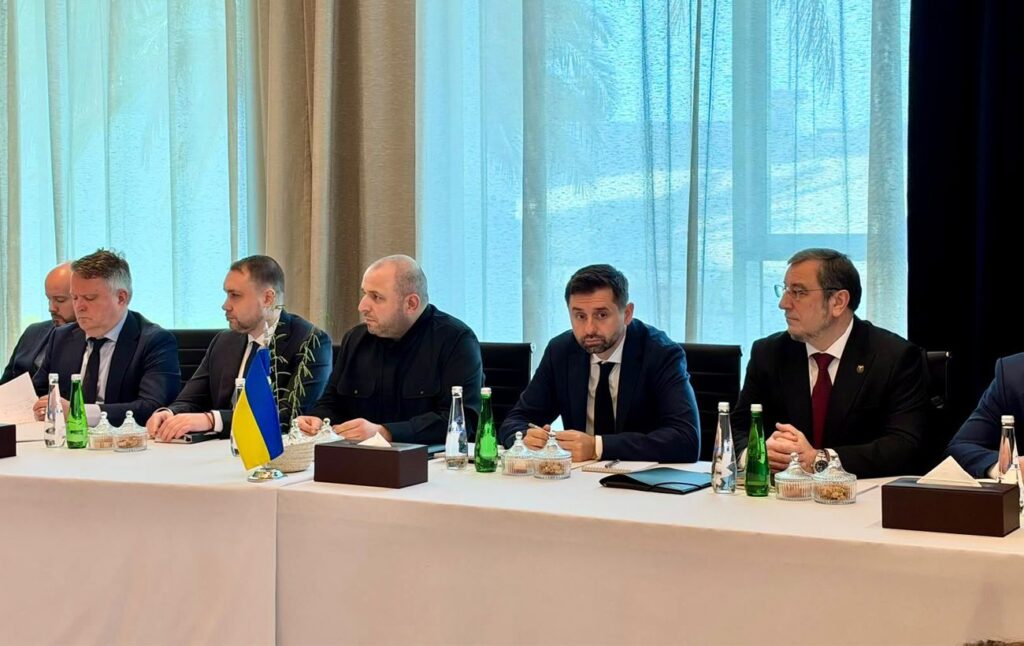
The meeting will follow talks among U.S., Ukrainian, and Russian representatives in Abu Dhabi, which made progress on prisoner exchanges but failed to resolve the main disagreements. Ukraine and European states continue to insist on participating in the formulation of peace arrangements, while Moscow has not agreed to expand the negotiating format to include Europeans.
This creates a favorable diplomatic opportunity for Putin: to discuss Russian demands directly with the leaders of two other major powers without agreeing to equal representation for all parties affected by the war.
The Strike on the Crimean Bridge: A Strategic Blow Ahead of the Talks
The events of November 16–17 significantly changed the military and political backdrop of the summit.
According to Reuters, Ukrainian strikes caused part of the Crimean Bridge’s road structure to collapse and damaged a railway section. Russia suspended traffic, although railway service was subsequently reported to have resumed. Thus, the incident involved serious damage to a strategic asset, but not a confirmed complete and indefinite shutdown.
Analysts at the Institute for the Study of War regard earlier strikes as part of a systematic Ukrainian campaign against Russian lines of communication through occupied Crimea.
Military and Logistical Impact
The Crimean Bridge provided road and rail connections between Russia and the occupied peninsula. Damage to it complicates supplies, forces traffic to be rerouted, and increases Russian forces’ dependence on alternative routes through occupied areas of southern Ukraine.
Damage to the bridge does not, by itself, mean an immediate logistical paralysis of Russian forces. The scale of the consequences will depend on the condition of the railway structures, the duration of repairs, the capacity of alternative routes, and the Russian transport system’s ability to offset the losses.
Political and Psychological Impact
The significance of the strike extends beyond military logistics.
The Crimean Bridge was one of the main symbols of Putin’s political project to integrate illegally annexed Crimea into Russia. Damage to it immediately before a meeting with world leaders calls into question Russian claims of assured control over the peninsula.
This creates three problems for the Kremlin.
First, it demonstrates the limited effectiveness of defenses protecting one of Russia’s most politically important infrastructure assets.
Second, it undermines the credibility of the claim that time is working exclusively in Moscow’s favor and that Ukraine is gradually losing its ability to conduct strategically significant strikes.
Third, it forces Putin to take account of domestic pressure from advocates of escalation, who may interpret negotiations after such a strike as a sign of weakness.
Ukraine has demonstrated its ability to shape the negotiating environment even without directly participating in the trilateral summit. However, turning a military success into a diplomatic outcome is not automatic.
Russia’s Negotiating Position: Between a Show of Force and the Need for an Agreement
For the Kremlin, the talks have a dual significance. On the one hand, they offer an opportunity to secure international recognition of Russia as an indispensable participant in global decision-making. On the other, they allow Moscow to attempt to lock in political outcomes of the war that it has not been able to secure definitively by military means.
Russia’s negotiating position can be divided into four broad dimensions.
Territorial. Moscow will seek acceptance of its de facto control over occupied territories as a starting condition for a settlement. For the Kremlin, it is essential that a cessation of hostilities not entail the mandatory withdrawal of Russian troops from all occupied territories.
Security. Russia will seek to restrict Ukraine’s future integration into NATO, the military presence of Western states, and Kyiv’s ability to obtain certain categories of weapons. Moscow may present these restrictions as necessary guarantees of its own security.
Economic. The Kremlin is interested in sanctions relief, reduced financial pressure, restored access to technology, and expanded opportunities for international trade.
Geopolitical. Putin will seek confirmation that Russia remains one of the powers with which the United States must coordinate on European security. This dimension may be no less important to him than individual provisions of a potential peace agreement.
However, damage to the Crimean Bridge complicates Russia’s strategy of negotiating from a position of unquestioned strength. Moscow may respond not by softening its demands but by hardening them, seeking to offset military and reputational losses through demonstrative intransigence.
Thus, a weakening of Russia’s position will not necessarily mean greater Kremlin willingness to compromise. In the short term, the opposite effect is possible: escalating strikes and more ultimatum-like rhetoric.
The China Factor: Why Xi Jinping Is Not Interested in Putin’s Complete Victory
For Beijing, the forthcoming summit has a different significance than it does for Moscow. China has no interest in a strategic defeat for Russia that could lead to domestic destabilization and greater American influence in Eurasia. Yet an excessive strengthening of Moscow would not necessarily serve China’s long-term interests either.
Xi Jinping can use the talks to reinforce the asymmetry in relations with Russia, which is increasingly dependent on Chinese markets, technology, and diplomatic support.
Beijing may pursue three strategic objectives.
Prevent a U.S.–Russia rapprochement at China’s expense. Beijing does not want Washington to offer Moscow sweeping economic and political rapprochement in exchange for distancing itself from China. Although such a scenario is unlikely in the short term, its very possibility gives Chinese leaders an additional incentive to shape the diplomatic process.
Avoid international responsibility for Russia’s territorial demands. China traditionally declares its respect for state sovereignty and territorial integrity. Formal recognition of Russia’s annexations would contradict that position and complicate relations with European countries.
Link strategic stability to broader relations with the United States. Trade restrictions, technology sanctions, Taiwan, and the U.S. military presence in the Indo-Pacific remain important to Beijing.
China has taken a cautious approach to the U.S. initiative for trilateral nuclear arms control because its nuclear arsenal remains substantially smaller than those of Russia and the United States.
In this context, damage to the Crimean Bridge may carry additional significance for Beijing: it demonstrates that Russia, despite a prolonged war and substantial military resources, cannot fully protect even its most symbolic assets.
China will seek to preserve its strategic partnership with Moscow without assuming obligations regarding Russia’s war aims.
Trump’s Position: A Diplomatic Achievement or a Strategic Concession to Moscow?
For Donald Trump, the Shenzhen summit could be an opportunity to demonstrate the United States’ ability to negotiate simultaneously with its two principal geopolitical competitors.
The U.S. administration does not expect a rapid breakthrough in nuclear negotiations, while China and Russia have different interests regarding the agenda.
This increases the importance of potential political arrangements concerning Ukraine, even if they are not formalized as a separate trilateral agreement.
Trump faces two fundamentally different potential diplomatic outcomes.
One involves a cessation of hostilities with monitoring mechanisms, the preservation of Ukraine’s defense capabilities, and the possibility of restoring sanctions pressure if Russia violates the agreements.
The other is a rapid political settlement that effectively consolidates Russian control over occupied territories without providing sufficient guarantees against another invasion.
The second scenario is the most attractive to the Kremlin because it would transform the results of aggression into long-term political advantages.
. The United States retains leverage through sanctions, financial mechanisms, military and technological cooperation with Ukraine, and coordination with European allies.
The key question is not whether the United States has instruments of pressure, but whether the Trump administration is prepared to use them to achieve a durable settlement rather than merely a quick diplomatic result.
Will the Strike on the Crimean Bridge Force Putin to Change His Negotiating Tactics?
The strike on the bridge is more likely to affect the Russian delegation’s tactics than the Kremlin’s fundamental political demands.
Putin faces three possible choices.
Demonstrative Escalation
Intensifying strikes against Ukrainian infrastructure to restore the image of military superiority and exert additional pressure ahead of negotiations. This could worsen the prospects for compromise but would be consistent with the coercive approach Moscow has used before.
Limited Diplomatic Flexibility
Agreeing to specific humanitarian, technical, or procedural steps without revising territorial demands. This would allow the Kremlin to appear constructive to Trump while retaining its main instruments of pressure on Ukraine.
Prolonging the Negotiations
Using the summit to confer political legitimacy on Russia and discuss broader issues without commitments to end the war. Moscow may calculate that time and internal divisions among Ukraine’s allies will improve its position.
A combination of the first and second options appears most likely: continued military pressure accompanied by a display of readiness for limited diplomatic arrangements.
Of particular importance is that Russia is already responding with strikes against Ukrainian bridges. According to reports on November 17, Russian attacks damaged infrastructure in Kyiv, including bridges across the Dnipro River.
This creates the risk of a mutually expanding campaign of strikes against transport infrastructure without any real progress toward a political settlement.
Forecast of Negotiation Scenarios
The most realistic outcome remains a political declaration on the need for peace and strategic stability without a fundamental resolution of the issue of occupied territories.
Implications for the United States, NATO, and Ukraine
For the United States, the principal challenge will be to avoid a situation in which diplomatic recognition of Russia as a great power is accompanied by de facto recognition of the results of territorial aggression.
For NATO, the danger lies in potential agreements that restrict Ukraine’s defense sovereignty and create a precedent for revising the European security order under military pressure.
For Ukraine, the priority must remain combining military resilience with diplomatic participation in determining the terms for ending the war. Damage to the Crimean Bridge demonstrates that Russian strategic assets remain vulnerable. Yet the diplomatic value of such an outcome will depend on Kyiv and its partners’ ability to turn changes in the military balance into concrete security guarantees.
The most important indicator of the summit’s outcome will not be the number of joint statements but whether Moscow’s behavior changes afterward: willingness to enter a genuine ceasefire, abandonment of ultimatum-like territorial demands, and acceptance of international monitoring mechanisms.
Concluding Assessment
The Shenzhen summit will take place at a moment when Russia seeks to consolidate the results of the war diplomatically while simultaneously demonstrating its inability to fully protect its own strategic infrastructure.
The strike on the Crimean Bridge does not deprive Putin of negotiating leverage, but it undermines an important element of Russia’s political argument: the notion that its control over Crimea is irreversible and Ukraine’s capabilities are steadily being exhausted.
For the Kremlin, participation in the trilateral meeting is already a diplomatic gain. Putin has an opportunity to appear alongside the leaders of the United States and China as a participant in discussions about the global order, despite Russia’s continued aggression against Ukraine.
Yet the central contradiction in Russia’s negotiating position remains unresolved: Moscow seeks international recognition of its territorial gains without having guarantees that it can hold and defend them militarily over the long term.
The strategic risk is that Trump may offer Putin a political exit from the war on terms that compensate Russia for its military vulnerabilities, rather than using those vulnerabilities to achieve a fairer and more durable peace.Therefore, the central question surrounding the forthcoming negotiations is not whether Putin will agree to talk about peace, but whether Washington will be prepared to reject a deal that rewards Russian aggression and creates the conditions for another war in Europe.